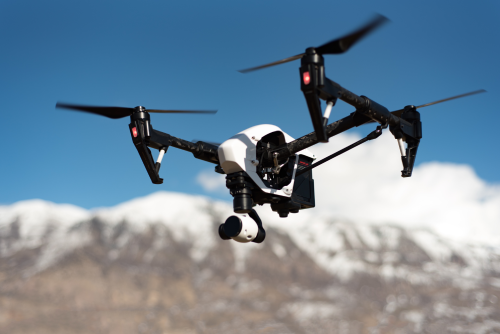
Great drone photos rarely come from luck. For beginners, the biggest jump in quality comes from a few simple habits: better light, slower flying, cleaner composition, and safer planning.
If you are searching for the top drone photography tips for beginners, start here. These practical tips are written for Indian hobbyists, creators, students, and first-time buyers who want sharper, more cinematic aerial photos without making costly mistakes.
Quick Take
- Fly for the shot, not just for the thrill.
- Early morning and late afternoon light will improve your photos more than any filter.
- Keep ISO low, use a fixed white balance, and shoot RAW if your drone supports it.
- Start with simple compositions: one main subject, clean lines, and a straight horizon.
- Change altitude and camera angle deliberately instead of hovering randomly.
- Slow, smooth movement makes framing easier and photos cleaner.
- India-specific reality matters: haze, harsh midday sun, dust, heat, and monsoon winds can ruin an otherwise good flight.
- Always verify the latest DGCA and Digital Sky requirements before flying, especially near cities, airports, events, sensitive locations, or client sites.
Why beginner drone photos often look disappointing
Many first-time drone users expect every aerial image to look dramatic. In practice, beginner shots often fail for very ordinary reasons:
- light is too harsh
- the frame has no clear subject
- the drone is too high for the scene
- the horizon is tilted
- colors look strange because white balance changed from shot to shot
- the photo is overprocessed later
The good news is that these are easy problems to fix. You do not need expert gear to get much better results.
The top drone photography tips for beginners
1. Plan the shot before takeoff
The best drone photographers usually know what they want before the motors start.
Ask yourself three questions:
- What is the subject?
- What angle will show it best?
- What light will make it look better?
For example, if you are photographing a fort, a farmhouse, a riverbank, or a sports ground, decide whether the shot is about scale, symmetry, texture, or location. That one decision changes where you fly and how high you go.
A simple shot list helps: – one wide establishing photo – one medium-height image – one top-down or near top-down frame – one image focused on patterns or leading lines
Without a shot plan, beginners often fly aimlessly, drain the battery, and come back with 50 average photos instead of 5 useful ones.
2. Shoot in good light, not just when you are free
Light matters more than the drone.
The easiest way to improve your drone photography is to fly during: – early morning – late afternoon – just after sunrise – around golden hour before sunset
At these times, shadows are longer, colors are softer, and buildings, roads, trees, and terrain show more depth.
Midday light can still work, but it is harder: – shadows become short and ugly – water and rooftops may look flat – haze becomes more visible – white concrete and light-colored surfaces can lose detail
In many parts of India, especially in summer, midday heat also reduces comfort and can affect battery performance. If you can choose only one upgrade to your results, choose better light.
3. Keep your camera settings simple
Many beginners overcomplicate settings. Start with a clean, repeatable setup.
Here is a practical starting point for still photography:
| Setting | Beginner starting point | Why it helps |
|---|---|---|
| Image format | RAW + JPEG if available | JPEG is easy to preview; RAW gives more editing flexibility |
| ISO | Lowest possible | Lower ISO usually means cleaner images with less noise |
| White balance | Fixed setting, not Auto | Keeps color consistent across shots |
| Grid lines | On | Helps with horizon and composition |
| Histogram | On if available | Helps avoid blown highlights |
| Exposure | Slightly cautious in very bright scenes | Protects detail in clouds, white buildings, and reflective surfaces |
If you are completely new, use Auto mode first to learn framing. Once you are comfortable, pay attention to ISO and exposure. For still photos, a steady drone usually lets you use slower shutter speeds than handheld cameras, but avoid going so slow that wind or subject movement causes blur.
4. Keep ISO low for sharper, cleaner images
ISO controls how sensitive the camera is to light. Higher ISO can help in dim light, but it also adds noise and reduces image quality.
For beginners, a good rule is simple:
- keep ISO as low as you reasonably can
- use better light instead of forcing high ISO
- avoid very dark flights unless you understand your drone camera’s limits
This matters because many consumer drones have small sensors. Small sensors struggle more in low light than larger cameras. A photo taken at sunrise with low ISO will usually look much better than one taken after sunset at a high ISO.
If your image looks too noisy or soft, high ISO is often the reason.
5. Use a fixed white balance
Auto white balance sounds convenient, but it can shift color from one image to the next. That is frustrating when you are editing a set of photos from the same location.
A fixed white balance gives you consistency. The exact setting depends on the conditions, but the principle is what matters: – sunny conditions: use a daylight-type setting – cloudy conditions: use a cloudy-type setting – avoid Auto if you want a consistent look
This is especially useful in India, where warm light around sunrise and sunset can look beautiful. Auto white balance may neutralize that warmth and make the scene look less natural.
6. Shoot RAW if your drone supports it
RAW files hold more image data than JPEGs. That gives you more room to: – recover highlights – lift shadows – correct white balance – improve contrast without damaging the image too quickly
For beginners, RAW is useful because drone scenes often contain bright skies and darker land at the same time. That wide contrast can be difficult for JPEG alone.
If your drone offers RAW + JPEG, that is often the best beginner choice. Use JPEG for quick sharing and RAW for your best edits.
7. Start with simple composition
Aerial views can become messy fast. When everything looks interesting, nothing stands out.
The easiest composition rule for beginners is this: choose one clear subject.
That subject could be: – a road cutting through fields – a temple tank or stepwell from above – a lone tree – a boat in open water – a building with strong geometry – a person standing in a large open space, where flying is permitted and safe
Then remove distractions from the frame. Reposition the drone instead of assuming you can crop later.
Simple frames usually work better than crowded ones.
8. Use altitude and angle on purpose
One of the biggest beginner mistakes is flying too high too quickly.
Higher is not always better. Very high shots can make the subject look small and unimportant. Often, the strongest drone photos come from moderate height, where you still get an aerial perspective but keep enough detail.
Try the same scene from three heights: 1. low aerial 2. medium aerial 3. higher overview
Also change the camera tilt: – straight ahead for depth and landscape feel – slightly downward for context – top-down for patterns and geometry
A paddy field, market roofline, beach, river curve, or housing layout can look completely different at each height. Make altitude part of your composition, not an accident.
9. Look for lines, patterns, and symmetry
Drones are excellent at revealing shapes we do not notice from the ground.
Train yourself to spot: – roads – railway lines from safe, legal distances – rows of trees – crop patterns – rooftops – ghats – bridges – coastlines – shadows
These elements create structure in a frame.
Leading lines pull the eye through the image. Symmetry makes scenes look clean and balanced. Repetition adds visual rhythm.
A simple example: a winding road through dry terrain may look ordinary from the ground, but from above it can become the main subject because the curve itself creates the composition.
10. Let one element dominate the frame
A strong photo usually has a visual anchor. That anchor tells the viewer where to look first.
Good dominant subjects in drone photography include: – a building surrounded by empty land – a person or vehicle placed carefully in a large scene – a tree line separating water and land – a brightly colored object against a muted background – a boat, jetty, or bridge
Do not be afraid of negative space. Empty areas around the subject can make the image stronger, not weaker.
This is especially useful when shooting beaches, dry lake beds, salt pans, fields, or large grounds.
11. Keep the horizon straight
A tilted horizon makes even a good drone photo feel amateur.
Turn on grid lines if your app provides them. Before pressing the shutter, pause for one second and check: – is the horizon level? – does the frame feel balanced? – is the subject placed intentionally?
If the horizon is not visible, check whether the frame still looks aligned. Buildings, coastlines, and water edges can reveal unwanted tilt.
This sounds basic, but it instantly improves the look of your work.
12. Move slowly, even when taking photos
Photography is not only about the moment you press the shutter. The way you fly affects whether you can frame the shot properly.
Fly slowly when: – approaching the subject – changing height – reframing – adjusting the camera tilt
Fast movement makes it harder to notice clutter, horizon tilt, and bad spacing around the subject. Slower flight gives you time to compose.
A good beginner habit is to stop the drone briefly before taking the photo. Let the aircraft settle, confirm the frame, then shoot. That pause often improves sharpness and composition.
13. Use top-down shots carefully
Top-down images are one of the most striking drone photography styles, but they work best when the scene has clear structure.
Use them for: – geometric rooftops – crop patterns – boats in clean water – parked vehicles in neat arrangement – steps, courtyards, and textured ground – beaches with contrasting surf lines
Avoid top-down shots when the scene is visually chaotic. If there is no shape, texture, or contrast, the result may look flat.
Also be mindful of privacy and local sensitivity. Just because a drone can look straight down does not mean every place or subject should be photographed.
14. Bracket tricky scenes if your drone allows it
Some scenes are hard to expose in one shot, especially when: – the sky is bright – the ground is much darker – reflective water is in the frame – you are shooting toward the sun
If your drone supports exposure bracketing, take multiple exposures of the same frame. This gives you options later and can help preserve detail in both bright and dark areas.
Use this carefully. The goal is a natural-looking image, not an overcooked HDR-style edit with fake colors and halos.
For beginners, bracketing is most useful during sunrise, sunset, coastal scenes, and urban shots with bright sky.
15. Edit lightly and consistently
Editing should finish the image, not rescue a bad one.
A simple beginner editing workflow is enough: 1. pick your best 5 to 10 photos, not all 100 2. correct exposure 3. recover highlights if needed 4. lift shadows gently 5. adjust white balance 6. add a little contrast and clarity 7. straighten the frame 8. sharpen lightly 9. reduce noise only if necessary 10. stop before the image looks artificial
Common beginner editing mistakes include: – oversaturation – excessive sharpening – unnatural sky colors – too much clarity or contrast – pushing shadows until the image looks muddy
A clean, natural edit almost always ages better.
A simple beginner workflow for every flight
Use this routine for your next few sessions.
- Check whether flying is allowed and safe at that location.
- Visit at a time with better light.
- Clean the lens.
- Set RAW + JPEG if available.
- Fix white balance.
- Turn on grid lines and histogram.
- Take one wide shot, one medium shot, and one top-down shot.
- Repeat the same subject from different heights.
- Pause before each photo.
- Edit only your strongest images.
This routine builds better habits faster than buying more accessories.
Safety, legal, and compliance basics in India
Drone photography is not just about image quality. It also involves safety, privacy, and compliance.
Rules can change, and location-specific restrictions matter. Before flying in India, verify the latest official guidance from DGCA, Digital Sky, and any local authority or site management relevant to your area.
As a practical beginner rule, do all of the following:
- check whether the area has restrictions or requires permission
- avoid airports, airfields, helipads, military zones, and other sensitive sites
- do not fly over crowds, traffic, emergency activity, or public gatherings
- keep visual line of sight with the drone
- respect privacy, especially in residential areas
- do not treat weddings, resorts, religious spaces, or commercial venues as automatically open for drone use
- avoid wildlife disturbance, especially near wetlands, forests, and nesting areas
- do not fly in rain, strong winds, or poor visibility
If you are shooting for a client, verify: – whether the location owner has approved the flight – whether local restrictions apply – whether you need additional documentation or insurance
When in doubt, do not fly until you have checked.
India-specific conditions beginners should respect
Haze and pollution
In many Indian cities and plains, distant scenes may look washed out because of haze. This is normal. Shoot closer subjects, use side light, and avoid expecting crystal-clear long-distance landscapes every day.
Harsh summer light
Summer sun can create very bright, contrasty scenes. Protect highlights and prefer morning flights.
Heat and battery care
Do not leave batteries in direct sun on a car dashboard or exposed ground. Let the drone cool between flights if conditions are very hot.
Dust and sand
Open grounds, dry fields, and beaches can throw dust into the air during takeoff and landing. Use a clean launch spot if possible and inspect the lens and gimbal after the flight.
Monsoon winds and moisture
Even if the rain has stopped, gusty winds and moisture can make conditions risky. Wet surfaces also affect landing safety. If the weather feels uncertain, skip the flight.
Common mistakes beginners make
Flying too high too soon
You lose subject impact and often create boring images. Start lower and build upward.
Shooting everything from one angle
A location can give you wide, medium, oblique, and top-down frames. Use that variety.
Using Auto white balance for every shot
Your photo set ends up with inconsistent colors.
Ignoring the background
A good subject can be ruined by clutter around it.
Overediting
The fastest way to make drone photos look fake is too much saturation, sharpening, and HDR effect.
Chasing dramatic shots in unsafe places
No photo is worth a risky flight, a privacy complaint, or a rule violation.
Taking off without a shot plan
Battery life disappears quickly when you are thinking in the air instead of before takeoff.
FAQ
What is the best time of day for beginner drone photography?
Early morning and late afternoon are the easiest times to get good results. The light is softer, shadows add depth, and colors usually look better.
Should I shoot in Auto or Manual mode?
If you are brand new, start with Auto so you can focus on framing and safety. As you improve, learn to control ISO, exposure, and white balance more deliberately.
Do I really need RAW files?
Not always, but RAW is very useful. It gives you more flexibility when fixing exposure, color, and highlights, especially in bright skies or high-contrast scenes.
How high should I fly for better photos?
There is no perfect height for every scene. Often, moderate height looks better than maximum height because the subject still has shape and detail. Always stay within applicable rules and verify local restrictions.
Can I fly over people or traffic for a dramatic photo?
Avoid it. It is unsafe, can create privacy problems, and may violate applicable rules or local restrictions. Choose safer compositions from permitted areas instead.
Why do my drone photos look soft?
Common causes are dirty lens glass, high ISO, motion during capture, digital zoom, haze, or poor focus behavior. Clean the lens, use better light, keep ISO low, and pause before shooting.
Is editing necessary for drone photos?
Usually, yes, but only lightly. Basic exposure correction, white balance adjustment, straightening, and gentle sharpening are often enough.
What is the most useful feature in a beginner drone for photography?
A stable 3-axis gimbal, reliable GPS positioning, and RAW photo support matter more than flashy extras. Predictable flight and a decent camera are more valuable than gimmicks.
Can I do drone photography in windy weather?
Beginners should avoid it. Wind makes framing harder, reduces stability, and can create blurry results or unsafe flying conditions.
How many photos should I take at one location?
Take enough variations to compare, but avoid random overshooting. A good target is a small set of intentional frames: wide, medium, top-down, and a few variations in height and angle.
Final takeaway
If you want better drone photos fast, do not start by chasing advanced tricks. On your next two flights, focus on just four things: better light, lower ISO, one clear subject, and slower, more deliberate framing.
Those habits will improve your work far more than flying higher, editing harder, or buying a more expensive drone.
