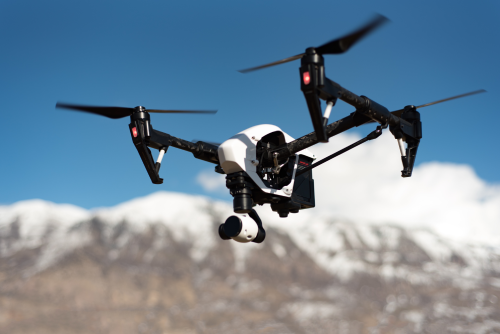
Construction monitoring is one of the most practical drone use cases in India, but the “best” drone depends on what you actually need: progress photos, mapping, stockpile measurement, safety inspection, or client-ready reports. A builder tracking a mid-rise project does not need the same aircraft as an infrastructure contractor mapping a large earthwork site.
Quick Take
If you are choosing the best drones for construction monitoring, start here:
- For most professional construction teams, an enterprise quadcopter in the DJI Mavic 3 Enterprise class is the best overall fit.
- For smaller builders, architects, consultants, and marketing-heavy site updates, a DJI Air 3 class drone is often the smartest value buy.
- For very light, portable visual monitoring on small sites, a DJI Mini 4 Pro class drone is good, but it is not the right tool for serious measurement work.
- If you need accurate maps, stockpile volumes, or repeatable progress surveys, prioritize a mechanical shutter and RTK support. RTK means satellite-based positioning correction for better accuracy.
- If you need thermal imaging, buy a thermal drone only when there is a real inspection use case. It is expensive overkill for routine progress photos.
- For mega projects, long corridors, or high-accuracy survey work, hiring a specialist may be better than buying.
- In India, compliance, pilot training, spare parts, and after-sales support matter as much as the drone itself. Always verify the latest DGCA and Digital Sky requirements before purchase or operation.
What construction monitoring actually needs from a drone
Many buyers start by looking at camera quality alone. That is a mistake.
Construction monitoring usually involves some combination of these outputs:
- Weekly or monthly progress photos from the same angles
- Top-down site maps
- Orthomosaics, which are stitched overhead images used for documentation and planning
- Earthwork and stockpile volume measurements
- Roof, facade, or crane-area inspection
- Client presentation videos
- Safety review of hard-to-reach areas
- Thermal inspection in select cases
That means the best drone is not always the one with the prettiest cinematic video. It is the one that gives you repeatable, safe, consistent data.
For construction work, these features matter most:
- Stable GPS and reliable return-to-home
- Good obstacle sensing
- Strong wind handling
- Consistent image capture
- A camera suitable for mapping or inspection
- Battery ecosystem that supports repeat site visits
- Easy access to spares and repair
- Software compatibility for maps, measurements, and reports
- Legal and operational fit for your team in India
If your deliverable is measurement, accuracy matters more than dramatic footage. If your deliverable is client reporting, repeatability matters more than extreme zoom. If your site is active and crowded, safety features matter more than headline flight time.
Best drones for construction monitoring at a glance
| Best for | Drone or class | Why it works | Main limitation |
|---|---|---|---|
| Most professional construction teams | DJI Mavic 3 Enterprise class | Strong all-round mix of mapping, inspection, portability, and workflow | Costs more than consumer drones |
| Small and mid-sized builders, consultants, architects | DJI Air 3 class | Excellent visual monitoring, easy to fly, strong value | Not the best tool for precision mapping |
| Lightweight, portable site updates | DJI Mini 4 Pro class | Easy to carry, good image quality, low operator burden | Limited in wind and not ideal for serious survey work |
| Thermal inspection and safety checks | DJI Mavic 3 Thermal class | Adds thermal imaging for hotspots and defect detection | High cost if thermal is rarely used |
| Large infrastructure and advanced survey | Matrice 350 RTK class or similar enterprise platform | Payload flexibility, stronger site capability, more scalable | Expensive, larger, more training-heavy |
| Mega sites and long linear projects | Fixed-wing survey drone class | Efficient coverage of large areas | Poor fit for close inspection and tight urban sites |
| Indoor or confined inspection | Caged inspection drone class | Safer around obstacles and GPS-denied environments | Niche use, not for general outdoor monitoring |
Availability and support can change. Treat these as buying classes first and specific models second.
The best options in detail
DJI Mavic 3 Enterprise class
For most professional buyers, this is the best overall drone for construction monitoring.
Why it stands out:
- Built for actual work, not just content creation
- Suitable for progress mapping, inspection, stockpile tracking, and regular reporting
- Mechanical shutter helps reduce distortion in mapping missions
- RTK support can improve positional accuracy for survey-style outputs
- Portable enough for routine site visits
- Easier to deploy than a large enterprise airframe
Who should buy it:
- Project management consultants
- Real estate developers with recurring site reporting needs
- EPC contractors monitoring medium-sized sites
- Quantity and planning teams that need usable maps, not just photos
- Service providers offering construction progress reports
Where it fits best:
- Mid-size building projects
- Warehousing and industrial plots
- Solar and EPC sites
- Road packages and earthwork zones where a quadcopter is still practical
Watch-outs:
- It is more expensive than a consumer drone, and the real cost includes batteries, charger, RTK accessories, software, and training.
- It still does not replace specialist surveying workflows when contract-grade accuracy is required.
- If your use is only monthly progress videos, you may be overspending.
Buy this if you need one drone that can handle serious construction monitoring without jumping into a very large industrial platform.
DJI Air 3 class
For many Indian buyers, this is the best value option.
Why it works:
- Strong image quality for progress reporting
- Easy to transport between sites
- Good obstacle sensing for practical, real-world work
- Useful for both stills and video
- A smart bridge between hobby drones and work drones
Who should buy it:
- Builders doing visual progress documentation
- Architects and consultants
- Small developers
- Marketing teams who also want practical site coverage
- Freelancers building a drone services portfolio
Where it shines:
- Weekly progress photos
- Before-and-after documentation
- Client updates
- Simple top-down views and visual comparison over time
- Social media and investor presentation footage
Where it falls short:
- It is not the right first choice for accurate mapping-heavy workflows.
- No matter how good the camera is, a consumer drone is still not the same as an enterprise mapping platform.
- If stockpile volume and measured orthomosaic output are core deliverables, step up to an enterprise model.
This is the drone to buy when your output is mainly visual monitoring, reporting, and communication rather than survey-grade data.
DJI Mini 4 Pro class
This is the best lightweight option for small-site visual monitoring.
Why people like it:
- Extremely portable
- Quick to deploy
- Less intimidating for beginners
- Good image quality for its size
- Useful for regular site checks when you do not want a larger kit
Who it suits:
- Small contractors
- Site owners wanting simple visual records
- Students or learners building construction-monitoring skills
- Creators covering property or development updates
Best use cases:
- Small residential projects
- Villas, farm structures, and low-rise builds
- Lightweight documentation
- Basic aerial photos for timeline comparison
Its limitations matter:
- Small drones are less comfortable in wind.
- They are not ideal for high-accuracy mapping.
- On larger or busy sites, you may outgrow this class quickly.
- If your operation has recurring commercial value, the cheaper drone may become the expensive choice once rework and limitations appear.
A Mini-class drone is great for basic eyes-in-the-sky work, but it is not the best long-term professional construction platform.
DJI Mavic 3 Thermal class
This is the right pick only when thermal is part of the job.
Thermal cameras can help with:
- Detecting heat anomalies in electrical installations
- Reviewing rooftop solar systems
- Checking certain envelope issues
- Spotting moisture or insulation problems in some cases
- Identifying overheating equipment on industrial sites
Why it can be valuable:
- Combines a normal visual camera with thermal imaging
- Useful for safety teams and technical inspection workflows
- More practical than carrying separate systems
Why most buyers should not start here:
- Thermal drones cost more
- Interpreting thermal images properly takes training
- For basic construction progress updates, thermal adds little value
- A thermal drone is not a substitute for a proper mapping drone if your main job is measurement
Buy this only if you already know why thermal data will be used in your workflow.
Matrice 350 RTK class and similar large enterprise platforms
This is the step-up option for larger sites, advanced inspections, and payload flexibility.
Why bigger platforms exist:
- Better for heavier payloads
- More scalable for specialized sensors
- More suitable for demanding industrial operations
- Stronger for larger, more complex project environments
Who should consider it:
- Infrastructure companies
- Mining and heavy earthwork contractors
- Industrial EPC teams
- Firms that may later add LiDAR, high-end mapping cameras, or advanced inspection payloads
- Serious drone service providers
But be realistic:
- The aircraft is only part of the total system cost
- Training, operations, transport, and safety planning are more demanding
- It is excessive for routine building progress on ordinary sites
- Many buyers are better off hiring this capability instead of owning it
If your business is not yet using drone data every week, this class is often too much aircraft too early.
Fixed-wing survey drone class
This is not the best general construction drone, but it is excellent for very large areas.
Where fixed-wing platforms win:
- Cover large land parcels efficiently
- Suitable for long linear projects such as roads, canals, or pipelines
- More efficient than quadcopters on mega sites
Where they lose:
- Not ideal for close inspection
- Harder to operate in tight or urban environments
- Less practical for daily visual reporting
- Usually part of a specialist survey workflow
For most builders and mid-size contractors in India, fixed-wing is a service to hire, not a drone to buy.
Caged indoor inspection drone class
A normal GPS drone is not the right answer for every environment.
For indoor or confined areas such as:
- Large halls under construction
- Plant rooms
- Warehouses
- Tunnels
- Atriums
- Areas with major obstacle risk
A caged inspection drone can be safer because it is built to handle contact and fly where GPS may not work well.
This is a niche category. Most buyers do not need it. But for specialised contractors, industrial inspections, or difficult interiors, it can save time and reduce risk compared with sending people into awkward spaces.
How to choose the right drone for your type of site
Instead of asking, “Which drone is best?” ask, “What output do I need every month?”
Choose a visual monitoring drone if you mainly need photos and video
A visual monitoring drone is enough when you want:
- Progress images from repeat angles
- Short client update videos
- Site-wide status checks
- Marketing content for developers or brokers
Best fit: – Air 3 class – Mini 4 Pro class for smaller sites and tighter budgets
Choose an enterprise mapping drone if you need measurement and repeatable reports
You need this if you want:
- Orthomosaic maps
- Stockpile or earthwork volume
- Better geotagging and consistency
- Data that planners, engineers, or project managers can use
Best fit: – Mavic 3 Enterprise class
Choose a specialized enterprise platform if the site is large or technically demanding
You may need this if:
- Your area is very large
- You need advanced payloads
- You work in industrial or infrastructure environments
- You need LiDAR or higher-end survey workflows
Best fit: – Matrice-class enterprise systems – Fixed-wing via service partner for large area mapping
Choose based on your team, not just the drone
A great drone in untrained hands creates bad data.
Ask these questions before buying:
- Who will actually fly it every week?
- Will they be trained and available?
- Do you need maps, inspection, or both?
- How quickly can you get batteries, props, and service?
- What software will you use to turn images into reports?
- Will the output be used only internally, or for contractual decisions?
Buy a drone or hire a specialist?
Many construction businesses should start by hiring.
Buy if
- You need weekly or even daily monitoring
- You have recurring projects
- You can assign a trained operator
- You want internal control over progress documentation
- You need fast turnaround
Hire if
- You only need monthly or one-time mapping
- The project is technically complex
- You need high-accuracy deliverables
- You need LiDAR, advanced RTK workflows, or corridor mapping
- You do not have trained staff
- The drone will sit unused most of the time
A simple rule:
- Frequent visual monitoring: buy
- Frequent mapping with trained staff: buy enterprise
- Occasional advanced survey: hire
Safety, legal, and compliance checks in India
Before you buy or fly, verify the latest official guidance. Drone rules, platform requirements, and operational procedures can change.
Keep these points in mind:
- Verify current DGCA and Digital Sky requirements before purchase and before operations.
- Do not assume that owning or managing the land means you can fly freely. Airspace restrictions still matter.
- Check whether your drone, operation type, pilot qualification, permissions, and NPNT requirements apply to your work.
- Some construction sites may be near airports, military zones, ports, industrial facilities, or other sensitive areas where restrictions are tighter.
- Get written site permission from the project owner or principal contractor, but remember that site permission is not the same as airspace clearance.
- Avoid flight directly over workers, public roads, neighboring houses, scaffolding crews, or crane activity unless you have a very controlled operation.
- Create a site drone SOP, or standard operating procedure, covering takeoff area, emergency actions, battery handling, crew roles, and communication with the site team.
- Consider insurance suitable for commercial operations.
- Respect privacy. Construction monitoring should not become accidental surveillance of nearby homes or workers.
For measurement-heavy work, document your method. If a volume figure or progress map will influence billing, planning, or claims, consistency and record-keeping matter.
Common mistakes buyers make
Buying a cinema drone when they need a mapping tool
A beautiful camera does not automatically mean useful project data.
Choosing by headline flight time
Real productivity depends on batteries, turnaround, wind, site layout, and workflow.
Ignoring software
The drone only captures data. The real value comes from maps, measurements, annotations, and reports.
Underestimating after-sales support
In India, the best drone on paper can become a bad investment if spares, batteries, or repairs are slow.
Buying thermal without a workflow
Thermal data is powerful, but only when you know how it will be interpreted and used.
Flying different routes every time
Progress monitoring works best when you repeat the same flight plan, height, and camera angles.
Expecting survey-grade results from a basic drone
For serious measurement work, you may need RTK, ground control points, careful processing, and a qualified survey workflow.
Forgetting site safety coordination
A drone flight on an active site should be coordinated with the site manager, safety officer, and crane or lift activity.
FAQ
Is a Mini-class drone enough for construction monitoring?
Yes, for small sites and basic visual progress documentation. No, if you need accurate maps, stockpile measurement, or frequent professional reporting on demanding sites.
Do I need RTK for construction monitoring?
Not always. If your goal is progress photos and simple site visuals, no. If you need better positional accuracy for orthomosaics, volumes, or repeatable mapping, RTK is highly valuable.
What is a mechanical shutter, and why does it matter?
A mechanical shutter is a physical camera shutter that helps reduce image distortion during mapping flights. It matters when the drone is moving and you want cleaner, more reliable survey-style images.
Can drones really measure stockpile volumes?
Yes, drones can estimate stockpile and earthwork volumes using aerial images and processing software. But the reliability depends on the drone, flight method, control points, processing quality, and operator skill.
Is a thermal drone worth it for a builder?
Usually not as a first purchase. It is worth it only when you have a clear use case such as electrical inspection, rooftop solar checks, certain building envelope reviews, or industrial maintenance work.
Can I fly over my own construction site without checking rules?
Do not assume that you can. Ownership or site control does not automatically remove airspace or operational restrictions. Always verify the latest official requirements and the local site environment before flight.
What is better for a builder: Air 3 or Mavic 3 Enterprise?
If your work is mostly visual updates, presentations, and basic progress coverage, Air 3 is usually the better value. If you need mapping, volumes, and more professional site data, Mavic 3 Enterprise is the better tool.
Should I buy one expensive drone or two simpler drones?
For many teams, one capable primary drone plus a backup or smaller secondary drone makes more operational sense than a single large, expensive platform. Downtime hurts construction workflows.
How many batteries should I plan for?
Enough to complete a normal site visit without rushing. The right number depends on your site size, wind, and mission type. For regular professional work, battery planning is a business decision, not an accessory purchase.
What software do I need after buying the drone?
That depends on your output. For visual reporting, you may only need simple media management and annotation tools. For mapping and volume work, you need processing software that can create orthomosaics, elevation outputs, and measurements.
Final takeaway
If you want the best all-round drone for real construction monitoring, an enterprise quadcopter in the Mavic 3 Enterprise class is the strongest choice for most professional teams. If your need is mainly visual progress updates and client communication, an Air 3 class drone is usually the better value. And if your project only needs occasional advanced mapping, do not rush into a high-end purchase; hire the specialist, verify compliance, and spend your money where it matters most: trained operators, repeatable workflows, and dependable support.
