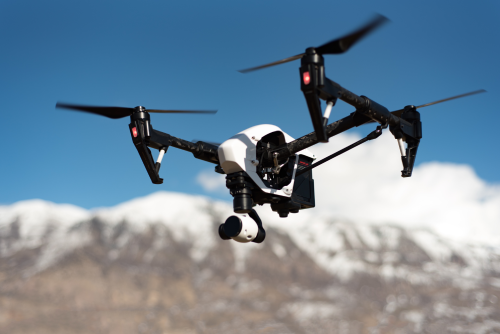
GPS mode is one of the biggest reasons modern drones feel easier to fly. When used correctly, it helps the drone hold its position, return to its take-off point, and stay more predictable in the air. For beginners in India, learning how to use GPS mode on a drone is one of the fastest ways to fly more safely and get steadier footage.
Quick Take
- GPS mode helps a drone hold position using satellite navigation plus onboard sensors.
- On many drones, GPS mode turns on automatically when satellite lock is strong enough. It may appear as GPS, P-mode, Position mode, Normal mode, or GNSS mode.
- Do not take off the moment the drone powers on. Wait for a proper GPS lock and a confirmed home point.
- Always set a safe Return-to-Home altitude before flight.
- GPS mode is helpful, but it is not magic. It does not make the drone crash-proof, obstacle-proof, or legal to fly anywhere.
- Avoid relying on GPS mode indoors, between tall buildings, under trees, or near strong magnetic interference.
- In India, always verify the latest DGCA, Digital Sky, airspace, and local restrictions before flying.
What GPS Mode Actually Does
GPS mode usually means the drone is using satellite positioning to know where it is and to hold its location more steadily in the air. Strictly speaking, many drones use more than just the American GPS system. They may also use GLONASS, Galileo, or BeiDou. That is why some manufacturers call it GNSS mode instead of GPS mode.
In practical flying, GPS mode usually helps with:
- Position hold: the drone tries to stay in one spot when you release the sticks
- More stable hovering outdoors
- Better braking and stopping
- Return-to-Home, or RTH
- More accurate automated features such as waypoints or point-of-interest flights, if your drone supports them
GPS mode is not working alone. Most drones also combine:
- A compass to know heading
- A barometer to estimate altitude
- Vision sensors on some models to help near the ground
- The remote link and flight controller for corrections
That is why a drone can still hold altitude even when GPS is weak, but it may drift sideways.
GPS mode is not autopilot
A common beginner misunderstanding is thinking GPS mode means the drone can look after itself. It cannot.
GPS mode does not guarantee:
- Obstacle avoidance
- Safe flying near people, buildings, power lines, or trees
- Perfect hover in strong wind
- Accurate flight indoors
- Legal clearance to fly in a location
Think of GPS mode as a helpful assistant, not a substitute for pilot control.
GPS Mode vs Other Flight Modes
Mode names vary by brand, but the behaviour is usually similar.
| Flight mode | What the drone tries to do | Best for | Main limitation |
|---|---|---|---|
| GPS / Position / Normal | Holds position and brakes more actively using satellites and sensors | Beginners, general outdoor flying, stable footage | Can become unreliable with weak signal or interference |
| ATTI / Attitude / Altitude hold | Holds altitude but not horizontal position, so it drifts with wind | Emergency handling, advanced practice, weak GPS situations | Harder to control for beginners |
| Sport / Manual / Fast modes | More speed, less gentle braking, sometimes still uses GPS depending on model | Experienced pilots, open areas | Easier to overshoot, less forgiving |
If your drone does not show a button called “GPS mode,” do not worry. On many camera drones, it activates automatically once the drone has enough satellite lock and sensors are healthy.
When GPS Mode Is Most Useful
GPS mode is ideal when you want predictable, controlled flight outdoors.
Good use cases include:
- Your first few flights in an open field
- Hover practice
- Learning orientation and basic stick control
- Simple photo and video work
- Slow cinematic flying
- Returning safely if you lose orientation
- Survey-style straight-line flights on compatible drones
It is especially useful for Indian beginners flying in places like:
- Open school or college grounds with permission
- Farms or rural open spaces, where legal and safe
- Empty grounds away from roads, crowds, and wires
- Large open areas outside dense city neighbourhoods
When GPS mode is a poor choice
Avoid depending on GPS mode in these situations:
- Indoors
- On a terrace surrounded by taller buildings
- Under tree cover
- Near mobile towers, large metal structures, or vehicles
- In narrow streets between buildings
- Close to bridges, cranes, or power infrastructure
- In high winds that exceed your drone’s capability
In these environments, the drone may lose accurate position hold or behave unpredictably.
Before You Use GPS Mode
Getting GPS mode right starts before take-off.
Choose the right launch spot
Pick a take-off area that is:
- Open and clear above you
- Away from people and traffic
- Free from overhead wires
- Not close to parked cars, metal railings, or large concrete structures
- Flat enough for stable take-off
If possible, avoid launching from:
- A car roof
- A metal table
- A manhole cover
- Reinforced concrete right next to steel railings
These can interfere with the compass or sensors.
Check the legal side first
In India, do not assume GPS mode makes a location flyable. Before every flight, verify the latest official guidance for:
- Airspace restrictions
- Digital Sky requirements
- Drone category and registration requirements, where applicable
- NPNT-related requirements, if they apply to your drone and use case
- Local restrictions around airports, defence areas, government sites, monuments, wildlife zones, and public gatherings
Rules and procedures can change, so verify the latest official position before you fly.
Prepare the drone and controller
Before starting, check:
- Flight battery is adequately charged
- Controller battery is charged
- Propellers are in good condition
- Gimbal clamp or lens cover has been removed
- Firmware and app are stable and already updated before the flying day, not at the field
- SD card is inserted if you plan to record
- Failsafe behaviour is understood, especially Return-to-Home
Set a safe Return-to-Home altitude
This is one of the most important GPS-related settings.
Your RTH altitude should be high enough to clear:
- Trees
- Light poles
- Buildings
- Water tanks
- Mobile towers
- Overhead cables in the general area
Do not copy someone else’s number. Set it based on your actual location. In Indian urban and semi-urban areas, rooftop tanks, utility poles, and patchy cable runs can surprise beginners.
Wait for the home point to update
Before take-off, the drone should record the home point correctly. This is the location it will try to return to during RTH.
Do not just look at satellite count. Wait for the app or controller to clearly confirm:
- Strong GPS or GNSS lock
- Home point updated or recorded
- No critical compass or sensor warning
If you move your take-off spot after powering on, confirm the home point again.
Step-by-Step: How to Use GPS Mode on a Drone
Here is a practical beginner workflow.
1. Power on in the correct order
A safe routine is usually:
- Place the drone on a flat, open surface
- Turn on the controller
- Turn on the drone
- Open the flight app if your system uses one
- Wait for system checks to complete
Follow your manufacturer’s recommended sequence if it differs.
2. Confirm GPS lock and home point
Before the motors start, verify:
- The drone shows GPS, GNSS, Position, or Normal mode
- The signal is strong enough according to your model
- The home point has been recorded
- The map location broadly matches where you are
If the app shows weak GPS, ATTI, or a compass warning, do not rush into take-off.
3. Check the immediate environment
Look around once more for:
- People walking into your area
- Dogs, birds, or livestock nearby
- Tall poles or wires
- Wind direction
- Obstacles behind you in case you step back during the flight
This matters more than many beginners realise.
4. Take off gently and climb to a safe hover
Use auto take-off only if you understand how it behaves on your drone. Otherwise, a smooth manual take-off is fine.
After lift-off:
- Rise to a modest height above ground, enough to avoid dust and ground effect
- Stop and let go of the sticks
- Watch whether the drone holds its position steadily
- Check for unusual drift, wobble, or warning messages
A slight correction here and there is normal. Large drifting is not.
5. Test position hold before going farther
This is the simplest way to “use” GPS mode properly.
Do these checks:
- Let the drone hover for a few seconds
- Yaw the drone left and right and see if it still holds location
- Move it a little forward and stop
- Move it left and stop
- Fly a small box pattern and return
If the drone stops cleanly and holds position, GPS mode is doing its job.
6. Practice basic movements in GPS mode
Beginners should keep the flight simple at first.
Try these drills:
Hover and release
- Move a few metres forward
- Release the stick
- See how the drone brakes and holds
This teaches you how aggressively your drone stops.
Square pattern
Fly a slow square:
- Forward
- Right
- Back
- Left
Do this at low speed in a wide open area. It helps build orientation and confidence.
Out-and-back
- Fly straight away from you
- Stop
- Bring it back slowly
Do not go so far that the drone becomes hard to see.
Nose-in hover
Turn the drone to face you and try small corrections. GPS mode makes this easier because the drone will try to stay in place while you learn the stick directions.
7. Learn Return-to-Home before you need it
RTH is one of the best reasons to use GPS mode, but only if you understand it first.
In a safe open area, test it carefully:
- Fly out a short distance
- Confirm your RTH altitude is set correctly
- Trigger Return-to-Home
- Watch how the drone behaves
- Be ready to cancel or take over if needed
Pay attention to:
- Whether it first climbs
- Whether it returns in a straight line
- Whether it lands exactly or only approximately
- How much space it needs near the home point
Do not make your first RTH test in a crowded park, near a building, or over water.
8. Land under control
GPS mode helps with hover, but landing is still a pilot skill.
When landing:
- Pick a clear spot
- Descend slowly
- Watch for dust, loose grass, or uneven ground
- Keep fingers away from the propellers
- Shut down properly after touchdown
On some drones, downward sensors work well only in good light and on textured surfaces. Do not expect perfect precision on shiny floors, reflective tiles, or very dark ground.
Useful GPS Features You Should Understand
GPS mode becomes more valuable when you understand the features built around it.
Return-to-Home
This is the most important one.
RTH can be triggered by:
- You pressing the RTH button
- Signal loss, depending on settings
- Low battery logic, depending on the drone
Know your model’s behaviour. Some drones return immediately. Some may hover first. Some allow you to continue for a moment before forcing action.
Home point updates
If you are moving during the flight, such as on a boat or vehicle, home point handling can become more complicated. Most beginners should avoid these scenarios entirely. For normal use, make sure the home point matches your actual take-off spot.
Hover for photography
GPS mode is excellent for:
- Framing a building from a safe distance
- Taking a still photo without drift
- Holding position while adjusting camera angle
- Repeating a shot more consistently
For creators, this is often the biggest real-world benefit.
Intelligent flight modes
Some drones offer:
- Waypoints
- Point of Interest
- Follow modes
- Automated panoramas
These rely heavily on accurate positioning. Use them only after you are comfortable flying manually in GPS mode first.
The Limits of GPS Mode You Should Respect
GPS mode makes flying easier, not risk-free.
Wind can still overpower the drone
A drone may hold well in light wind, then suddenly struggle higher up where wind is stronger. This is common in open fields, coastal areas, and hill stations.
If the drone is leaning hard just to stay in place, stop the shot and bring it back.
Buildings can confuse positioning
In dense city areas, the drone may receive reflected satellite signals from buildings. This can reduce accuracy. A rooftop in a crowded Indian city may feel open to you, but the surrounding structures can still affect positioning and RTH safety.
Compass interference matters
The drone may have good GPS and still behave badly if the compass is disturbed.
Potential causes include:
- Metal benches
- Cars
- Loudspeakers with magnets
- Steel structures
- High-voltage areas
If the app reports magnetic or compass interference, move away and reassess.
Low altitude precision is not perfect
Near the ground, GPS accuracy can still vary. Do not use GPS mode as an excuse to fly too close to cars, windows, terrace edges, or people.
GPS mode is not obstacle avoidance
Even drones with obstacle sensors have blind spots and limitations. Wires, thin branches, reflective surfaces, and poor lighting can reduce effectiveness.
Safety and Legal Checks for India
If you are learning how to use GPS mode on a drone, pair that skill with safe and compliant flying habits.
Always verify current rules before flight
In India, requirements can differ based on:
- Drone category
- Purpose of use
- Airspace
- Location sensitivity
- Registration and operational status of the drone
Before flying, verify the latest guidance from the relevant official systems and authorities. Do not rely only on social media advice or old YouTube videos.
Keep visual line of sight
Visual line of sight means you can see the drone directly with your own eyes, not only through the camera feed. GPS mode is not a reason to send the drone too far away.
Stay away from crowds and traffic
Even a stable GPS hover can go wrong if there is a sudden gust, signal issue, or pilot mistake. Avoid:
- Wedding crowds
- Busy beaches
- Festival areas
- Road junctions
- Public gatherings
- Stadiums and event grounds
Respect privacy
Do not hover outside apartments, near private terraces, or over people’s homes just because the drone can hold position there. Stable flight does not make invasive flying acceptable.
Be extra careful near campuses, industrial sites, and tourism spots
Students, creators, and small businesses often want to fly around campuses, factories, forts, or tourist landmarks. These places can have their own permissions, sensitivities, or official restrictions. Verify first.
Common Mistakes When Using GPS Mode
These are the errors beginners make most often.
Taking off before GPS and home point are confirmed
This is the biggest one. If the home point is wrong, RTH may not help the way you expect.
Trusting satellite count alone
A high number is not enough if the signal quality is poor or the compass is unhappy.
Launching from a magnetically bad spot
Metal surfaces and reinforced areas can create avoidable problems.
Using GPS mode indoors
Many beginners assume the drone will “lock” indoors. Often it will not, or it will switch to a less stable mode.
Setting the wrong RTH altitude
Too low is dangerous. Unthinkingly too high can also waste battery or create other problems.
Treating GPS mode like obstacle avoidance
Position hold does not mean the drone understands wires or branches.
Flying too far too soon
GPS mode gives confidence quickly, sometimes too quickly. Keep the first flights short and close.
Calibrating the compass unnecessarily
Do not perform a compass calibration before every flight just out of habit. If the app does not recommend it, unnecessary calibration in a poor environment can make things worse.
Ignoring wind because the hover looks stable
A drone can seem fine when hovering but struggle when returning against the wind.
Quick Troubleshooting
| Problem | Likely cause | What to do |
|---|---|---|
| Drone says weak GPS | Poor sky view, too close to buildings or trees | Move to a more open area and wait longer |
| Drone drifts in hover | Weak GPS, wind, or no position hold | Land and check whether you are really in GPS/Position mode |
| Compass warning appears | Metal or magnetic interference | Move the take-off point away from metal structures and vehicles |
| Return-to-Home seems inaccurate | Home point was not recorded well or GPS was weak | Recheck home point before take-off on the next flight |
| Drone switches out of GPS mode mid-flight | Signal degradation or sensor issue | Stay calm, reduce distance, fly back manually if safe, and land |
If your drone repeatedly struggles to hold position even in an open area, inspect propellers, firmware, and sensor status, and review the manufacturer’s guidance for your model.
FAQ
Is GPS mode the best mode for beginners?
Yes, for most outdoor beginner flying. It helps the drone hold position and makes stick control less stressful. Just remember that you still need to pilot actively.
Can I use GPS mode indoors?
Usually no, or at least not reliably. Indoor spaces often block or weaken satellite signals, so the drone may drift or switch to a different mode.
How many satellites do I need before take-off?
There is no single number that applies to every drone. Follow your model’s app or controller guidance and wait for a clear confirmation of strong GPS lock and a recorded home point.
Why does my drone still drift in GPS mode?
Possible reasons include wind, poor satellite geometry, building reflections, compass interference, or the drone not actually being in full position-hold mode.
Does GPS mode avoid obstacles?
No. GPS mode helps with positioning, not object detection. Obstacle sensing, if your drone has it, is a separate system and has limits.
What happens if GPS signal is lost during flight?
The drone may switch to a less stable mode, often similar to attitude or altitude hold. That means it can drift more and needs more active pilot control.
Should I calibrate the compass before every flight?
Not necessarily. Calibrate when the drone asks for it or when the manufacturer recommends it. Doing it unnecessarily, especially near metal, can create problems.
Is Return-to-Home always safe to use?
Only if the home point is correct and the RTH altitude is high enough for the area. Test it in a clear open space before depending on it in real situations.
Can I use GPS mode in windy weather?
You can in light, manageable wind if the drone’s capability allows it, but GPS mode does not cancel wind. If the drone struggles to hold position or return, land early.
Does GPS mode drain the battery faster?
The GPS system itself is not usually the main battery concern. Wind, aggressive flying, climbing, and longer flight times matter more.
Final takeaway
If you want to use GPS mode properly, do not start with fancy shots. Start with discipline: choose a legal open area, wait for strong GPS lock and home-point confirmation, set a safe RTH altitude, and practice short low-risk flights. Once you can trust how your drone hovers, brakes, and returns in GPS mode, every other flying skill becomes easier and safer.
