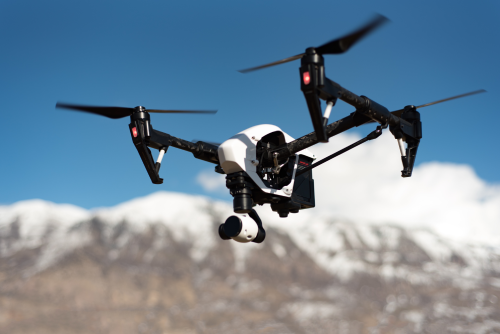
The best drones for drone businesses are not always the biggest or most expensive models. In India, the right drone is the one that matches your service offering, gives repeatable results, has dependable after-sales support, and can be operated within the latest DGCA and airspace rules. If you are choosing between content work, surveys, inspections, or agricultural services, the smart buy is very different in each case.
Quick Take
- For most new small drone businesses, the best first buy is a premium compact camera drone with strong safety features, good image quality, and easy battery management.
- If your work is mainly real estate, hospitality, local brands, weddings, and social content, do not rush into an enterprise drone.
- If your revenue depends on measurements, maps, stockpiles, or repeat site progress data, you should be looking at an RTK mapping drone. RTK means real-time kinematic positioning, which improves location accuracy.
- If your work is industrial inspection, solar, telecom, roofs, or infrastructure, a zoom or thermal enterprise drone is usually a better fit than a cinema-style camera drone.
- For large-area mapping, a fixed-wing drone can cover more ground than a multirotor, but it needs more training and more open space.
- For agriculture spraying, buy only if you already understand seasonal demand, training, field operations, chemical handling, and service support. This is a full system business, not just a drone purchase.
- In India, always verify the latest DGCA, Digital Sky, airspace, documentation, and model compliance requirements before you buy or fly.
What makes a drone good for business
A hobby drone can take nice footage. A business drone has to make money reliably.
Before you compare brands, think about these seven factors.
1. The deliverable matters more than the drone
Clients do not pay for your flight time. They pay for an output:
- a polished property video
- a construction progress update
- a solar inspection report
- a land map
- a stockpile volume estimate
- an agricultural spray service
If the output is wrong, the drone is wrong.
2. Reliability beats headline specs
For paid work, consistent results matter more than brochure numbers.
Look for:
- stable hovering
- dependable return-to-home
- obstacle sensing or collision avoidance where relevant
- predictable battery performance
- quick setup at site
- clear controller display in sunlight
- good wind handling
A drone that flies safely every day is usually more valuable than one with one flashy spec.
3. Local service and spare parts matter
Downtime is expensive for a drone business.
Before buying, ask:
- Are batteries easy to replace?
- Are props, landing gear, and chargers available locally?
- Is there an authorized or reliable repair path in India?
- What is the usual service turnaround?
- Can the seller provide training and post-sale support?
For business use, after-sales support often matters more than a small jump in camera quality.
4. Software is part of the purchase
A survey drone without usable mapping software is incomplete.
An inspection drone without a good reporting workflow is incomplete.
Budget not just for the airframe, but also for:
- flight planning apps
- mapping or inspection software
- storage and backup
- report preparation
- firmware support
- training time
5. Battery ecosystem affects profitability
Many first-time buyers underestimate batteries.
If you can only fly one short mission before charging, your business slows down. For commercial work, battery count and charging speed affect how many jobs you can complete in a day.
6. Compliance is not optional
In India, do not assume a drone that is available in the market is automatically the right one for your business use. Verify the latest official requirements around:
- airspace checks
- operator qualifications
- model compliance
- Digital Sky processes
- documentation
- insurance suitability
- any current NPNT applicability
NPNT stands for No Permission, No Takeoff. Its practical relevance can depend on the drone and the current rule position, so verify before purchase.
7. Total ownership cost matters more than entry cost
Your real cost is not just the drone body.
Include:
- batteries
- charger or charging hub
- spare props
- memory cards
- hard case or field bag
- software
- insurance
- training
- repairs
- travel accessories
- backup drone planning
A “cheap” drone with poor support can cost more than a better-supported one.
Best drone type for each business use case
| Business use case | Best drone type | Why it fits | Watch out for |
|---|---|---|---|
| Real estate, resorts, weddings, social media, local brand content | Premium compact camera drone | Strong image quality, easy transport, fast setup, safer for most everyday shoots | Not ideal for accurate mapping or thermal work |
| Low-budget solo creator or new side business | Lightweight creator drone | Lower risk entry, easy to carry, useful for reels and basic property shots | Limited wind performance and less room to grow |
| Construction measurement, land surveys, mining, stockpiles | RTK mapping multirotor | Better positioning, repeatable missions, practical for Indian job sites | Software, training, and workflow costs |
| Solar, telecom, industrial, roof, facade inspection | Enterprise zoom or thermal drone | Safer stand-off inspection, report-friendly data capture | Higher cost and more specialized operations |
| Large farms, corridors, mines, solar parks | Fixed-wing mapping drone | Covers large areas quickly and efficiently | Needs more training and open launch/recovery space |
| Agricultural spraying services | Agriculture drone | Built for payload and field productivity | High operational complexity and strong support needs |
Best drones for different drone businesses
Best overall for most small drone businesses: premium compact camera drone
If you are starting a drone business around visual content, this is the strongest first purchase.
It suits:
- real estate photographers
- resort and homestay marketers
- wedding filmmakers
- tourism creators
- small agencies
- corporate communications teams
- construction progress videographers for marketing use
Why this category works so well:
- portable enough for frequent travel
- good enough image quality for most clients
- quicker to deploy than larger systems
- better safety features than cheap beginner drones
- easier to sell and recover value from later
Look for:
- strong obstacle sensing
- reliable return-to-home
- high-quality stills and video
- good low-light performance for sunrise or sunset shoots
- a controller screen bright enough for outdoor work
- at least three batteries in your kit
- easy availability of props and chargers
This is the best first paid-work drone for many solo operators in India.
It is not the right choice if your clients mainly want maps, precise measurements, or thermal diagnostics.
Best low-cost starter for new creators: lightweight creator drone
A lightweight camera drone can be a smart business starter if you want to test demand before investing heavily.
It works best for:
- Instagram and short-form video packages
- college and campus content
- basic property reels
- travel and tourism content
- simple event coverage where airspace and venue rules allow it
- creators building a client base on weekends
Why it makes sense:
- lower upfront investment
- easy to carry every day
- quick to launch for simple jobs
- useful as a backup drone even after you upgrade
What to check:
- stable GPS hover
- decent wind resistance for your city or region
- reliable app and firmware support
- video quality good enough for client delivery
- prop guards or safety accessories if you train with it
The downside is growth ceiling. Lightweight drones are excellent for simple work, but they may feel limited once clients ask for tougher conditions, more dynamic range, longer workdays, or more professional handling.
If you already know that your clients will expect premium real estate films or regular paid shoots, it is often better to step straight into the premium compact class.
Best for survey, mining, and construction measurement: RTK mapping multirotor
If your business sells data instead of pretty footage, this is where you should focus.
RTK, or real-time kinematic positioning, improves the positional accuracy of the drone’s captured data. That matters for jobs such as:
- land parcel mapping
- stockpile volume estimates
- mine progress monitoring
- road and corridor surveys
- construction earthwork tracking
- repeat site documentation over time
A multirotor mapping drone is often the practical choice for Indian businesses because it can take off and land vertically, which helps on tight sites.
Look for:
- RTK support
- dependable mission planning software
- a mapping-friendly camera with consistent capture
- geotagging reliability
- strong battery and field charging setup
- training from the seller or system integrator
- clean export options for client reports
Important reality check: buying the drone is only half the job.
You also need:
- flight planning discipline
- ground checks or control points where required
- data processing workflow
- report generation
- client communication around accuracy limits
If you mostly work on smaller construction sites or industrial plots, an RTK multirotor is often the most sensible business tool. If you regularly map very large areas, fixed-wing may be better.
Best for inspections: enterprise zoom or thermal drone
Inspection work is where many businesses buy the wrong drone.
A good inspection drone is not the one with the most cinematic camera. It is the one that lets you inspect safely from a distance and capture useful evidence.
This class is best for:
- solar plants
- rooftop inspection
- telecom towers
- building facades
- industrial plants
- bridge or utility inspection
- electrical asset checks
- selected public safety and emergency support tasks where lawful
Why zoom matters:
- you can stay farther from the structure
- you reduce collision risk
- you can inspect details without aggressive flying
- you get more repeatable documentation
Why thermal matters:
- it can reveal heat differences
- that is useful for solar faults, some electrical issues, and some roof moisture cases
- it adds a sellable service line when clients genuinely need it
But thermal is specialized. A thermal image alone does not equal a diagnosis. You need training, consistent capture methods, and a clear reporting process.
Look for:
- optical zoom
- strong obstacle sensing
- stable hover performance
- thermal only if your business model supports it
- geotagged image workflow
- clear file management and reporting tools
- rugged support and service
If you are mainly shooting marketing videos, this class is overkill. If you are climbing into industrial work, it can be the difference between a usable inspection business and a risky one.
Best for very large-area mapping: fixed-wing drone
Fixed-wing mapping drones are built for coverage.
They are ideal for:
- large mines
- long corridors
- solar parks
- forestry projects
- large farms
- infrastructure planning over wide areas
Their main advantage is simple: they can cover much more ground per flight than a typical multirotor.
That can make them highly efficient for businesses doing repeated acreage or corridor jobs.
Look for:
- a proven mapping workflow
- simple launch and recovery
- good wind tolerance
- dependable field repair options
- training for your crew
- compatibility with your processing workflow
Their limitations are just as important:
- they usually need more open space
- launch and landing are less forgiving than a multirotor
- they are not ideal for urban sites
- they are not your best choice for close inspection work
- they are less flexible for ad-hoc marketing footage
For many small Indian businesses, fixed-wing should be a second-stage purchase, not the first one. If you only get occasional large mapping jobs, renting or partnering first can be smarter.
Best for agricultural service businesses: agriculture spraying drone
Agriculture drones can be profitable, but they are often misunderstood.
If your plan is to provide crop spraying or input application services, the drone is only one part of the business. Your real operation includes:
- pilot and field team training
- batteries and chargers
- pumps and nozzles
- spares
- transport
- field safety
- chemical handling
- scheduling around the crop cycle
- maintenance during peak season
This class is best for businesses that already have a clear local market, such as:
- village or cluster-based service providers
- agri-input dealers expanding into services
- rural entrepreneurship programs
- FPO-linked operations
- farm service teams with seasonal demand visibility
What matters most here:
- strong local support
- quick spare availability in season
- easy maintenance
- dependable spray system performance
- operator training
- field demonstration support
- clear documentation for lawful operation
Do not choose an agri drone only on payload size. A bigger payload number is not enough if the pump, battery ecosystem, field logistics, or repair support are weak.
In agriculture, downtime during the season can be more damaging than a slightly higher purchase price.
India-specific legal, safety, and compliance checks
Before you buy a drone for business use in India, verify the latest official position for your exact model and use case.
At minimum, check these points:
- whether the drone model can be lawfully operated for your intended purpose
- the current DGCA and Digital Sky requirements that apply to your category of operation
- any pilot training or certification requirements that apply
- whether current NPNT-related expectations affect your purchase decision
- the airspace status of the areas where you plan to work
- whether your insurance is suitable for commercial operations
- whether your client site has separate permission, privacy, or security constraints
A few practical rules help almost every business:
- Do not fly near crowds unless the operation is clearly safe and lawful.
- Client permission does not override airspace restrictions.
- Keep written pre-flight and post-flight checklists.
- Maintain battery health logs if you fly frequently.
- Use conservative return-to-home settings.
- Get written site permission for private property jobs.
- Be careful around airports, military zones, power infrastructure, ports, major events, and sensitive locations.
- Do not rely on old YouTube videos or reseller claims for legal guidance. Verify fresh official information before acting.
A simple buying checklist before you pay
Use this six-step filter before choosing a drone.
-
List your top three services for the next 12 months.
Not your dream services. Your likely paying services. -
Pick the drone that covers 80 percent of that work.
Do not buy for one rare project. -
Ask for a live demo and sample deliverables.
For mapping, ask for sample outputs. For inspection, ask for report examples. -
Price the full working kit, not just the drone.
Include batteries, chargers, case, software, spares, and training. -
Check support in your city or state.
A slightly weaker spec with stronger service can be the better business choice. -
If unsure, rent first.
This is especially sensible for thermal, fixed-wing, and agriculture systems.
Common mistakes businesses make when buying a drone
Buying for status instead of revenue
Many buyers choose a bigger drone because it looks “professional.” Clients care more about usable outputs, speed, and consistency.
Ignoring the software stack
Survey, inspection, and thermal businesses often fail at the workflow stage, not the flying stage.
Underestimating battery needs
One or two batteries are rarely enough for commercial work. Your working day becomes too short.
Trying to use one drone for every service
A content drone is not automatically a survey drone. A survey drone is not automatically the best inspection drone.
Skipping service and repair planning
If your drone goes down in the middle of the season or during a client project, poor support can cost you more than the initial savings.
Buying thermal before you have thermal clients
Thermal can be profitable, but only if you already have demand and know how to interpret and report what you capture.
Treating compliance as a later problem
In India, that is a bad business habit. Verify paperwork and operating requirements before you commit money.
FAQ
What is the best first drone for most new drone businesses?
For most new businesses focused on visual content, a premium compact camera drone is the best starting point. It gives a good balance of image quality, safety, portability, and ease of use without forcing you into enterprise-level cost and complexity.
Can I start a drone business in India with a lightweight drone?
Yes, for simple content services such as reels, basic property clips, and local brand shoots, a lightweight drone can be enough to start. But verify current legal requirements for your exact model and use case, and be realistic about wind performance and client expectations.
Do I need RTK for mapping work?
Not always for very basic visual maps, but if clients care about measurement quality, repeatability, or professional survey-style outputs, RTK is often worth it. It improves positional accuracy and makes your workflow more credible.
Is one drone enough for photo, survey, and inspection work?
Usually not if you are serious about more than one service line. A compact camera drone can handle content work well, but survey and inspection often need specialized hardware and software.
How many batteries should a business buyer own?
For content work, three batteries is a practical starting point, and more is better for busy days. For survey, inspection, and agriculture, battery planning depends on flight length, charging speed, travel time, and how many jobs you stack in one day.
Should I buy a thermal drone immediately?
Only if you already have clients who need thermal work or you have a clear route to that market. Thermal adds cost, training needs, and reporting responsibility. It is a great business tool, but not a casual upgrade.
Is local service more important than slightly better specs?
For business buyers, very often yes. Better service, spare availability, and repair turnaround can protect your revenue more than a small camera or flight-performance advantage.
Should I buy or rent an enterprise drone first?
If your inspection, mapping, or agriculture workload is still uncertain, renting first is often the smarter move. It lets you test client demand and workflow before locking money into a specialized platform.
Final takeaway
If you are starting a drone business in India, the safest first choice for most people is a premium compact camera drone. If your revenue depends on measurement, move to an RTK mapping drone. If it depends on safe stand-off inspection, choose a zoom or thermal enterprise drone. If it depends on spraying, buy a complete agriculture system with strong local support, not just a drone body.
Pick the drone that fits the work you will actually sell in the next year, then verify the latest Indian compliance requirements before you spend.
