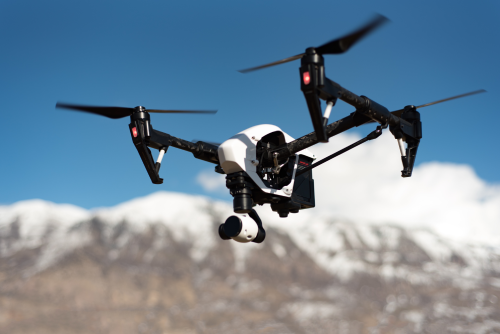
Choosing the best drones for startups in India is less about buying the most advanced aircraft and more about matching the drone to your first paying use case. A content studio, a survey firm, a solar inspection team, and an agritech operator all need very different tools, training, and compliance checks.
If you are setting up a drone-led business, this guide will help you choose the right drone class, avoid overspending early, and focus on what actually matters in Indian operating conditions: reliability, after-sales support, batteries, software, and legal fit.
Quick Take
- The best first drone for many startups in India is a compact camera drone, not an enterprise platform.
- If your startup is focused on content, branding, real estate, hospitality, or social media, a lightweight camera drone is usually the smartest starting point.
- If your business depends on measurements, thermal data, spraying, or industrial inspection, buy for workflow and compliance first, not cinematic specs.
- In India, after-sales support, spare batteries, repair turnaround, and documentation are often more important than one extra camera feature.
- Do not assume every drone is automatically suitable for commercial work. Before purchase, verify the latest DGCA and Digital Sky requirements for your drone category, use case, airspace, and pilot eligibility.
- For most new businesses, one reliable drone plus enough batteries, storage, training, and a backup plan beats one expensive flagship drone with no operational support.
What makes a drone startup-ready in India
A startup drone is not just an aircraft. It is a working system.
Before comparing models, shortlist drones using these practical filters:
1. Your first revenue stream
Ask a simple question: what will this drone help you sell in the next 90 days?
Examples:
- Social media videos for cafés, resorts, builders, and local brands
- Real estate listing videos
- Wedding or event aerial coverage
- Construction progress updates
- Survey and mapping deliverables
- Solar or industrial inspections
- Agriculture spraying services
A drone that is perfect for cinematic social content can be completely wrong for surveying or thermal inspection.
2. Reliability and ease of flying
For a startup, repeatability matters more than excitement.
Look for:
- Stable GPS positioning
- Predictable return-to-home
- Good wind handling for your area
- Obstacle sensing or collision avoidance where available
- Consistent battery performance
- A controller that is easy for your team to learn
3. Local support and spare parts
This is where many first-time buyers in India make a costly mistake.
Before buying, ask the seller:
- Is there an authorised or reliable service option in India?
- How quickly are batteries, props, and gimbals replaced?
- What is the usual repair turnaround?
- Is warranty support handled locally or through a third party?
- Are genuine accessories easy to source later?
A cheaper drone with poor support can become more expensive than a premium drone with dependable service.
4. Software and output workflow
Startups often focus on the aircraft and ignore the software.
That is a mistake.
You may also need:
- Video editing software
- Colour grading workflow
- Mapping or photogrammetry software
- Thermal analysis tools
- Cloud storage and client delivery systems
- Mission planning tools
- GIS compatibility for survey work
If your business model depends on maps, measurements, or inspection reports, software is part of the drone purchase decision.
5. Total operating cost
Your real cost is not just the drone body.
Budget for:
- Extra batteries
- Fast charger or charging hub
- Memory cards
- Spare propellers
- Carry case
- ND filters for video work
- Landing pad
- Tablet or controller screen if needed
- Insurance, if relevant
- Team training
- Data processing software
Best drones for startups in India by use case
The table below gives a quick buying direction. After that, each option is explained in more detail.
| Startup use case | Best-fit drone type | Strong examples | Why it works | Main caution |
|---|---|---|---|---|
| Social media, creator agency, founder marketing | Lightweight camera drone | DJI Mini 4 Pro, DJI Mini 3 | Easy to carry, quick to deploy, strong enough for most short-form work | Wind handling and premium commercial output still have limits |
| Real estate, hospitality, brand shoots, local agencies | Mid-range foldable camera drone | DJI Air 3, DJI Air 3S | Better wind performance, more flexibility, stronger all-rounder | Larger, costlier, and may be more than very early startups need |
| Premium ad films, luxury property, high-end clients | Premium camera drone | DJI Mavic 3 Pro, DJI Mavic 3 Classic | Strong image quality and more professional headroom | Expensive and overkill for basic content businesses |
| Action-heavy reels, immersive tours, FPV-style social content | FPV-style drone | DJI Avata 2 | Unique motion and energetic visuals clients notice | Requires more skill and does not replace a regular camera drone |
| Survey, mapping, stockpile, construction documentation | Enterprise mapping drone | DJI Mavic 3 Enterprise-class platforms | Better suited to accurate mapping workflows | You also need software, process discipline, and trained operators |
| Solar, utility, industrial, rooftop hotspot inspections | Thermal enterprise drone | DJI Mavic 3 Thermal-class platforms | Adds thermal capability for commercial inspection jobs | Thermal data is only useful if you can interpret and report it properly |
| Agriculture spraying services | Agri spraying platform with local support | Indian agri drone vendors and integrators | Built for spraying operations and rural service models | Needs trained crew, logistics, support network, and strict compliance checks |
Availability, support quality, and legal suitability can vary by seller, city, and intended operation. Treat the table as a shortlist, not as a blanket approval for every business scenario.
Best starter camera drone: DJI Mini 4 Pro
For many bootstrapped startups, the DJI Mini 4 Pro is the safest practical starting point in the market today.
It suits:
- Social media agencies
- Founder-led content teams
- Real estate marketers on a small budget
- Tourism and hospitality creators
- Students turning freelance drone work into a small business
Why it is a strong startup pick:
- Compact and easy to transport
- Fast to launch for short jobs
- Strong image quality for web, social, and most local commercial work
- Easier for new pilots to learn than larger aircraft
- Good for solo operators who need a low-friction workflow
Where it makes the most sense in India:
- Urban and semi-urban content work where setup speed matters
- Frequent travel between client sites
- Projects where a low-profile drone is easier to manage
- Startups that need to keep overheads controlled
Who should skip it:
- Startups selling premium ad films from day one
- Teams flying regularly in stronger winds or difficult weather
- Survey or thermal businesses
- Businesses that need longer-range, enterprise-style inspection workflows
Lower-budget alternatives:
- DJI Mini 3 remains a sensible option if budget is tight and you can accept fewer advanced features.
- A very small drone such as the DJI Neo can be useful for testing short-form content ideas, training, or ultra-light social workflows, but it is not a full replacement for a proper business camera drone.
Best all-rounder for agencies and real estate: DJI Air 3 or Air 3S
If your startup has already moved beyond “testing the market” and you want one drone that can handle a wide range of paid work, the DJI Air 3 family is a very strong middle ground.
It suits:
- Real estate video agencies
- Hospitality and resort marketing teams
- Small production houses
- Digital agencies offering bundled photo, video, and aerial packages
- YouTube and branded-content businesses
Why it works:
- Stronger overall capability than mini-class drones
- Better confidence in wind and outdoor shoots
- More versatile framing options
- Better fit for client-facing work where consistency matters
- Good balance between portability and output quality
This is often the sweet spot for startups that want to look professional without jumping straight to heavy premium or enterprise gear.
When it is the better choice than a Mini-class drone:
- You shoot more often than just occasional client work
- Your clients expect polished edits, not just casual aerial clips
- You frequently work on larger outdoor properties or resorts
- You want more room to grow without immediately upgrading again
The trade-off is simple: it costs more, is more visible on set, and may involve more operational overhead than a lightweight starter drone.
Best premium camera drone for high-end client work: DJI Mavic 3 Pro or Mavic 3 Classic
If your startup serves luxury real estate, ad films, premium resorts, auto content, destination marketing, or high-value brand campaigns, a Mavic 3-class drone can make sense.
It suits:
- Boutique production houses
- Premium real estate teams
- Brand film specialists
- Businesses already charging higher-ticket retainers
Why founders choose this class:
- Stronger image quality headroom
- Better fit for high-end edits and larger displays
- More confidence when aerials must match premium ground-camera work
- Better choice when the drone is part of a broader commercial production workflow
But here is the practical truth: many startups buy this class too early.
If most of your output goes to Instagram, YouTube, listing portals, and short brand videos, an Air-class drone often gives better overall value. A Mavic 3-class drone makes sense when your client quality bar and billing rates already justify it.
Good rule of thumb:
- If the drone helps you win premium clients immediately, it may be worth it.
- If you are still experimenting with local shoots and low-ticket projects, it is usually too much drone too soon.
Best for FPV-style startup content: DJI Avata 2
Some startups do not want standard aerial shots. They want movement, energy, and visuals that stand out in crowded social feeds.
That is where the DJI Avata 2 class becomes interesting.
It suits:
- Reels-focused content studios
- Real estate walkthrough specialists
- Event hype-video teams
- Auto and bike creators
- Adventure and sports content startups
Why it stands out:
- FPV-style flying creates immersive motion
- Great for dynamic movement through spaces
- Useful when clients want a more modern, high-energy visual style
- Can help a startup differentiate itself from ordinary drone video providers
But treat it as a specialist tool, not your only drone.
Important limitation:
An FPV-style drone does not replace a normal camera drone for safe, repeatable, everyday client work. It requires more pilot skill, more practice, and more careful risk management.
A good startup setup is often:
- One standard camera drone for dependable commercial shots
- One FPV-style drone later, once the business has recurring clients who actually want that look
Best for survey and mapping startups: DJI Mavic 3 Enterprise-class platforms
If your startup sells maps, orthomosaics, stockpile measurements, site progress records, or survey support services, buy an enterprise mapping workflow, not a creator drone.
A Mavic 3 Enterprise-class drone is the kind of platform many small survey and mapping businesses start with.
It suits:
- Land survey support teams
- Construction documentation startups
- Mining and stockpile service providers
- Infrastructure consultants
- GIS-focused service businesses
Why this class matters:
- Better alignment with mapping missions
- More suitable image capture for survey workflows
- Better integration into professional deliverables
- Stronger fit for repeatable commercial operations
But the aircraft is only one part of the business.
You also need:
- Proper flight planning process
- Ground control or RTK strategy where required
- Data processing capability
- QA checks on outputs
- A team that understands mapping accuracy limits
- Reporting standards clients can trust
If your work involves large corridors, long linear assets, or very large acreage, a fixed-wing or VTOL workflow may eventually be more efficient. In India, some clients may also prefer domestic enterprise vendors with local procurement and support structures. For those cases, compare established Indian enterprise drone companies on payload options, support, documentation, and mission suitability rather than brand reputation alone.
Best for thermal inspection startups: Mavic 3 Thermal-class platforms
For solar plants, rooftops, electrical assets, industrial facilities, and maintenance inspections, a thermal-capable enterprise drone is the right starting point.
This class suits:
- Solar O&M startups
- Rooftop inspection businesses
- Industrial maintenance firms
- Utility inspection teams
- Fire and safety service providers working with authorised clients
Why it is valuable:
- Thermal imagery can reveal heat anomalies invisible to a standard camera
- It opens commercial use cases beyond simple video
- It can help startups build recurring B2B service contracts rather than one-off shoots
But thermal work has a hidden challenge: interpretation.
A thermal drone is not automatically a thermal business.
To be credible, your startup also needs:
- A clear inspection method
- Operators who understand thermal limitations
- Consistent report templates
- Safe stand-off planning
- Client expectations set correctly
If your team cannot interpret what the thermal image means, the hardware alone will not create a strong business.
Best for agriculture service startups: locally supported agri spraying drones
Agriculture spraying is one of the most talked-about drone business ideas in India. It is also one of the easiest areas to underestimate.
If your startup wants to offer spraying services, choose a locally supported agricultural drone platform from a reliable Indian manufacturer or integrator with training and service in your state.
This route suits:
- Agritech service startups
- Input distributors expanding into services
- FPO-linked service providers
- Rural entrepreneurs building seasonal spray businesses
Why local support matters more than brand hype:
- Agricultural operations are hard on equipment
- Downtime during spray season is expensive
- Battery and charging logistics are critical
- Training quality affects safety and crop results
- Spare parts and field support can decide whether the business survives its first season
Before buying an agri drone, verify:
- Local service network
- Operator training
- Nozzle and spray system support
- Battery ecosystem and charging plan
- Chemical compatibility guidance
- Documentation needed for lawful operation
- Insurance and liability planning
This is not the category to enter casually. An agri drone startup needs operations discipline, field relationships, and a service model that works beyond the first demo.
The smartest buying strategy for most startups
Many founders ask, “Should we buy the best drone we can afford?”
Usually, no.
A better question is: “What drone lets us deliver our first 20 paid jobs reliably?”
For most early-stage startups, the smartest path looks like this:
- Start with the service you can sell fastest.
- Buy the smallest drone that can deliver that service professionally.
- Add batteries, accessories, and training before upgrading the aircraft.
- Move to enterprise hardware only when your workflow or clients actually demand it.
A few practical examples
If you run a digital marketing or content startup
Start with a Mini 4 Pro or Air 3-class drone.
You probably need:
- Fast deployment
- Good enough image quality
- Easy travel
- Low setup stress
- Quick learning curve
You probably do not need:
- Thermal
- RTK
- Survey-grade workflow
- A flagship cinema-oriented drone on day one
If you run a real estate media business
An Air 3-class drone is often the sweet spot.
It gives you:
- Better confidence than entry-level options
- Strong output for listing videos and builder marketing
- Enough flexibility to handle both short-form and polished client edits
If you are building a survey or inspection company
Do not start with a creator drone just because it looks cheaper.
If your deliverable is technical, start with a technical workflow:
- Enterprise drone
- Data processing plan
- Pilot training
- Compliance checks
- Reporting format
If you want to start an agri drone service
Do not buy the drone first and figure out the business later.
First secure:
- Local demand
- Trained crew
- Service and battery support
- Area coverage plan
- Permission and compliance understanding
Then choose the platform.
Compliance and safety checks before your startup flies in India
Indian drone operations can involve DGCA rules, Digital Sky processes, airspace restrictions, platform eligibility, and pilot requirements that differ by drone category and type of work. Rules can change, and details may vary by use case.
Before buying or flying for business, verify the latest official guidance for your specific scenario.
At a minimum, your startup should check:
-
Drone category and intended use – Consumer content flying, mapping, thermal inspection, and spraying are not the same in regulatory terms.
-
Platform eligibility – Confirm whether the model and its documentation are suitable for your intended operations, including any NPNT, type certification, or related requirements that may apply.
-
Pilot requirements – Verify whether your operator needs formal training or a Remote Pilot Certificate for the category and operation you plan to conduct.
-
Airspace and location – Do not assume open land is automatically legal to fly over. – Airports, defence areas, strategic zones, government sites, and other sensitive areas can have restrictions.
-
Client and property permissions – Even where airspace allows flight, you may still need property owner, event organiser, industrial site, or local authority permission depending on the project.
-
Privacy and data handling – Avoid careless collection of personal or sensitive imagery. – Have a clear process for storing and sharing client footage and inspection data.
-
Insurance and SOPs – For commercial work, insurance and written operating procedures are strongly worth considering.
If there is any doubt, pause and verify before acting. A startup cannot afford compliance shortcuts.
Common mistakes startups make when buying a drone
Buying for features instead of revenue
A triple-camera flagship drone sounds impressive. But if your clients only need short real estate reels, a mid-range drone may be the smarter business decision.
Ignoring repair downtime
A startup loses money when the drone is grounded.
Always ask:
- Who fixes it?
- How fast?
- At what likely cost?
- Are batteries and props easy to replace?
Budgeting only for the drone body
A drone with one battery is not a business setup.
You need an operational kit, not just an aircraft.
Choosing a technical niche without workflow skills
Survey, thermal, and agriculture are not “upgrade paths” from content creation. They are different businesses with different processes.
Skipping practice under pressure
Many founders fly well in an empty field and struggle badly on a real client site.
Train for:
- Takeoff and landing in uneven locations
- Wind judgment
- Quick site risk assessment
- Lost-signal or return-to-home scenarios
- Battery discipline
Offering services before verifying legal fit
Do not sell a job first and check the rules later.
FAQ
What is the best first drone for a startup in India?
For many new businesses, a lightweight camera drone like the DJI Mini 4 Pro is the best first step. It is practical for content, real estate, social media, and general commercial visuals. If your work is technical, though, your “best first drone” may need to be an enterprise platform instead.
Should a startup buy a sub-250g drone first?
Often, yes. A lighter drone can be an easier and lower-risk way to test demand, build pilot skill, and create client samples. But lighter does not automatically mean legally simpler for every commercial use case, so verify current rules before relying on that assumption.
Can I use a consumer drone for paid client work?
Sometimes, depending on the job, the drone category, the model’s status, the airspace, and current regulatory requirements. The safe approach is to verify the latest DGCA and Digital Sky guidance for your specific operation before offering paid services.
Which is better for a real estate startup: Mini-class or Air-class?
If you are just starting and want a low-overhead setup, Mini-class is a strong entry point. If you already have steady clients and need stronger overall performance and more polished output, an Air-class drone is often the better long-term value.
Should I buy one premium drone or two lower-cost drones?
For many startups, one dependable main drone plus a plan for backup is better than spending everything on a premium flagship. If downtime would hurt your business, operational resilience matters more than headline specs.
How many batteries should a startup have?
Enough to complete a real client job without stress. In practical terms, a single battery is rarely enough for professional work. Your exact number depends on your service type, travel pattern, weather, and turnaround expectations.
What accessories matter from day one?
At minimum:
- Extra batteries
- Spare props
- Quality memory cards
- Carry case
- Charger or charging hub
- Landing pad
- Basic safety checklist
For video work, ND filters are also useful. For technical work, your software stack matters just as much as accessories.
Is a mapping drone worth it for a small startup?
Only if mapping is the actual business, not just an occasional request. If clients are paying for survey-grade outputs, then yes, an enterprise mapping workflow can be worth it. If not, it can become an expensive distraction.
Should I buy an Indian drone or an imported drone?
That depends on your use case, procurement needs, support expectations, and client requirements. For some enterprise or government-facing work, domestic support and procurement alignment can matter a lot. For content businesses, ease of use and repair ecosystem may matter more.
Is insurance necessary for a small drone startup?
Not always mandatory in every situation, but often wise for commercial operations. Insurance can help protect a small business from the financial shock of damage, accidents, or liability issues. Check what is appropriate for your operation.
Final takeaway
If your startup is built around content, branding, or real estate, start with a Mini 4 Pro or Air 3-class drone and focus on fast, repeatable delivery. If your startup sells maps, inspections, or thermal reports, buy an enterprise workflow rather than a creator toy with big promises. And if you are entering agriculture, choose the support network, training, and field operations model first, then pick the drone.
The best drone for your startup in India is the one that helps you win real clients, stay compliant, and keep flying without expensive downtime.
