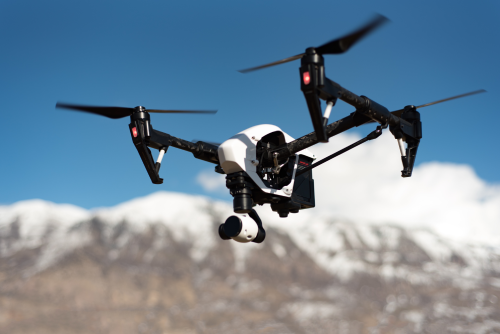
Vertical video is no longer just a last-minute crop. If you want to create vertical drone videos for social media, you need to plan for a phone screen before you take off, not after you land. The good news is that you do not need cinema gear or advanced editing to make 9:16 drone footage look polished; you need the right shooting method, cleaner framing, and a smarter workflow.
Quick Take
- Think in 9:16 from the start. That is the tall vertical frame used by Reels, Shorts, and similar formats.
- If your drone supports native vertical shooting, use it. If not, shoot at the highest practical resolution and crop later.
- Vertical videos work best when they have one clear subject: a road, fort, waterfall, building, beach path, temple complex with permission, farm pattern, or person-sized action scene shot safely and legally.
- Use slow, simple movements: push-ins, pull-backs, reveals, top-down tracks, and gentle orbits.
- Keep the subject near the center, but leave room at the top and bottom because social apps place text and buttons there.
- Shoot in soft light when possible. In India, harsh midday sunlight often makes vertical drone footage look flat and contrasty.
- Lock white balance and keep ISO low for more consistent colour.
- Edit on a 1080 x 1920 timeline, trim aggressively, and make the first 1 to 2 seconds visually strong.
- Always verify the latest DGCA and Digital Sky guidance before flying, and avoid risky, privacy-invasive, or restricted flights.
Why vertical drone videos need a different approach
Most drone footage is captured with wide landscapes in mind. That works well for YouTube or TV, but a phone screen is tall, not wide.
In a horizontal frame, you can show a lot of left-to-right scenery. In a vertical frame, you have far less horizontal space. That means a beautiful wide landscape can become empty and weak once cropped into 9:16.
Vertical drone videos perform better when they focus on:
- A strong central subject
- Clear foreground, middle ground, and background layers
- Height, depth, and leading lines
- Shorter, more decisive shots
- Movement that guides the eye up, down, or into the frame
This is why roads, rivers, stairways, beach curves, tall buildings, cliffs, ghats, fields with patterns, and narrow lanes often look better in vertical than a huge plain landscape.
A simple way to think about it: vertical is about emphasis, not coverage.
Choose your capture method
There are three practical ways to create vertical drone videos for social media.
| Method | Best for | Advantages | Trade-offs |
|---|---|---|---|
| Native vertical mode | Fast delivery for Reels and Shorts | Easier framing, less guessing, cleaner 9:16 workflow | Not available on every drone |
| Shoot horizontal and crop later | Most drones and most creators | Flexible, works with existing gear, lets you create both horizontal and vertical versions | You must protect the frame while shooting |
| Shoot extra wide for multiple outputs | Client work, travel content, repurposing | One flight can produce 16:9, 9:16, and square edits | Wider shots can feel less dramatic if you stay too far away |
If you are a beginner, the safest workflow is usually:
- Shoot at the highest resolution your drone handles well.
- Keep the main subject centered or slightly above center.
- Leave extra room around the subject.
- Crop to vertical during editing.
That works with most consumer drones and gives you room to fix framing later.
Step-by-step: how to create vertical drone videos for social media
1. Pick a subject that works in a tall frame
Before you even charge your batteries, ask a simple question:
What is the one thing this video is about?
If your answer is vague, your vertical video will usually feel weak.
Good vertical-friendly subjects include:
- A winding road through hills
- A river cutting through a valley
- A resort entrance or pool area
- A lone tree, watchtower, or lighthouse
- A waterfall or cliff edge
- A ghat, stepwell, or staircase
- A beach path with people kept at a safe, respectful distance
- A fort wall or old structure where flying is permitted
- A farm with visible rows or geometric patterns
- A real estate property with one hero feature
Subjects that often struggle in vertical:
- Very wide mountain ranges with no dominant subject
- Flat open land without patterns
- City skylines shot from too far away
- Crowded scenes where everything looks tiny
- Random panning shots with no visual anchor
For Indian creators, this matters a lot because many beautiful locations are visually busy. Markets, roads, tourist spots, wedding venues, and festival areas can become cluttered very quickly in a 9:16 frame. Simplicity wins.
2. Pre-visualise the 9:16 frame before takeoff
Aspect ratio means the shape of the frame. For social media, the most common vertical format is 9:16.
Even if your drone records horizontally, you should imagine a tall rectangle inside that wide image. That mental frame helps you avoid losing the important parts when you crop later.
Before launch, decide:
- Where the subject will sit
- Whether the movement goes up, down, forward, or backward
- What the opening shot will be
- What the ending shot will be
- Whether any text will appear on screen
A useful rule is to leave “breathing room” around the subject. Do not frame so tightly that the crop cuts off the top of a building, tree, or waterfall.
Also remember that social apps cover parts of the screen with:
- User interface buttons
- Captions
- Like/share icons
- Username and description areas
So keep key details away from the extreme top and bottom edges.
3. Dial in camera settings for cleaner footage
You do not need perfect manual control to make good social videos, but a few settings make a big difference.
Resolution
If you plan to crop horizontal footage into vertical, record at the highest practical resolution available on your drone.
Why this matters: cropping throws away part of the frame. More resolution gives you more room to crop without the video looking soft.
Frame rate
A good starting point:
- 30 fps for general travel, real estate, and scenic clips
- 60 fps if you want smoother motion or slight slow motion later
If you are unsure, 30 fps is the easiest all-round choice.
Shutter speed
For a natural-looking amount of motion blur, many videographers use a shutter speed close to double the frame rate.
Examples:
- 30 fps: around 1/60
- 60 fps: around 1/120
In bright Indian daylight, this may be too bright unless you use an ND filter, which is a dark filter placed in front of the lens to reduce light.
If you do not have ND filters, do not panic. Good framing and stable movement matter more than chasing perfect cinematic motion blur.
ISO
Keep ISO as low as possible. ISO controls sensor sensitivity. Higher ISO can make footage noisy, especially in late evening or cloudy conditions.
White balance
Do not leave white balance on auto if you can avoid it. Auto white balance can shift colour during a shot, which looks amateur.
A locked white balance gives you more consistent clips, especially when flying through mixed light around buildings, water, and greenery.
Colour profile
- Use a normal colour profile if you want easy editing and fast posting.
- Use a flat or log profile only if you are comfortable with colour correction.
Beginners often make flat footage look worse in editing, not better.
4. Use movements that suit vertical video
Vertical footage rewards simple movement. Fast, flashy stick work usually looks messy on a phone.
The drone’s gimbal, which is the stabilised camera mount, should move gently. So should the drone itself.
Here are the best moves for vertical social clips:
Slow push-in
Fly forward slowly toward the subject.
Best for:
- Resorts
- Waterfalls
- Small temples or forts where flying is permitted
- Real estate entrances
- Boats or jetties from a safe distance
Why it works: it creates focus and feels immersive on a phone screen.
Pull-back reveal
Start close to a subject and move backward to reveal more surroundings.
Best for:
- Clifftops
- Beaches
- Farmhouses
- Scenic roads
- Hill viewpoints
Why it works: the viewer gets a clean visual surprise.
Rise reveal
Start low behind a tree, wall, roofline, or ridge and climb slowly.
Best for:
- Hidden views
- Property reveals
- Fort walls
- Landscapes with a clear foreground object
Why it works: vertical frames love upward motion.
Top-down track
Point the camera straight down and move over a road, bridge, boat, field, waves, or courtyard.
Best for:
- Patterns
- Agricultural land
- Coastal lines
- River bends
- Architectural symmetry
Why it works: top-down shots naturally fit the tall frame and feel striking on social media.
Gentle orbit
Circle around a subject slowly while keeping it in frame.
Best for:
- Isolated trees
- Statues where allowed
- Buildings
- Towers
- Small hilltops
Why it works: it adds depth, but only if done slowly and steadily.
Parallax move
Fly sideways while keeping the camera pointed at the subject. The background shifts relative to the subject.
Best for:
- Buildings
- Watchtowers
- Scenic roadside subjects
- Real estate exteriors
Why it works: it makes flat scenes feel more three-dimensional.
For beginners, it is better to nail two clean moves than record ten shaky ones.
5. Build a short story, not just pretty clips
A good social media drone video is rarely one random shot. Even a 12-second Reel feels better when it has a beginning, middle, and end.
Try this simple 5-shot formula for a 15 to 20 second vertical video:
-
Hook shot
Start with your strongest visual in the first 1 to 2 seconds.
Example: a top-down shot of waves meeting a beach path. -
Context shot
Show where the location is.
Example: a slightly wider rise reveal of the coastline. -
Hero movement
Use your most polished push-in, orbit, or pull-back.
Example: slow push toward a resort pool or cliff edge. -
Detail or pattern shot
Add variety.
Example: top-down of umbrellas, farmland rows, or a winding road. -
Exit shot
End with a clean closing frame.
Example: pull back to reveal the full property or landscape.
This structure works especially well for:
- Travel creators
- Small hotels and homestays
- Real estate agents
- Wedding venues
- Tourism pages
- Students building a social media portfolio
6. Edit for Reels, Shorts, and other vertical platforms
Editing is where most horizontal drone footage becomes a proper vertical video.
Create a vertical timeline
Start with a 1080 x 1920 project. That is the standard full-screen vertical format.
If your footage is high resolution and your software supports it smoothly, you can work at a higher vertical resolution too. For most creators, 1080 x 1920 is enough.
Reframe each clip manually
Do not trust automatic crop tools too much. They often place the subject badly.
Instead:
- Move the crop frame shot by shot
- Keep the main subject visible at all times
- Leave room for motion
- Avoid cutting off buildings, trees, or roads awkwardly
Keep the pace tight
On social media, drone footage often works best in short bursts.
A practical guideline:
- 1.5 to 3 seconds per shot for fast reels
- 3 to 5 seconds for slower travel or luxury property edits
If a clip feels boring, it probably is.
Use text carefully
If you add captions or titles:
- Keep them away from the very top and bottom
- Make them easy to read on a phone
- Do not cover the most important visual element
Stabilise lightly
Too much software stabilisation can create wobbly edges or unnatural warping. Use it only when needed.
Do not overdo transitions
Hard cuts are often better than flashy transitions.
Most viewers care more about:
- Clean composition
- Strong opening shot
- Good music choice
- Smooth pacing
Handle audio realistically
Drone propeller sound is rarely useful. Most social drone videos work better with:
- Music
- Simple ambient sound added separately
- Voiceover for travel or property content
Export smartly
Export in a common vertical format such as:
- 1080 x 1920
- High quality H.264 or H.265 if your software offers both
Most platforms compress your video anyway, so the bigger win is strong source footage, not endless export tweaking.
A practical shooting plan for your next outing
If you want a simple field workflow, use this checklist:
- Find one clear vertical-friendly subject.
- Decide your first and last shot before takeoff.
- Record one top-down shot.
- Record one push-in or pull-back.
- Record one rise reveal.
- Record one extra safety shot a bit wider than you think you need.
- Keep each move slow and repeat it twice.
- Land, review, and only then leave the location.
That last step matters. Many creators discover later that their hero shot was slightly tilted, too fast, or cropped badly.
Safety, legal, and compliance checks in India
Even if you are shooting only for Instagram or YouTube Shorts, drone law and safety still apply.
Before any flight in India, verify the latest official guidance from the relevant authorities, including DGCA and Digital Sky, because rules, permissions, categories, and airspace handling can change.
At a practical level, keep these checks in mind:
Airspace and restrictions
- Confirm the area is legal to fly in before you launch.
- Be extra cautious around airports, military areas, government-sensitive zones, border regions, and event locations.
- Some tourist, heritage, coastal, wildlife, or religious areas may have local restrictions or require permission.
Local permission
Even where flying is broadly allowed, you may still need permission from:
- The property owner
- Resort or hotel management
- Event organisers
- Construction site managers
- Local administration, depending on the location and purpose
People, crowds, and privacy
- Do not fly low over crowds or traffic.
- Avoid filming people in a privacy-invasive way, especially in residential areas, beaches, weddings, and small communities.
- If you are shooting a commercial job, make sure the client understands what permissions are needed.
Weather and environment
Indian conditions can change quickly:
- Coastal wind can become stronger than it looks
- Summer heat can affect batteries
- Dust can reduce visibility and gimbal performance
- Monsoon drizzle and moisture can damage small drones
- Birds may react aggressively in some locations
Flight discipline
- Set a sensible return-to-home height based on trees, poles, and buildings
- Keep visual awareness of the drone and surroundings
- Do not chase vehicles or people for dramatic social clips
- If the location feels legally uncertain or physically risky, do not fly
A good vertical video is never worth a reckless launch.
Common mistakes that ruin vertical drone videos
Cropping without planning
If you shoot everything like a landscape video and crop later, your subject often becomes tiny or awkwardly cut off.
Flying too high
Beginners often think “higher is better.” For vertical video, too much height can make everything look small and flat. Lower, safer, more deliberate framing usually looks stronger.
Using fast yaw and abrupt turns
Quick left-right rotation looks nervous on a phone screen. Slow movements look more premium.
Trying to show too much
A vertical frame cannot carry a whole landscape and still feel focused. Pick one subject.
Shooting only at midday
In much of India, midday light is harsh for most of the year. Early morning or late afternoon often gives richer colour and better shadows.
Leaving white balance on auto
Colour shifts during a shot make even expensive drones look amateur.
Over-editing
Heavy transitions, aggressive speed ramps, and too much sharpening can make footage look cheap.
Ignoring safe zones
If your text or subject sits under app buttons or captions, the video feels poorly designed.
Not getting enough coverage
Record at least one wider safety take and repeat your best move. Social edits often fail because the creator came home with only one usable clip.
Ignoring legal and privacy issues
A viral clip is not worth complaints, confrontation, or regulatory trouble. Respect local rules and people on the ground.
FAQ
Do I need a drone with native vertical shooting?
No. It helps, but it is not essential. Many creators shoot horizontal footage at high resolution and crop it to 9:16 during editing.
Can I just rotate my horizontal drone footage to make it vertical?
Usually, no. Simply rotating a horizontal clip does not solve the framing problem. You still need a proper vertical crop and a subject that fits a tall frame.
What resolution should I use if I plan to crop later?
Use the highest practical resolution your drone and editing device can handle smoothly. Higher resolution gives you more flexibility when cropping to vertical.
What frame rate is best for social media drone videos?
For most creators, 30 fps is the easiest all-round choice. Use 60 fps if you want smoother motion or light slow motion in editing.
How long should a vertical drone video be?
Shorter is usually better. Many effective Reels and Shorts land in the 10 to 30 second range, but the real rule is simple: keep only the strongest shots.
Why does my drone footage look jerky even when the drone is stable?
Common causes include flying too fast, using abrupt stick inputs, fast yaw, poor shutter settings, or heavy cropping that exaggerates movement.
What types of locations work best in vertical format?
Places with clear lines, height, or patterns work best: roads, cliffs, waterfalls, stairways, towers, coastlines, courtyards, farms, and compact architectural spaces.
Should I use auto settings or manual settings?
A mix works well for beginners. Prioritise locking white balance and keeping ISO low. Full manual control is useful, but clean framing and slow movement matter even more.
Are vertical drone videos for social media legal in India?
They can be, but legality depends on the drone, the airspace, the location, the purpose of the shoot, and current official rules. Always verify the latest DGCA, Digital Sky, and local requirements before flying.
Which editing apps are easiest for vertical drone videos?
Simple mobile and desktop editors can both work well. Choose one that lets you crop manually, place text safely, trim quickly, and export in 1080 x 1920 without fuss.
Final takeaway
To create better vertical drone videos for social media, stop treating vertical as an afterthought. Plan one clear subject, shoot slow movements, leave room for a 9:16 crop, and edit for a phone screen from the very beginning. For your next flight, aim to capture just three clean vertical-friendly shots instead of ten random ones; that single change will improve your Reels and Shorts immediately.
