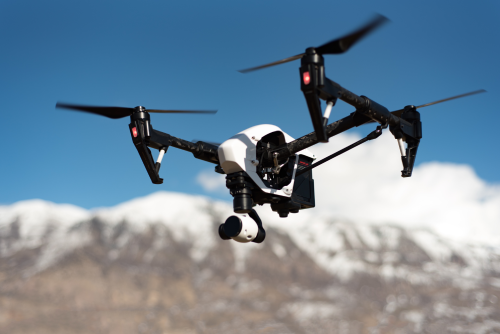
Seed spreading by drone is one of the most practical non-camera uses of UAVs, especially where land is hard to access, labour is short, or timing matters. In India, this can range from broadcasting cover crops on farms to dropping suitable seeds over degraded land for restoration, but the real results depend far more on planning, seed choice, and field conditions than on the drone alone.
Quick Take
- Seed spreading drones do not “plant” seeds the way a planter does. Most of them broadcast seed from the air over a target area.
- They are most useful for cover crops, green manure crops, grasses, some restoration work, and hard-to-reach terrain.
- The best results usually come with small, uniform, or pelletized seeds that flow consistently through the spreader.
- A drone can save time and avoid soil compaction, but it cannot solve poor moisture, bad timing, weed pressure, or unsuitable seed.
- For many crops that need depth control and row spacing, a conventional seeder or planter is still better.
- In India, operators should verify the latest DGCA, Digital Sky, airspace, and local land-use permissions before flying.
- If you are considering drone seed spreading as a service or project, treat it as a workflow: survey, calibrate, spread, inspect, and re-seed where needed.
What seed spreading by drone actually means
When people ask how drones are used in seed spreading, they often imagine a drone “planting” seeds one by one into the soil. In most real-world cases, that is not what happens.
A seed spreading drone typically carries:
- a hopper to hold seeds
- a metering system to control how much seed is released
- a spreader disc or outlet that throws or drops the seed across a set width
This is closer to aerial broadcasting than precision planting.
That difference matters.
A tractor planter places seed at a controlled depth and spacing. A drone spreader usually places seed on or near the surface, so success depends on:
- soil moisture
- surface condition
- seed-soil contact
- rain timing
- seed type
- bird or insect pressure
- weed competition
In other words, drones are a delivery tool. They are not a magic replacement for agronomy.
Where drones are used in seed spreading
Farms and cultivated land
On farms, seed spreading drones are mainly useful where broadcasting makes sense.
Common examples include:
- Cover crops between main crops
- Green manure crops such as legumes grown to improve soil
- Inter-seeding into orchards or wide-row crops where ground access is difficult
- Broadcast sowing in wet or soft fields where tractors may cause damage
- Gap filling in patches that were missed or poorly established
In Indian conditions, this can be useful during tight seasonal windows, especially when labour is unavailable or the field is too wet for machinery.
A practical example: a service provider may use a drone to broadcast a soil-improving crop into an orchard floor before expected rainfall. The grower avoids sending workers repeatedly across the field and does not compact the soil with heavier machinery.
Direct seeding trials in certain crops
Some operators and institutions also experiment with drone-based seeding for crops that are traditionally broadcast or direct-seeded. This can include situations where fields are prepared for surface sowing rather than row planting.
But this is where expectations need to stay realistic.
For many major crops, especially those that need proper placement depth and stand establishment, drone broadcasting may give mixed results unless field preparation, moisture, and seed rate are carefully managed. If you are trying this for a commercial crop, it is wise to test on a small block first and take local agronomy advice.
Reforestation and land restoration
This is the most talked-about use case, and also the one with the most hype.
Drones can be used to spread:
- grass seed for slope stabilization
- native species in restoration trials
- pelletized or coated tree seeds
- seed balls in selected projects
- species mixes for degraded land recovery
This is attractive for:
- steep slopes
- mined land
- scrubland
- erosion-prone areas
- land that is unsafe or slow to access on foot
In India, these projects may involve NGOs, CSR-backed environmental work, watershed programs, research institutions, or local authorities. But a drone flight alone does not create a forest.
Restoration success depends on:
- whether the species suits the site
- whether the land already has competing vegetation
- rainfall timing
- grazing pressure
- soil depth
- local ecology
- follow-up monitoring
A drone can help distribute seed quickly. It cannot replace ecological planning.
Pasture, fodder, and community land improvement
Seed spreading drones can also be useful for:
- reseeding pasture
- establishing fodder grasses
- improving common grazing areas
- stabilizing bunds, embankments, or exposed soil with suitable grasses
This can be relevant in hilly or semi-arid regions where manual spreading is slow and patchy. However, these projects often involve community land, panchayat land, or government-controlled land, so permissions matter.
Research, pilot projects, and service businesses
In India, this use case is still developing compared with spraying, but it fits well with:
- drone service providers expanding beyond spraying
- agriculture universities and Krishi Vigyan Kendras running trials
- Farmer Producer Organisations exploring shared services
- forestry and restoration pilots
- agri-tech companies testing aerial seeding methods
For a small drone business, seed spreading can be a useful add-on service, but only if the operator understands seed behaviour and field conditions, not just flight operations.
How the seed spreading workflow works in practice
A successful drone seed spreading job usually follows a clear sequence.
1. Define the objective
Start by asking what you are trying to achieve.
Examples:
- quick cover before monsoon
- soil improvement
- fodder establishment
- erosion control
- restoration of degraded land
- patch re-seeding after poor germination
The target determines the seed type, rate, timing, and flight plan.
2. Survey the site
Before flying, inspect the land or map it with a drone if permitted.
Check for:
- trees and power lines
- uneven terrain
- waterlogging
- access points for takeoff and refilling
- nearby roads or settlements
- wind exposure
- no-fly or restricted airspace issues
- whether the ground is actually ready for seeding
On farms, a quick field visit often reveals problems that aerial seeding cannot fix, such as heavy weed growth or a hard dry soil crust.
3. Choose the right seed form
Not all seed flows well through a drone spreader.
Operators may use:
- untreated seed
- coated seed
- pelletized seed
- seed mixes
- seed balls for special projects
Uniform seed usually spreads more predictably. Very light, fluffy, sticky, irregular, or fragile seed can bridge inside the hopper or spread unevenly.
A small germination test before a major job is always smart, especially if seed has been stored in humid conditions.
4. Prepare the site
This is one of the most ignored steps.
Good spreading over a bad site still gives bad results.
Depending on the use case, site preparation may include:
- reducing weeds
- lightly opening the soil surface
- timing the job before expected rain
- ensuring some seed-soil contact
- protecting the area from grazing
- removing obvious obstacles
For restoration work, ground teams may still be needed for fencing, moisture retention, or spot treatment in difficult areas.
5. Calibrate the spreader
Calibration means checking how much seed the system actually drops at a given speed, altitude, and opening setting.
This is essential because two seed lots of the same crop may behave differently if they vary in:
- size
- moisture
- coating
- weight
- flowability
A typical calibration process includes:
- Fill the hopper with a known quantity.
- Run a short controlled test.
- Measure how much area was covered.
- Check how much seed was used.
- Adjust gate opening, disc speed, or flight speed.
- Repeat until the target rate is close.
Skipping calibration is one of the fastest ways to waste seed.
6. Plan the flight
The operator then plans the mission based on:
- area size
- spread width
- overlap between passes
- terrain
- wind direction
- battery change intervals
- refill points
Flying too high can widen the pattern but reduce accuracy. Flying too low can create narrow bands and uneven coverage. The correct setting depends on the spreader design and the seed.
7. Spread the seed
During the actual job, consistency matters more than speed.
The best operators maintain:
- stable flight height
- steady forward speed
- predictable overlap
- careful refill handling
- clear records of each block covered
For larger jobs, teams often work in a rhythm: one person handles batteries, another handles seed loading, and the pilot focuses on safe, repeatable operations.
8. Inspect and follow up
After spreading, the work is not finished.
Check for:
- visible pattern gaps
- bird activity
- runoff losses after rain
- missed corners
- uneven germination
- blocked areas under dense vegetation
A follow-up drone survey can help identify patchy emergence. In some cases, a second pass or spot correction may be needed.
What kinds of seeds work best?
In general, drones handle seed best when the material is fairly uniform and flows smoothly.
The easiest categories are usually:
- Small to medium, free-flowing seeds
- Coated or pelletized seeds
- Grass and ground-cover mixes designed for broadcasting
- Restoration seed blends prepared for mechanical spreading
More difficult categories include:
- very fluffy or hairy seeds
- fragile seeds that crack under agitation
- wet or sticky seed
- highly irregular seed mixes
- large seeds that need planting depth for good establishment
- pre-germinated seed that may be damaged in the hopper
If your project involves tree species or native species, do not assume they will spread well just because they fit physically inside the hopper. Flow pattern and survival both matter.
A simple rule: if the seed behaves poorly in hand-broadcasting or ground spreaders, it may also behave poorly in a drone spreader unless specially prepared.
Why people use drones for seed spreading
The strongest case for drones is not novelty. It is operational convenience in the right situation.
Faster deployment in short windows
Some seeding jobs are highly time-sensitive. A drone can cover selected areas quickly when rainfall is near or when field entry is difficult.
Access to difficult terrain
This is a major advantage for:
- slopes
- fragmented plots
- wet fields
- bunded areas
- scrubland
- areas with poor vehicle access
No tyre tracks or soil compaction
Because the drone works from the air, it avoids the wheel ruts and compaction that ground equipment can create in soft soil.
Lower labour dependence
When labour is scarce, expensive, or difficult to coordinate on short notice, a drone service can be a practical alternative for certain broadcast jobs.
Better repeatability and records
A drone mission can produce flight logs, mapped coverage, and clearer records of where and when seed was spread. That helps contractors, institutions, and project managers.
Safer access in some situations
For unstable slopes, rough terrain, or waterlogged areas, using a drone may be safer than sending workers deep into the site.
Where drones are not the best tool
This is just as important as the benefits.
Drone seed spreading is usually a weak fit when:
- the crop needs precise row spacing
- the seed needs accurate depth placement
- the field is large, flat, and easily accessible by tractor
- the seed rate is very high and frequent refills make drone work inefficient
- the land has heavy weed cover
- the success of the crop depends on firm soil closure over the seed
- the operator cannot return for follow-up checks
For many farmers, a ground-based seeder, planter, or tractor-mounted broadcaster will still be more practical and economical on accessible land.
Drone vs manual vs tractor spreading
| Method | Best for | Main advantage | Main limitation |
|---|---|---|---|
| Drone spreading | Wet fields, fragmented land, slopes, quick jobs, restoration sites | Fast deployment without entering the field | Limited payload, battery swaps, needs careful calibration |
| Manual broadcasting | Small plots, low-budget jobs, local patch work | Simple and flexible | Inconsistent coverage, labour-heavy |
| Tractor or ATV spreader | Large accessible fields | High productivity and lower turnaround time on open land | Needs field access, can compact soil or damage wet ground |
| Planter or seed drill | Crops needing depth and row precision | Better stand establishment for many crops | Not suited to rough terrain or pure broadcast jobs |
Safety, legal, and compliance points in India
Seed spreading may look harmless compared with chemical spraying, but it still involves an aircraft, rotating parts, and material being dispersed from the air.
Keep these points in mind:
- Use a drone and operator setup that complies with the latest Indian drone rules for the category and type of operation you are conducting.
- Verify current requirements on DGCA and Digital Sky, including airspace permissions, no-fly areas, and any platform-specific requirements such as NPNT, or “No Permission, No Takeoff,” where applicable.
- Get clear permission from the landowner or project authority before flying.
- If the site involves forest land, wildlife areas, water bodies, public infrastructure, or government land, verify separate local approvals before operating.
- Maintain safe distance from people, roads, buildings, livestock, power lines, and vehicles.
- Watch for side throw from the spreader. Seeds or pellets can travel beyond the line directly below the drone.
- Do not fly in strong wind, low visibility, or rain unless the system and operation are specifically suitable and safe for those conditions.
- If the seed has been treated, coated, or mixed with additives, confirm that its intended use and handling are appropriate for aerial application in that project context.
- For commercial work, maintain records of the job, operator details, and permissions, and check whether insurance and contract terms are appropriate for the project.
If you are unsure about legality for a specific site, stop and verify first.
Common mistakes that ruin results
1. Treating broadcasting like planting
Aerial spreading places seed on or near the surface. If the crop really needs precise placement, a drone may not be the right tool.
2. Skipping calibration
Different seeds flow differently. One setting does not fit every species or seed lot.
3. Flying too fast or too high
This often causes streaks, missed bands, or drift.
4. Seeding into dry or weedy ground
Even perfect spreading cannot overcome poor ground conditions.
5. Using the wrong seed form
Irregular, sticky, fluffy, or fragile seeds may clog, segregate, or spread unevenly.
6. Ignoring wind
Crosswind can distort the spread pattern badly, especially with light seed.
7. Expecting one-pass forestry success
Restoration usually needs monitoring, protection, and sometimes repeat seeding. The drone is only one part of the project.
8. Poor refill and battery planning
Frequent interruptions can slow the job and create inconsistent application if the team is rushed.
9. No post-flight monitoring
Without checking germination and coverage, you never learn whether the method actually worked.
FAQ
Are seed spreading drones the same as spraying drones?
Often, the airframe may be similar, and some platforms can use a spreading attachment instead of a spray tank. But the job is different. Seed flow, calibration, spread width, and mission planning are not the same as liquid spraying.
Can a drone replace a seed drill or planter?
Usually not. If your crop needs row spacing and correct seed depth, a planter or seed drill is the better choice. Drones are more suited to broadcast-style seeding and selected restoration work.
What seeds are most suitable for drone spreading?
Uniform, free-flowing seeds and pelletized seeds are generally easier to spread consistently. Very light, fluffy, sticky, or irregular seeds are harder to handle. Always test the exact seed lot before a large job.
Is drone seed spreading useful for tree plantation?
It can support reforestation or restoration projects, but it does not guarantee tree establishment. Species choice, rainfall, grazing control, soil condition, and follow-up matter far more than the flight itself.
Is it cheaper than manual sowing?
Sometimes, but not always. It may save labour and time on hard-to-access land, wet fields, or short seasonal windows. On small simple plots, manual work may still be cheaper. On large open accessible fields, tractors may be more efficient.
Can drones spread seed in strong wind?
They should not be used in conditions that compromise safety or pattern accuracy. Wind can push seeds off-target and create uneven coverage. Light seed is especially affected.
Do I need permission in India to do this commercially?
You should verify the latest DGCA and Digital Sky requirements, along with local permissions for the land you are operating over. Commercial work also needs clear operator compliance, safe airspace use, and proper project authorization.
Can seed spreading by drone work in orchards?
Yes, in some cases it can be useful for broadcasting cover crops or ground cover between rows where ground access is limited. But seed choice, shade, irrigation pattern, and competition from existing vegetation will affect results.
How do operators decide the seeding rate?
They combine the agronomic target with real calibration tests. The operator checks how much seed is dropped over a known area at a given speed and setting, then adjusts until the target application rate is achieved.
Final takeaway
Drone seed spreading makes the most sense when you need to broadcast seed quickly over land that is wet, rough, fragmented, or difficult to access. If you are considering it in India, start with a small trial, verify the legal permissions, and judge the method by one question only: does it improve establishment on your site better than the ground-based alternative?
