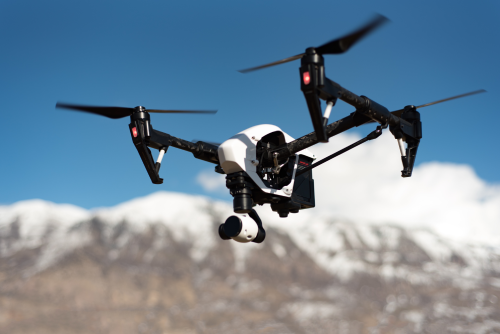
Landfills and legacy dumpsites are hard to monitor from the ground. Uneven waste heaps, leachate, smoke, birds, and heavy machinery make regular inspection slow, risky, and often incomplete. That is exactly why drones are now widely used in landfill monitoring: they help operators map the site, measure volumes, track remediation progress, and spot problems earlier.
For Indian municipalities, contractors, consultants, and waste-management firms, drone surveys can turn a messy site into something measurable. Used properly, they improve safety, reporting, and decision-making without sending people into hazardous areas as often.
Quick Take
- Drones are used in landfill monitoring mainly for mapping, volume measurement, progress tracking, thermal checks, drainage inspection, and perimeter review.
- A basic RGB camera drone can already do a lot, especially for orthomosaics and 3D surface models.
- Thermal drones help identify surface heat anomalies and possible fire-risk zones, but they do not replace on-ground verification.
- For active landfills, drones can estimate fill progress and remaining airspace. For legacy dumpsites, they are useful in biomining, capping, and land reclamation tracking.
- The biggest advantage is repeatable data over time. A landfill flown the same way every week or month becomes much easier to manage.
- In India, always verify current DGCA and Digital Sky requirements before operating. Site permission, airspace checks, and safe operations matter as much as the drone itself.
Why landfill monitoring is a good fit for drones
A landfill changes constantly.
Waste is added, moved, compacted, covered, excavated, or processed. Roads shift. Slopes change. Water collects in new places. Smoke may appear in one corner and disappear in another. A ground team can inspect only part of this efficiently.
Drones help because they can:
- cover large sites quickly
- reach dangerous or difficult areas without sending staff on foot
- produce maps that can be compared over time
- create visual records for project teams, authorities, and contractors
- reduce guesswork in volume and progress estimates
This matters even more in India, where many cities are dealing with both active landfill operations and old legacy dumpsites under remediation or biomining.
What drones actually monitor at a landfill
Not every landfill mission is the same. Some flights are for simple visual inspection. Others are full survey jobs that generate 2D maps, 3D models, and volumetric reports.
Common drone sensors used in landfill work
| Drone setup | What it helps with | Best use cases | Main limitations |
|---|---|---|---|
| Standard RGB camera | Photos, videos, stitched maps, 3D models | Routine inspection, site mapping, progress tracking | Accuracy depends on good flight planning and processing |
| RGB with RTK or PPK positioning | More accurate location data | Volume calculation, engineering surveys, repeat surveys | Higher cost, still needs proper workflow |
| Thermal camera | Surface temperature differences | Hotspot detection, smouldering zones, drainage anomalies | Surface-only indication, affected by weather and sunlight |
| Multispectral camera | Vegetation and cover analysis | Monitoring capped areas and plant health | Less useful for day-to-day waste operations |
| LiDAR payload | Dense 3D point clouds | Complex terrain, some vegetated areas | Expensive, heavier setup, specialist workflow |
| Gas-sensor payload | Airborne gas screening | Methane or emission screening in special studies | Calibration, wind, payload limits, not a substitute for statutory monitoring |
RTK and PPK are positioning methods that improve map accuracy. For many Indian landfill projects, an RGB drone with a good survey workflow is enough to deliver strong results. More advanced sensors make sense only when the problem actually demands them.
Main ways drones are used in landfill monitoring
Creating up-to-date site maps
One of the most basic and useful jobs is generating an orthomosaic.
An orthomosaic is a stitched aerial map that is corrected for scale and perspective, so it behaves more like a measurable map than a simple photograph.
This helps teams:
- see the full site in one view
- mark boundaries and work zones
- identify newly formed waste heaps
- inspect access roads and internal haul routes
- document litter spread, standing water, and exposed waste
For municipal bodies and contractors, this is often the first step toward better site control. A current map is much more useful than relying on old drawings or ground photos from just one corner.
Measuring waste volumes and remaining airspace
This is one of the biggest practical applications.
By flying the site and creating a 3D surface model, operators can estimate the volume of waste mounds, soil stockpiles, compost-like fractions, inert material, or excavation zones. In an active landfill, the same method can help estimate how much fill capacity remains.
Airspace means the remaining permitted volume available for waste placement in a landfill cell. A cell is a defined section of the landfill used for controlled waste disposal.
Typical uses include:
- measuring how much waste was added since the last survey
- tracking how much old waste was removed during biomining
- checking stockpiles of cover soil or recovered material
- estimating remaining capacity in active zones
- supporting milestone-based contractor reporting
The key point is consistency. If the base surface, coordinate system, and survey method keep changing, volume figures become hard to trust.
Tracking biomining and legacy dumpsite remediation
In India, this is a major use case.
Many cities are trying to reduce or reclaim old dumpsites through biomining or bio-remediation. In simple terms, biomining means excavating and mechanically processing old mixed waste to recover useful fractions, reduce mound height, and reclaim land.
Drones help project teams answer practical questions such as:
- How much of the dump has been excavated?
- How quickly is the mound reducing?
- Which areas are still untouched?
- How much land has been cleared?
- Is the processed fraction stockpiling where it should?
A drone map from the first week can be compared with later surveys to show whether the project is genuinely progressing or just moving waste around. This becomes valuable in internal reviews, payment validation, and public reporting.
Monitoring daily cover, exposed waste, and operational discipline
At active landfill sites, operators often need to monitor where fresh waste is being placed and whether exposed areas are being managed properly.
A drone can quickly show:
- active tipping zones
- areas lacking sufficient cover
- wind-blown litter spread
- vehicle movement patterns
- unsafe stacking or steep side slopes
This does not replace good ground supervision, but it gives managers a clearer site-wide view. A short flight can reveal patterns that are easy to miss at eye level.
Inspecting slopes, settlement, erosion, and stability concerns
Landfill slopes change over time.
Waste settles. Rain cuts gullies into cover soil. Some areas sink while others bulge. After the monsoon, these issues can become more visible and more serious.
Repeated drone surveys help teams monitor:
- slope angle changes
- local settlement or subsidence
- erosion channels after rain
- cracking or surface deformation on capped areas
- ponding water on top surfaces
A drone cannot certify geotechnical stability on its own. But it is very good at showing where the site has changed enough to justify a closer engineering inspection.
Checking leachate ponds, drains, and stormwater flow
Leachate is the contaminated liquid that drains through waste. Managing it is critical.
Drones are useful for checking:
- leachate-collection ponds
- drainage channels
- blocked drains
- overflow risk after rainfall
- stormwater entering the wrong area
- seepage paths on outer slopes
Aerial imagery is especially useful before monsoon, after heavy rain, and during remediation work when temporary drainage systems may keep changing.
What drones cannot do well is tell you the exact chemical quality of water. For that, you still need proper sampling and testing.
Spotting heat anomalies and fire-prone zones
Thermal drones are increasingly used at landfills because surface heat can be an early warning sign.
They can help identify:
- hot spots in waste mounds
- areas with persistent surface heating
- smoke-linked zones that need inspection
- heat near recently disturbed waste
- possible self-heating regions in legacy dumps
This is useful because landfill fires can spread underground or within compacted waste and may not be obvious from a normal camera view.
But there is an important limit: thermal cameras show surface temperature patterns, not the full internal condition of the mound. A hot patch may indicate a problem, but it still needs ground verification.
Thermal surveys are often most useful in the early morning, late evening, or under conditions where sun-heated surfaces are less confusing.
Monitoring capped areas and vegetation
Once part of a landfill has been capped, the next question becomes whether the cover is staying intact.
Drones can monitor:
- damage to the final cover
- bare patches in vegetated areas
- erosion scars
- drainage problems on the cap
- changes in surface shape over time
Where required, multispectral imaging can help assess vegetation health on capped zones. That can be useful in rehabilitation projects, though it is not necessary for every site.
Reviewing perimeter security and encroachment
Landfills often have fencing, buffer zones, access controls, and nearby habitations or roads. Drones can support perimeter monitoring by helping teams identify:
- fence breaches
- unauthorised access points
- nearby encroachment
- roadside litter escape
- damage to internal roads or gates
This should be done carefully and lawfully, with respect for privacy and local permissions.
A typical landfill drone monitoring workflow
The best results come from treating drone flights as a measurement process, not just an aerial video exercise.
1. Define the exact purpose
Start with a clear question:
- Do you need volume measurement?
- Weekly progress evidence?
- A thermal scan for suspected fire risk?
- Monsoon drainage review?
- Biomining progress documentation?
The purpose decides the drone, sensor, flight altitude, overlap, and reporting format.
2. Check site hazards and permissions
Landfills can be risky places to fly.
Before the mission, review:
- heavy equipment movement
- birds and scavenger activity
- smoke, dust, or gas risk
- power lines and poles
- restricted areas on site
- local airspace restrictions
In India, verify current DGCA and Digital Sky requirements before flying. Also ensure you have permission from the landfill operator, municipal authority, or site owner as applicable.
3. Plan a repeatable flight
For monitoring, consistency matters more than dramatic camera angles.
Try to keep the same:
- flight area
- altitude
- image overlap
- camera angle
- time of day, where practical
- coordinate system and checkpoints
This makes time-based comparison far more reliable.
4. Capture the data safely
Depending on the task, the team may capture:
- nadir images, meaning straight-down photos for mapping
- oblique images, meaning angled photos for 3D detail
- thermal imagery
- perimeter visuals
- ground control points or RTK/PPK position data
The operator should avoid flying unnecessarily over people, moving vehicles, or active unloading zones.
5. Process the outputs
Typical outputs include:
- orthomosaic map
- digital surface model, which is a height model of the site surface
- contour map
- point cloud, which is a dense set of 3D points
- volume or cut-fill report
- hotspot map from thermal data
6. Compare with previous surveys
This is where landfill monitoring becomes truly useful.
A single drone survey is a snapshot. A series of surveys shows change.
Teams can compare:
- volume added or removed
- mound height reduction
- spread of exposed waste
- growth of erosion channels
- movement of stockpiles
- changes in pond size or drainage pattern
7. Verify anomalies on the ground
If the drone shows a hot spot, sink area, blocked drain, or unexpected volume change, a ground team should verify it.
That step is essential. Aerial evidence is powerful, but it is strongest when backed by field confirmation.
How often should landfill drone surveys be done?
There is no single correct frequency. It depends on what you are monitoring.
A practical rule of thumb is:
- active waste placement areas: weekly or more often if operations change quickly
- biomining or dump remediation: weekly, fortnightly, or milestone-based
- volume certification: on a fixed schedule agreed by all stakeholders
- drainage and erosion checks: before monsoon, after major rain, and post-monsoon
- thermal or fire-risk scans: as needed, plus follow-up after an incident
For trend analysis, a smaller number of well-planned, repeatable surveys is better than many random flights.
Should you buy a drone or hire a survey provider?
For landfill monitoring, many organisations are better off hiring first.
Hiring makes sense if:
- you need occasional surveys
- you want processed maps and volume reports, not just raw footage
- you need thermal, RTK, or specialised analysis
- you do not have trained in-house staff
Buying makes sense if:
- you run frequent surveys at the same site
- you have a trained remote pilot and data-processing capacity
- you need quick turnaround for operations
- long-term monitoring is part of your normal workflow
For many Indian local bodies and contractors, a hybrid model works well: hire specialists for baseline and technical surveys, then build internal capacity only if the survey workload is frequent enough.
What drones do well, and what they do not
Drones are excellent for visibility, measurement, and repeatable documentation.
They are not a magic replacement for every landfill task.
Drones do well
- frequent mapping
- progress tracking
- visual inspections over large areas
- 3D surface modelling
- hotspot screening
- contractor and management reporting
Drones do not replace
- lab testing of water, soil, or air
- geotechnical engineering judgment
- statutory environmental monitoring
- on-ground safety inspections
- good site management
The most successful landfill projects use drones as part of a broader monitoring system, not as a standalone solution.
Common mistakes in landfill drone monitoring
Treating the job like a video shoot
A cinematic flyover may look impressive, but it is not the same as a measurable survey. If the goal is mapping or volume calculation, the mission must be planned for data capture, not visuals.
Changing flight settings every time
If one survey is flown at 60 metres and another at 110 metres with different overlap and camera angles, comparing them becomes much harder.
Ignoring accuracy checks
Good-looking maps can still contain errors. If the project depends on numbers, use proper survey methods, checkpoints, and consistent processing.
Measuring volume against the wrong base surface
Volume estimates depend heavily on what surface you compare against. If the reference base is poorly defined, the result may be misleading even when the 3D model looks fine.
Using thermal images without context
A warm patch is not automatically a fire. Solar heating, surface material, and time of day can influence thermal readings. Ground confirmation is necessary.
Flying at the wrong time or in poor conditions
Strong winds, smoke, dust, low contrast, or harsh midday heat can reduce data quality. Landfill sites also attract birds, which can become a serious flight risk.
Forgetting data organisation
Landfill monitoring only becomes valuable over time. If files, dates, coordinate systems, and reports are not organised properly, long-term comparison becomes messy and disputed.
Safety, legal, and compliance points in India
Landfill monitoring involves both aviation safety and site safety.
A few practical points matter:
- Verify the latest DGCA rules before any operation. Requirements can change.
- Check Digital Sky and any applicable airspace permissions or operational conditions.
- Use a drone and workflow that meet current Indian compliance requirements, including platform-specific requirements where applicable.
- Obtain permission from the site owner, operator, municipal body, or project authority before flying.
- Maintain safe separation from people, vehicles, cranes, power lines, and active machinery.
- Be extra cautious around smoke, dust plumes, flare points, and suspected gas vents.
- Watch for birds. Dump sites often attract aggressive bird activity that can disrupt flights.
- Avoid unnecessary capture of nearby homes or private activity outside the site boundary.
- If the output will be used for payment, claims, audits, or formal reporting, document the date, method, accuracy approach, and processing assumptions clearly.
If the site handles hazardous waste or is near sensitive infrastructure, the compliance and safety review should be even stricter.
FAQ
Are drones accurate enough for landfill volume measurement?
Yes, if the mission is planned properly. Accuracy depends on flight quality, overlap, processing, and positioning method. For serious measurement work, RTK, PPK, or well-laid control points may be needed.
What type of drone is best for landfill monitoring?
For most routine landfill jobs, a stable mapping-capable drone with a good RGB camera is enough. Add thermal only if you have a real need for hotspot detection. LiDAR and gas-sensor payloads are more specialised.
Can drones detect methane leaks?
Specialised drones can carry methane or gas sensors for screening, but results depend on sensor quality, calibration, wind conditions, and flight method. They are useful for indication, not as a casual replacement for regulated environmental monitoring.
Can a drone replace ground inspection at a landfill?
No. It reduces the need for risky site walking and improves visibility, but anomalies still need on-ground verification. Drones work best alongside ground teams, not instead of them.
How useful are drones for biomining projects?
Very useful. They can document starting conditions, track mound reduction, measure excavation and stockpiles, and show reclaimed land area over time. This is one of the strongest landfill-related drone applications in India.
Are thermal cameras necessary for every landfill?
No. A normal RGB mapping drone can already deliver strong value. Thermal becomes useful when fire risk, smouldering waste, or heat anomaly detection is a genuine operational concern.
How often should a landfill be surveyed with a drone?
It depends on the objective. Active sites may benefit from weekly monitoring, while remediation or capping work may be tracked fortnightly or monthly. The important thing is to keep the schedule and method consistent.
What are the biggest risks when flying over landfill sites?
Bird strikes, wind, smoke, dust, poor GPS conditions in some areas, worker proximity, and site hazards such as uneven ground or machinery movement. Pilot skill and site briefing matter a lot.
Is it better to hire a service provider or build an in-house team?
Hire a provider if the need is occasional or technical. Build in-house capability only if surveys are frequent and you can support pilot training, compliance, and data processing.
Do drones help with compliance reporting?
They can support reporting with time-stamped maps, visual records, and measurable outputs. But they do not replace formal environmental testing, engineering sign-off, or statutory requirements.
Final takeaway
Drones are used in landfill monitoring because they answer three practical questions better than most ground-only methods: what changed, how much changed, and where the risk is building.
If you are evaluating drone use for a landfill in India, start with repeatable RGB mapping and clear survey objectives. Add thermal or other specialised sensors only when the problem truly demands them, and always pair drone data with safe operations, ground checks, and current regulatory compliance.
