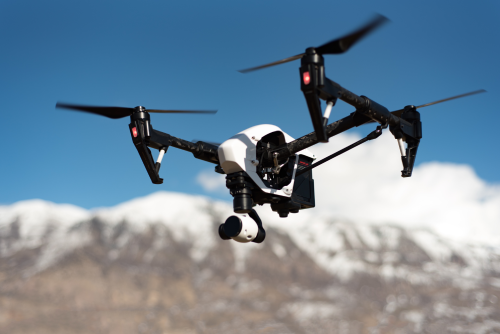
Drones are becoming a practical tool for road and highway monitoring because they can capture fast, repeatable, high-visibility data over long stretches of infrastructure. In India, they are especially useful for tracking construction progress, checking pavement condition, inspecting drainage and slopes, and reviewing hard-to-access areas without putting as many people on live carriageways.
Quick Take
- Road and highway agencies, contractors, consultants, and maintenance teams use drones for mapping, inspection, progress tracking, and damage assessment.
- The biggest advantages are speed, safer data collection, repeatable records, and better visual evidence for decision-making.
- Drones are useful before construction, during execution, and after a road opens to traffic.
- Common outputs include orthomosaic maps, high-resolution images, 3D models, elevation data, and progress reports.
- For Indian projects, drones are particularly helpful in monsoon checks, hill roads, long corridor monitoring, and locations where lane access is difficult.
- Drones do not replace all ground inspection. They work best when combined with site checks, engineering judgment, and proper survey workflow.
- Before any commercial or official flight, verify the latest DGCA, Digital Sky, airspace, and site-specific compliance requirements.
Why drones matter in road and highway work
Understanding how drones are used in road and highway monitoring is easier if you start with the core problem: roads are long, dynamic, and expensive to inspect manually.
A team on foot or in a vehicle can inspect only a limited stretch in a day. They may also need traffic control, access permission, and extra safety measures. On busy roads, medians, bridges, cut slopes, drains, culverts, and embankments are not always easy to reach.
A drone changes that workflow. It can quickly capture a top view of a corridor, zoom into defects, revisit the same section every week, and produce a visual record that is much easier to compare over time.
This matters in India for a few practical reasons:
- Many projects cover long linear corridors.
- Monsoon damage can appear suddenly.
- Hill roads and remote stretches are hard to inspect frequently.
- Construction clients often want visual proof of progress.
- Manual quantity checks and progress photos can be inconsistent.
- Work near live traffic increases risk for site teams.
Drones are not magic, but they are very effective when the goal is clear.
The main ways drones are used in road and highway monitoring
Route planning and corridor assessment
Before or during project planning, drones can help teams understand the road corridor from above.
They are used to:
- map existing road alignment
- capture nearby terrain and roadside features
- identify visible encroachments or obstructions
- review access roads, junctions, and service roads
- create a visual base map for planning discussions
For widening projects, a drone survey can show where the current carriageway sits relative to shoulders, drains, embankments, nearby properties, and utility corridors. It is not a substitute for formal land records or all utility detection, but it gives teams a much clearer starting point.
In hilly or undulating terrain, drone-generated elevation models can also help engineers spot steep slopes, low points, or drainage risks early.
Construction progress monitoring
This is one of the most common and valuable uses.
Instead of relying only on scattered photos and verbal updates, project teams can fly the same stretch weekly or monthly and compare progress visually.
Typical monitoring tasks include:
- embankment development
- cut and fill progress
- subgrade and granular layer spread
- pavement laying progress
- bridge and culvert construction status
- median and shoulder work
- retaining wall or slope protection progress
- stockpile and material yard monitoring
A repeatable drone survey creates a timeline. That helps contractors, consultants, and clients answer questions like:
- How much of this package is actually complete?
- Has work advanced uniformly, or are there gaps?
- Are structures lagging behind earthwork?
- Is the drainage system progressing with the road, or is it delayed?
- Are site resources concentrated in the right location?
On a four-lane highway widening job, for example, a drone can capture one corridor map each week. The team can then mark completed stretches, identify pending culverts, verify median work, and compare actual site status against the planned schedule.
Earthwork measurement and quantity verification
Road projects involve a lot of earthwork. Drones help by producing surface models that can be compared over time.
This is useful for:
- excavation measurement
- embankment volume tracking
- borrow area monitoring
- stockpile estimation
- cut-and-fill comparison
With the right workflow, such as RTK or PPK-enabled mapping and proper check points where needed, drone survey data can support quantity estimation much faster than purely manual methods. Accuracy depends heavily on flight planning, terrain, vegetation, control points, and processing quality, so teams should not assume every drone survey is automatically survey-grade.
Still, for regular progress checks, drones can save major time.
Pavement condition and surface distress inspection
Once a road is in service, drones are often used to inspect pavement and identify visible distress.
They can help detect:
- potholes
- patch failures
- edge breaks
- rutting visible from angle or pattern
- shoulder damage
- ravelling
- standing water areas
- faded lane markings
- damaged signs or roadside furniture
High-resolution imagery is especially useful on service roads, shoulders, intersections, and stretches where access is difficult or traffic is heavy.
That said, there is an important limit: very fine hairline cracks are not always reliably captured from normal mapping height. If crack-level diagnosis is the goal, teams may need lower-altitude imaging, slower flights, a more suitable camera setup, and ground confirmation. Ordinary progress footage is not enough for serious pavement distress analysis.
Drainage and waterlogging checks
A road can fail not only because of traffic loads, but because water is not being managed properly.
Drones are very useful for monitoring:
- blocked side drains
- silted culverts
- shoulder erosion
- low spots where water collects
- damaged outfalls
- waterlogging near underpasses
- overtopping risk after heavy rain
This is especially relevant in India during and after monsoon periods. A drone can scan a long road section much faster than a vehicle team stopping repeatedly to inspect every drain outlet.
If a maintenance team already knows that one stretch floods every year, a drone survey before and after the rains can show whether the issue is due to blocked drainage, embankment settlement, poor shoulder shaping, or nearby encroachment affecting runoff.
Slope, embankment, and hill road monitoring
Hill roads and roads on high embankments need close observation because failures can develop quickly.
Drones are used to inspect:
- slope cracks
- erosion scars
- landslide-prone sections
- fallen debris zones
- retaining structures
- gabion damage
- embankment settlement
- scour near water crossings
This is one of the safest drone applications because many of these areas are risky for people to approach, especially after rain.
A drone cannot see everything beneath vegetation, but it is very good at giving engineers a first-level visual assessment of unstable sections.
Bridge, flyover, and culvert inspection support
Road monitoring is not only about pavement. Structures are a major part of the job.
Drones can help inspect:
- bridge decks
- parapets and barriers
- expansion joint surroundings
- pier visibility zones
- approach slab condition
- underside access areas where feasible with proper planning
- culvert inlets and outlets
- debris accumulation around structures
For a basic visual inspection, a drone can save time and reduce the need for scaffolding or difficult access in some situations. However, highly detailed structural assessment may still require closer manual inspection, specialized sensors, rope access, or other non-destructive testing methods.
In other words, the drone is often the first inspection layer, not always the last.
Traffic, junction, and work zone observation
Drones are also used to observe how traffic behaves around a road section.
Typical use cases include:
- queue buildup near toll plazas
- congestion at junctions and interchanges
- diversion performance during road work
- work zone layout review
- bottleneck identification
- vehicle conflict points near access roads
From above, traffic patterns become much easier to understand. A site team can see whether a temporary diversion is too sharp, whether trucks are encroaching into unsafe areas, or whether lane merges are causing long queues.
This use case needs extra care. Flying near live traffic requires strong safety planning, proper coordination, and close attention to legal and operational restrictions. It should never be treated like casual filming.
Encroachment and right-of-way monitoring
Road authorities and concessionaires may also use drones to keep an eye on the right of way.
This can include checking for:
- roadside construction creeping into the corridor
- illegal dumping
- vegetation overgrowth affecting visibility
- unauthorized access cuts
- material storage inside protected areas
- temporary structures too close to the roadway
A repeatable aerial record is useful because disputes often depend on proving change over time. Drone images can support monitoring, provided the operation is lawful and the data is handled responsibly.
Emergency and post-disaster assessment
After a flood, landslide, washout, or major traffic incident, getting fast situational awareness is critical.
Drones can support by showing:
- whether a road is passable
- where the carriageway is damaged
- whether an embankment has breached
- the extent of debris spread
- which culverts or bridges are affected
- where emergency access is still possible
This can help authorities prioritize response, inspection, and temporary restoration. In remote areas, that time saving can matter a lot.
What data drones actually produce
A drone is useful not because it flies, but because of the data it produces.
| Monitoring task | Typical drone output | Why it helps |
|---|---|---|
| Corridor overview | Orthomosaic map, video | Gives one clear visual record of the full stretch |
| Progress tracking | Repeat maps, comparison imagery, 3D model | Makes weekly or monthly progress easier to verify |
| Earthwork measurement | Surface model, volume estimates | Helps check cut, fill, and stockpile changes |
| Pavement review | High-resolution images and video | Supports distress spotting and maintenance planning |
| Drainage check | Top-view imagery, terrain model | Shows blocked paths, ponding, and erosion |
| Structure inspection | Close-up imagery | Helps inspect hard-to-reach visible areas |
| Emergency assessment | Rapid aerial overview | Speeds up decision-making after damage |
Some advanced workflows also use:
- RTK or PPK positioning for better mapping accuracy
- LiDAR for terrain capture in more demanding cases
- thermal sensors for selected inspection tasks
- AI-based software to classify defects or count progress items
These advanced tools can be powerful, but only if the mission design and data processing are done properly.
A typical drone workflow for highway monitoring
A good drone operation starts with the decision you need to make, not with the drone itself.
1. Define the purpose clearly
Ask one simple question first: what exactly are we trying to monitor?
Examples:
- weekly paving progress
- embankment volume change
- pothole mapping after rain
- culvert blockage review
- slope distress inspection
A vague goal like “let’s do drone coverage” often leads to lots of footage and very little useful output.
2. Check legal, airspace, and site requirements
Before flying, verify the latest applicable rules and permissions. In India, this may involve checking current DGCA guidance, Digital Sky requirements, airspace status, platform compliance, and any local or project-specific restrictions.
For road and highway jobs, also coordinate with:
- the project authority or client
- the site engineer
- the safety officer
- local administration or police if required
- toll or traffic operators if the area is active
3. Plan for safety on and around the road
Takeoff and landing should be from a safe area away from moving traffic where possible. The team should assess:
- traffic exposure
- public access
- nearby power lines
- bridges or tall structures
- wind conditions
- GNSS signal quality
- emergency landing options
This matters even more in interchanges, bridges, urban flyovers, and high-speed corridors.
4. Choose the right flight plan
Different tasks need different capture methods.
- For mapping: systematic grid flights with overlap.
- For progress visuals: repeated route-based capture from similar positions each time.
- For structure inspection: slow, careful close-range imaging with strong obstacle awareness.
- For distress review: lower-altitude, higher-detail capture over specific sections.
Consistency is key. If you want useful comparisons, the drone should fly the same section in a similar way each time.
5. Capture reference data when accuracy matters
For quantity and mapping work, teams may use ground control points or check points, or rely on RTK/PPK workflows where suitable. This improves confidence in measured outputs.
Skipping this step is one of the fastest ways to end up with pretty images but weak engineering value.
6. Process the data into usable outputs
Raw images alone are rarely enough.
Depending on the job, the output may be:
- a stitched corridor map
- a 3D surface model
- before-and-after comparison layers
- annotated defect images
- a quantity report
- a client progress presentation
7. Turn the data into action
This is where the real value appears.
For example:
- If ponding is seen repeatedly, check drainage design or maintenance.
- If one section is behind schedule, redeploy crews.
- If shoulder erosion is growing, intervene before the pavement edge fails.
- If a slope crack widens, escalate inspection immediately.
Which drone setup works best for highway monitoring
Not every road job needs the same type of drone.
Basic camera multirotor
Best for:
- visual inspection
- short-stretch progress updates
- culvert and drainage checks
- bridge approach review
- emergency visual assessment
Why it works: – easy to deploy – good for hovering – flexible for short missions
Main limit: – less efficient for very long corridors
Mapping-focused multirotor with RTK or similar workflow
Best for:
- corridor mapping
- progress measurement
- earthwork checks
- repeatable site documentation
Why it works: – more reliable geospatial output – better suited to engineering-style monitoring
Main limit: – still limited in total area per battery cycle
Fixed-wing mapping drone
Best for:
- long corridor coverage
- large highway packages
- repeated broad-area surveys
Why it works: – more efficient over long distances
Main limit: – needs more suitable launch and recovery planning – not ideal for tight-space structure inspection
Specialized payloads such as LiDAR or thermal
Best for: – specific advanced survey or inspection needs
Why they work: – can capture terrain or heat-related patterns in situations where a normal camera is not enough
Main limit: – higher cost, more processing complexity, and more specialized skill requirements
For most beginners and small businesses, the practical starting point is a capable camera drone used with a repeatable workflow. Advanced payloads make sense only when the project actually needs them.
Benefits and limits of using drones on roads
The biggest benefits
- Faster coverage of long stretches
- Less exposure of staff to live traffic
- Better visual records for clients and authorities
- Easier progress comparison over time
- Strong support for quantity review and planning
- Quicker response after rain or damage events
The biggest limits
- Weather can stop flights or reduce quality
- Trees, structures, and shadows can hide defects
- Very fine distress may still need ground inspection
- Long corridors require careful battery and logistics planning
- Data processing takes time and skill
- Some areas may be restricted or operationally sensitive
- Drones do not automatically guarantee survey-grade accuracy
The best teams use drones as one layer in a broader inspection system.
Safety, legal, and compliance points in India
Because roads often run through populated and operationally sensitive areas, drone compliance matters a lot.
Keep these points in mind:
- Verify the latest DGCA and Digital Sky requirements before every project, especially if the corridor passes through mixed airspace or near sensitive locations.
- Confirm the current status of airspace permissions, platform compliance, and operational limitations before flight.
- Use a properly trained operator and project workflow suited to the task.
- Coordinate with the project owner, road authority, and local officials where required.
- Avoid unsafe takeoff, landing, or hovering practices near moving traffic.
- Protect public privacy, especially in urban stretches, settlements, toll areas, and places where people may be identifiable.
- Treat road, bridge, and infrastructure imagery as sensitive project data and handle storage and sharing carefully.
- If insurance, client approvals, or internal safety documentation are required, complete them before deployment.
- Recheck site conditions on the day of flight. A corridor that looked safe on a map may have new traffic diversions, cranes, utility work, or crowd activity.
If anything is unclear, verify it before flying rather than assuming.
Common mistakes in highway drone monitoring
- Flying without a clear monitoring objective
- Using one generic flight pattern for every task
- Trying to cover too much corridor in one sortie
- Capturing visuals without enough overlap for mapping
- Expecting normal footage to replace proper survey workflow
- Failing to maintain the same route and altitude in repeat surveys
- Ignoring lighting conditions for the specific task
- Skipping ground checks after spotting apparent defects from the air
- Launching too close to traffic or public movement
- Delivering too much raw data and too little interpretation
A simple rule helps: collect only the data you can process, compare, and use.
FAQ
Can drones replace road inspection teams completely?
No. They reduce field exposure and improve visibility, but they do not replace all manual inspection, testing, or engineering judgment. Ground truth is still important.
Are drones good for finding potholes and cracks?
They are good for visible surface defects, especially potholes, edge failures, and damaged shoulders. Fine crack mapping depends on image resolution, flight height, lighting, and processing quality, so it often needs a more specialized approach.
How often should a highway project be surveyed by drone?
It depends on the purpose. Fast-moving construction may justify weekly flights. Maintenance inspections may be monthly, seasonal, or event-based, such as after heavy rain. The right interval is the one that supports a decision.
What is the best drone type for road and highway monitoring?
For many users, a camera-based multirotor is the most practical starting point. For mapping and quantity work, a more survey-oriented setup is usually better. For very long corridors, fixed-wing platforms may be more efficient.
Can drones be used on active highways with moving traffic?
They can be used in some monitoring scenarios, but this needs careful safety planning, proper coordination, and legal compliance. It should never be treated as casual filming over a busy road.
Are drones useful during monsoon season?
Yes, especially for drainage, erosion, embankment, and flood impact checks. But weather also creates flight limitations, so teams must watch wind, rain, visibility, and site safety carefully.
Do I need special permissions in India for highway drone work?
You need to verify the latest official requirements before each operation. Airspace status, operational category, platform compliance, and project location all matter. Do not assume a previous approval or another project’s process will apply everywhere.
Is LiDAR necessary for road monitoring?
Not always. Many road monitoring tasks can be handled with a good RGB camera workflow. LiDAR becomes more relevant when terrain capture is difficult, vegetation is a challenge, or the project specifically requires it.
Can drone data be used for progress reports to clients?
Yes, and this is one of the strongest use cases. Repeatable maps, comparison images, and annotated visuals make progress reporting clearer than random site photos.
What is the biggest reason drone road surveys fail to create value?
Usually it is not the drone. It is poor planning. If the team does not define what to measure, how often to measure it, and what decision the data should support, even excellent footage becomes wasted effort.
Final takeaway
If you want to use drones for road and highway monitoring, start with one high-value, repeatable job: progress tracking, drainage checks, pavement distress review, or post-rain assessment. The teams that get the best results are not the ones flying the most, but the ones collecting the right data, the same way, at the right intervals, with safety and compliance built in from the start.
