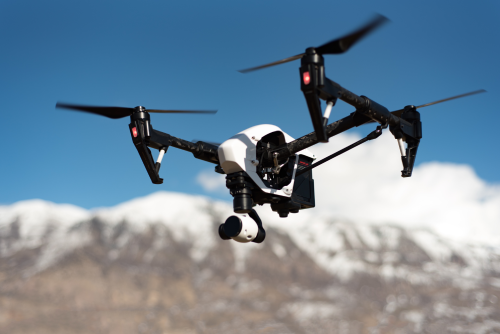
When people ask how drones are used in property boundary mapping, the short answer is simple: drones create a clear, up-to-date view of land from above, making it easier to identify visible boundary features, measure occupied areas, and document site conditions. In India, this is especially useful for farms, plots, layouts, industrial land, and development sites, but a drone map should support proper land records and survey work, not replace them blindly.
Quick Take
- Drones help map property boundaries by capturing overhead images that can be turned into accurate site maps.
- They are very useful for spotting visible boundary features such as compound walls, fencing, survey stones, roads, drains, bunds, and encroachments.
- The best results come from combining drone data with existing land records, ground control points, and field verification.
- A drone can show what is on the ground today, but it does not automatically prove the legal property line.
- In India, official boundary confirmation may still require records from the relevant land authority and, in many cases, a qualified survey professional.
- Before any commercial drone survey, verify the latest DGCA, Digital Sky, and local airspace requirements.
What drones actually do in property boundary mapping
Property boundary mapping is not just about drawing a line around a plot.
There are usually two different questions:
- What is physically visible on the ground right now?
- What is the legally recognized boundary in official records?
A drone is excellent at answering the first question. It can capture a high-resolution top-down image of the site and show things like:
- Boundary walls
- Fences
- Survey stones
- Farm bunds
- Road edges
- Drainage lines
- Access tracks
- Signs of encroachment
- Existing structures near the edge of the land
But the second question is more serious. The legal boundary may depend on revenue records, cadastral maps, field measurement records, approved layout plans, city survey data, lease drawings, or other official documents. In many cases, especially in India, older maps and present-day ground reality do not match perfectly.
That is why drones are most powerful when used as a mapping and documentation tool within a proper survey workflow.
Why drones are useful for boundary mapping
Traditional ground measurement is still important, but drones add speed, coverage, and clarity.
Faster coverage of large land parcels
A large farm, plotted layout, warehouse site, or institutional campus can take a lot of time to inspect from the ground. A drone can capture the full area quickly and produce one continuous map instead of scattered photos.
Better visual context
Standing on the site, you see only a small part at a time. From above, you can understand:
- The full shape of the parcel
- Where the boundary turns
- Which structures sit close to the edge
- How adjacent plots connect
- Whether access roads match the plan
This bird’s-eye view is often what resolves confusion.
Easier encroachment detection
If a neighbouring wall, shed, farm cultivation strip, or road widening appears to cross into the parcel, a drone map can make that visible much more clearly than hand sketches or phone photos.
Repeatable records over time
One of the biggest advantages of drones is repeatability. You can map the site before purchase, before fencing, during construction, and after completion. That creates a visual record of changes over time.
Useful measurements
Once the images are processed correctly, the output can provide:
- Area calculations
- Perimeter length
- Distances between features
- Building footprints
- Offsets from roads, drains, or compound lines
- Terrain information if elevation matters
The basic drone workflow for property boundary mapping
A good property boundary mapping job is not just “fly, click, and deliver.” The workflow matters.
1. Collect the existing records first
Before the drone takes off, the survey team should understand what they are trying to map.
This may include:
- Sale deed sketch or lease plan
- Revenue map or cadastral map
- Field measurement sketch
- Approved layout drawing
- Existing survey point coordinates
- Earlier survey reports
- Site access boundaries and neighbouring parcel details
For Indian projects, this step is critical because the drone image must often be compared against older land records.
2. Identify or mark known boundary points on the ground
If survey stones, corner markers, wall corners, or known coordinates already exist, they should be located and checked on the ground.
Sometimes teams place visible markers before the flight so the corners can be seen clearly in the aerial images. These markers can also serve as control points for better alignment.
3. Plan the flight properly
The operator then plans a flight based on:
- Area size
- Required accuracy
- Ground sample distance, which is the size of each pixel on the ground
- Obstructions such as trees, towers, and wires
- Terrain variation
- Wind and lighting conditions
For a boundary job, the flight usually needs enough overlap between images so software can stitch them into one accurate map.
4. Capture overlapping aerial images
The drone flies a planned route and captures many images with consistent overlap.
If the job needs higher positional accuracy, the team may use:
- RTK, or real-time kinematic positioning
- PPK, or post-processed kinematic positioning
- GCPs, or ground control points measured on the site
These are survey methods that improve how accurately the drone imagery fits real-world coordinates.
5. Process the images into a map
The images are processed using photogrammetry software. Photogrammetry means turning overlapping photos into measurable map products.
Common outputs include:
- Orthomosaic: a corrected top-down image map
- Point cloud: a dense 3D set of measured points
- Digital surface model: a height model of the terrain and objects
- Contours: terrain lines showing elevation changes
For boundary mapping, the orthomosaic is usually the main output.
6. Draw the boundary over the map
Once the map is ready, the team can digitize the boundary by tracing:
- Visible walls or fences
- Known survey points
- Marked corners
- Existing parcel lines from validated records
This is also where cadastral or layout information may be overlaid. If the old plan and the drone image do not line up, the difference must be examined carefully rather than hidden.
7. Verify on the ground and prepare deliverables
A responsible workflow ends with field verification.
The final output may include:
- Boundary map
- Area statement
- Coordinates of corner points
- Encroachment markings, if any
- Comparison with existing records
- PDF drawing for review
- CAD or GIS file for design or legal follow-up
- Accuracy note or survey methodology statement
Typical ways drones are used in property boundary mapping
The technology is the same, but the use case changes by industry.
Farm and rural land mapping
In many rural areas, land boundaries may be represented by bunds, tree lines, irrigation channels, paths, or old survey stones. Walking the full edge of the property can be slow and unclear.
A drone helps by showing:
- Field shape and total cultivated area
- Boundary bund alignment
- Changes in neighbouring use
- Water channels crossing the parcel
- Possible encroachment into the farm edge
This is especially useful before fencing, land consolidation, irrigation work, or sale.
Plot and layout verification
For plotted developments, drones are used to check whether roads, open spaces, and plot extents on the ground match the approved or marketed plan.
This helps with:
- Visual verification before purchase
- Progress checks for developers
- Detection of missing roads or shifted boundaries
- Documentation before registration or construction planning
Construction and industrial site perimeters
Factories, warehouses, logistics parks, and construction sites often need clear perimeter records.
A drone can show:
- Compound wall position
- Temporary site occupancy
- Material stacked near boundaries
- Neighbouring structures or encroachments
- Utility lines or access constraints around the site
This can be valuable during land acquisition, due diligence, and contractor coordination.
Real estate due diligence
Before buying land, investors and developers want to know what is actually on the site.
A drone map can reveal:
- Existing occupation
- Illegal sheds or dumping
- Road access reality versus brochure claims
- Nearby nallas, ponds, or right-of-way issues
- Topography that affects development
It gives a much stronger picture than brochure images or a quick physical visit.
Infrastructure, campuses, and large estates
Schools, hospitals, resorts, solar sites, and institutional campuses often have long and irregular boundaries. Drones make it easier to create one consistent map of the full property and identify gaps in fencing or perimeter risk points.
How accurate can drone boundary mapping be?
This depends less on the drone alone and more on the full survey method.
A simple camera drone can produce a very useful visual map, but not every aerial image is fit for boundary certification or legal measurement.
What affects accuracy
- Quality of the drone’s positioning system
- Use of RTK or PPK
- Number and quality of ground control points
- Flight altitude
- Image overlap
- Terrain slope
- Tree cover and shadows
- Whether the site has visible, stable boundary markers
- Correct coordinate system and map projection
- Processing quality and field verification
Practical comparison
| Workflow level | Best for | What it includes | Main limitation |
|---|---|---|---|
| Basic aerial photo job | Visual review, marketing, rough planning | Standard drone flight and stitched image | Not reliable enough by itself for high-confidence boundary decisions |
| Measured mapping workflow | Site planning, area checks, progress records, preliminary boundary review | Better flight planning, corrected orthomosaic, some control and verification | Accuracy varies if control is weak or source records are poor |
| High-accuracy survey workflow | Detailed boundary mapping, engineering use, dispute support documentation | RTK/PPK, ground control points, coordinate checks, professional processing, field validation | Still must be matched with official records and legal survey requirements |
With a proper survey-grade workflow, drone mapping can achieve very high accuracy on suitable sites. But accuracy should be tested and documented, not assumed.
If a provider cannot explain how they measured control points, verified accuracy, or aligned records, be careful.
What deliverables should you ask for?
If you are hiring a drone survey for property boundary mapping, ask for outputs that are actually useful.
A good deliverable set may include:
- Orthomosaic map with scale and north direction
- Area and perimeter statement
- Coordinates of corner points
- Boundary line layer in CAD or GIS format
- Marked visible encroachments or occupation features
- Overlay with available cadastral or layout reference
- Site photos of corner markers or survey stones
- Accuracy or methodology note
- Date of survey and version-controlled final report
This matters because a pretty aerial image alone is often not enough for decision-making.
Where drones are not enough by themselves
Drones are powerful, but they have limits.
They are not the right standalone tool when:
- The legal boundary is disputed and no reliable record is available
- The site is heavily covered by trees, making corners invisible
- Dense urban conditions block visibility and GNSS quality
- The boundary runs through covered spaces or inside built structures
- Old land records are distorted or not tied to modern coordinates
- The matter needs formal demarcation by a government authority
- A court, bank, or approval body requires a certified survey in a specific format
In such cases, drone mapping should be combined with total station work, GNSS survey, official demarcation, or state-specific land record verification.
India-specific legal, safety, and compliance points
This is one area where readers should be conservative.
A drone image is not automatically a legal title map
In India, ownership and boundary rights usually depend on official records and recognized survey processes. A drone map can support understanding, documentation, and technical analysis, but it may not by itself settle a title or boundary dispute.
Check current DGCA and Digital Sky requirements
Drone operations in India are regulated. Before flying for any commercial mapping job, verify the latest official requirements related to:
- Drone registration and compliance
- Pilot eligibility or certification, where applicable
- Airspace permissions
- Restricted and no-fly zones
- NPNT-related requirements for the specific operation and aircraft
- Any local administrative instructions
Rules can change, so do not rely on old social media summaries.
Sensitive locations need extra caution
Boundary mapping near airports, defence areas, industrial plants, ports, government campuses, or other sensitive locations can attract additional restrictions. Verify before planning the job.
Respect privacy
Boundary mapping often captures neighbouring houses, yards, terraces, or workers on adjacent land. Keep collection limited to what is necessary. Take permission from the client and, where practical, inform affected occupants if the site is in a closely packed area.
Clarify who must sign off
If the map is for:
- A property purchase
- A bank submission
- A land dispute
- A development approval
- Internal engineering planning
ask in advance whether the final plan must be signed by a surveyor, architect, engineer, or other authorized professional.
Common mistakes people make
Confusing a fence with the legal boundary
A wall or fence may be misplaced. The drone will show where the wall is, not whether the wall is legally correct.
Using old records without reconciliation
An older village or layout map may not align neatly with modern coordinates. Forcing a visual match can create false confidence.
Skipping ground control
Without proper control points or field checks, a map may look sharp but still be off in position.
Ignoring vegetation and shadows
If the boundary is hidden by trees, thick crops, or long shadows, the map may not reveal the true edge clearly.
Promising legal certainty too early
Good professionals do not say “the drone proves ownership.” They say the drone supports measurement and documentation.
Asking only for a JPEG or PDF
If the project matters, get structured outputs such as coordinates, CAD layers, methodology notes, and comparison records.
Flying without compliance checks
Even a legitimate landowner’s request does not override airspace and drone rules.
FAQ
Can a drone legally determine my property line?
Not by itself. A drone can map visible site conditions and measured features, but the legal property line usually depends on official records and recognized survey procedures.
Do I still need a land surveyor if I use a drone?
Often, yes. For serious boundary work, the best results come from combining drone mapping with professional ground survey and record verification.
Are drone maps useful in property disputes?
Yes, they can be very useful as visual and technical documentation, especially for showing present ground conditions, occupation, access, and encroachment patterns. But whether they are accepted formally depends on the case, the authority involved, and how the survey was done.
Can drones map agricultural land boundaries accurately?
They can do this very well when the boundary is visible or properly marked and when the job uses sound survey methods. Accuracy drops if the corners are unclear, heavily vegetated, or unsupported by records.
What if the boundary is hidden under trees?
A normal camera drone may not see it clearly. In that case, ground survey, visible marking, or other survey methods become more important.
Is an RTK drone necessary?
Not for every job. For basic visual documentation, a standard mapping workflow may be enough. For higher-confidence measurements and boundary work, RTK or PPK plus ground control is often worth it.
How long does a property boundary mapping job take?
A small open plot may be captured quickly, but total project time includes record review, site setup, flying, processing, boundary interpretation, and field verification. Complex or disputed sites take longer.
What output should I ask for if I am buying land?
At minimum, ask for an orthomosaic map, area and perimeter, visible corner points, access route view, marked structures near the edge, and a note on how the map was referenced to existing records.
Can drones replace government land demarcation?
No. If official demarcation is required, you may still need the competent authority or an authorized survey process as applicable in your state or project type.
The takeaway
Drones are one of the most practical tools for property boundary mapping because they turn confusing ground conditions into a clear overhead map you can actually work with. If your goal is to understand a site, document boundaries, spot encroachment, or support a purchase or development decision, use a drone survey backed by proper records, ground control, and field verification; if your goal is legal finality, make sure the drone work is tied to the official survey process that applies to your land.
