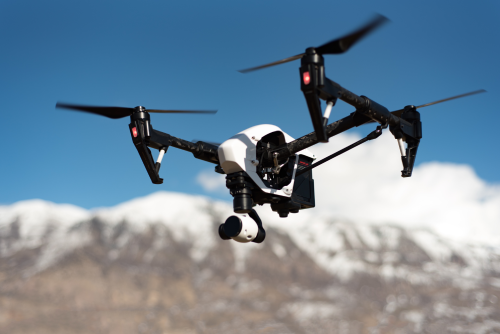
How drones are used in land record surveys is becoming an important question in India, where outdated maps, unclear parcel edges, and on-ground changes often lead to confusion and disputes. A properly planned drone survey can create an updated, geo-referenced map quickly, but it works best when combined with ground verification, accurate control points, and the correct legal process for record updates.
For revenue work, village property mapping, layout verification, or boundary checks, drones are not a magic shortcut. They are a fast and highly visual measurement tool that can make land records clearer when used the right way.
Quick Take
- Drones help land record surveys by capturing overlapping aerial photos and turning them into accurate maps.
- The most useful output is usually an orthomosaic, which is a corrected top-down map image tied to real-world coordinates.
- Survey teams use drone data to measure plots, check encroachments, compare old and new boundaries, and prepare maps for field verification.
- In India, drones are especially useful for village property mapping, peri-urban layout checks, road widening surveys, and resurvey work.
- A drone map alone does not decide legal ownership. Official record changes still need the process required by the relevant authority.
- Accuracy depends on the full workflow: flight planning, control points, camera quality, processing, and on-ground checks.
- Before any flight, verify the latest DGCA and local authority requirements, airspace permissions, and operational compliance.
What a land record survey actually means
A land record survey is not just about flying over a plot and drawing a line.
In practical terms, it usually includes some combination of:
- identifying parcel boundaries
- checking survey numbers or plot numbers
- mapping roads, drains, common land, and structures
- measuring area
- matching current ground reality with older maps or records
- preparing data for resurvey, mutation support, subdivision, acquisition, or dispute review
In India, the exact record format varies by state. One office may work with village maps and survey numbers, while another may use municipal plot plans, property cards, or revenue maps. The terminology changes, but the core problem is often the same: the map on paper and the land on the ground do not fully match.
That is where drones help.
They create a current visual layer of the area from above. When that visual layer is tied to coordinates and checked against control points on the ground, it becomes much easier to measure land, compare features, and spot changes.
How drones are used in land record surveys
Creating an updated base map
The first major use of drones is to create a fresh map of the site.
A survey drone captures many overlapping photos. Software then uses photogrammetry, which means turning overlapping images into measurement-ready mapping data, to stitch them into one large image called an orthomosaic.
Unlike a normal photograph, an orthomosaic is corrected for perspective and scale, so surveyors can measure from it more reliably.
This helps when:
- older maps are faded, low-detail, or not recently updated
- field features such as roads, houses, walls, canals, and tree lines have changed
- officials need one current visual reference for the entire village or block
Mapping parcel boundaries and subdivisions
Once the orthomosaic is ready, survey teams can mark visible parcel edges such as walls, fences, bunds, roads, and corners.
This is useful in:
- agricultural land subdivisions
- village habitation area mapping
- plotting layouts in peri-urban areas
- checking whether a sold plot matches its intended size and shape
However, this comes with an important caution: a visible fence is not always the legal boundary. The final parcel line must still be verified using records, survey monuments, and field checks.
Detecting encroachments and overlaps
Drones are very effective when the question is not just “Where is the land?” but also “What has changed?”
For example, drone data can help identify:
- construction extending into road margins
- occupation on common land
- overlap between neighbouring parcel claims
- changes along canal banks, drains, or access paths
- structure growth into setback areas in plotted developments
Because the drone map shows the full context from above, it is often easier for officials, landowners, and surveyors to discuss disputed areas using one common visual reference.
Supporting village property mapping
One of the strongest Indian use cases for drones is village-level property mapping in inhabited areas.
Programmes such as SVAMITVA have made this application more visible, but the underlying benefit is broader: drones can map dense settlement areas much faster than many traditional methods alone.
In a village setting, a drone survey can help capture:
- house roofs and building outlines
- internal lanes
- courtyard limits where visible
- public spaces
- common facilities and approach roads
The drone does not replace every ground measurement, especially where boundaries are hidden or disputed. But it gives survey teams a strong base layer for parcel marking and verification.
Comparing before and after changes
Land records often become unclear after physical changes on the ground.
Drones are useful for before-and-after comparison in cases such as:
- road widening
- irrigation work
- flood damage
- erosion along riverbanks
- conversion of agricultural land into plotted layouts
- new fencing or compound wall changes
Because the same area can be flown again using a similar flight plan, drone surveys are good for repeatable documentation over time.
Helping with field verification and stakeholder discussion
A big advantage of drone mapping is that it improves communication.
A printed or digital orthomosaic is much easier for many landowners and local officials to understand than a rough sketch or an old paper map. Survey teams can use it during site visits to:
- identify parcel corners
- ask landowners to point out claimed limits
- compare visible features with official records
- flag disputed strips for further examination
This does not solve every dispute. But it makes the discussion more evidence-based.
A typical drone workflow for land record surveys
A good land record survey is not just about the flight. The full workflow matters.
1. Define the survey objective
Start by being specific.
Is the job meant for:
- updating a village map
- checking a private plot boundary
- measuring land for acquisition
- identifying encroachment
- verifying a plotted layout
- comparing pre- and post-construction conditions
The answer determines the required accuracy, flight area, equipment, and final deliverables.
2. Collect existing records
Before flying, the survey team should gather whatever reference material is available, such as:
- old cadastral maps
- survey numbers or parcel lists
- layout plans
- road or canal alignment drawings
- previous ground survey data
- local landmark information
This is important because the drone map has to be matched to the record system already in use.
3. Check airspace, permissions, and local approvals
The team should verify the latest Indian drone rules and airspace requirements before any flight.
Depending on the operation, this may involve:
- checking whether the area is legally flyable
- using the current official permission system if required
- ensuring the drone and operation meet current compliance requirements
- taking permission from the contracting authority or landowner
- coordinating with district, revenue, panchayat, municipal, or project authorities where relevant
The official process can change, so it is wise to verify the latest guidance before each project.
4. Place control points on the ground
This is one of the most important steps.
Survey teams often use:
- Ground Control Points, or GCPs, which are clearly marked spots measured accurately on the ground
- checkpoints, which are separate points used to test the final accuracy
Even if the drone has RTK or PPK, which are advanced satellite positioning methods, GCPs and checkpoints are still valuable for validation.
Poor control means poor results.
5. Fly the mission with enough overlap
The drone then captures the area using a planned path and consistent height.
For land record work, the team usually aims for:
- clear daylight
- low wind
- enough image overlap
- a camera angle and height suited to the required detail
- safe launch and recovery procedures
The actual flying may be quick. The planning behind it is what makes the survey usable.
6. Process the imagery into survey outputs
After the flight, software processes the photos into mapping products.
Common outputs include:
- orthomosaic
- digital surface model
- point cloud
- contours
- parcel layer or linework
- measurement tables
At this stage, the team should also check for gaps, distortions, and accuracy issues.
7. Verify boundaries on the ground
This is where many bad projects fail.
Surveyors should compare the drone map with:
- record maps
- field markers
- physical occupation
- statements from concerned parties, where required
- control point data
Any uncertain boundary should be flagged for further ground survey, not guessed from imagery alone.
8. Integrate with GIS or record systems
The final step is to convert the drone data into a usable record format.
GIS stands for Geographic Information System, which is software used to store and manage spatial data. Depending on the client, the final output may go into:
- GIS layers
- CAD drawings
- parcel maps
- area schedules
- inspection reports
- resurvey documentation
What a drone survey can deliver
| Output | What it means | How it helps in land record surveys |
|---|---|---|
| Orthomosaic | A corrected top-down map made from many drone photos | Used as the main visual base for parcel marking, road edges, structures, and encroachment checks |
| Point cloud | A dense 3D set of measured points | Useful for detailed terrain and structure representation |
| Digital surface model | A height model of the visible surface, including buildings and vegetation | Helps understand slopes, embankments, drains, and changes in terrain |
| Contour map | Lines showing elevation change | Useful in planning, drainage review, and infrastructure-linked land work |
| Parcel layer | Digitised plot boundaries in GIS or CAD format | Used for area calculation, plotting, and integration with land records |
| Change map | A comparison between two dates or two datasets | Useful for showing new construction, widening, erosion, or encroachment |
Why drones help so much in land record work
The biggest advantage is speed with context.
A traditional ground survey can be accurate, but it takes time to cover large or complicated areas point by point. A drone can capture the same area visually in a fraction of the field time and give the team one common map to work on.
Other practical benefits include:
- faster coverage of large villages, layouts, or agricultural blocks
- safer access in rough, waterlogged, or hard-to-reach terrain
- better visual documentation for disputes and review meetings
- easier repeat surveys for monitoring changes
- simpler area measurement once parcel lines are verified
- smoother integration with modern GIS workflows
For many Indian projects, the best approach is not “drone versus ground survey.” It is “drone plus ground survey.”
The drone gives broad coverage and visual clarity. Ground instruments confirm control, corners, and hidden boundaries.
Where drones have limits
Drones are powerful, but they are not a complete substitute for every survey tool or legal process.
Here are the main limits.
They do not decide ownership
A drone map can support evidence, measurement, and record preparation. It does not automatically settle title, inheritance, or conflicting claims.
Legal ownership questions must follow the procedure required by the relevant authority.
They only see what is visible
If the boundary marker is hidden under trees, bushes, tarpaulin, or dense construction, a normal camera drone may not capture it clearly.
This is a common issue in:
- dense tree cover
- narrow urban lanes
- tightly packed settlements
- monsoon vegetation growth
Accuracy is workflow-dependent
A drone is not “accurate” by default.
The final quality depends on:
- control point quality
- camera calibration
- flight height
- overlap
- processing settings
- coordinate system handling
- field verification
Always ask for an accuracy or quality-check report, not just a map image.
Old maps may not align cleanly
In many places, legacy paper maps were prepared using older methods. When you overlay a modern drone map on them, mismatches can appear.
That does not always mean the drone is wrong. It may mean the old reference needs careful transformation, interpretation, or resurvey support.
Weather and field conditions matter
Wind, harsh shadows, rain, haze, and poor lighting can reduce data quality. Survey timing matters more than many first-time clients realise.
Safety, legal, and compliance points in India
Any drone use for land record surveys must be done carefully and legally.
A few ground rules:
- Verify the latest DGCA rules before flying. Requirements can depend on the aircraft, weight class, operation type, and location.
- Check whether the area is in a permitted airspace category and whether prior approval is required through the current official system.
- Use compliant equipment and qualified operators where the current rules require them.
- If applicable to the drone and operation, confirm NPNT and other current compliance requirements instead of assuming.
- Take written permission from the client, landowner, department, or local authority as needed for the project.
- Avoid unsafe flying over crowds, traffic, schools, sensitive locations, and critical infrastructure unless specifically permitted and properly risk-assessed.
- Respect privacy. Capture only what is necessary for the survey and store data securely.
- Maintain flight logs, battery discipline, calibration records, and data backups.
- If the survey may be used in a dispute, preserve data properly so the workflow is transparent and defensible.
For government-linked or village-level work, local coordination matters almost as much as flight permission. Even where the drone operation itself is permitted, you may still need administrative clearance for the survey activity.
Common mistakes in drone-based land record surveys
Treating the drone flight as the whole job
The flight is only one step. If the project skips records review, control points, or field validation, the final map may look good but still be unusable.
Believing RTK alone solves everything
RTK-equipped drones are helpful, but they do not eliminate the need for checkpoints and, in many projects, well-placed GCPs.
Assuming visible occupation equals legal boundary
A fence, crop line, or wall may reflect current use, not the legally recognised parcel edge.
Ignoring coordinate system issues
If the drone data, old cadastral map, and ground survey are not in the same reference system, parcels can appear shifted.
This is a common technical problem that can create major confusion.
Flying at the wrong time
Tall crop cover, deep shadows, monsoon growth, or seasonal waterlogging can hide important features. Timing the survey around visibility is often critical.
Using weak deliverables
Some providers hand over only a JPEG image.
For serious land record work, you may also need:
- parcel line files
- coordinate lists
- area statements
- ground control details
- accuracy report
- clearly named layers in GIS or CAD format
Promising instant record updates
A good drone survey can support record correction or resurvey. It does not guarantee immediate mutation, title correction, or dispute closure.
A practical example
Imagine a peri-urban village where a new road has widened, several plots have been sold, and old access paths have shifted.
A drone-based land record survey could help like this:
- The survey team collects old village maps, plot references, and road alignment data.
- They obtain the necessary flight and local administrative clearances.
- Ground control points are established across the village.
- The drone flies the village in blocks and creates an orthomosaic.
- Surveyors digitise visible parcel edges, roads, drains, and new structures.
- The map is checked on the ground with local officials and affected landholders.
- Areas where occupation and records do not match are flagged for detailed review instead of being altered blindly.
- The final outputs go into GIS and report form for the authority handling the update.
That is the real value of drones here: faster mapping, clearer evidence, and better decisions, not guesswork.
FAQ
Are drone land record surveys legal in India?
They can be, but only if the operation follows the latest DGCA and other applicable requirements. Airspace status, drone compliance, operator qualifications, and local administrative permissions should all be checked before flying.
Can a drone survey prove land ownership?
No. A drone survey can support measurement, mapping, and evidence. Legal ownership and official record changes still depend on the relevant land administration and legal process.
How accurate is a drone survey for land records?
It can be very accurate when done properly with RTK or PPK, ground control, checkpoints, and strong processing. But the exact result depends on terrain, visibility, equipment, and workflow. Ask for an accuracy report, not just a verbal claim.
Are drones better than total stations or ground GPS?
For large-area coverage and visual documentation, often yes. For hidden boundary points, precise corner confirmation, and some legal survey tasks, ground instruments are still essential. The best results usually combine both.
Can drones survey land under trees?
Regular camera-based drone mapping struggles under dense canopy because it only sees the top surface. In such areas, ground survey or, in specialised cases, LiDAR may be needed.
What should I ask a survey provider before hiring them?
Ask about: – compliance and permissions – drone type and positioning method – GCPs and checkpoints – expected deliverables – coordinate system – accuracy reporting – data ownership and storage – field verification process
How long does a drone land survey take?
The flying itself may be quick, but permissions, control setup, processing, and boundary verification can take much longer. A serious survey is rarely just a one-day “fly and finish” job.
What drone setup is commonly used for this work?
For many land record jobs, an RGB camera drone with RTK or PPK support is common. Large rural blocks may suit other platforms, while dense vegetation may require additional methods. The right setup depends on the site and required output.
Do small private landowners benefit from drone surveys too?
Yes, especially for boundary clarification, subdivision planning, and documentation before purchase or development. But even for a small plot, make sure the survey is tied to recognised control and official records if the result will be used formally.
Final takeaway
Drones are used in land record surveys because they make mapping faster, clearer, and easier to review, especially across villages, layouts, and changing peri-urban areas. But the useful way to think about them is simple: a drone gives you a strong measurement and evidence layer, while ground control, field verification, and legal procedure make that layer trustworthy.
If you are planning a land record survey, do not ask only, “Can a drone fly this area?” Ask, “Will the team deliver verified boundaries, proper control, usable GIS or CAD outputs, and a workflow that stands up to official scrutiny?” That is what turns drone imagery into a survey you can actually use.
