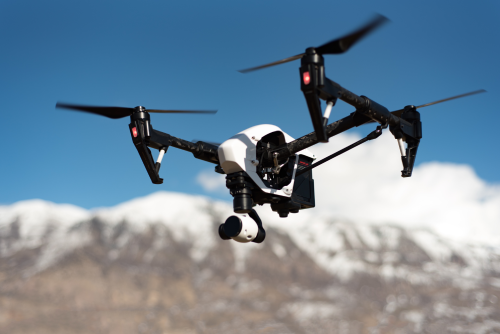
How drones are used in construction progress tracking is simpler than it sounds: they fly the same route at regular intervals, capture site data, and turn it into visual proof of what changed. For builders, contractors, consultants, and real estate teams in India, that means faster site updates, safer inspections, and clearer reporting than relying only on manual photos and site walks.
When used properly, drones help compare planned work with actual progress, measure earthwork and stockpiles, document milestones, and spot delays before they become expensive.
Quick Take
- Drones are mainly used to capture repeatable aerial photos, videos, maps, and 3D site models.
- Construction teams use this data to track weekly or monthly progress, verify completed work, and identify delays early.
- The most useful outputs are:
- overhead site maps
- before-and-after comparisons
- 3D models
- volume calculations for soil, sand, and aggregates
- progress reports for clients and management
- Drones are especially useful on large or complex sites such as housing projects, roads, metro work, solar parks, warehouses, and industrial campuses.
- Good results depend on flying the same route consistently, using the right software, and defining what progress needs to be measured.
- In India, always verify the latest DGCA, Digital Sky, airspace, pilot qualification, and site permission requirements before operating.
What construction progress tracking really means
In construction, “progress tracking” is not just about taking nice aerial photos.
It usually means answering practical questions such as:
- Which areas are complete, in progress, or delayed?
- How much earthwork has been done?
- Has the contractor cleared, excavated, filled, or paved the planned area?
- Are materials available where they are needed?
- Is the site layout changing as planned?
- Do client reports match what is actually visible on the ground?
- Are there safety or access issues slowing work?
Traditionally, these answers come from site walks, engineer notes, phone photos, spreadsheets, and manual survey work.
That still matters.
But drones add a faster visual layer over the whole site. Instead of checking only a few points, teams can review the entire project from above and compare it across dates.
Why drones fit construction sites so well
Construction sites change constantly.
One week you see excavation and foundation work. A few weeks later there may be slab casting, material stockpiles, access roads, drainage lines, or façade progress. On a large site, those changes are hard to capture accurately from ground level alone.
Drones help because they can:
- cover large areas quickly
- follow the same flight path every time
- create consistent visual records
- reduce the need to physically access difficult or risky areas
- generate measurements, not just images
That last point is important.
A drone is not only a flying camera. With the right flight pattern and software, it can produce data that supports decisions.
Traditional tracking vs drone-based tracking
| Method | Traditional site walk and manual photos | Drone-based progress tracking |
|---|---|---|
| Coverage | Limited to selected areas | Whole site or corridor coverage |
| Speed | Slower on large sites | Fast for large open areas |
| Repeatability | Depends on who took the photos | Same route can be flown repeatedly |
| Visual proof | Scattered images | Structured aerial record over time |
| Measurement | Often manual and partial | Can support mapping, volumes, and comparisons |
| Safety | May require entering active zones | Reduces exposure to some hazardous areas |
| Reporting | Can be subjective | Easier to standardize and share |
The best projects usually combine both methods.
Drones provide the aerial record. Engineers, surveyors, and site managers provide context, technical checks, and final decisions.
The main ways drones are used in construction progress tracking
Aerial photo updates
This is the simplest and most common use.
A drone captures high-resolution images of the site from fixed angles every week or every month. These images show:
- structure growth
- road formation
- foundation completion
- site clearing
- crane and equipment placement
- stockyard movement
- temporary facilities and access changes
For clients and management teams, these photos are easy to understand without needing technical software.
They are especially useful in progress presentations, investor updates, and milestone documentation.
Aerial video reports
Video gives a broader narrative.
A short, stable drone video can show how different parts of a project connect:
- entry and access roads
- tower locations
- basement excavation zones
- drainage alignment
- utility corridors
- façade and roof work
- external development
Video is useful when the audience is non-technical, such as developers, senior management, marketing teams, or external stakeholders.
But for serious progress tracking, video alone is not enough.
If the goal is measurement or comparison, structured photo mapping is more valuable than only cinematic footage.
Orthomosaic maps
An orthomosaic is a large overhead map created by stitching together many drone images.
Unlike a simple photo, it is corrected so that distances and positions are more consistent across the image. In practical terms, it becomes a measurable top-down site map.
Construction teams use orthomosaics to:
- compare site progress between dates
- mark completed and pending zones
- check road alignment and site layout
- monitor excavation spread
- verify material storage locations
- review boundary conditions
- document external development work
For example, on a plotted development or township project, an orthomosaic can show which roads, drains, and utility trenches are complete and which plots are still untouched.
3D models and point clouds
A 3D model gives a more realistic representation of the site’s shape and elevation.
A point cloud is a dense set of measured points in 3D space generated from images or other sensors. Survey and engineering software can use it to understand terrain, structures, and volume.
These outputs are helpful for:
- earthwork analysis
- terrain changes
- slope monitoring
- excavation and fill assessment
- checking large structural progress
- comparing as-built conditions with design data
On a large cut-and-fill site, such as an industrial platform or logistics park, a 3D model is far more useful than isolated photos.
Volume calculations
This is one of the biggest money-saving uses of drones.
By mapping stockpiles or terrain, teams can estimate volumes of:
- excavated soil
- backfill
- aggregate
- sand
- rubble
- embankments
This helps with:
- contractor billing support
- material planning
- productivity tracking
- stock control
- checking whether movement on site matches reported work
Important caution: the accuracy needed for billing, claims, or contractual decisions should be agreed in advance. Drone volume estimates can be excellent when captured and processed properly, but the method, accuracy standard, and acceptance criteria must be clear.
Planned vs actual comparison
Some project teams overlay drone outputs with drawings, CAD layouts, or BIM models.
BIM means Building Information Modeling, a digital model containing building geometry and project information.
This comparison helps answer questions like:
- Has the road been laid along the intended alignment?
- Is excavation complete up to the planned footprint?
- Are the completed zones matching the current project schedule?
- Is a structure lagging behind the planned stage?
This is especially useful for PMCs, EPC contractors, infrastructure developers, and owners managing large multi-package projects.
Site logistics and workflow monitoring
Progress tracking is not only about the building itself.
Drones also help monitor:
- internal traffic flow
- material laydown areas
- plant and machinery locations
- temporary roads
- worker access routes
- waste and debris accumulation
- congestion points on site
This can reveal why progress is slowing in certain zones.
For example, if material movement to one block is blocked by poor access during the monsoon, a drone map makes that visible quickly.
A typical drone workflow for construction progress tracking
The best results come from a repeatable process, not random flying.
Step 1: Define what “progress” means for the project
Before flying, the team should decide what exactly needs to be monitored.
Examples:
- excavation quantity
- floor-by-floor structural progress
- road length completed
- solar table installation spread
- stockpile movement
- façade completion
- external development works
If this step is skipped, the drone may collect lots of visuals but very little useful information.
Step 2: Set a flight schedule
Most projects use a regular schedule such as:
- weekly
- fortnightly
- monthly
- milestone-based
Consistency matters more than frequency.
A weekly flight at the same time of day and similar route usually produces better comparisons than irregular flights done only when someone asks for photos.
Step 3: Do legal, site, and safety checks
Before each operation, confirm:
- the site owner or client has approved the flight
- the area is legally flyable under current Indian rules
- the required permissions, pilot qualifications, and drone compliance conditions are met
- weather is acceptable
- takeoff and landing zones are safe
- workers and machines are informed if needed
This is not optional.
Construction sites are active, crowded, and sometimes close to sensitive areas or urban zones.
Step 4: Capture repeatable data
For progress tracking, repeatability is everything.
That usually means:
- same flight path
- same altitude
- similar camera angle
- adequate image overlap for mapping
- consistent naming of files and dates
For measurement-oriented work, teams may also use RTK or ground control.
RTK means Real-Time Kinematic positioning, a method that improves location accuracy. It is especially useful when the site needs reliable mapping and volume calculations.
Step 5: Process the data
After the flight, software can generate:
- selected progress photos
- videos
- orthomosaic maps
- 3D models
- contour maps
- volume reports
- date-wise comparisons
Not every project needs all of these.
A small residential project may need only fixed-angle photos and a simple overhead map. A highway package may need corridor mapping and earthwork progress analysis.
Step 6: Compare with baseline and previous dates
Progress becomes meaningful only when compared against something.
That could be:
- last week’s flight
- the original site condition
- a master plan
- a milestone schedule
- a design model
This step is where drone data becomes a management tool rather than just media content.
Step 7: Create a report people can actually use
A useful progress report should not dump hundreds of raw photos on the client.
It should answer key questions clearly:
- what changed since last report
- what is complete
- where delays are visible
- what needs site attention
- whether stockpile or earthwork quantities changed
- which zones need follow-up
A one-page visual summary is often more effective than a giant folder of unlabelled files.
A practical example
Imagine a 12-acre residential project in Pune with three towers, basement work, internal roads, and a clubhouse.
A drone flight every Saturday morning can show:
- Tower A slab progress by floor
- Tower B excavation and retaining work
- Tower C material staging area
- internal road preparation
- stormwater line trenching
- debris accumulation near the east boundary
- stockpile reduction indicating fill work consumed during the week
Now compare that with last week’s map and the contractor’s stated milestone update.
The project manager can quickly verify whether the reported progress is visible, whether work is shifting to the right zones, and where site coordination is needed.
That is the real value of drones in progress tracking.
Where drone progress tracking is most useful in India
Residential and commercial real estate
Developers, contractors, and sales teams often need clear project visibility.
Drones help with:
- tower-wise progress
- podium and basement work
- amenity area development
- landscaping and road progress
- investor or buyer updates
Roads, highways, rail, and metro projects
Linear infrastructure is hard to monitor from ground level.
Drones are useful for:
- corridor-wide progress review
- embankment development
- bridge approach work
- culvert locations
- material stockyards
- access and logistics planning
Solar parks and large industrial sites
These projects spread over large open areas, which suits drone mapping well.
Teams can track:
- grading and levelling
- structure installation spread
- cable trenching
- substation area development
- access roads and drainage
Warehouses, logistics parks, and factories
Such sites often need progress reports for multiple stakeholders.
Drones help document:
- earthwork and plinth preparation
- steel structure erection
- roofing progress
- paving and yard development
- utility routing
- overall site readiness
Public projects and smart infrastructure
Municipal, industrial, and utility projects can use drones for:
- water treatment plant construction
- canal or drainage work
- urban road packages
- campus development
- depot and terminal projects
In India, this is particularly useful where stakeholders are spread across contractor teams, owners, consultants, and government departments.
What different stakeholders gain from drone tracking
Project managers
They get faster visual review across the full site and can spot where work is ahead or behind.
Engineers and survey teams
They get additional data for layout review, earthwork checks, and site documentation.
PMCs and consultants
They can produce more structured, date-based reporting for owners and lenders.
Owners and developers
They get independent visual evidence of milestone progress, useful for management reviews and decision-making.
Contractors
They can show work completed, defend claims with better evidence, and improve planning.
Sales and communications teams
They can use selected visuals to show visible project advancement, while technical teams use the more detailed mapping outputs.
Benefits that matter in practice
The biggest benefits are not flashy. They are operational.
Faster site visibility
A drone can cover in minutes what may take hours to inspect on foot.
Better documentation
You get a dated visual record that is easy to compare later.
Safer monitoring
Teams can review hard-to-access or active areas without entering every zone physically.
Improved coordination
Management, engineering, consultants, and clients can look at the same evidence.
Better volume and earthwork control
Where the workflow is correct, drone mapping can support practical quantity checks.
Earlier issue detection
Blocked access, material shortage, idle areas, drainage problems, and uneven progress become visible sooner.
Stronger reporting
Weekly or monthly reports become far clearer when they include maps and comparisons instead of only text updates.
Limits you should understand before depending on drones
Drones are useful, but they are not magic.
They cannot replace all ground checks
Aerial data cannot fully replace on-site engineering inspection, quality testing, or statutory measurement.
Accuracy depends on method
If you need reliable volume or measurement outputs, you need proper capture, processing, and control. Casual flying is not enough.
Weather can disrupt the workflow
Strong wind, poor light, rain, dust, and heat can affect both flight safety and data quality. In India, monsoon planning matters.
Dense urban sites may be complicated
Tall buildings, restricted airspace, signal issues, and limited takeoff space can make urban operations harder.
Indoor progress is limited
Standard drones are much more effective outdoors. Interior work still often needs handheld cameras, 360 cameras, or manual inspection.
Too much data can become useless
If files are not organized and reports are not structured, teams may stop using the data altogether.
Choosing the right drone setup
You do not always need the most expensive platform.
What matters is matching the drone to the job.
| Site need | Suitable setup focus | Why it matters |
|---|---|---|
| Small building site, basic reporting | Stable camera drone with good image quality | Enough for repeat photo and video updates |
| Medium to large site, mapping needed | Mapping-capable drone with repeatable mission planning | Better for orthomosaics and comparisons |
| Earthwork, stockpile, regular measurement | Drone with strong positioning accuracy such as RTK-enabled workflow | More reliable for volume and terrain outputs |
| Industrial or complex site | Enterprise setup with zoom, strong safety features, and software integration | Better control, reporting, and site adaptability |
When comparing options, focus on:
- image quality
- flight stability
- repeatable flight planning
- battery ecosystem
- support and repairs in India
- software compatibility
- wind handling
- obstacle awareness
- positioning accuracy if mapping is important
Safety, legal, and compliance in India
Construction sites are not private airspace just because a company owns the land.
Before flying any drone for progress tracking in India, verify the latest official requirements. Rules, permissions, platform processes, and compliance details can change.
As a practical minimum, check the following:
- whether the site is in a permitted airspace category for the intended operation
- whether the drone model and operation type require registration or other compliance steps
- whether the pilot needs a valid remote pilot qualification for that category of operation
- whether Digital Sky or any current permission workflow applies
- whether NPNT, or No Permission, No Takeoff, is relevant for your drone and mission
- whether the client or site owner has given written approval
- whether there are nearby airports, defence areas, government facilities, power infrastructure, or other sensitive locations
- whether the site’s internal EHS rules allow the operation
Also follow basic site safety discipline:
- keep a clear takeoff and landing area
- brief workers if flying near active zones
- avoid hovering unnecessarily over people
- pause operations if cranes, lifts, or other hazards create conflict
- maintain visual awareness and an emergency landing plan
- manage batteries carefully in hot weather
Privacy matters too.
If the site is in a dense city area, avoid capturing neighbouring homes, private terraces, or unrelated properties more than necessary for the job.
If you are running a business service, also verify insurance expectations, client contractual requirements, data handling responsibilities, and report confidentiality.
Common mistakes teams make
Treating progress tracking like a cinematic shoot
Nice video is useful, but if there is no repeatable mapping workflow, it may not answer management questions.
Flying a different route every time
If altitude, angles, and positions keep changing, comparison becomes weak.
Not defining the report format in advance
Clients may ask for “drone progress tracking” but what they actually need could be: – weekly fixed photos – monthly map – stockpile volume – tower-wise status – delay markers
Define this before the first flight.
Ignoring accuracy needs
If someone later wants to use casual imagery for quantity disputes, problems start. Decide the required accuracy level in advance.
Delivering raw files without insight
A folder of 400 photos is not a progress report.
Flying in poor light or bad weather
Low light, heavy haze, strong wind, and rain reduce data quality and increase risk.
Forgetting site coordination
A drone flight should not surprise crane operators, safety officers, or security teams.
Overpromising that drones replace surveyors or engineers
They do not. They support them.
Poor file and date management
If imagery from April, May, and June is mixed without labels, time-based analysis becomes painful.
FAQ
How often should a construction site be flown?
For many projects, weekly or fortnightly works well. Fast-moving sites may benefit from weekly flights, while slower projects may use monthly updates. The main rule is consistency.
Are drones accurate enough for construction measurement?
They can be very useful for mapping and volume estimation when the workflow is designed properly. But the required accuracy for billing, claims, or contractual acceptance should be agreed in advance and verified by the relevant technical team.
Can a small builder benefit from drone progress tracking?
Yes. Even a small or medium project can benefit from monthly aerial updates, especially for client reporting, layout visibility, and milestone documentation.
Is RTK necessary for every construction project?
No. For simple photo and video progress reports, it may not be necessary. For regular mapping, volumetrics, and better positional consistency, RTK or another proper control method becomes more valuable.
Can drones track indoor construction progress?
Usually not very well compared with outdoor work. Standard progress tracking is best suited to open or partially open areas. Indoor work often needs other tools such as handheld cameras or 360 documentation.
What is the most useful output for a project manager?
Usually a combination of fixed-angle photos, an overhead orthomosaic map, and a short written summary of visible changes since the last flight.
Do drone flights save time on large infrastructure projects?
Yes, especially on roads, rail corridors, solar sites, and large industrial campuses where walking the full site is slow and incomplete.
Do I need a certified pilot in India for construction drone work?
That depends on the drone category, operation type, and the current rules in force. Always verify the latest DGCA and Digital Sky requirements before operating commercially or on client sites.
Can drones help with contractor-client disputes?
They can support documentation by providing dated visual evidence and, in some cases, measurements. But they should be part of a broader reporting and verification process, not the only basis for a dispute.
Final takeaway
Drones are most valuable in construction progress tracking when they are treated as a repeatable reporting system, not just a flying camera. If you want better visibility on site progress, start with a clear reporting goal, a fixed flight schedule, and a compliant workflow suited to Indian conditions.
