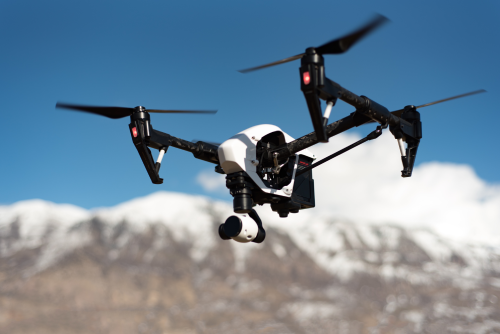
Anti-poaching patrols are one of the most practical conservation uses of drones. In anti-poaching patrols, drones are used to scan large areas faster than foot teams alone, spot suspicious movement, and guide authorised forest staff toward the right place at the right time.
They are not a magic replacement for rangers, trackers, or local intelligence. But when used well, drones can make patrols quicker, safer, and more targeted.
Quick Take
- Drones help anti-poaching teams cover more ground with fewer blind spots.
- Their most useful jobs are boundary checks, hotspot monitoring, night surveillance, and real-time support for ground teams.
- Thermal cameras detect heat differences and are especially useful after dark, but they need trained operators.
- Multirotor drones are best for hovering and close inspection. Fixed-wing and hybrid platforms are better for longer patrol routes.
- Drones work best when tied to maps, radio communication, and a ground response plan.
- They are less effective under dense tree cover, in bad weather, or when teams rely on them without good field intelligence.
- In India, anti-poaching flights should only be done by authorised agencies or approved operators, with the latest DGCA, airspace, and forest-area permissions verified before flying.
Why drones matter in anti-poaching patrols
Poaching often happens in places that are hard to watch continuously: forest edges, river crossings, grasslands, waterholes, remote tracks, and fence lines. Ground patrols remain essential, but they are limited by terrain, visibility, staff availability, and time.
A drone gives patrol teams an aerial view that can answer urgent questions quickly:
- Is there a person or vehicle where there should not be one?
- Has a patrol route or boundary been breached?
- Is there movement near a water source after dark?
- Is a suspected camp, trap line, or carcass visible from above?
- Which route should the nearest ground team take?
For Indian conditions, this matters a lot. Protected landscapes here vary widely: open grassland in the northeast, dry deciduous forest in central India, wetlands, mangroves, riverine belts, and hilly terrain. A patrol method that works in open land may fail inside thick canopy. Drones do not solve every surveillance problem, but they add a flexible layer between satellites and boots on the ground.
How drones are actually used in anti-poaching patrols
1. Boundary and route surveillance
One of the simplest uses is checking vulnerable edges of a reserve or sanctuary.
Instead of sending multiple teams to physically inspect long stretches of boundary, an authorised drone crew can scan:
- Fence lines
- Unofficial entry paths
- Riverbanks and dry stream beds
- Patrol roads
- Village-facing edges
- Vehicle tracks entering from unusual directions
This is especially useful early morning and late evening, when light is changing and movement may be easier to miss from the ground.
2. Hotspot monitoring
Most poaching risk is not spread evenly. It tends to cluster around predictable locations, such as:
- Waterholes
- Salt licks
- Animal trails
- Carcass sites
- River crossings
- Grazing edges
- Areas with previous snare recoveries
A drone can be launched for short, focused checks rather than random patrols. This improves battery use and makes the operation more purposeful.
For example, if a patrol team finds signs of recent human entry near a water source, a drone can be used to scan nearby clearings and approach routes before rangers move in.
3. Night patrol support with thermal imaging
Thermal cameras detect heat differences rather than normal visible light. That makes them valuable when anti-poaching teams need to find people, vehicles, or camp activity after sunset.
In open terrain, thermal drones can help spot:
- Human movement
- Motorbikes or vehicles
- Small campfires or warm campsites
- Boats on water bodies
- Heat signatures near restricted zones
But thermal imaging has limits:
- It does not identify a person by itself.
- It cannot reliably see through thick canopy.
- Rocks, warm ground, livestock, and machinery can create confusion.
- Operators need training to interpret what they are seeing.
Thermal is best used as a search and cueing tool. Once a heat source is seen, ground teams still need to verify it.
4. Guiding response teams in real time
This is where drones often deliver the biggest value.
A drone crew can watch a situation from above and guide field staff using radio or secure communication. That can help teams avoid walking into the wrong direction, approaching from a risky side, or wasting time in rough terrain.
Typical real-time support includes:
- Relaying the latest location of a suspect or vehicle
- Suggesting the safest access route
- Checking whether a crossing point is clear
- Monitoring if a suspect splits from a group
- Warning ground teams about wildlife nearby
The drone is not making the enforcement decision. It is giving better situational awareness to those who are.
5. Detecting signs of illegal activity
Drones are often better at spotting patterns than single objects. In daylight, they may help identify:
- Fresh vehicle tracks
- Disturbed ground
- Temporary camps
- Cut fence sections
- Boats in restricted areas
- Unusual foot movement on game paths
In open or semi-open areas, drones may also help locate carcasses more quickly, especially when there are vultures, scavenger activity, or a visible disturbance around the site.
Snare detection from the air is possible in some cases, but it should not be oversold. Fine wire snares under foliage are hard to spot. Drones are more useful for scanning likely snare zones, access routes, or fence gaps than for finding every hidden trap directly.
6. Post-incident documentation
After a suspected poaching event, drones can help document the scene before it is disturbed.
That may include:
- Aerial photos of the site
- Mapping tracks and approach paths
- Recording the position of camps, boats, or cut sections
- Creating a broader scene overview for investigation records
This is useful for internal review and planning future patrols. Any evidentiary use should follow the agency’s official procedure, because chain of custody and proper documentation matter.
7. Deterrence in some situations
A visible drone does not stop all poaching. But in certain areas, it can increase perceived surveillance and make illegal entry riskier.
Deterrence works best when:
- Poachers know patrols are active
- Drone flights are unpredictable
- Ground response is fast
- Surveillance is linked to actual enforcement
A drone without follow-up can become just noise.
The sensors and payloads that matter most
The airframe gets attention, but the payload often determines whether the mission is useful.
| Sensor or feature | What it does | Best use in anti-poaching patrols | Main limitation |
|---|---|---|---|
| RGB camera | Normal daylight video and photos | Boundary checks, route scans, evidence photos, camp detection | Poor performance in darkness |
| Thermal camera | Shows heat differences | Night patrols, locating people or vehicles, search support | Hard to identify exact objects without training |
| Zoom camera | Magnifies distant targets | Checking suspicious movement without flying too low | Image quality varies with platform |
| Low-light camera | Better visibility at dusk or dawn | Early morning and evening patrols | Still weaker than thermal in total darkness |
| Mapping workflow | Creates geotagged images or area records | Post-incident documentation, hotspot analysis | Slower than simple live surveillance |
Which drone type is used for what
Different patrol problems need different platforms.
| Drone type | Best for | Strengths | Limits |
|---|---|---|---|
| Multirotor | Hotspot checks, hovering, close inspection, night overwatch | Precise control, can hold position, easier to launch in tight spaces | Shorter endurance |
| Fixed-wing | Long route patrols, wide-area surveillance in open terrain | Covers more ground efficiently | Cannot hover, needs more planning |
| Hybrid VTOL | Longer coverage with vertical takeoff | Useful where you need endurance and limited launch space | More complex and often costlier to operate |
For many forest teams, a practical mix is more effective than one “perfect” drone:
- A multirotor for rapid launch and detailed inspection
- A longer-endurance platform for broad patrol sectors
A typical anti-poaching drone workflow
The best anti-poaching drone operations are not random flights. They follow a repeatable process.
1. Start with intelligence, not the aircraft
Teams first identify likely risk zones using:
- Previous incident records
- Animal movement patterns
- Ground patrol reports
- Seasonal access routes
- Nearby human activity
2. Plan the mission
Before launch, the team decides:
- Patrol objective
- Launch and recovery point
- Day or night sensor choice
- Communication method with ground teams
- Emergency landing options
- Weather and visibility limits
3. Verify legal and operational clearance
The crew confirms the latest required approvals, airspace status, and site permissions before flight.
4. Fly a search pattern or targeted route
Depending on the mission, the drone may:
- Fly a grid over a hotspot
- Follow a boundary line
- Scan a water body
- Hold over a suspect route
- Revisit a recent incident location
5. Verify suspicious activity
If something unusual appears, the operator does not immediately assume it is poaching. The crew checks for context:
- Is it an authorised staff member?
- Is it livestock or wildlife?
- Is it a tourist vehicle on a permitted route?
- Does the heat source match a real person or just warm ground?
6. Guide the response team
If the threat is credible, the drone crew relays the location and movement to field staff.
7. Record and review
After landing, the team logs the flight, preserves relevant footage, and updates the patrol plan.
Where drones deliver the biggest benefits
Faster coverage with limited manpower
A single drone team can inspect areas that would take much longer to reach on foot. That does not replace patrol staff, but it helps them use their time better.
Safer decision-making
Sending staff blindly into thick grass, riverbanks, or a suspected camp can be risky. An aerial view helps reduce unnecessary exposure.
Better use of patrol vehicles and field teams
Instead of spreading teams thinly, a drone can help prioritise where the response should go first.
Stronger documentation
Aerial images can capture the wider picture around an incident, not just the immediate spot on the ground.
Smarter patrol planning over time
Repeated drone observations can reveal patterns:
- Which routes are used most often
- When certain hotspots become active
- Which sectors need more foot patrols
- Where fencing or signage is weak
The limits you should not ignore
Drones are useful, but anti-poaching patrols fail when teams expect too much from them.
Dense canopy hides activity
In thick forest, a drone may see only the treetops. It cannot reliably watch what is happening under dense cover.
Endurance is always a constraint
Even a good platform has limited flight time. If operations are badly planned, the drone may have to return before the mission becomes useful.
Weather can stop everything
Wind, rain, fog, dust, and high humidity can reduce visibility, stability, and safety.
Thermal images can be misread
A warm rock, livestock, or an authorised vehicle can look suspicious from the air if the operator is inexperienced.
Communications can break down
Many protected areas have poor network coverage. If drone crews and ground teams cannot coordinate, the value of live surveillance drops sharply.
Wildlife disturbance is a real concern
Flying too low or too close can stress animals. The mission should support conservation, not create a new problem.
India-specific legal, safety, and compliance points
Anti-poaching flights in India are not casual drone outings. They involve wildlife protection, restricted or sensitive locations, and in some cases night operations.
Keep these points in mind:
- Such patrols should be carried out only by authorised government teams, approved research or conservation projects, or properly contracted operators working under written permission.
- Verify the latest DGCA rules, Digital Sky requirements, and applicable airspace restrictions before any flight.
- Requirements can vary depending on the drone category, location, mission type, and time of operation.
- Protected areas may need separate approvals from forest, wildlife, park, or district authorities in addition to aviation-related permissions.
- Border regions, military areas, and other sensitive zones may have stricter controls.
- Do not publish live animal locations, patrol routes, or sensitive footage on social media.
- Evidence handling should follow official procedure. Randomly sharing clips can compromise investigations and wildlife safety.
- Night operations need extra care: trained crews, visual observers where required, clear emergency procedures, and conservative go/no-go rules.
- Battery safety, fire safety, and safe launch zones matter even in field camps.
If you are a service provider or NGO considering this work, do not assume normal commercial drone experience is enough. Wildlife-area operations demand a different standard of planning and responsibility.
Common mistakes in anti-poaching drone programs
Buying the drone before defining the mission
A long-range aircraft is not automatically better. First decide whether the real need is hotspot monitoring, night search, route patrol, or documentation.
Flying too low to “get a better view”
Descending aggressively may disturb wildlife, alert suspects, and create unnecessary risk.
Treating thermal as foolproof
Thermal helps locate heat sources. It does not replace trained interpretation and ground verification.
Ignoring response integration
A drone that finds suspicious movement but has no linked ranger response team adds little real value.
Focusing only on the pilot
You also need:
- An observer or spotter
- A field coordinator
- A communication plan
- Battery and maintenance discipline
- Data handling procedures
Overlooking terrain reality
What works in open grassland may not work in dense sal forest, mangroves, or steep valleys.
Sharing footage carelessly
Sensitive wildlife imagery can reveal animal locations, patrol habits, and weak points in a reserve.
FAQ
Can a normal hobby drone be used for anti-poaching patrols?
For serious anti-poaching work, a basic hobby drone is usually not enough. Endurance, sensor quality, reliability, data handling, and legal authorisation all matter. In India, such missions should only be conducted by authorised entities or approved operators.
Are thermal cameras essential?
Not always, but they are extremely valuable for dusk, night, and low-visibility patrols. For daytime boundary checks or post-incident documentation, a good regular camera may be enough. The right choice depends on the actual patrol problem.
Do drones replace forest guards or foot patrols?
No. Drones extend the reach of ground teams, but they do not replace local knowledge, tracking skills, or enforcement presence. The best systems combine aerial surveillance with field response.
Can drones see poachers under trees?
Usually not through dense canopy. In open or lightly covered areas, they can be very effective. In thick forest, their value is often in checking edges, clearings, routes, and nearby openings.
Are night drone flights allowed in India for this kind of work?
Do not assume they are automatically allowed. Night operations can involve extra restrictions, approvals, and procedures. Always verify the latest official DGCA and local authority requirements for the exact location and mission.
What is better for anti-poaching patrols: multirotor or fixed-wing?
Multirotors are better for hovering, inspecting, and quick launches. Fixed-wing platforms are better for scanning larger areas. Many organisations benefit from using each type for different jobs.
Can drones detect snares directly?
Sometimes in open terrain or along fence lines, but not reliably in every case. Small hidden wire snares under vegetation are hard to spot from the air. Drones are better at identifying suspicious areas and access patterns than promising perfect snare detection.
Is live streaming necessary?
Not always, but real-time viewing becomes much more useful when a ground team is ready to act. For documentation-only missions, recorded footage may be enough. For active patrols, live situational awareness is a major advantage.
Are drones useful in monsoon conditions?
Their usefulness can drop significantly in rain, wind, fog, and poor visibility. Even when the aircraft is technically capable, mission safety and image quality may not be acceptable. Conservative weather decisions are important.
Can NGOs run anti-poaching drone patrols independently?
They should not do so informally. Any such operation should be coordinated with the relevant government and protected-area authorities, and it must comply with current aviation and site-specific permissions.
Final takeaway
Drones are most effective in anti-poaching patrols when they do one simple thing well: give authorised field teams better information faster. If you are evaluating this use case in India, start with the patrol problem, not the drone model—then build the operation around legal approvals, trained crews, the right sensor, and a ground team that can actually respond.
