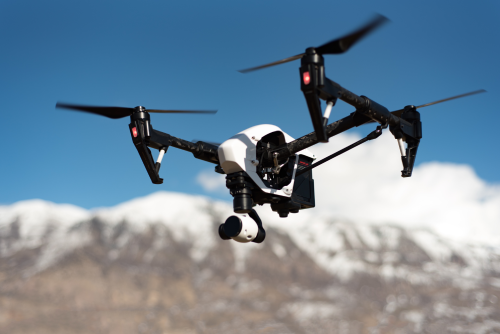
How drones are improving crop health monitoring becomes obvious the moment you compare a full-field aerial map with a farmer’s usual ground walk. Instead of checking a few rows and guessing the rest, a drone can show stress patterns, irrigation problems, and uneven growth across the whole field in one view.
For Indian agriculture, where weather shifts fast and problems like pest spread, nutrient stress, and water imbalance can escalate quickly, that earlier visibility can make decisions faster and more precise. The real advantage is not just flying a drone, but turning those images into timely action on the ground.
Quick Take
- Drones help farmers and agri-professionals spot crop stress earlier than manual scouting alone.
- They are especially useful for finding patterns such as patchy growth, waterlogging, dry zones, clogged drip lines, stand gaps, and pest or disease hotspots.
- A standard RGB camera is enough for many visible issues. Multispectral and thermal sensors can reveal hidden stress, but they need better planning and interpretation.
- The best results come from repeat flights over the same field, followed by on-ground inspection and agronomy-based action.
- In India, drones are often most practical through service providers, farmer producer organisations, custom hiring models, or shared business use rather than one-farmer ownership.
- Before flying, always verify the latest DGCA, Digital Sky, airspace, and local compliance requirements for your location and type of operation.
Why crop health monitoring needs a better tool
Traditional crop monitoring usually means walking the field, checking leaves, and looking for visible changes. That still matters, but it has limits.
A person on foot can only cover so much area in a day. In large fields, sugarcane blocks, cotton plots, orchards, or scattered farms, it is easy to miss early signs of trouble. Even in small Indian holdings, stress often begins in patches, not everywhere at once. If you only inspect one part of the field, you may miss the real problem area.
This becomes more difficult during:
- Peak growth stages when the canopy is dense
- Water-sensitive periods after irrigation or rainfall
- Pest-prone windows in crops like cotton and paddy
- Labour shortages or tight farm schedules
- Situations where multiple plots need checking on the same day
Drones do not replace field knowledge. They make field knowledge more targeted.
How drones improve crop health monitoring
They cover more area in less time
A drone can survey a field far faster than a manual walk and create a stitched top-down map, often called an orthomosaic. This gives a full-field view instead of scattered observations.
That matters because crop issues are rarely random. They often follow patterns linked to:
- Irrigation flow
- Soil variation
- Slope and drainage
- Input application quality
- Pest entry points
- Previous crop residue or field history
A drone helps you see those patterns at once.
For example, a farmer may think an entire wheat field looks weak. A drone map may show that the problem is only along one side, where irrigation is not reaching properly. That changes the solution from “more input everywhere” to “fix one specific problem area.”
They reveal patterns the eye can miss from ground level
When you stand inside a field, your view is limited by crop height, row spacing, and perspective. From above, uneven canopy cover becomes much easier to spot.
This is useful for identifying:
- Patchy germination or transplanting
- Areas with poor plant stand
- Waterlogged or dry zones
- Lodging after wind or rain
- Row-to-row variation in orchards and plantations
- Weed-heavy sections
- Zones where crop vigor is lower than the rest of the field
Even a normal camera can highlight these patterns clearly. You may not know the exact cause immediately, but you know where to investigate first.
They make early detection more practical
Many crop problems do not start with dramatic symptoms. Stress often appears as a subtle change in colour, canopy density, or temperature before the whole field looks damaged.
Drones improve early monitoring because they can be flown repeatedly at important crop stages. Once you start comparing field maps over time, small changes become easier to notice.
In Indian conditions, this can help when:
- Cotton begins showing uneven vigour before a visible outbreak
- Paddy has low-lying areas holding excess water
- Sugarcane ratoon growth is poor in selected strips
- Orchard trees show irregular canopy health due to drip blockage
- Maize or wheat reveals nutrient-related patchiness in certain zones
Early detection does not guarantee a perfect diagnosis, but it gives you more time to respond.
They help farmers act more precisely
Good crop health monitoring is not about collecting pretty maps. It is about making better decisions.
A drone survey can help you decide:
- Which part of the field needs physical inspection first
- Whether the issue is widespread or localized
- If irrigation is uneven
- Whether replanting is needed in certain patches
- Which rows or blocks need closer pest scouting
- Where input use may be unnecessary
This can reduce wasted labour and avoid blanket decisions based on assumptions.
In practice, many users get the most value when drone maps are used to direct people on the ground. Instead of walking every acre equally, the team goes straight to the suspicious zone, checks plants closely, and then decides the next step.
They create a record you can compare over time
One of the biggest advantages of drones is consistency. If you fly the same field at similar stages and conditions, you can compare one map with the next.
That helps answer practical questions such as:
- Did the stressed patch expand or recover?
- Did the irrigation fix actually work?
- Is the crop now more uniform after intervention?
- Are some orchard rows repeatedly weaker than others?
- Is one block consistently underperforming across seasons?
These records can also help agronomists, farm managers, FPO teams, and agri-service businesses communicate more clearly with farmers and clients. They provide visual evidence, not just opinions.
What drones can actually see
Not every drone sees the same thing. For crop health monitoring, the sensor matters as much as the aircraft.
| Sensor type | What it captures | Best for | Main limitation |
|---|---|---|---|
| RGB camera | Normal colour images | Visible stress, stand gaps, lodging, weed patches, canopy variation, drainage issues | Cannot reliably show hidden stress before visible symptoms appear |
| Multispectral camera | Light bands beyond normal visible colour | Plant vigor mapping, stress pattern detection, vegetation indices such as NDVI | More expensive, needs careful flight planning and interpretation |
| Thermal camera | Heat differences across the field or canopy | Water stress clues, irrigation issues, blocked drips, uneven canopy temperature | Easy to misread without proper timing and ground checks |
RGB is often the best place to start
Many first-time users assume they need advanced sensors. Often, they do not.
A good RGB map can already reveal:
- Missing plants
- Poor emergence
- Uneven crop density
- Drainage channels
- Waterlogging marks
- Damaged patches
- Physical field variation
For many farm decisions, that is enough to justify a flight.
What multispectral data adds
Multispectral cameras capture specific wavelengths of light that plants reflect differently depending on their condition. This allows the software to create vegetation indices.
One common example is NDVI, or Normalized Difference Vegetation Index. In simple terms, it is a map that estimates relative plant vigor by comparing how plants reflect red and near-infrared light.
Useful point: these maps show patterns, not final diagnoses.
A low-vigor area on an NDVI-style map might be caused by:
- Low nitrogen
- Water stress
- Disease pressure
- Root damage
- Soil compaction
- Poor plant stand
So the map tells you where to look, not always exactly what the cause is.
What thermal data adds
Thermal sensors measure temperature differences. In agriculture, hotter canopy zones can indicate stress, especially when plants are not cooling themselves properly through transpiration.
Thermal imaging can help in:
- Detecting irrigation irregularities
- Finding blocked drippers in orchards
- Identifying dry strips or wet patches
- Comparing canopy temperature across rows or blocks
But thermal data is sensitive to time of day, weather, and surface conditions. It should be used carefully and interpreted with field knowledge.
A practical drone workflow for crop health monitoring
The most useful farm drone work follows a simple process.
1. Start with one clear question
Do not fly just because the drone is available. Decide what you want to find out.
Examples:
- Why is one paddy section staying yellow?
- Is irrigation uniform across this orchard?
- Which cotton blocks need pest scouting today?
- Are there stand gaps after sowing?
- Did last week’s intervention improve the weak patch?
A clear question makes the flight more useful.
2. Fly at the right time and in stable conditions
Try to keep monitoring flights consistent. Similar time of day and similar lighting make comparisons more reliable.
Also avoid:
- Rain
- Strong wind
- Very low visibility
- Conditions that make mapping poor or unsafe
For crop monitoring, timing matters as much as equipment. A beautifully flown mission at the wrong crop stage may still provide little value.
3. Create a usable field map
A proper mapping flight usually involves overlapping images that software stitches into one field map. This stitched output is much more useful than random photos.
If the map quality is poor, your decisions may also be poor.
4. Mark the hotspots
Once the map is ready, identify areas that look different from the rest of the field:
- Weak zones
- Hotter zones
- Low-vigor patches
- Wet or dry strips
- Missing rows
- Tree-to-tree differences
These become priority points for field inspection.
5. Ground-truth the result
This step is non-negotiable.
Ground-truthing means physically checking what the drone map is showing. Without it, you may confuse one issue for another.
A low-vigor patch could be:
- Nutrient deficiency
- Termite or pest damage
- Water stagnation
- Shade
- Soil salinity
- Weeds
- Tractor compaction
The drone points you to the problem zone. The ground inspection confirms the cause.
6. Take action and recheck
The final step is action:
- Fix irrigation
- Improve drainage
- Inspect for pests
- Adjust agronomy inputs with expert advice
- Replant gaps if practical
- Monitor whether the patch recovers
Then fly again after a suitable interval to see if the field response matches the intervention.
That repeat cycle is where real value builds.
Where drones make the biggest difference in India
Drones can help in almost any crop, but the benefits are stronger in some situations than others.
Paddy and other water-sensitive crops
Drones can help reveal:
- Uneven standing water
- Patchy crop establishment
- Lodging after weather events
- Areas recovering poorly after transplanting
In monsoon-dependent farming, fast checks after a rain event can be especially useful.
Cotton
Cotton often develops localized stress before the whole field visibly declines. Drone maps can help teams focus scouting on the most suspicious zones instead of walking all blocks equally.
Sugarcane
Sugarcane is difficult to inspect fully from ground level once it grows dense. Drone imagery can help with:
- Gap spotting
- Uneven ratoon growth
- Waterlogging patterns
- Block-level comparison
Orchards and vineyards
Fruit crops often benefit the most from drone monitoring because tree and row differences are easier to map. Drones can help find weak rows, missing trees, canopy variation, and irrigation issues.
FPOs, agri-service providers, and large farm operations
In India, this is often the strongest use case.
Many farmers may not need to own a drone individually. But a shared service model can make sense for:
- Farmer producer organisations
- Input advisory businesses
- Seed production operations
- Contract farming networks
- Corporate or institutional farms
Drones are powerful, but they are not magic
It helps to be realistic about what drones can and cannot do.
Drones are great at showing field variability. They are not perfect at identifying the exact reason without on-ground verification.
They work best when:
- The farm has a clear monitoring goal
- Flights are repeated at key crop stages
- Maps are compared over time
- Someone knowledgeable checks the crop physically
- The result leads to actual decisions
They make less sense when:
- The user expects one flight to solve every agronomy problem
- There is no process to inspect and act on the map
- The farm is too small to justify ownership and no shared model exists
- Compliance, weather, or operator skill are ignored
For many Indian users, hiring a trained service provider is the better first step than buying equipment immediately.
Common mistakes to avoid
Treating drone maps as final diagnosis
A map showing stress is not the same as identifying the cause. Always inspect the crop on the ground before making input decisions.
Flying only once
Crop health monitoring works best as a repeat process. One flight is a snapshot. A series of flights shows trends.
Using advanced sensors without a clear need
Many users jump to multispectral or thermal too early. If the main problem is visible stand gaps or drainage, RGB may already be enough.
Ignoring timing consistency
Comparing flights from very different light or crop conditions can create misleading conclusions.
Assuming every weak patch is a disease outbreak
Crop stress has many causes. Water, nutrients, soil, weeds, and pests can all look similar from above.
Making blanket input decisions
The value of drone monitoring is precision. If you still apply the same action everywhere without checking the hotspot, you lose much of the benefit.
Overlooking map quality
Poor overlap, shaky flying, bad processing, or incorrect geotagging can produce misleading maps.
Safety, legal, and compliance in India
Agricultural use does not automatically mean unrestricted use.
Before flying a drone for crop health monitoring in India, verify the latest official requirements on:
- Airspace permissions and no-fly restrictions
- Digital Sky procedures, if applicable to your operation
- Drone registration and equipment compliance
- Pilot qualification or certification requirements
- Any NPNT-related requirement for the class of drone and operation
- Temporary local restrictions near sensitive areas
Also follow basic operational discipline:
- Get landowner consent before flying over farmland
- Avoid capturing neighbouring homes, roads, or people unnecessarily
- Stay clear of power lines, towers, livestock areas, and public movement
- Do not fly in poor weather or low visibility
- Maintain visual awareness of the drone unless specific permissions allow otherwise
- Use battery, return-to-home, and emergency procedures properly
If you are hiring a service provider, ask them about their operating process, safety checks, and compliance status rather than assuming everything is covered.
FAQ
Can a drone detect crop disease directly?
Not always. A drone usually detects stress patterns, colour change, canopy difference, or temperature variation. The exact cause may still need field inspection, lab testing, or agronomy expertise.
Is an RGB camera enough for crop health monitoring?
Often, yes. RGB is very useful for visible problems such as gaps, drainage issues, lodging, uneven growth, and weed patches. Multispectral and thermal become more valuable when you need deeper stress pattern analysis.
Are drones useful for small farms in India?
They can be, but ownership may not be the most practical option. Small farms often benefit more from shared services through local providers, FPOs, or community-level operations.
How often should a field be surveyed?
It depends on the crop and purpose. In general, one flight per critical crop stage or after a major event such as heavy rain, irrigation trouble, or suspected pest pressure is more useful than random flying.
Can one drone do both crop monitoring and spraying?
Sometimes, but not always efficiently. Spraying drones and mapping drones are often designed for different jobs. Many professional setups use separate platforms or at least separate workflows.
Do drone maps replace agronomists or field scouts?
No. They make those people more effective. The drone shows where to check first; the agronomist or scout confirms what is actually happening.
Are drones better than satellites for crop monitoring?
For field-level detail, yes, drones are usually much sharper and more flexible in timing. But satellites cover far larger areas and can be useful for broad trends. In practice, the two can complement each other.
What is the biggest reason drone monitoring fails?
Usually, it is not the drone. It is poor workflow: unclear objectives, bad timing, weak map quality, and no ground verification or follow-up action.
Do I need permission to fly over my own farm?
Do not assume ownership of land automatically gives full freedom to fly a drone. Always verify the latest DGCA, Digital Sky, and local airspace rules before operating.
Final takeaway
Drones are improving crop health monitoring because they turn guesswork into visible field evidence. If you want real value, start with one clear farm problem, use the right sensor for that job, verify findings on the ground, and repeat the process over time. For most Indian users, the smartest next step is not “buy a drone first,” but “test drone monitoring on a real crop decision and see what changes.”
