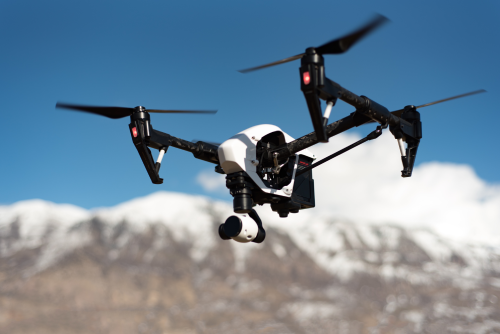
Drone delivery in India is not a simple yes-or-no story. It is already real in a few practical, high-value use cases, but it is not yet the everyday “parcel from the sky” experience many people imagine for regular online shopping.
If you are asking whether drones can deliver medicines, lab samples, urgent parts, or supplies across difficult terrain in India, the answer is: yes, in the right setup. If you are asking whether most Indian homes will soon receive routine e-commerce orders by drone, that future is still limited by regulation, safety, infrastructure, weather, and economics.
Quick Take
- Drone delivery in India is already a reality in controlled and specialized operations.
- The strongest current use cases are:
- medical logistics
- remote and difficult-terrain transport
- industrial and campus deliveries
- urgent business-to-business consignments
- Mass consumer doorstep delivery in crowded Indian cities is still more “future” than “present”.
- The biggest barriers are:
- airspace approvals
- beyond visual line of sight operations
- safe landing or hand-off points
- battery and payload limits
- weather reliability
- cost per successful delivery at scale
- For most businesses, drone delivery works best when the payload is:
- light
- time-sensitive
- high-value
- moving along a repeatable route
- Before planning any commercial operation, verify the latest DGCA, Digital Sky, airspace, pilot, and operational compliance requirements. Do not assume a trial, news headline, or old rule still applies.
The short answer: both future and reality
Drone delivery in India is already real, but only in the parts of logistics where drones solve a clear problem better than road transport.
That usually means one of three things:
- The route is hard, slow, or unreliable by road.
- The item is urgent enough that minutes matter.
- The payload is small enough for a drone to carry safely and repeatedly.
This is why healthcare and remote logistics keep coming up whenever drone delivery is discussed seriously. A blood sample, vaccine box, diagnostic kit, antivenom pack, or emergency medicine consignment can be light, valuable, and time-critical. A drone does not need to beat a truck on every route. It only needs to win on the routes where delay is expensive or dangerous.
By contrast, the image of drones dropping everyday shopping orders into apartment complexes across Mumbai, Delhi, Bengaluru, or Hyderabad is still far from normal reality. Indian cities are dense, unpredictable, crowded, and full of practical complications that do not show up in glossy demos.
What “drone delivery” really means
Many people imagine drone delivery as a drone carrying a package from a warehouse and dropping it at a customer’s house. In practice, a real delivery system is much more than an aircraft.
A workable delivery operation usually includes:
- the drone or aircraft itself
- payload packaging
- route planning software
- airspace checks
- trained operators
- launch and recovery procedures
- battery charging or swapping
- tracking and proof of delivery
- emergency handling
- maintenance and logs
- customer or site-side hand-off
There are also different delivery models.
Point-to-point delivery
This is the most practical model today.
The drone flies between two known locations, such as:
- hospital to laboratory
- warehouse to store
- campus building to campus building
- control room to field site
This works because both ends are prepared for the operation.
Campus or private-site delivery
This happens inside a controlled area such as:
- industrial plants
- mines
- ports
- large institutional campuses
- research parks
This is easier than open public delivery because the operating environment is more controlled and landing zones can be planned.
Last-mile consumer delivery
This is the popular idea: the drone flies to a customer’s home or building.
This is the hardest model to scale in India because of:
- crowd density
- balconies, wires, terraces, and trees
- moving people and vehicles
- limited landing areas
- apartment society restrictions
- public safety concerns
VLOS and BVLOS
You will often hear two terms:
- VLOS: Visual Line of Sight, where the operator can see the drone during flight
- BVLOS: Beyond Visual Line of Sight, where the drone flies beyond what the operator can directly see
Routine large-scale delivery usually needs BVLOS capability. That is why regulation and approvals are such a big part of the story. Do not assume that because a drone can technically fly a route, it is legally or operationally ready for commercial delivery there.
Where drone delivery is already working in India
India is not starting from zero. Drone delivery has already shown real value in several sectors.
Healthcare and medical logistics
This is the clearest Indian success case.
Drones are useful for moving:
- blood samples
- diagnostic kits
- medicines
- vaccines
- emergency medical supplies
- small laboratory payloads
Why it works:
- medical payloads are often lightweight
- urgency is high
- fixed routes are possible
- remote clinics and district facilities may be far apart by road
- time savings can directly improve care
In parts of India where roads are poor, rivers interrupt travel, or terrain is hilly, a drone can turn a long multi-leg trip into a direct air route.
A practical example: a primary health centre in a remote area needs to send a sample to a district lab. By road, the sample may take hours and be affected by traffic or terrain. By drone, the route may become shorter and more predictable, if the corridor, handling, packaging, and approvals are in place.
Industrial and enterprise campuses
This is another realistic near-term use case.
Think of sites where people need to move:
- spare parts
- tools
- sensors
- inspection components
- documents
- small consumables
Examples include:
- large factories
- power projects
- mining areas
- port zones
- oil and gas facilities
- logistics parks
- private campuses
Why it works:
- routes are repetitive
- start and end points are known
- operations can be coordinated internally
- value comes from time saved, not public spectacle
If a site engineer needs a small replacement part across a large industrial area, a drone may save a vehicle trip, entry formalities, and waiting time.
Remote geography and difficult access
India has many places where the map looks short but the trip is not.
Drones can be especially useful in:
- hilly regions
- flood-affected areas
- island locations
- river-separated settlements
- disaster-response situations
- areas with weak road connectivity
This does not mean drones replace trucks, boats, or helicopters. It means they can fill the gap for small urgent payloads when surface routes are too slow or blocked.
Urgent B2B deliveries
For business-to-business logistics, drone delivery can already make sense when the item is:
- small
- important
- urgent
- moving between known facilities
That includes:
- legal or banking documents in secure controlled workflows
- prototype parts
- testing samples
- service spares
- maintenance items
These operations are far easier to manage than unpredictable household deliveries.
Where it is still more future than present
Drone delivery becomes much harder when the route is not fixed, the destination is unpredictable, or the delivery point is unsafe.
Everyday e-commerce to homes
This is the part most people think of first, and it is still the least mature.
The challenges are obvious once you look beyond the headline:
- Where exactly does the drone land?
- What if the home is in a dense lane with overhead wires?
- What if the customer lives in a high-rise apartment?
- What if a crowd gathers?
- What if a pet, child, or parked vehicle is directly below?
- What if the package requires an OTP, signature, or return handling?
The “last 20 metres” of delivery is often harder than the air route itself.
Food delivery at city scale
Food seems like a natural drone use case because it is lightweight and time-sensitive. But city-scale food delivery is not easy.
Problems include:
- hot meals need stable packaging
- frequent short trips demand high operational efficiency
- restaurants and homes may not have safe takeoff and landing zones
- many delivery points are in crowded urban environments
- regular operations need reliability in wind, rain, and heat
In a few controlled settings like campuses or private communities, it may work. At large city scale, it is still more limited than many assume.
Heavy or bulky parcels
Drones are poor replacements for vans or bikes when parcels are:
- large
- heavy
- cheap but bulky
- low urgency
If a road vehicle can move ten or twenty parcels efficiently in one trip, a drone carrying one small package at a time may not be the better business model.
Where drone delivery makes the most sense in India
The best Indian use cases tend to look like this:
| Good fit for drone delivery | Poor fit for drone delivery |
|---|---|
| Light payloads | Heavy or bulky goods |
| Time-sensitive shipments | Low-urgency general parcels |
| Remote or hard-to-reach routes | Easy road routes with high delivery density |
| Fixed point-to-point corridors | Random one-off destinations |
| High-value or mission-critical items | Cheap commodity items |
| Controlled campuses or prepared sites | Crowded public spaces with no landing zone |
That is the core truth many hype-driven discussions miss. Drone delivery is not about replacing every delivery method. It is about solving the small set of logistics problems where air mobility has a real advantage.
The real obstacles holding drone delivery back
The technology matters, but the operational system matters even more.
Airspace and regulatory approvals
In India, drone operations are not just a matter of buying hardware and launching flights.
Commercial delivery can involve questions around:
- airspace category
- permitted flight zones
- Digital Sky permissions
- drone registration or identification requirements
- NPNT, which means No Permission, No Takeoff, where applicable
- remote pilot requirements
- operational approvals
- whether BVLOS is permitted for your exact mission
If your plan depends on routine BVLOS delivery, verify the current legal pathway very carefully. This is one of the biggest gaps between “demo video” and “real business”.
Landing zones and hand-off
A drone still needs a safe and predictable way to complete the delivery.
Possible hand-off methods include:
- landing and manual pickup
- delivery to a marked pad
- delivery to a locker or docking point
- controlled lowering systems in specialized cases
Each method adds complexity. In India, rooftops, balconies, terraces, and lanes are rarely as standardized as they look in foreign concept videos.
Weather and operating reliability
Indian conditions are tough on small aircraft.
Operators have to deal with:
- monsoon rain
- strong gusts
- high temperatures
- dust
- humidity
- reduced visibility in some seasons
A route that looks easy in a dry-season trial may become unreliable across the full year.
Battery, payload, and range trade-offs
Drone delivery is a constant trade-off between:
- payload weight
- flight time
- range
- safety margin
- reserve power
- weather tolerance
A heavier package usually reduces range and endurance. A longer route may require more reserve planning. Manufacturer claims should never be taken at face value without real operational testing.
Economics beyond the drone price
This is where many excited buyers go wrong.
The cost of drone delivery is not just the aircraft. Real operating cost includes:
- pilot and crew
- batteries
- charging systems
- maintenance
- spare parts
- packaging
- software
- compliance paperwork
- insurance or liability coverage where applicable
- training
- route surveys
- failed or weather-cancelled trips
- recovery procedures
A drone may save time but still lose money if utilization is poor or the route is badly chosen.
Public safety, privacy, and trust
Even a technically successful delivery model can fail if people do not trust it.
Common concerns include:
- drones flying over people
- noise
- camera privacy fears
- risk of dropped payloads
- security of valuable items
Winning public confidence matters just as much as technical performance.
Safety, legal, and compliance checks in India
If you are exploring drone delivery in India, treat compliance as part of the business model, not as an afterthought.
Before operating, verify the latest official position on:
- the drone category and whether your aircraft is permitted for the intended mission
- registration or identification requirements
- NPNT applicability
- remote pilot training or certification requirements
- airspace restrictions and permission workflows on Digital Sky
- whether your planned operation is VLOS or BVLOS
- payload carriage and delivery restrictions
- local site permissions from landowners, facilities, campuses, hospitals, or industrial operators
- state or district-level administrative expectations, where relevant
- insurance and liability expectations from clients and partners
- emergency procedures, lost-link procedures, and incident reporting obligations
Also remember that delivery operations may trigger other compliance issues beyond drone rules alone, such as:
- medical sample handling
- cold-chain procedures
- hazardous material restrictions
- data protection and tracking records
- facility-level safety protocols
If any part of the route or workflow is unclear, get professional regulatory guidance before investing in scale.
How to judge if drone delivery fits your business
If you are a startup, hospital network, warehouse operator, or industrial company, do not begin with the drone. Begin with the mission.
1. Define the payload
Ask:
- What exactly are we moving?
- How much does it weigh?
- Is it fragile, temperature-sensitive, or regulated?
- How urgent is it?
A 500-gram lab sample box is a very different mission from a 3-kg consumer parcel.
2. Study the route
Look at:
- distance
- terrain
- obstacles
- weather exposure
- mobile network quality if needed
- safe takeoff and recovery points
- alternative ground route
A drone is most valuable when the air route is much better than the road route.
3. Check compliance before buying hardware
Many teams do this in the wrong order.
Do not buy aircraft first and ask legal questions later. First verify:
- whether the route is legally operable
- whether your team can obtain the required permissions
- whether the operation style is even feasible under current rules
4. Design the ground workflow
A delivery mission succeeds on the ground, not only in the air.
You need:
- who packs the item
- who scans it
- who authorizes dispatch
- who receives it
- what happens if the receiver is absent
- how proof of delivery is recorded
- what happens during delay or diversion
5. Run a pilot on one corridor
Start with one repeatable route, not ten.
Good pilot routes are:
- fixed
- low complexity
- high urgency
- easy to monitor
Measure performance such as:
- average delivery time
- dispatch-to-receipt time
- weather cancellations
- successful completion rate
- battery turnaround time
- cost per completed mission
6. Build redundancy
Ask what happens if:
- wind picks up
- GNSS signal degrades
- the landing site is blocked
- the battery shows abnormal health
- the network link fails
If your workflow has no backup, it is not ready.
7. Scale only after repeatability
A drone delivery business is not proven by one successful demo. It is proven by safe, repeatable, compliant operations over time.
Common mistakes people make about drone delivery
Confusing a camera drone with a delivery system
A consumer camera drone is not automatically a delivery platform. Delivery aircraft, payload systems, safety logic, and operational planning are different.
Chasing the flashiest use case first
Urban doorstep delivery looks exciting, but fixed corridor medical or campus logistics is often more practical and commercially sensible.
Ignoring the hand-off problem
Many teams focus on flying to the destination but forget the hardest part: safe package transfer.
Underestimating Indian weather
Heat, dust, humidity, and monsoon conditions can affect reliability, battery performance, and maintenance intervals.
Thinking speed always equals savings
A faster delivery is valuable only if the route actually needs speed and the operation remains cost-effective.
Skipping community communication
If people near the route do not know what is happening, they may feel unsafe or object to operations. Trust matters.
Assuming a pilot project means nationwide readiness
A successful trial in one district, one campus, or one corridor does not mean the same model will immediately work across India.
What will decide the next phase of drone delivery in India
A few factors will shape whether India moves from isolated success stories to broader adoption.
Better clarity for scalable operations
Especially for repeatable delivery corridors and more advanced operations beyond simple visual-range flying.
More purpose-built infrastructure
Landing pads, secure lockers, rooftop delivery points, and standardized dispatch zones can make a huge difference.
Better economics through utilization
Drone delivery becomes more viable when the same route is flown often enough to justify the system, crew, maintenance, and compliance overhead.
Stronger integration with ground logistics
The winners may not be companies that “replace” bikes and vans, but those that combine drones with them intelligently.
More reliable aircraft and safety systems
Improved navigation, health monitoring, redundancy, and recovery systems will matter more than marketing buzzwords.
Enterprise adoption before consumer adoption
India is more likely to see serious growth first in healthcare, infrastructure, industrial campuses, and specialized logistics before widespread household delivery.
FAQ
Is drone delivery legal in India?
It can be legal in specific approved operations, but legality depends on the drone, airspace, mission type, permissions, and operating method. Always verify the latest DGCA and Digital Sky requirements before planning or investing.
Can I expect regular online shopping parcels by drone in Indian cities soon?
Not at scale for most households yet. Some trials and niche deployments are possible, but routine mass consumer doorstep delivery in dense cities still faces major operational and regulatory challenges.
What items are best suited for drone delivery?
The best candidates are lightweight, urgent, and high-value items such as medical supplies, lab samples, critical documents, and small spare parts.
Are drones cheaper than delivery bikes or vans?
Not automatically. Drones can be cheaper or more valuable on specific routes, especially remote or time-critical ones, but not for every parcel type. Total cost depends on utilization, crew, maintenance, weather downtime, and compliance overhead.
How far can a delivery drone fly?
There is no single answer. Range depends on the aircraft design, payload weight, weather, reserve safety margin, and legal operating constraints. Always test real-world performance rather than relying only on brochure numbers.
Can drones deliver food in India?
In limited controlled environments, possibly yes. At broad city scale, food delivery by drone is still difficult because of landing constraints, urban density, weather, and repeatability.
Do businesses need trained pilots for delivery operations?
Commercial operations generally require trained personnel, and the exact pilot or certification requirement depends on the drone class and mission. Verify the latest official rules before operating.
What is the biggest technical challenge in drone delivery?
Many people think it is flight range, but in practice the hardest issue is often the full system: permissions, route safety, landing or hand-off, weather reliability, and repeatable operations.
Will drone delivery replace traditional logistics in India?
No. It is more likely to become a useful layer within logistics, handling select routes where speed or access matters, while ground vehicles continue to handle the majority of deliveries.
What should Indian startups focus on first?
Focus on narrow, repeatable use cases with clear value: healthcare corridors, campus logistics, industrial spares, or remote-area supply routes. Avoid building a business plan around mass consumer delivery before the operational basics are proven.
Final takeaway
Drone delivery in India is already real where the mission is clear: light payloads, urgent need, fixed routes, and prepared sites. For everyday household shopping in crowded cities, it is still more future than reality.
If you are a business, look for one corridor where drones solve a specific problem better than road transport. If you are a consumer waiting for all online orders to arrive by air, do not expect that shift overnight. And before any real operation, verify the latest DGCA, Digital Sky, and local compliance requirements first.
