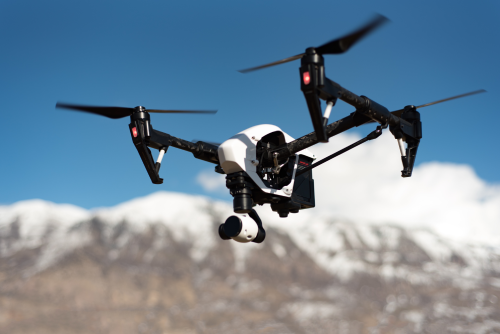
Daylight should make drone photography easy, but it often creates the toughest aerial photos: harsh shadows, blown skies, glare, and flat colours. The best camera settings for drone photography in daylight are really about control, not brightness. Whether you fly a small beginner drone or a more advanced camera drone, these settings will help you get cleaner, sharper images in typical Indian conditions.
Quick Take
If you want the short version, start here:
- Shoot in RAW or RAW+JPEG, not JPEG only.
- Keep ISO at the lowest clean setting, usually ISO 100.
- Use 4:3 photo format on most drones for maximum image area.
- Lock white balance instead of leaving it on Auto.
- Watch the histogram, not just your phone screen in bright sun.
- Slight underexposure is often better than blown highlights in daylight.
- Use faster shutter speeds when the drone is moving, the wind is strong, or the subject is moving.
- On adjustable-aperture drones, f/4 to f/5.6 is usually the sweet spot.
- Use AEB (auto exposure bracketing) or HDR for bright sky and dark ground scenes.
- ND filters are usually unnecessary for normal daylight still photography.
Why daylight is trickier than it looks
From the ground, daylight seems safe and simple. From the air, it is less forgiving.
Small drone cameras do not handle extreme contrast as well as larger cameras. In India, this gets worse because of strong overhead sun, dust haze, bright concrete rooftops, reflective water, white buildings, and summer glare. A scene that looks beautiful to your eyes may turn into a photo with a washed-out sky and blocked shadows.
The goal in daylight drone photography is not to make the image brighter. The goal is to preserve detail, keep colours consistent, and avoid clipping the brightest parts of the image.
Best camera settings for drone photography in daylight
Shoot in RAW or RAW+JPEG
If your drone offers RAW, use it.
RAW files keep more image information than JPEGs. That matters in daylight because you often need to recover bright clouds, tame glare, lift shadows, or reduce haze later. JPEGs are fine for quick sharing, but they leave you much less room to fix mistakes.
Use:
- RAW if you edit every important image
- RAW+JPEG if you want quick previews plus an editable master file
For real estate, travel, landscape, and commercial work, RAW is the safer choice.
Keep ISO as low as possible
For daylight drone photography, the best ISO is almost always the lowest native setting your drone offers, usually ISO 100.
Why this works:
- Lower ISO gives cleaner files
- Colours hold up better
- Bright highlights are easier to protect
- Fine detail survives editing better
In strong daylight, there is rarely a good reason to let ISO climb. If your drone is in Auto mode, it may raise ISO earlier than necessary, especially when the scene has shadows or dark ground.
Good habit:
- Set ISO manually to 100
- Then control exposure with shutter speed, aperture, or exposure compensation depending on your drone
If your drone has a lowest setting below 100, use that only if the image quality is actually better on your model. On most consumer drones, ISO 100 is the standard safe starting point.
Use a shutter speed that matches the conditions
A drone is not a tripod. Even with a good gimbal, the aircraft can drift, shake slightly in wind, or vibrate during hover. That means your shutter speed for still photos often needs to be faster than you expect.
A practical daylight guide:
- Calm conditions, static landscape: around 1/250 to 1/500
- Mild wind, buildings, general travel shots: around 1/500 to 1/800
- Stronger wind, moving trees, waves, traffic, boats: around 1/1000 to 1/2000
You do not need to chase the fastest possible shutter speed all the time. But if your daylight photos look soft even though focus is correct, a slow shutter is often the reason.
Two useful rules:
- If the drone is fighting wind, increase shutter speed.
- If the subject is moving, increase shutter speed again.
For still photos, fast shutter speeds are usually more useful than fancy filters.
Aperture: what to do if your drone has one
Many beginner drones have a fixed aperture. In that case, skip this section and control exposure with shutter speed and ISO.
If your drone has an adjustable aperture, daylight gives you more flexibility. But small drone sensors do not behave like larger mirrorless or DSLR cameras. Closing the aperture too much can actually reduce sharpness because of diffraction, which is softness caused by light squeezing through a very small opening.
A practical daylight range:
- f/4 to f/5.6: usually the sharpest, most flexible range
- f/2.8: usable, but often brighter than needed in full sun
- f/8: acceptable when needed
- f/11 and smaller: usually avoid unless there is a specific reason
For most daylight shots, set:
- ISO 100
- Aperture around f/4 or f/5.6
- Then fine-tune exposure with shutter speed
If your drone has a fixed aperture, do not worry. You can still get excellent daylight photos by managing shutter speed, ISO, and exposure carefully.
Lock white balance
White balance controls colour temperature, or how warm or cool the photo looks.
If you leave white balance on Auto, the drone may shift colour slightly from frame to frame. That becomes annoying when you are shooting a panorama, a property, or a series of landscape images that should match.
Better approach:
- In sunny daylight, start around 5500K to 6000K
- In cloudy bright daylight, start around 6000K to 6500K
- Or simply use the Daylight or Cloudy preset and keep it locked
This is especially useful in India when you are shooting over mixed surfaces like green fields, red roofs, white terraces, or water. Auto white balance can bounce around too much.
Expose for highlights, not for the shadows
This is one of the biggest upgrades you can make.
In harsh daylight, the sky, clouds, sand, water, white buildings, marble, and rooftops can blow out easily. Once highlights are clipped, that detail is usually gone. Shadows, on the other hand, are often easier to lift later when shooting RAW.
So instead of making the whole frame look bright on your screen, protect the brightest areas.
Use:
- The histogram, which is the brightness graph on your screen
- Zebra warnings, if your drone offers them, to show overexposed areas
- Slight negative exposure compensation if shooting in Auto or semi-auto modes
A good starting point in harsh daylight:
- EV 0 for balanced light
- EV -0.3 for bright open scenes
- EV -0.7 for very reflective scenes such as beaches, water, white rooftops, or marble structures
If the histogram is heavily pressed against the right side, your highlights are in danger.
Use 4:3 photo format for stills
On many drones, 16:9 is just a crop of the full sensor area, while 4:3 uses more of the image. For still photography, 4:3 usually gives you more room to crop later.
Use 4:3 when:
- You want maximum resolution
- You may crop for Instagram, YouTube thumbnails, print, or client layouts later
- You are shooting real estate, landscape, travel, or commercial stills
Use 16:9 only if you specifically need a wider composition straight out of camera and are happy to lose some cropping flexibility.
Focus carefully before each important shot
Not all drone softness is caused by exposure. Sometimes it is just bad focus.
If your drone supports autofocus:
- Tap on your subject or a high-contrast area in the scene
- Wait for focus confirmation
- Take a test shot
- Zoom in and check sharpness before continuing
This matters a lot when photographing buildings, forts, temples, resorts, or farmland patterns with fine detail.
If your drone uses fixed focus, you do not need to adjust focus manually. But you should still check one early test image at full zoom to make sure the result is truly sharp.
Use AEB or HDR for high-contrast scenes
AEB stands for auto exposure bracketing. The drone takes multiple photos at different brightness levels, so you can pick the best one or merge them later.
This is extremely useful in daylight when:
- The sky is much brighter than the ground
- You are photographing cities, valleys, forts, or coastlines
- Buildings have dark shadows and bright highlights
- You want a more balanced file without crushing blacks
Use AEB when the scene is static. If trees, waves, vehicles, or people are moving quickly, merged HDR images can show ghosting or messy edges.
Recommended starting settings for common daylight scenes
Use these as starting points, not fixed rules.
| Scene | ISO | Shutter speed | Aperture if adjustable | White balance | Exposure tip |
|---|---|---|---|---|---|
| Open landscape in clean morning light | 100 | 1/250 to 1/500 | f/4 to f/5.6 | 5500K to 6000K | EV 0 to -0.3 |
| Harsh noon city scene | 100 | 1/500 to 1/1000 | f/4 to f/5.6 | 5500K to 6000K | EV -0.3 to -0.7 |
| Beach, river, lake, backwater | 100 | 1/800 to 1/1600 | f/4 to f/5.6 | 5500K to 6000K | Protect reflections and bright water |
| Windy day with trees or moving traffic | 100 | 1/1000 to 1/2000 | f/4 to f/5.6 | Locked to scene | Prioritise sharpness over perfect brightness |
| Bright cloudy daylight | 100 | 1/250 to 1/500 | f/4 to f/5.6 | 6000K to 6500K | EV 0, add contrast later if needed |
| Hazy urban morning | 100 | 1/500 to 1/800 | f/4 to f/5.6 | 5500K to 6000K | Underexpose slightly, avoid shooting straight into haze |
A simple daylight setup workflow
If you want consistent results, use the same checklist before every important daylight flight.
1. Start with the right photo mode
Set:
- RAW or RAW+JPEG
- 4:3 aspect ratio
- ISO 100
- White balance locked
- AEB available as a backup option
2. Take off and ignore the first impression
Your phone or controller screen can look darker or brighter than reality in strong sunlight. Do not judge exposure by eye alone.
Check:
- Histogram
- Zebra warnings
- Whether bright clouds or rooftops are clipping
3. Set exposure for the brightest important part of the scene
If the sky or white surfaces are blowing out:
- Increase shutter speed
- Close the aperture slightly if available
- Or reduce exposure compensation
4. Focus and confirm sharpness
Before doing a full pass around the scene:
- Tap focus if your drone supports it
- Take one test frame
- Zoom in to confirm sharpness
5. Shoot both a safe frame and a flexible frame
For important scenes, take:
- One normal single RAW image
- One AEB burst if contrast is high
That gives you a clean option and a recovery option.
6. Recheck whenever the light changes
Daylight is not constant. Light changes fast when clouds pass, when you turn toward the sun, or when you move from greenery to reflective surfaces. Recheck exposure often.
7. Review before leaving the location
Do not assume the shoot is done because the drone battery is low. Land, inspect a few files at full zoom, and make sure you actually have usable sharp images.
Do you need ND or polarising filters for daylight photos?
Usually, no.
For normal daylight still photography, ND filters are not essential. They are far more useful for video, where you may want a specific shutter speed for natural motion.
For photos, ND filters make sense mainly when you want creative blur, such as:
- Soft water movement
- Long-exposure landscape effects
- Motion blur as a deliberate artistic choice
That is a niche use case, not a default setting.
Polarising filters can reduce some reflections, but on drones they can be inconsistent because the effect changes as the aircraft changes direction relative to the sun. They are not a reliable fix for poor light.
If you are choosing between learning exposure properly and buying filters, learn exposure first.
India-specific daylight tips
A few things matter more in Indian shooting conditions than many beginners expect:
Haze is a major image killer
In cities and plains, especially in summer or dusty periods, haze can flatten contrast quickly. Shooting after rain often gives cleaner files. If possible, avoid aiming directly into the brightest haze.
White buildings and rooftops clip fast
Marble, terraces, wedding venues, beaches, and modern concrete structures can fool the meter. Slight negative exposure is usually safer than trusting the screen.
Midday light is often the problem, not your drone
If your noon photos look boring, your settings may be fine. The light itself is harsh and flat. Early morning and late afternoon still count as daylight and usually produce much better texture, colour, and shadow shape.
Wind matters more in open fields, coasts, and hill areas
A sunny day can still be a shaky day. If you are shooting in Goa, Kerala backwaters, Rajasthan open terrain, hill stations, or large farmlands, do not let shutter speed drop too low.
Safety and legal checks before every daytime shoot
Camera settings matter only if the flight itself is safe and legal.
Before flying in India:
- Verify the latest official DGCA and Digital Sky guidance for your location and drone category
- Check airspace status, local restrictions, and any site-specific rules
- Avoid airports, sensitive areas, major public gatherings, and locations where drone operations are restricted
- Respect privacy and get consent when filming private property or people
- Avoid crowded places unless you are fully authorised and operating safely
- Maintain visual awareness of the drone instead of staring at the screen the whole time
- Watch for birds, kites, wires, towers, and sudden thermal gusts in hot weather
If you are shooting paid work like real estate, resorts, construction, or events, verify permissions in advance rather than assuming the location is fine.
Common mistakes that ruin daylight drone photos
These are the errors that show up again and again:
-
Shooting JPEG only
You lose too much editing flexibility in harsh daylight. -
Leaving ISO on Auto
The drone may raise ISO when it does not need to, hurting image quality. -
Trusting the screen instead of the histogram
Bright sun makes screens unreliable. -
Leaving white balance on Auto
Your image colours can shift from shot to shot. -
Using too slow a shutter speed in wind
The result is soft photos even if focus is correct. -
Stopping the aperture down too much
On small drone cameras, very small apertures can reduce sharpness. -
Using 16:9 for every still photo
You may be throwing away part of the sensor area. -
Skipping AEB on high-contrast scenes
One bracketed burst can save a difficult shot. -
Expecting filters to fix bad light
Good timing and good exposure matter more. -
Ignoring lens dust or smudges
This is very common in India, especially after takeoff from dusty ground or travel in hot weather.
FAQ
What is the best ISO for daylight drone photography?
Usually ISO 100. The idea is to keep noise low and preserve as much image quality as possible. In normal daylight, there is rarely a reason to use a higher ISO for still photos.
Should I use Auto or Manual mode for daylight photos?
If you are a beginner, Auto can work, but lock ISO and white balance if your drone allows it, and watch exposure compensation. If you want consistent results, Pro or Manual mode gives better control, especially in scenes with bright sky and reflective ground.
What shutter speed is best for daylight drone stills?
A good safe range is 1/250 to 1/500 for calm static scenes. Increase to 1/500 to 1/1000 or faster if there is wind, movement, or fine detail that must stay crisp.
What white balance should I use in daylight?
Lock it instead of using Auto. Around 5500K to 6000K works well in sunny conditions, while 6000K to 6500K works well in cloudy bright conditions. The exact number matters less than keeping it consistent.
Should I shoot RAW or JPEG?
Shoot RAW if the image matters. Use RAW+JPEG if you want quick sharing plus editing flexibility. JPEG alone is fine only for casual use where you do not expect to recover highlights or adjust colour much.
Do I need an ND filter for daytime drone photography?
Not usually for still photos. ND filters are mostly useful for video or for deliberate long-exposure photography. For normal daylight images, correct exposure settings are more important than an ND filter.
Why do my daylight drone photos look flat or hazy?
The usual reasons are harsh overhead light, atmospheric haze, clipped highlights, auto white balance shifts, or low-contrast midday conditions. Shoot earlier or later in the day when possible, use RAW, lock white balance, and underexpose slightly to protect detail.
Is 4:3 better than 16:9 for drone photos?
On many drones, yes. 4:3 often uses more of the sensor and gives you more flexibility to crop later. 16:9 is usually better reserved for video-style framing or when you know you want a wide crop immediately.
Can I use HDR or AEB for every daylight shot?
You can, but it is most useful when the scene has strong contrast and the subject is mostly static. If trees, waves, cars, or people are moving quickly, HDR merges can create unwanted ghosting.
Final takeaway
For your next daylight flight, keep it simple: shoot RAW, use 4:3, lock ISO at 100, lock white balance, and expose for highlights using the histogram. If your drone has a fixed aperture, control brightness with shutter speed and slight negative EV; if it has adjustable aperture, stay around f/4 to f/5.6 most of the time. Master those basics first, and your daylight drone photos will improve more than they will from any filter or editing preset.
