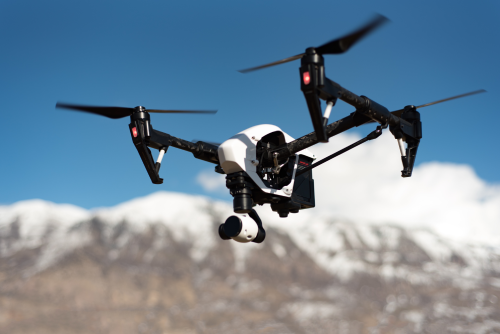
Flood monitoring is one of the most practical and important uses of drones. In India, where monsoon flooding can affect dense cities, river belts, villages, farms, and transport routes, drones help teams see what is happening far faster than ground surveys alone. The real value is not just aerial video, but timely information that helps people make better decisions.
Quick Take
- Drones are used in flood monitoring to map flooded areas, inspect embankments and drains, find safe access routes, locate stranded people, and document damage.
- They are useful before, during, and after floods:
- before floods for risk mapping and preventive inspection
- during floods for rapid situational awareness
- after floods for damage assessment and recovery planning
- The most common outputs are:
- live video feeds
- geotagged photos
- stitched maps called orthomosaics
- comparison reports showing what changed over time
- In India, drones can be especially helpful in:
- urban flooding after heavy rain
- river overflow in low-lying districts
- crop damage surveys
- road, bridge, and culvert inspection
- Drones do not replace boats, rescue teams, satellite data, or ground inspection. They complement them.
- Flying during emergencies has safety and legal implications. Always verify the latest DGCA, Digital Sky, and local authority requirements before operating.
What flood monitoring with drones actually means
When people hear “drone use in floods,” they often imagine a pilot recording dramatic floodwater from above. That is only a small part of the job.
In practice, flood monitoring means using drones to answer specific questions such as:
- Which areas are underwater right now?
- How fast is the water spreading?
- Which roads are still usable?
- Is an embankment, levee, or riverbank showing signs of failure?
- Are culverts or drains blocked?
- Where are people stranded?
- Which houses, fields, or assets have been damaged?
- What changed since the last flight?
That is why the best flood-monitoring missions are planned around decisions, not visuals.
Why drones are useful in flood situations
Floods create two big problems for field teams: access and time.
Roads may be cut off. Water can hide potholes, open drains, or broken pavement. Entering a flooded area on foot or by vehicle may be slow or dangerous. A drone can launch from a safer location and collect a wide view in minutes.
Drones are also useful because they can work at the scale where many flood decisions happen:
- one neighbourhood
- one village cluster
- one river embankment stretch
- one blocked road
- one damaged bridge approach
- one crop belt
This local detail is where drones often beat traditional inspection methods.
Drones vs ground teams and satellites
Ground teams see details well, but they move slowly in flood conditions.
Satellites cover large areas, which is valuable, but monsoon cloud cover can limit optical satellite images. Some radar-based satellites remain useful through cloud, but they may not provide the same level of local visual detail or immediate task-specific coverage. Drones fill that gap by giving on-demand, low-altitude views when conditions and permissions allow.
Where drones fit in the flood cycle
Before flooding: risk mapping and prevention
One of the smartest uses of drones happens before the flood arrives.
A pre-flood drone survey creates a baseline. That baseline can later be compared with flood-time and post-flood data.
Common pre-flood uses
- Mapping low-lying areas near rivers, lakes, and drains
- Inspecting stormwater drains, canals, and culverts for blockage
- Checking embankments for erosion, cracks, slumping, or weak points
- Surveying informal settlements or dense urban edges where flooding risk is high
- Building elevation models for local planning
- Identifying likely water pathways in peri-urban or village areas
For example, a municipality may use drones before monsoon to inspect drain outfalls, identify garbage choke points, and map neighbourhoods where water tends to collect. That helps teams clean or reinforce the right areas before heavy rain.
Why baseline data matters
Without baseline data, post-flood analysis becomes weaker.
If you already know what a road shoulder, riverbank, housing cluster, or crop field looked like before the flood, it is much easier to prove:
- what changed
- how much area was affected
- where erosion began
- which assets were newly damaged
During flooding: rapid situational awareness
This is the phase most people think of first. During an active flood, drones give responders a quick and updated view of the situation.
Common in-flood uses
- Tracking inundation extent, meaning how far floodwater has spread
- Identifying trapped people on rooftops, terraces, or isolated roads
- Finding access routes for boats, ambulances, or relief vehicles
- Checking bridge approaches, road breaches, and washed-out sections
- Monitoring riverbanks and embankments for overtopping or breach risk
- Inspecting urban waterlogging hotspots
- Watching water movement around critical assets such as pumps, substations, or storage yards
In a city, a drone may help determine whether water is only ponding on the surface or if an entire road corridor is unusable. In a river basin district, it may help spot where a breach is developing before teams reach the location physically.
Why repeat flights matter
A single drone flight is just a snapshot.
Flood monitoring becomes much more useful when flights are repeated at planned intervals. For example:
- early morning for overview
- midday after additional rainfall
- evening after water release upstream or after embankment inspection
- next day for change detection
This time-series view helps authorities see whether water is rising, stabilising, or receding.
After flooding: assessment and recovery
Post-flood work is where drone data becomes highly valuable for documentation and planning.
Common post-flood uses
- Mapping damaged homes and public infrastructure
- Measuring erosion along riverbanks and canals
- Recording crop loss extent
- Inspecting damaged roads, culverts, bridges, and drainage works
- Creating evidence for relief planning and contractor scoping
- Supporting insurance or institutional documentation where applicable
- Checking stagnant water areas that may become health risks
Because drones capture geotagged images, they help create a structured visual record rather than a pile of random photos.
What drones can capture for flood monitoring
Not every flood mission needs an advanced drone. But it does help to understand the main types of outputs.
| Flood task | Typical drone output | Best sensor type | Main limitation |
|---|---|---|---|
| Quick overview of flooded area | Live video, still images | Standard RGB camera | Hard in heavy rain or poor visibility |
| Road and bridge inspection | Oblique photos, zoom footage | RGB camera with zoom if available | Water glare can hide detail |
| Embankment and riverbank check | Video, high-resolution stills, stitched map | RGB camera | Dense vegetation can hide weakness |
| Search for stranded people | Live video, sometimes thermal support | RGB, thermal in some cases | Thermal is not magic and can give false positives |
| Urban drainage blockage check | Low-altitude inspection footage | RGB camera | Narrow lanes and wires increase flight risk |
| Crop damage estimation | Orthomosaic map, area measurements | RGB, sometimes multispectral | Standing water reflections can confuse interpretation |
| Damage documentation after flood | Geotagged photos, 3D model, stitched map | RGB, RTK-enabled mapping if needed | Accuracy depends on good flight planning |
RGB camera
This is the normal visible-light camera found on most drones. It is the most useful starting point for flood work.
It helps with:
- flood extent mapping
- road condition checks
- embankment inspection
- roof damage checks
- documenting houses, fields, and assets
Thermal camera
A thermal camera detects heat differences rather than visible colour.
It may help in:
- low-light search tasks
- spotting people or animals in some conditions
- checking equipment hotspots around critical infrastructure
But thermal has limits. Water, debris, hot surfaces, and environmental conditions can create misleading patterns. It should be used by trained operators and interpreted carefully.
Orthomosaic maps
An orthomosaic is a top-down map made by stitching many drone photos together and correcting perspective. This makes measurements more reliable than with random aerial photos.
Orthomosaics are useful for:
- mapping inundation area
- identifying damaged structures
- comparing before-and-after conditions
- planning recovery work
Elevation models and 3D data
Some drone workflows create surface models or terrain models that help show land shape and slope.
These are useful for:
- understanding where water naturally flows
- planning drainage improvement
- identifying vulnerable depressions
- monitoring erosion
Advanced teams may use RTK, short for real-time kinematic positioning, or other survey methods for better positional accuracy.
A practical drone workflow for flood monitoring
A good flood-monitoring mission is more than takeoff and filming. Here is a practical workflow.
1. Define the question first
Do not send a drone up just because the sky is dramatic.
Start with one clear mission objective:
- map inundation in Ward 4
- inspect 3 km of embankment
- confirm whether the road to the health centre is passable
- document crop loss in a specific village
- locate blocked stormwater outfalls
One mission can have multiple outputs, but one primary objective keeps the flight efficient.
2. Verify permissions, airspace, and local coordination
Before flying in India, verify the current rules from official sources.
Depending on the location and type of operation, you may need to check:
- DGCA requirements
- Digital Sky status and airspace permissions
- local district administration instructions
- police coordination
- disaster management authority instructions
- airport or heli-operation sensitivity if relevant
During emergencies, the airspace may be more sensitive because of helicopters, rescue aircraft, or security operations.
3. Check weather and field hazards
Flood areas create unique risks:
- rain
- gusty wind
- low visibility
- power lines
- mobile towers
- trees and poles hidden by water glare
- birds displaced by weather
- unstable launch points
If conditions are poor, postpone. Losing a drone into floodwater rarely helps anyone.
4. Launch from a safe, stable point
Pick a launch point that is:
- above the waterline
- clear of people and vehicles
- not too close to wires or trees
- easy to return to even if conditions worsen
Do not launch from a slippery embankment edge unless it is fully controlled and justified.
5. Capture both overview and detail
A strong mission often uses two passes:
- A quick high-level overview to understand the scene
- A more systematic flight for detailed mapping or inspection
This prevents the common mistake of collecting dramatic footage but missing the actual evidence decision-makers need.
6. Mark key points of concern
During or after the flight, note important findings:
- road breach at chainage marker or landmark
- house cluster cut off by water
- erosion on outer river bend
- culvert blocked by debris
- water entering a school compound
- alternate dry route for relief vehicle
Flood monitoring is valuable when the output is location-based and actionable.
7. Process the data fast
In emergencies, speed matters more than perfect cinematic editing.
Useful outputs include:
- annotated map
- short incident note
- labelled photos
- before-and-after comparison
- passable vs non-passable route markings
- list of high-priority intervention points
8. Repeat with the same method
If repeat monitoring is needed, try to keep:
- similar flight path
- similar altitude
- similar camera angle
- same landmarks and labels
That makes comparison more meaningful.
Real-world flood monitoring scenarios in India
Urban flooding after heavy rain
In many Indian cities, flooding is not only about rivers. Short, intense rainfall can overwhelm drains, underpasses, and low-lying roads.
A drone can help local teams:
- check where water is ponding fastest
- identify blocked drain inlets
- inspect underpasses without sending staff into unsafe water
- monitor traffic bottlenecks caused by waterlogging
- document where stormwater escapes into residential lanes
This is especially useful when multiple hotspots appear at once and ground teams cannot reach all of them quickly.
River flood monitoring in a district
Along major rivers and tributaries, floods may spread over wide rural belts and cut off approach roads.
Here, drones can help with:
- embankment line inspection
- flood spread mapping near villages
- checking whether relief vehicles can approach from the rear side
- locating isolated settlements
- documenting bank erosion and breach points
This kind of data can help district teams prioritise where to send boats, pumps, materials, or medical support.
Village and agricultural area monitoring
In rural India, flood damage is often mixed: homes, fields, tube wells, feeder roads, and small bridges can all be affected together.
Drones help by creating a common picture that can be shared across departments.
Useful outputs include:
- affected crop area
- damaged rural roads
- broken field bunds
- standing water around houses
- access condition to anganwadi, school, or health sub-centre
Benefits of using drones in flood monitoring
Faster than manual inspection
A drone can cover an area quickly, especially where roads are blocked or the landscape is fragmented by water.
Safer for field teams
Instead of sending personnel into uncertain water or unstable embankments immediately, a drone can provide a first look.
Better local detail
Drones can see site-level issues that may be too small for broader remote-sensing tools.
Easier repeat monitoring
The same area can be flown again and compared.
Stronger documentation
Geotagged images and mapped outputs are more useful than scattered phone photos.
Useful across departments
The same dataset can help disaster response, roads, irrigation, urban local bodies, and agriculture teams.
Limitations you should understand
Drones are useful, but they are not magic.
They struggle in bad weather
Heavy rain, strong wind, mist, and poor visibility can ground flights.
Batteries limit coverage
Large flood areas may require multiple batteries, field charging, or multiple teams.
Water surfaces can be tricky
Reflections, moving water, and muddy conditions can make interpretation harder.
Dense canopy hides the ground
If trees cover the flooded area, a standard camera may not show what is happening below.
They do not directly solve rescue
A drone may find a problem, but boats, medical teams, machinery, and local administration still do the real response work.
Accuracy depends on method
If a mission needs measurement-grade results, flight planning and survey accuracy matter a lot.
Safety, legal, and compliance points for India
Flood operations are high-pressure, but that does not remove responsibility.
Verify the latest rules before flying
Drone rules, operational categories, and permissions can change. Before any flood-monitoring flight in India, verify the latest official guidance related to:
- DGCA requirements
- Digital Sky permissions or workflow
- airspace restrictions
- local police or district administration instructions
- any disaster-response coordination protocols
If your operation falls under compliance requirements such as NPNT or other platform and airspace conditions, make sure the mission is fully compliant based on current official guidance.
Coordinate with authorities during emergencies
Do not assume that an emergency automatically allows independent flying.
In active disaster zones, aircraft deconfliction matters. Rescue helicopters, security operations, or restricted zones may be present.
Do not fly recklessly over people
Avoid unnecessary flight over crowds, shelters, relief queues, or vulnerable groups. If a mission requires close access, it should be professionally planned and authorised.
Do not fly in rain unless the platform is specifically designed for it
Many consumer and prosumer drones are not truly rain-safe. Water ingress can cause sudden failure.
Respect privacy and dignity
Flood victims are under stress. Avoid intrusive filming of private moments, especially in homes, rooftops, or relief situations unless the mission requires documented evidence and is handled responsibly.
Common mistakes in flood drone missions
These mistakes reduce the value of the mission or increase risk.
- Flying without a clear question to answer
- Collecting only cinematic footage and no usable map or evidence
- Ignoring airspace and local permission checks
- Launching too close to water, wires, or unstable ground
- Trying to fly in rain or severe wind
- Failing to carry enough batteries, memory cards, and backup plans
- Not using repeatable flight paths for comparison
- Sending untrained hobby pilots into active disaster environments
- Assuming thermal cameras can see everything clearly
- Delivering raw footage instead of a short actionable report
What kind of drone setup is most practical?
For most flood-monitoring work, the most practical setup is not the most exotic one.
A practical baseline setup includes
- stable RGB camera
- reliable GPS positioning
- enough battery rotation for repeat flights
- good obstacle awareness, where available
- geotagged image capture
- easy data export for mapping or reporting
Useful advanced features
- zoom camera for safer stand-off inspection
- RTK for more accurate mapping
- thermal camera for specific search or inspection tasks
- louder telemetry and field communication tools for coordinated operations
But the platform matters less than the workflow. A well-planned standard-camera mission is usually more useful than an advanced drone flown poorly.
FAQ
Can drones fly in rain for flood monitoring?
Usually, most common drones should not be flown in rain unless the manufacturer and mission setup specifically support it. Flood monitoring often happens around bad weather, but that does not make wet flying safe.
Are drones better than satellites for flood monitoring?
Not always. Drones and satellites do different jobs. Satellites are better for large-area coverage, while drones are better for local detail and on-demand inspection. The best results often come from combining both.
Can a normal drone camera measure water depth?
Not directly. A standard camera mainly shows visible extent and surface conditions. Water depth usually requires reference markers, survey methods, known elevation data, or other instruments.
What is the most useful output from a flood-monitoring drone mission?
Usually an annotated map, geotagged photos, and a short findings report. Raw video alone is rarely enough for decision-making.
Do hobby drones have any role in flood monitoring?
They can help in limited, safe, and legal situations, especially for awareness or small-area inspection. But active disaster work is best handled by trained teams coordinating with authorities.
Is thermal imaging necessary for flood monitoring?
No. For most flood mapping and infrastructure inspection, a normal RGB camera is enough. Thermal is useful only for certain search, low-light, or equipment-inspection tasks.
How often should a flooded area be surveyed by drone?
It depends on the mission. Fast-changing situations may need repeat flights every few hours, while recovery mapping may only need daily or one-time surveys. The interval should match how fast conditions are changing.
Can drones help with compensation, insurance, or official damage records?
They can support documentation by providing geotagged visual evidence and measured area outputs. Whether that evidence is accepted for a formal process depends on the authority, institution, or workflow involved.
Final takeaway
If you want to understand how drones are used in flood monitoring, think beyond aerial footage. Their real value is in answering practical questions quickly: where the water is, what is at risk, which route is safe, and what changed since the last survey. If you plan to use drones for this work in India, start with a clear mission, verify the latest legal requirements, and focus on repeatable map-based outputs that help responders act fast.
