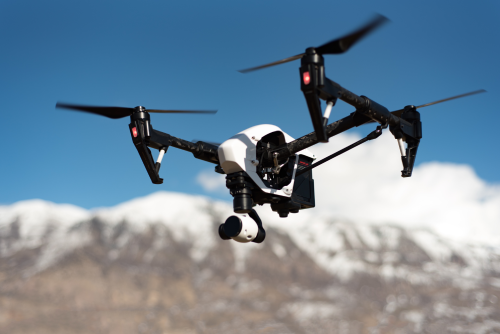
Disasters move faster than ground teams can often see. That is where drones help in disaster management and relief operations: they give responders a quick aerial view, help locate survivors, assess damage, and support smarter decisions when minutes matter. In India, where floods, cyclones, landslides, fires, and urban collapse incidents can affect large areas, drones have become a practical tool for faster and safer response.
Quick Take
- Drones do not replace rescue teams, boats, ambulances, or helicopters. They make those teams more effective.
- Their biggest value is speed: a drone can survey an affected area in minutes when roads are blocked or visibility from the ground is poor.
- Common uses include flood mapping, search and rescue, damage assessment, route planning, fire monitoring, and small urgent deliveries in controlled situations.
- Thermal cameras can help find people by detecting heat differences, but they are not magic and can give false results.
- Multirotor drones are best for hovering and close inspection. Fixed-wing or VTOL drones are better for covering larger areas.
- In India, disaster drone flights must be coordinated with authorities and checked against the latest DGCA, Digital Sky, and local airspace requirements before flying.
- The most useful output is not dramatic video. It is accurate, geotagged information that ground teams can act on immediately.
- Self-deploying into a disaster zone without coordination can create risk. The right approach is planned, official integration.
Why drones matter in disaster management
In a disaster, the first problem is often lack of information.
A district control room may know that a river has overflowed, a hillside has slipped, or a building has collapsed. But responders still need answers:
- Which roads are open?
- Where are people stranded?
- Which areas are safe for rescue teams to enter?
- What infrastructure is damaged?
- Where should relief materials be sent first?
Drones help fill that information gap quickly.
Instead of sending responders blindly into dangerous areas, a drone can provide an overhead view, zoom into trouble spots, and create maps that show what has changed. This reduces guesswork and can lower risk for field teams.
In India, this is especially valuable because many disaster settings are hard to access:
- Flooded villages cut off by water
- Landslide zones in hill states such as Himachal Pradesh or Uttarakhand
- Cyclone-hit coastal belts in Odisha, Andhra Pradesh, Tamil Nadu, or West Bengal
- Forest fire areas with rough terrain
- Dense urban neighborhoods where access is blocked by debris, traffic, or narrow lanes
The core advantage is simple: drones bring eyes into places people cannot reach quickly or safely.
The biggest ways drones help in relief operations
Rapid situational awareness
This is usually the first and most useful role.
A drone can be launched soon after an incident to capture live video and still images of the affected area. That helps responders understand:
- The spread of floodwater
- The size of a fire line
- The extent of a landslide
- The location of blocked roads
- The condition of rooftops, bridges, embankments, or power lines
- Whether there are visible survivors signaling for help
For example, in a flooded village, a drone can quickly show which homes are still above water, which roads have disappeared, and where boats can move safely. That is far more efficient than relying only on scattered phone calls or delayed ground reports.
The best drone output here is clear and actionable:
- Live video for the control room
- Geotagged photos, meaning images tagged with location data
- Short marked clips showing priority problem areas
- Basic maps with affected zones highlighted
Search and rescue
Search and rescue is one of the most talked-about drone applications, and for good reason.
Drones can help find people stranded on rooftops, trapped in isolated patches of land, stuck along riverbanks, or cut off after landslides and building collapse incidents. A zoom camera lets operators inspect places that are dangerous to approach on foot.
Thermal cameras can add another layer. A thermal camera detects heat differences, which can help spot a human body against a cooler background, especially in low light or over open ground.
This can be useful for:
- Night searches
- Locating people in vegetation gaps
- Identifying body heat on rooftops or exposed terrain
- Scanning debris fields from a safer distance
But thermal imaging has limits:
- It does not see through walls
- Hot roofs, machinery, or fires can confuse the image
- Dense tree cover can hide people
- In hot conditions, body heat may blend into the surroundings
So drones should support rescue teams, not replace physical search methods.
A practical search workflow often looks like this:
- Launch the drone from a safe staging area.
- Fly a defined search grid instead of wandering randomly.
- Use the zoom camera first to confirm shapes or movement.
- Cross-check any thermal signature with visible imagery.
- Record exact coordinates.
- Pass those coordinates immediately to boat teams, firefighters, police, or NDRF/SDRF personnel.
Flood mapping and route planning
Floods are one of the clearest examples of how drones help in disaster management and relief operations in India.
When water spreads across fields, roads, villages, and low-lying urban areas, the ground view becomes misleading. A road may look usable from one end but be washed out further ahead. A boat route may seem open but hide electric poles, trees, wires, or fast-moving current zones.
Drones help by showing:
- Water extent
- Breached embankments
- Safe approach routes
- Dry high-ground pockets
- Areas where people are stranded
- Where relief camps or boat pickup points could be set up
If responders need more than video, drone images can be stitched into an orthomosaic, which is a single top-down map made by combining many overlapping photos. That gives authorities a clearer base map for planning relief distribution and rescue routes.
This is also helpful after the immediate response, when officials need to estimate how many homes, roads, farms, or public facilities were affected.
Damage assessment after cyclones, earthquakes, and landslides
Once the immediate rescue phase settles, authorities need reliable damage data.
Drones can inspect:
- Roof damage after cyclones
- Collapsed or cracked structures after earthquakes
- Road cuts and unstable slopes after landslides
- Riverbank erosion
- Damaged bridges and culverts
- Fallen towers and utility infrastructure
Compared with manual inspection, drones are often faster and safer, especially where structures are unstable.
In a hilly area after a landslide, a drone can capture high-resolution images from multiple angles. These images can be turned into:
- Terrain maps
- Volume estimates of debris
- 3D site models
- Change comparisons between before and after conditions
That helps engineers and disaster managers decide:
- Which roads can be reopened first
- Where more slope movement is likely
- Whether heavy equipment can be sent safely
- Where to keep workers out
In urban incidents such as building collapse, drone footage can also help teams understand access routes, void spaces, and danger zones before sending rescuers close to the structure.
Fire monitoring and hazardous areas
Drones are useful in fire situations because they can view the scene from above without putting a pilot or firefighter in the hottest area.
They can help in:
- Forest fire perimeter tracking
- Monitoring hotspots after the main flames are reduced
- Identifying spread direction
- Spotting isolated flare-ups
- Assessing rooftop fires in built-up areas
- Inspecting hazardous sites from stand-off distance
Thermal cameras are especially valuable here because hotspots may not be visible to the naked eye.
For hazardous areas, drones may also be used in specialized operations involving industrial accidents or chemical leak zones, but that typically requires trained teams, mission-specific sensors, and strict safety procedures. This is not a casual use case.
Delivery of small urgent supplies
This use gets a lot of attention, but it is important to stay realistic.
Drones can carry only limited payloads, so they are not a replacement for trucks, boats, or helicopters. Still, they can be useful for urgent last-mile needs in certain controlled situations, such as delivering:
- Basic medicines
- First-aid items
- Communication devices
- Small food packets
- Blood samples or medical samples in specialized setups
- Lightweight rescue aids
This becomes relevant when roads are blocked, bridges are damaged, or the affected location is cut off by floodwater.
The key limitation is capacity. A drone that can deliver a small emergency package is helpful, but it cannot supply an entire relief camp. The role is targeted, not mass distribution.
Also, delivery operations may involve extra operational and regulatory requirements, especially if they go beyond visual line of sight, meaning beyond the pilot’s direct unaided view. In India, do not assume such flights are automatically allowed. Verify the latest official permissions and local coordination requirements before planning them.
Infrastructure inspection and restoration support
After the immediate emergency, recovery depends on restoring infrastructure.
Drones can help utilities, engineers, and public agencies inspect:
- Power lines and substations
- Telecom towers
- Roads and bridges
- Railway corridors
- Canal and embankment damage
- Public buildings, schools, hospitals, and water tanks
This helps in two ways:
- Faster prioritization
- Safer inspection
Instead of sending people directly onto damaged structures, teams can first use drone footage to identify where physical inspection is necessary.
For small businesses offering drone services, this is one of the most practical disaster-related applications: supporting post-disaster assessment and restoration planning for local authorities, contractors, utilities, and survey teams, always with proper approvals and coordination.
Preparedness before disasters
Disaster response does not start after the event. Some of the best drone use happens before it.
Drones can support preparedness by mapping:
- Flood-prone zones
- Embankments and drainage channels
- Landslide-vulnerable slopes
- Coastal erosion
- Evacuation routes
- Relief camp sites
- Critical public assets
These pre-disaster maps become much more valuable during the emergency because responders already know what “normal” looks like.
For example, if a district has updated drone maps of river-adjacent villages before monsoon season, it becomes easier to compare fresh imagery and see where water has newly spread, where access routes are lost, and which settlements are likely to need evacuation first.
Which drone payloads are most useful?
Different disaster missions need different sensors. A regular camera is useful, but not always enough.
| Payload or sensor | Best use | Main strength | Main limit |
|---|---|---|---|
| RGB camera (standard visual camera) | General assessment, mapping, inspection | Clear visual detail, low cost, versatile | Cannot detect heat or hidden hotspots |
| Zoom camera | Search, inspection, standoff viewing | Lets teams inspect from safer distance | Narrow field of view |
| Thermal camera | Search at low light, hotspot detection, fire monitoring | Shows heat differences | Can be misleading in hot environments or through cover |
| RTK-enabled mapping setup | Accurate mapping and survey work | Better location accuracy for maps | More expensive and skill-dependent |
| Loudspeaker or spotlight | Communication support in some missions | Useful in controlled rescue situations | Limited range and added weight |
| Specialized sensors | Industrial or hazardous response | Mission-specific detection | Usually costly, niche, and training-heavy |
For most district-level or practical relief work, the core tools are still the most important:
- Reliable drone platform
- Good visual camera
- Zoom if possible
- Thermal if search or fire work is expected
- Enough batteries
- A disciplined data workflow
A practical drone workflow during disaster response
A drone is useful only when its output reaches the right people quickly. A good workflow matters more than fancy hardware.
1. Define the mission
Before takeoff, answer one question: what exactly are we trying to know?
Examples:
- Find stranded persons
- Check if a bridge is passable
- Map flood extent in two villages
- Look for fire spread direction
- Inspect roof damage in a coastal settlement
Without a clear mission, flights become random and less useful.
2. Coordinate with the authority in charge
In disaster zones, drone operators should not freelance their way into the air.
Coordinate with:
- District administration
- Police
- Fire services
- NDRF or SDRF teams
- Local incident control room
- Utility or engineering teams, if it is a restoration mission
This avoids airspace conflict, duplication, and confusion.
3. Check the airspace and safety situation
Confirm:
- Any nearby helipad, airport, or restricted zone
- Whether helicopters or other aircraft are operating
- Weather conditions
- Wind speed
- Rain and visibility
- Ground launch and landing safety
If manned aircraft are involved, drone coordination becomes critical. A drone must never interfere with rescue helicopters.
4. Fly a planned pattern
Use a search grid, corridor route, or mapping pattern depending on the mission.
This improves coverage and reduces missed areas.
5. Capture usable data
Focus on:
- Stable video
- Geotagged stills
- Repeated angles for comparison
- Clear markers for damaged points
- Basic voice notes or field notes if your workflow supports them
6. Share findings fast
Do not wait hours to produce a polished report if the field team needs a decision now.
Share:
- Coordinates
- Marked screenshots
- Short situation notes
- Priority action points
7. Archive the data properly
After the immediate mission, organize the images, maps, and logs. This helps later with claims, engineering review, resource allocation, and lessons learned.
What kind of drone setup works best?
The right platform depends on the mission.
Multirotor drones
Best for:
- Hovering
- Search and rescue
- Close inspection
- Urban work
- Launching from tight spaces
Advantages:
- Easy to position precisely
- Good for rooftops, debris sites, and short response flights
Limitations:
- Shorter endurance
- Covers smaller areas per flight
Fixed-wing or VTOL drones
VTOL means vertical take-off and landing.
Best for:
- Large-area mapping
- River corridors
- Coastal belts
- Wide flood zones
Advantages:
- Longer flight time
- Covers more ground
Limitations:
- More complex operation
- Often less ideal for close hovering inspection
For many real disaster-response teams, a mix works best: multirotors for immediate tactical work and larger mapping platforms for area-wide assessment.
Safety, legal, and compliance points in India
This is one area where operators must be careful.
Rules, permissions, airspace conditions, and emergency procedures can change. Before flying, verify the latest official guidance from DGCA, Digital Sky, and the relevant local authority handling the incident.
A few practical principles matter almost every time:
- Do not self-deploy into a disaster zone without coordination.
- Use trained operators and compliant drones as per the latest applicable rules.
- Check the current airspace status before flight.
- Maintain strict separation from helicopters and other manned aircraft.
- Be especially careful near airports, defence areas, government-sensitive zones, and temporary emergency flight corridors.
- Night flying, payload dropping, and beyond visual line of sight operations may need additional approvals or may not be appropriate without specific authorization.
- Protect the privacy and dignity of affected people. Avoid unnecessary close-ups and careless sharing of sensitive footage.
- Keep flight logs, battery health records, and maintenance records.
- Do not fly over crowds unless the mission, risk assessment, and permissions clearly support it.
For NGOs, volunteers, and local drone operators, the safest approach is to coordinate in advance with district administration or recognized response agencies before a disaster happens. That is far better than showing up after the event and asking to fly.
Common mistakes that reduce the value of disaster drone missions
Even good pilots can run ineffective missions if the operation is not planned properly.
Flying without a clear objective
A drone in the air is not automatically useful. If the team does not know what information it needs, the footage may look impressive but solve nothing.
Using the wrong sensor
A standard camera cannot replace thermal imaging in low-light search work. But thermal also cannot replace normal visual confirmation. Matching the sensor to the task is essential.
Ignoring weather and environment
Strong wind, rain, smoke, salt-laden coastal air, and heat can all affect performance. A drone grounded by weather is not a failed mission; it is a correct safety decision.
Overestimating delivery capability
A small drone carrying medicine is helpful. A drone replacing normal relief logistics is not realistic in most situations.
Poor coordination with ground teams
If the drone operator finds something important but cannot quickly send coordinates or explain location clearly, the value is lost.
Chasing cinematic footage
Disaster response is not filmmaking. Wide dramatic shots may be less useful than one well-marked image with the exact location of stranded people.
Forgetting battery and rotation planning
Search and mapping missions fail when operators do not plan for battery swaps, charging, backup aircraft, and shift handover.
Casual data handling
Sensitive imagery should not be dumped into random chat groups or social media. Disaster footage often contains private homes, injured people, or critical infrastructure.
FAQ
Can drones fly during heavy rain, cyclones, or severe storms?
Usually, no. Most drones are limited by rain, high wind, and poor visibility. In extreme weather, it may be safer to wait for a gap rather than risk losing the aircraft or collecting useless data.
Are drones enough on their own for search and rescue?
No. They are a support tool. Final rescue still depends on trained ground teams, boats, medical staff, firefighters, police, or other responders.
What is the best drone type for disaster management?
There is no single best type. Multirotors are better for hovering and close inspection. Fixed-wing or VTOL drones are better for large-area mapping. The right choice depends on the mission.
Can hobby drones be used in relief work?
They can help with basic visual assessment in some cases, but only if the operation is legal, coordinated, and safe. Serious disaster missions usually need trained pilots, stronger workflow discipline, and better payload options.
Do thermal cameras detect people through roofs or walls?
No. Thermal cameras detect surface heat differences. They are useful, but they do not provide X-ray vision.
Can drones deliver medicines and food to isolated people?
Sometimes, for small urgent items and only in properly planned, authorized operations. They are useful for targeted last-mile delivery, not for bulk relief supply.
Who should operate drones during a disaster?
Ideally, trained operators working under official coordination with district authorities, response agencies, utilities, or recognized relief teams. Uncoordinated flying can create risk.
What output is most useful for authorities?
Usually: – Live situational video – Geotagged photos – Coordinates of survivors or damage points – Flood or damage maps – Short, clear situation summaries
Is beyond visual line of sight flying allowed for relief missions?
Do not assume it is. Beyond visual line of sight operations can involve additional regulatory and safety requirements. Always verify the latest official permissions before planning such flights.
How can a local drone business prepare for disaster-related work?
Build capability before disaster season: – Train pilots – Develop checklists and standard operating procedures – Practice mapping and reporting – Maintain batteries and logs – Coordinate early with local authorities or agencies – Learn to produce usable maps and location-tagged reports, not just footage
Final takeaway
Drones are most valuable in disaster management when they do three things well: show the real situation fast, reduce risk to responders, and turn aerial data into decisions on the ground. If you want to use drones in this field in India, the next step is not buying the biggest drone you can afford; it is building a legal, coordinated, mission-ready workflow before the next emergency begins.
