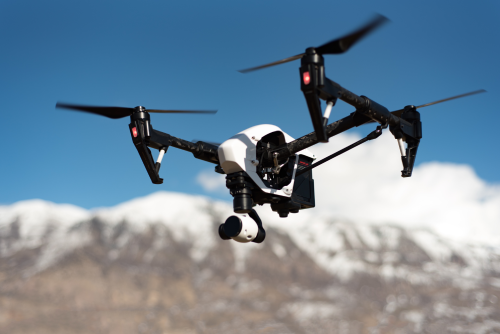
How police use drones for surveillance and safety is now a practical policing question, not a futuristic one. A drone can give officers a live aerial view of a crowd, accident, flood zone, or search area within minutes, often with less cost and risk than sending more people into the field. In India, that makes drones especially useful in dense cities, large public gatherings, and hard-to-reach rural areas.
Quick Take
- Police use drones mainly for faster situational awareness: seeing what is happening from above before deploying people on the ground.
- Common police drone tasks include crowd monitoring, traffic management, missing-person searches, disaster response, crime scene documentation, and perimeter surveillance.
- The most useful payloads are usually a live camera, zoom camera, thermal camera, spotlight, and sometimes a loudspeaker.
- Drones improve safety by helping officers spot risks early, plan routes, and keep responders out of dangerous areas until conditions are understood.
- They also have limits: battery life, rain, wind, privacy concerns, signal issues, and the risk of poor evidence handling.
- In India, drone operations by police and government agencies still need to align with applicable aviation rules, airspace restrictions, internal procedures, and local coordination requirements. Always verify the latest official guidance before operating or supplying such systems.
Why police have started relying on drones
A police drone is basically a fast, movable eye in the sky.
That sounds simple, but in real operations it solves a major problem: ground officers often do not have a clear view of what is happening beyond the next building, crowd line, curve in the road, riverbank, or field boundary.
Traditionally, police had a few ways to get that view:
- Send officers on foot
- Use fixed CCTV
- Climb rooftops or towers
- Rely on reports from the public
- In rare cases, use manned aircraft
Each option has limits. Foot patrols are slow. CCTV only shows fixed angles. Rooftop observation is limited. Public reports can be incomplete. Manned aviation is expensive and not always available.
A drone fills the gap. It can be launched quickly, fly to the area of concern, stream live video, and return before officers commit more resources.
In India, this is especially useful because policing conditions are often varied:
- Dense urban neighbourhoods
- Large religious or political gatherings
- Highways with sudden congestion
- Rural search areas with open fields or scrubland
- Flood-affected zones during monsoon
- Mixed terrain where access is difficult
The result is not just “surveillance” in the spy-movie sense. In many cases, it is simply better incident management.
Where police drones are most useful
The table below gives a quick view of the main police use cases.
| Police task | Typical payload | What the drone helps with | Main limitation |
|---|---|---|---|
| Crowd monitoring | Wide camera, zoom camera | Spot bottlenecks, route deviations, risky crowd density | Flying near or over dense crowds is high risk |
| Traffic management | Camera, zoom camera | See jams, blocked lanes, diversion points, emergency access routes | Detail can be limited if the drone is too high |
| Accident response | Camera, mapping workflow | Record the scene before it is disturbed | Good evidence handling is essential |
| Missing-person search | Camera, thermal camera | Search large areas faster than foot teams alone | Thermal images can be misleading in hot environments |
| Disaster response | Camera, thermal, spotlight | Identify stranded people, damaged routes, hazards | Weather can stop flights when they are needed most |
| Perimeter surveillance | Camera, zoom, thermal | Monitor walls, compounds, riverbeds, remote edges | Not a replacement for continuous ground security |
| Night operations | Thermal camera, spotlight | Detect heat signatures, guide responders, improve visibility | Thermal does not see through walls and cannot solve every identification problem |
How police use drones for surveillance and safety in the real world
Crowd monitoring and event security
This is one of the most visible police uses of drones.
At large festivals, processions, political events, sports gatherings, or religious gatherings, the biggest danger is often not crime alone. It can be crowd movement itself.
From the ground, a police team may only see one lane or one cluster of people. From the air, a drone can help identify:
- Congestion building at entry and exit points
- Barricades being bypassed
- Route deviations
- Vehicles blocking emergency access
- Pressure points where a crowd is compressing
- Areas where police presence is too thin
A live aerial view helps command teams shift personnel before a problem becomes a panic situation.
Practical example
Imagine a large procession moving through a city road network. From one junction, everything may look normal. But a drone feed can show that two lanes ahead, a bottleneck is forming because parked vehicles and street vendors are narrowing the route. That allows officers to clear the path early rather than reacting after a crush begins.
Important caution
Crowds are also where drone operations become more sensitive.
Routine flying directly over dense crowds is a serious safety issue. If a drone loses power or control, the risk is obvious. That is why police teams need careful mission planning, trained operators, appropriate stand-off positions, and proper approvals or procedures where required. It is not a situation for casual flying.
Traffic monitoring and road safety
Traffic policing is another major use case.
A drone can quickly show:
- How long a traffic queue really is
- Where the blockage starts
- Whether an alternate route is clear
- If an ambulance corridor is available
- Whether a stranded vehicle is causing cascading congestion
This is useful on city roads, expressways, toll approaches, and major junctions.
After an accident
Drones are especially valuable after serious road accidents because they help police do two things at once:
- Restore traffic faster
- Preserve the scene visually before it changes
An overhead view can show vehicle positions, lane conditions, debris spread, and road geometry more clearly than ground photos alone.
For more complex incidents, police may use aerial images to support later reconstruction. That can be useful when the exact layout matters.
Search and rescue for missing persons
When a child, elderly person, hiker, or accident victim is missing, time matters.
Searching on foot can be slow, especially in:
- Open fields
- Forest edges
- Riverbanks
- Semi-urban plots
- Construction zones
- Flooded or muddy terrain
A drone helps police scan these areas faster.
Why drones help
- They cover ground quickly
- They can check hard-to-reach spots without exposing searchers
- They can fly patterns over a search area
- They can relay live video to multiple officers
Thermal cameras in search missions
A thermal camera detects heat differences. It is often useful at dawn, dusk, or night, when a human or vehicle may stand out against cooler surroundings.
But thermal cameras are often misunderstood.
They do not:
- See through walls
- Guarantee facial identification
- Work equally well in every temperature condition
On hot afternoons, the ground, rocks, rooftops, and vehicles may also radiate heat, which can create false leads. So thermal helps, but trained interpretation matters.
Disaster response and emergency safety
In India, drone use becomes especially relevant during monsoon floods, landslides, fires, building collapses, and storm damage.
In such situations, police and district response teams need quick answers:
- Which roads are cut off?
- Where are people stranded?
- Is a bridge approach damaged?
- Is floodwater moving too fast for boats?
- Which rooftops are occupied?
- Is there fire spread toward nearby structures?
A drone can often get those answers faster than a ground team.
Why this improves safety
The biggest benefit is not the video itself. It is the reduction in guesswork.
Before sending responders into a hazardous area, officers can use the drone to assess:
- Water depth patterns
- Debris fields
- Access routes
- Roof conditions
- Crowd concentration
- Secondary risks like downed lines or unstable structures
That helps protect both the public and the first responders.
Crime scene documentation
Not every police drone mission is about live surveillance. Some are about recording a scene accurately.
For major incidents, an aerial view can help document:
- The full scene layout
- Entry and exit paths
- Relative positions of vehicles or objects
- Damage patterns
- Nearby surroundings that ground photos may miss
This is useful because ground-level evidence can get disturbed quickly by weather, traffic, public movement, or emergency response activity.
Why documentation quality matters
A drone image is only useful as evidence if the handling is disciplined.
Police teams must think about:
- Time and date accuracy
- Who flew the mission
- Where the footage was stored
- Whether the original file was preserved
- Whether edited or compressed copies are clearly separated from originals
Without a proper record trail, even good footage may become less useful later.
Perimeter and area surveillance
Police also use drones for area monitoring where the ground view is weak or the area is too large for quick patrol.
Examples can include:
- Sensitive compounds
- Large public premises
- Riverbeds and remote edges
- Illegal dumping or suspected illegal activity zones
- Hard-to-reach outskirts of a district
- Temporary security rings around a major event
The drone is useful here because it can move to a specific point of interest instead of waiting for a patrol to arrive.
A zoom camera is especially helpful in such missions. Optical zoom, which uses the lens rather than just enlarging pixels digitally, can preserve more detail from a safer distance.
Night operations with thermal and spotlight payloads
Night changes everything in policing.
Visibility drops. Witness reports become less reliable. Ground patrols may miss movement at a distance. A drone helps by adding an aerial layer at night, especially when fitted with:
- Thermal camera
- Spotlight
- Zoom camera
- Live downlink to command staff
Typical night uses
- Search for suspects or missing persons in open land
- Check rooftop movement
- Monitor a dark perimeter
- Assess whether a route is safe for officers to enter
- Support rescue teams in low light
Again, the key point is not that the drone “solves” the incident. It helps police decide what to do next with better information.
Public address and visible deterrence
Some police drones can carry a loudspeaker or flashing light. In the right situation, that can be useful for:
- Giving instructions during a flood or fire
- Directing people away from a danger zone
- Asking crowds to clear access routes
- Warning people not to enter a restricted area
Even when no loudspeaker is used, a clearly visible police drone can act as a deterrent. People may be less likely to ignore barricades or gather in unsafe zones if they know the area is being actively monitored.
That said, deterrence should not become indiscriminate monitoring. Drones work best when their use is tied to a specific purpose and timeframe.
What a police drone setup usually includes
A police drone program is not just “buy drone, fly drone.”
A usable setup often includes:
- A reliable multirotor drone for quick launch and hovering
- Spare batteries and fast charging support
- RGB camera for normal daylight video
- Zoom camera for stand-off observation
- Thermal camera for low-light and search tasks
- Spotlight or loudspeaker for some missions
- Rugged controller and display
- Live streaming or command-room viewing option
- Maintenance schedule and battery health tracking
- Trained pilot and visual observer
- Storage and evidence-handling workflow
For very large-area missions, longer-endurance platforms may also be considered. But in most city and district policing tasks, quick-deploy multirotor drones are more practical because they can hover and operate in tighter spaces.
How a typical police drone mission works
When police use drones well, the operation usually follows a simple workflow.
1. Define the mission
The first question is not “Can we fly?”
It is:
- What is the exact objective?
- Crowd monitoring?
- Missing person?
- Traffic assessment?
- Scene recording?
- Night search?
A vague mission leads to vague results.
2. Check airspace, permissions, and local coordination
The team then checks whether the area is legally and operationally suitable to fly in.
In India, this can involve applicable DGCA requirements, Digital Sky-related processes, local restrictions, district coordination, and special procedures relevant to government operations. The exact path can vary by mission and authority, so teams should rely on current official guidance, not old assumptions.
3. Select the right payload
A wide daylight camera is not the same as a thermal camera.
The payload should match the task:
- Crowd monitoring: wide view and zoom
- Search at night: thermal
- Accident documentation: stable imagery and mapping workflow
- Perimeter monitoring: zoom plus thermal if needed
4. Conduct a risk assessment
The team checks:
- Nearby people
- Obstacles
- Power lines
- Trees
- Weather
- Wind
- Signal quality
- Safe takeoff and landing zones
- Emergency return path
5. Fly with pilot and observer
In many real operations, the pilot should not do everything alone. A visual observer or second officer can help monitor the aircraft, airspace, and surroundings while the pilot focuses on flying.
6. Relay information to the ground team
The value of the drone comes from action.
So the operator or command team communicates findings quickly:
- Shift officers to Gate 3
- Open the left lane
- Send the ambulance via service road
- Search the canal edge next
- Do not send rescue personnel from the north side
7. Log, store, and review the data
After landing, the team should record the mission, preserve relevant files, and note anything that may matter later for investigation, reporting, training, or evidence.
What police drones do better than older methods
Police drones are useful for several practical reasons.
Faster response
A drone can be launched within minutes. That matters when the first ten minutes are the most important.
Better safety for officers
Instead of sending people blindly into floodwater, unstable ground, or a tense crowd edge, police can first assess the area from above.
Wider field of view
A drone sees road patterns, crowd flow, open terrain, and perimeter gaps that are invisible from ground level.
Better coordination
Live aerial feeds help control rooms, senior officers, and ground teams work from the same picture.
Lower operating cost than manned aviation
For many district-level tasks, drones are a much more practical tool than helicopters or aircraft.
Stronger documentation
Aerial imagery can support incident review, training, and in some cases investigations, as long as the data handling is done correctly.
The limits police cannot ignore
Drones are useful, but they are not magic.
Battery life is always a constraint
Most police drones do not stay airborne indefinitely. Teams must plan around battery swaps, charging cycles, and mission duration.
Bad weather can stop operations
Rain, strong wind, dust, and poor visibility can reduce performance or prevent flying altogether.
Urban environments are complicated
Tall buildings, wires, signal interference, and GPS reflection can make city flying harder than people expect.
Thermal is helpful, not perfect
A hot roof, parked vehicle, animal, or machinery can look significant when it is not. Thermal imagery needs training and cross-checking.
Drones do not replace ground policing
They support patrols, search teams, traffic officers, and investigators. They do not replace human judgment or physical presence.
Data overload is real
If every mission records hours of video without clear indexing, the result is confusion, not intelligence.
Privacy concerns can damage trust
If drone use appears unnecessary, excessive, or unclear, public trust suffers. That matters a lot for policing.
India-specific legal, privacy, and compliance points
For Indian readers, this section is important.
Police use of drones sits at the intersection of aviation safety, public order, privacy, and operational procedure. Exact requirements can change, and some government users may operate under procedures or exemptions that do not apply to civilians. That is why broad internet summaries are not enough.
Here are the practical points that matter:
Verify the latest official framework
Do not assume that an old rule summary is still correct.
For any real police, government, or vendor operation, verify:
- Current DGCA guidance
- Digital Sky-related requirements, where applicable
- Applicable airspace restrictions
- Local police and district procedures
- Any internal state or departmental SOPs
- Site-specific restrictions near airports, helipads, strategic locations, or temporary no-fly areas
Government use is not the same as hobby use
A police agency may follow a different approval path from a civilian pilot. But that does not mean unlimited freedom to fly anywhere, anytime.
Safe operation, mission justification, trained personnel, and coordination still matter.
Privacy should be built into the mission
Good police drone use should be:
- Purpose-specific
- Time-bound
- Limited to what is necessary
- Access-controlled
- Properly logged
Recording private homes, balconies, or bystanders unnecessarily can create legal and trust problems, even if the mission itself is legitimate.
Evidence handling matters
If a drone captures footage that may support an investigation, police teams should preserve the original data carefully and maintain a clear record of who handled it.
Vendors should be careful with compliance claims
If you are a supplier or service provider, do not casually promise that a particular platform is “fully approved” for every police use. Procurement and operational compliance depend on mission type, user category, airspace, local procedures, and the latest official position.
Common mistakes police teams and vendors should avoid
Buying only for camera quality
A sharp camera helps, but reliability, battery performance, service support, and training often matter more.
Ignoring operator training
A good pilot must do more than fly. They must judge risk, communicate clearly, manage batteries, and understand the mission objective.
Flying too high for useful detail
A very high drone may look impressive, but it may not provide the detail needed for traffic, crowd, or evidence work.
Treating thermal like a superpower
Thermal is valuable, but it can be misread. It should support decision-making, not replace it.
Weak mission planning around crowds
Dense public gatherings require serious safety planning. Casual deployment is not acceptable.
Poor battery discipline
Launching with partially charged batteries or pushing flights too long can turn a useful tool into a hazard.
No chain of custody for footage
If files are renamed, copied casually, edited without record, or stored insecurely, their value drops quickly.
No integration with ground teams
A drone feed that nobody on the ground acts upon is just interesting video.
Over-surveillance without clear purpose
Flying because “we have a drone, so let’s use it” is the wrong mindset. Every mission should have a specific operational reason.
What Indian drone professionals can learn from police use cases
For students, service providers, and drone businesses, police use teaches an important lesson: the most valuable drone systems are not always the ones with the biggest specs on paper.
What matters in policing is usually this:
- Quick deployment
- Reliable live video
- Stable flight in real field conditions
- Useful zoom and thermal capability
- Clear operating procedures
- Battery readiness
- Evidence-grade file handling
- Local service and maintenance support
- Training for both pilots and decision-makers
If you want to work in government, public safety, or emergency-response drone services, learn workflows and compliance, not just flying skills.
FAQ
Can police legally use drones in public areas in India?
They can use drones for legitimate official purposes, but operations must still align with applicable aviation rules, airspace restrictions, departmental procedures, and local coordination requirements. The exact framework should always be verified from current official guidance.
Do police drones always record everything they see?
Not necessarily. Some missions are for live situational awareness, while others involve recording for documentation or investigation. Good practice is to keep recording tied to a specific operational purpose.
Can thermal cameras identify a person clearly?
Thermal cameras detect heat differences, not fine facial detail in the way people often imagine. They are useful for spotting presence and movement, especially in low light, but they are not a magic identification tool.
Can a police drone see inside homes?
A normal camera cannot see through walls. Thermal cameras also do not see through walls in the way movies suggest. Privacy concerns are still real, though, because drones can capture views into open areas, terraces, or windows if used carelessly.
Do drones replace CCTV or patrol vehicles?
No. Drones complement them. CCTV provides fixed monitoring, patrols provide physical presence, and drones provide a fast movable aerial view when needed.
Why not just use more CCTV instead of drones?
CCTV is useful but limited to fixed angles and installed locations. A drone can be moved to the exact point where an incident is unfolding and can track changing conditions across a wider area.
Are drones useful in rural policing too?
Yes. They can be very useful in rural searches, flood response, riverbank monitoring, open-land surveillance, and situations where road access is poor.
What should citizens do if they see a police drone nearby?
The safest approach is simple: do not interfere, do not try to approach the takeoff area, and follow any public instructions being given. If you have a concern about misuse, raise it through appropriate official channels rather than confronting the operators in an active mission area.
Can footage from a police drone be used in an investigation?
It can be useful, but only if it is captured and handled properly. Time stamps, operator logs, original file preservation, and controlled storage all matter.
Are police drones always expensive, high-end systems?
Not always. The right setup depends on the task. Some missions need advanced payloads like thermal or zoom, while others can be done with simpler, reliable platforms. Operational discipline often matters more than buying the most expensive aircraft.
Final takeaway
Police drones are most effective when they are used for one clear purpose: giving officers a safer, faster, and wider view of a real situation. In India, their strongest use cases are crowd safety, traffic response, search and rescue, disaster assessment, and scene documentation. If you are evaluating this space as a reader, buyer, student, or professional, focus less on the “spy drone” image and more on the real value: better decisions, lower risk, and accountable use.
