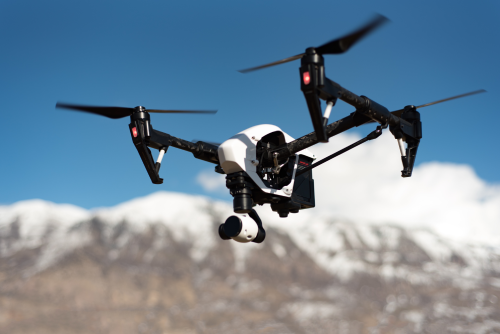
Minimalist aerial photography looks simple, but it is not accidental. If you want to learn how to shoot minimalist drone photos, the real skill is removing distractions until only the strongest shape, line, colour, or subject remains.
For drone photographers in India, this style is especially rewarding because our landscapes offer strong patterns: salt pans, beaches, fields, hill roads, rivers, rooftops, and monsoon textures. The challenge is not finding detail. It is deciding what to leave out.
Quick Take
- A minimalist drone photo needs one clear subject and plenty of visual breathing room.
- Look for simple backgrounds like water, sand, fields, concrete, fog, or shadow.
- Top-down shots often work best because they remove clutter and turn scenes into shapes.
- Fly small adjustments, not big dramatic moves. A few metres up, down, or sideways can clean a frame.
- Use the lowest practical ISO, lock white balance if possible, and shoot RAW if your drone supports it.
- Edit lightly: crop tighter, remove distractions, control highlights, and avoid over-saturating colours.
- In India, always verify current DGCA, Digital Sky, and local restrictions before flying. Avoid sensitive areas, crowds, and privacy-invasive shots.
What makes a drone photo minimalist?
Minimalism in drone photography is not just “less stuff in the frame.” It usually combines four things:
One dominant idea
The viewer should understand the photo quickly. That idea could be:
- a lone boat on water
- a single road cutting through sand
- one person walking across a plain surface
- a row pattern with one break in it
- a small building surrounded by empty land
If the eye keeps jumping between several subjects, the image is probably not minimalist.
Negative space
Negative space means the empty or quieter area around the subject. In drone photos, this could be:
- still water
- clean beach
- open farmland
- fog
- snow
- plain rooftops
- flat concrete yards
Negative space makes the subject feel stronger.
Limited visual noise
Minimalist photos avoid clutter like:
- too many colours
- multiple shadows crossing everywhere
- vehicles, wires, poles, people, and signboards
- messy edges
- random bright objects
Strong geometry or contrast
Many minimalist aerial images work because they simplify reality into:
- lines
- curves
- blocks
- symmetry
- repetition
- scale contrast
- light versus shadow
That is why drones are so useful. They can turn ordinary scenes into graphic compositions.
Why drones are perfect for minimalism
At ground level, scenes often feel busy. A drone gives you distance and angle, which helps you simplify.
From above, everyday places become abstract:
- fishing nets become patterns
- farm plots become colour blocks
- roads become leading lines
- small people become scale markers
- boats become shapes on a flat background
- shadows become part of the design
A drone also lets you “edit with altitude.” If the frame is messy, sometimes flying 10 metres higher is better than changing any camera setting.
The best minimalist subjects to look for in India
You do not need exotic locations. You need clean design.
Natural scenes
- Empty beaches with a single walker, boat, or wave line
- Salt pans and dry flats with geometric partitions
- Rivers or backwaters with one canoe or jetty
- Desert roads and dunes
- Snow fields and ridgelines where flying is lawful and weather-safe
- Monsoon water bodies with isolated trees or huts
Agricultural and rural patterns
- Paddy fields with strong grid or patchwork layouts
- Tea estates with repeating curves
- Farm roads dividing green fields
- Haystacks, irrigation ponds, or lone tractors in open space
Built environments
- Rooftops with repeating shapes
- Parking lots with one coloured vehicle
- Industrial yards with symmetry, where flight is legal and authorised
- Staircases, courtyards, and clean concrete patterns
Seasonal opportunities
India’s seasons change textures dramatically:
- Summer gives dry, graphic landscapes.
- Monsoon gives reflective surfaces and saturated greens.
- Winter mornings can give fog, which is excellent for minimalism if visibility and flight safety are still adequate.
A simple rule: if a scene looks better when you half-close your eyes and notice only shapes, it is a good minimalist candidate.
Before takeoff: plan for simplicity
Minimalist photos are easier when you plan before launching.
1. Decide the subject first
Ask: what is the one thing this image is about?
Possible answers:
- the red boat
- the white road line
- the person
- the shape of the shoreline
- the lone tree
If you cannot answer quickly, the shot may not be strong yet.
2. Study the background
A great subject on a messy background becomes an average photo.
Before takeoff, look for backgrounds that are:
- clean
- uniform
- low in detail
- different in tone or colour from the subject
For example, a dark boat on pale sand or a white car on black asphalt can work far better than a subject blending into a busy surface.
3. Pick the right time of day
Minimalism does not always mean golden hour. The best time depends on what you want.
- Early morning or late afternoon: softer light, longer shadows, more depth
- Midday: useful when you want flat, graphic colour and minimal shadows
- Foggy or hazy conditions: helpful for reducing background detail, but only if safe and legal to fly
For top-down minimalist shots, midday can actually be very effective because shadows stay shorter and shapes look cleaner.
4. Check weather and wind
Minimalist photography often depends on precision. Strong wind makes fine positioning harder and may reduce sharpness.
Also watch for:
- glare on water
- cloud cover changing brightness quickly
- heat haze over roads or dry land
- poor visibility
5. Pre-visualise the crop
Think in final image shapes before you fly:
- square for symmetry
- vertical for roads, rivers, and lone subjects
- horizontal for shoreline and negative space
- 4:3 if you want more flexibility later
Camera settings that help minimalist drone photos
Minimalism is about composition first, but settings still matter. Here are safe starting points for still photography.
| Setting | Good starting point | Why it helps |
|---|---|---|
| File format | RAW if available | More flexibility in highlights, shadows, and colour |
| ISO | Lowest practical ISO | Keeps image clean and detailed |
| Shutter speed | Fast enough to avoid blur, especially in wind | Preserves crisp lines and shapes |
| White balance | Fixed instead of auto when possible | Keeps colour consistent across shots |
| Aspect ratio | Native sensor ratio, crop later | Gives more freedom in editing |
| Exposure | Slightly protect highlights in bright scenes | Sand, water, and concrete can blow out easily |
| Grid lines | On | Helps with alignment and symmetry |
| Focus | Confirm focus on subject area | Prevents soft images that look weak in simple frames |
Practical settings tips
- If your drone has an adjustable aperture, avoid using very high ISO unless necessary.
- If the scene is bright and reflective, slightly underexposing can protect detail.
- Use a histogram if your app provides one. It helps you see if highlights are clipping.
- Do not rely completely on the phone screen outdoors. Bright sun can mislead you.
RAW or JPEG?
If your drone supports RAW, use it for serious minimalist photos. Minimalist images often depend on subtle tones, clean highlights, and precise colour control.
JPEG is fine for casual shooting, but RAW gives you more room to refine the image without it falling apart.
Composition techniques that make minimalism work
Start with one strong subject
The fastest way to improve your minimalist photos is to remove extra subjects.
Instead of:
- two boats
- three people
- several buildings
- many colour accents
try to frame:
- one boat
- one person
- one structure
- one coloured object against a plain field
When in doubt, subtract.
Use negative space aggressively
Beginners often keep the drone too low or too close. That adds detail but reduces simplicity.
Try these adjustments:
- fly higher to make the subject smaller in the frame
- leave more empty water, sand, or field around the subject
- place the subject off-centre if the empty area strengthens balance
A tiny subject can feel more powerful than a large subject when the surrounding space is clean.
Shoot straight down for graphic impact
A top-down shot removes the horizon and reduces perspective clutter. It can turn ordinary places into minimalist patterns.
This works especially well for:
- beaches
- boats
- roads
- fields
- rooftops
- swimmers where lawful, safe, and privacy-respecting
- shadow patterns
When a scene feels messy at an angle, try a near-vertical view.
Look for repetition with one break
A classic minimalist idea is pattern plus interruption.
Examples:
- many parked white cars and one red car
- repeated farm plots with one curved boundary
- several boats with one separated from the group
- building windows with one open panel
The “break” gives the eye a place to land.
Use scale to create emotion
Drone minimalism often works because it shows how small a person, vehicle, or structure is within a larger environment.
Examples:
- a motorbike on a long mountain road
- a lone fisherman in a wide estuary
- one hut in a floodplain
- a person crossing a giant concrete ground
Scale gives minimalist images atmosphere.
Control the edges of the frame
This is one of the biggest differences between a decent image and a polished one.
Before pressing the shutter, check the corners and edges for:
- cut-off vehicles
- poles or wires entering frame
- random bright objects
- partial shadows
- distracting reflections
Minimalist photos fail when the edges are messy.
Use colour sparingly
Minimalist images often become stronger when the palette is limited.
Great combinations include:
- blue water with one white boat
- pale sand with one red umbrella
- green field with one dirt road
- grey concrete with one yellow object
If the scene has too many colours fighting for attention, either change angle, wait for a cleaner subject, or convert to black and white later.
Move less, refine more
Minimalist photography is not about dramatic flying. It is about tiny positioning decisions.
Useful adjustments:
- rise 5 to 10 metres to simplify texture
- descend slightly to make the subject larger
- yaw a few degrees to align lines
- slide sideways to separate overlapping elements
- move forward just enough to remove clutter from the top edge
Often, the best shot is one careful hover and a slight reposition.
A simple step-by-step shooting workflow
Use this field process when you arrive at a location.
1. Identify the cleanest background
Before focusing on the subject, find the plainest area in the scene.
Ask:
- Where is the least visual clutter?
- Which angle gives the strongest colour separation?
- Can I isolate the subject against water, sand, field, shadow, or concrete?
2. Launch and test three heights
Do not guess the final altitude immediately.
Take a frame at:
- low altitude
- medium altitude
- higher altitude
Then compare.
Minimalist images often become stronger at the height where details merge into larger shapes.
3. Try two main angles
For most scenes, test:
- top-down
- slightly oblique angle
Top-down is usually cleaner. Oblique can be better if shadows or leading lines matter.
4. Simplify the frame
Now remove distractions by repositioning:
- wait for a person or vehicle to leave the edge
- shift left or right
- crop out clutter
- let the subject stand alone
5. Shoot variations, not random bursts
Take a small set of intentional versions:
- centred
- off-centre
- more negative space
- tighter crop
- wider crop
- portrait orientation if useful
A difference of a few metres can completely change the balance.
6. Review before leaving
Zoom in and check:
- sharpness
- horizon alignment if visible
- clipped highlights
- distracting edge elements
- whether the subject is still clearly dominant
Do not assume you can rescue a weak composition in editing.
Editing minimalist drone photos without ruining them
Minimalist editing should support the photo’s simplicity, not overpower it.
Start by selecting ruthlessly
Pick the image with:
- the cleanest edges
- the clearest subject
- the best balance of empty space
- the strongest colour separation
The best minimalist shot is often not the most dramatic one. It is the most disciplined one.
Crop for intent
Cropping is powerful in this style.
Use it to:
- remove edge distractions
- strengthen symmetry
- increase negative space
- place the subject more deliberately
Do not be afraid of leaving a lot of empty area if that emptiness is part of the design.
Clean up exposure first
Typical edits:
- reduce highlights if sand, water, or rooftops are too bright
- lift shadows slightly if the subject is disappearing
- add moderate contrast to define shapes
- avoid crushing blacks unless the graphic style truly benefits
Control colour instead of exaggerating it
Minimalist images usually look better with restrained colour.
Try:
- slightly reducing saturation in distracting colours
- keeping one dominant colour accent
- using white balance to make the image feel cleaner and more consistent
Too much vibrance can make a simple scene feel busy.
Use local adjustments carefully
If your editor allows masking or brushing, small local edits can help:
- brighten the subject slightly
- darken the surrounding area a little
- reduce glare on water
- tone down bright distractions
Keep it subtle. Heavy edits usually show.
Consider black and white
Black and white works well when the photo relies on:
- shape
- line
- shadow
- pattern
- contrast
It works less well when the main appeal is one isolated colour accent.
Common mistakes when shooting minimalist drone photos
Trying to fit too much into one frame
If the image contains several interesting elements, it may not be minimalist anymore. Choose one.
Flying too low
Beginners often stay close because it feels more immersive. But minimalist drone photography often improves as you gain height and reduce detail.
Ignoring background clutter
A strong subject is not enough if the background is noisy.
Centring everything by default
Centre placement can work for symmetry, but not every minimalist image should be centred. Sometimes off-centre placement creates better tension and balance.
Overediting
Heavy HDR-style editing, extreme clarity, and over-saturation usually fight against minimalist aesthetics.
Not checking the edges
A tiny bright object in one corner can break the whole image.
Chasing only golden hour
Soft light is great, but clean overhead light can be better for graphic top-down shots. Match the light to the scene.
Forgetting privacy and permissions
Urban rooftops, homes, and people can create legal and ethical issues. Even a strong composition is not worth an unsafe or intrusive flight.
Safety, privacy, and legal checks in India
Minimalist shots often tempt people to fly over beaches, cities, roads, rooftops, and open public spaces. That is exactly where you need extra caution.
Before flying in India:
- verify the latest DGCA and Digital Sky requirements for your drone category and operation
- check whether the area is permitted, restricted, or sensitive
- avoid airports, heliports, military zones, and other protected areas
- do not fly recklessly over crowds, traffic, or events
- respect privacy, especially near homes, terraces, resorts, farms, and private property
- be extra careful near wildlife habitats, coastal zones, and forest areas where additional restrictions may apply
- monitor wind, battery, return-to-home settings, and signal before focusing on photography
Rules and permissions can change, and requirements may differ based on the drone, weight class, and purpose of use. If you are flying commercially or in a location that seems even slightly sensitive, verify the latest official guidance before taking off.
Practice drills that improve your eye fast
If you want to get better quickly, try these simple exercises.
The one-subject challenge
At each location, make one image with only one obvious subject. No second anchor point.
The three-height test
Shoot the same subject at three altitudes and compare which one feels cleanest.
The colour-isolation exercise
Find one strong colour against a neutral background: a blue boat, yellow vehicle, red roof, white umbrella.
The edge-cleaning drill
Before every shot, scan all four corners and edges. This builds discipline.
The black-and-white review
Convert a few images to black and white. If the composition becomes stronger, the scene was probably built on good shape and contrast.
FAQ
Do I need an expensive drone to shoot minimalist drone photos?
No. Composition matters more than price. A stable drone with a decent camera, grid lines, and reliable hovering is enough to learn the style well.
What is the best altitude for minimalist photos?
There is no fixed altitude. The best height is where detail simplifies into shape. For some scenes that may be low; for others, much higher. Test multiple heights instead of guessing.
Should I always shoot straight down?
No, but top-down shots are often the easiest way to simplify a frame. Use an angled view when shadows, leading lines, or scale tell the story better.
Is RAW necessary?
Not necessary, but very useful. RAW helps recover highlights, adjust colour cleanly, and keep edits subtle, which suits minimalist images.
Can I shoot minimalist drone photos in harsh midday light?
Yes. Midday light can work very well for clean, graphic compositions, especially beaches, rooftops, roads, salt pans, and agricultural patterns.
Is black and white better for minimalism?
Sometimes. If the image relies on shape, contrast, and shadow, black and white can make it stronger. If colour is the main subject, keep it in colour.
How much empty space is too much?
If the subject still feels intentional and the viewer’s eye lands on it quickly, the empty space is probably working. If the subject feels lost for no reason, tighten the frame.
Can I shoot minimalist photos in Indian cities?
Yes, but urban flying needs extra caution. Check current restrictions, avoid privacy-invasive angles, and stay away from sensitive or crowded areas. Clean patterns from lawful, safe locations usually work better than busy city centres.
What is the easiest scene for a beginner to practice on?
A single boat on water, a road through open land, or one person on a plain beach or field is ideal. These scenes naturally provide subject separation and negative space.
How many shots should I take per composition?
Take enough to compare meaningful variations, but do not spray randomly. A set of 6 to 12 deliberate versions at different heights and placements is usually more useful than 100 similar frames.
Final takeaway
To shoot minimalist drone photos well, stop looking for more and start removing more. Pick one subject, find the cleanest background, make small positioning changes, and edit with restraint. On your next flight, aim for one frame that says one thing clearly. That is where strong minimalist aerial photography begins.
