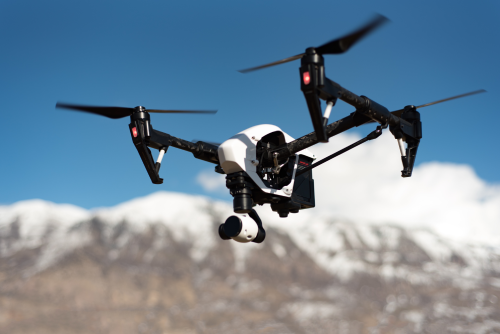
Drones are changing construction and land survey work by making site data faster to collect, easier to understand, and safer to capture in difficult areas. For Indian projects where teams often deal with large plots, uneven terrain, tight deadlines, and constant reporting, that can be a major advantage.
But drones are not magic. Their value depends on good planning, correct flight methods, the right level of accuracy, and compliance with current Indian rules.
Quick Take
- Drones help construction and survey teams capture maps, measurements, and visual records much faster than manual-only methods.
- The biggest gains usually come in topographic mapping, earthwork volume checks, progress monitoring, roof and façade inspection, and large-area site documentation.
- Drone data is most useful when it becomes a usable output such as an orthomosaic map, contours, a volume report, or inspection imagery, not just a nice video.
- Accuracy depends on the workflow, not just the drone. Ground control points, RTK or PPK positioning, flight height, overlap, and processing quality all matter.
- Drones do not replace every traditional survey tool. For legal boundaries, setting out, and some high-precision tasks, total stations, GNSS, levels, and ground verification still matter.
- In India, always verify the latest DGCA and Digital Sky requirements, local airspace restrictions, site permissions, and client approvals before flying.
Why drones matter on Indian project sites
Construction and land survey work in India often happens under messy real-world conditions:
- Large and spread-out sites
- Dust, heat, and uneven access
- Active machinery and moving workers
- Pressure to show weekly progress
- Frequent design changes
- Remote stakeholders who are not on site every day
Traditional survey methods are still essential, but they can be slow when the same area must be checked again and again. Walking a site with instruments, taking notes, and preparing reports takes time. If the site is a highway stretch, solar plant, industrial park, quarry, housing layout, or large warehouse project, the amount of ground to cover increases quickly.
A drone gives teams a fast aerial record of what exists on the ground right now. That matters because construction is dynamic. Excavation changes levels. Stockpiles move. Drainage channels shift. Temporary roads appear. With drone data, teams can compare site conditions week by week instead of relying only on memory, photos taken from the ground, or outdated drawings.
What drone data actually gives you
A drone is useful because of the outputs it creates. The most common ones are:
- Orthomosaic map: a stitched top-down image made from many overlapping photos. Unlike a simple photo, it is scaled and can be measured.
- Point cloud: a large set of 3D points representing the site surface.
- Digital elevation model (DEM): a processed terrain model used to understand height changes, slopes, and contours.
- Contours: lines showing elevation changes across land.
- Volume calculations: useful for stockpiles, excavation, and embankments.
- Inspection photos and video: close visual records of roofs, façades, towers, or inaccessible structures.
The key term here is photogrammetry, which means creating measurements and maps from overlapping photographs. On more advanced jobs, teams may also use LiDAR, a laser-based sensing method, especially where vegetation or complex terrain makes photo-based mapping harder. But for many construction and open-land survey jobs, standard RGB camera mapping is the practical starting point.
How drones are changing construction work
Faster pre-construction site understanding
Before work begins, teams need to know what is actually on the ground:
- Existing levels
- Access roads
- Water channels and low areas
- Trees and structures
- Material dumps
- Slope conditions
A drone can map an open site quickly and provide a visual base for planning. This helps civil contractors, architects, planners, and project managers start with current information rather than old satellite imagery or limited ground photos.
On a large site, even a basic aerial map can improve decisions about site offices, haul roads, drainage routes, and storage areas.
Better earthwork planning and quantity checks
Earthwork is one of the strongest use cases for drones.
On construction sites, teams often need to know:
- How much material was excavated
- How much fill was placed
- Whether grading is following plan
- Whether a slope or embankment matches design intent
- How stockpile volumes have changed
Drone-based surface models can make these comparisons faster. This is especially useful when the same area is being measured repeatedly. Instead of only checking a few points on the ground, project teams get a fuller surface picture.
That does not mean every drone volume report is automatically correct. The result depends on the quality of the survey workflow. But when the process is done properly, drone data can reduce disputes and improve reporting for billing, subcontractor checks, and internal control.
Weekly progress monitoring becomes much clearer
Many construction meetings suffer from one problem: different people are describing the site from different viewpoints.
Drone progress documentation helps because everyone can see the same current map or aerial image. A repeated flight over the same route each week or month creates a visual timeline of:
- Foundation progress
- Structural work
- Road formation
- Drainage development
- Material movement
- Safety housekeeping
- Delayed zones
This is useful not only for contractors, but also for developers, consultants, lenders, and owners who are not at the site daily.
For small and mid-sized Indian firms, this can be one of the most practical uses of drones. Even when high-end 3D modeling is not required, simple and consistent aerial documentation can improve communication and reduce confusion.
Safer inspection of hard-to-reach structures
Some parts of a site are difficult or risky to inspect manually:
- Roof edges
- Elevated façades
- Towers
- Temporary high structures
- Deep pits
- Steep cut faces
A drone can often capture images without sending a person into a risky position just to “have a look.” This does not remove the need for proper site safety procedures. It does reduce unnecessary exposure for visual inspection tasks.
That said, flying close to structures requires skill. GPS can be unreliable near walls or steel-heavy environments, and active construction zones need careful coordination. A drone inspection should be planned like a site activity, not treated like casual filming.
Better records for claims, coordination, and quality discussions
Construction disputes often come down to records. What was the site condition on a specific date? How much progress was visible? Was material present? Had access been blocked? Was a pond, trench, or obstruction there before work started?
Drone imagery creates a time-stamped visual record that can support project documentation. It is not a legal cure-all, but it is often far more useful than scattered mobile photos.
How drones are changing land survey work
Large-area mapping is much more practical
For open land, a drone can collect data across a large area much faster than manual-only methods. This is a big advantage in:
- Layout planning
- Corridor surveys for roads or canals
- Large industrial plots
- Solar and renewable energy sites
- Quarry and mine surroundings
- Agricultural-adjacent development land
Surveyors still need ground control and validation. But drones make it easier to create a broad site map without spending the whole day walking every part of the area.
Repeat surveys are easier to justify
A one-time survey is useful. A repeatable survey is often more valuable.
Land changes over time due to:
- Excavation
- Encroachment
- Rainwater movement
- Filling or dumping
- Site development
- Erosion
Because a drone can repeat a similar mission over the same area, changes become easier to measure and compare. For project planning, environmental monitoring, drainage review, and site control, that repeatability is important.
Survey teams get richer visual context
A traditional survey drawing can be precise, but it may not communicate context well to non-technical people.
A drone orthomosaic gives planners, architects, site owners, and contractors something they can understand immediately. Survey data overlaid on a current map is often more useful in meetings than raw points alone.
That visual layer helps when discussing:
- Boundary surroundings
- Access constraints
- Existing structures
- Natural drains
- Utility corridors
- Adjacent land use
Drones work best with, not against, ground survey methods
The best survey workflows are usually hybrid.
A drone handles broad coverage well. Ground instruments handle control, detail verification, and precision-critical tasks well. Together, they make a strong combination.
Two important terms here are:
- Ground control points (GCPs): marked points on the ground with known coordinates used to improve map accuracy.
- RTK or PPK: correction methods that improve the drone’s position data. RTK means real-time kinematic, and PPK means post-processed kinematic.
For many professional jobs, especially where accuracy matters, relying only on a drone’s basic GPS is not enough.
Legal boundaries need extra caution
This is where overpromising causes trouble.
A drone map can help visualize parcels and site conditions, but a drone survey does not automatically settle ownership disputes or replace official cadastral procedures. If the job involves legal boundaries, land title issues, or government records, verify the required survey standard and authority process before relying on drone outputs alone.
When drones are the right tool, and when they are not
| Task | Drones are very useful | Main caution | Ground methods still needed? |
|---|---|---|---|
| Open-site topographic mapping | Yes | Accuracy depends on control and processing | Usually yes, for checks and control |
| Earthwork and stockpile volumes | Yes | Surface quality and base definition matter | Often for validation |
| Weekly progress monitoring | Yes | Consistent flight path is important | Not always |
| Roof or façade inspection | Yes | Needs careful close-range flying and site safety | Sometimes |
| Corridor overview for roads/canals | Yes | Long sites may have airspace and logistics issues | Yes |
| Dense vegetation mapping | Limited with standard cameras | Ground not clearly visible from above | Often yes, or specialist sensors |
| Legal boundary disputes | Not on its own | Official standards and records matter | Yes |
| High-precision setting out | Usually no | Drones are not the best tool for marking exact points on ground | Yes |
A practical drone workflow for construction and survey jobs
A good drone result starts before takeoff.
1. Define the real job
Ask first:
- Do you need a map, a measurement, or just visual documentation?
- What accuracy is required?
- What will the client actually use: CAD, PDF, GIS, images, or a volume report?
- Is this for planning, billing, inspection, or legal support?
If the goal is unclear, the flight usually becomes wasteful.
2. Check permissions, compliance, and site conditions
Before any mission, confirm:
- Current Indian airspace and operational requirements
- Client permission and land access
- Sensitive nearby locations
- Worker movement and machinery hazards
- Weather, wind, and visibility
For Indian operations, always verify the latest DGCA and Digital Sky guidance before flying.
3. Plan the flight properly
Flight planning affects output quality. Important variables include:
- Flight altitude
- Image overlap
- Grid pattern
- Camera angle
- Time of day
- Battery planning
A high flight may cover more area, but detail reduces. Poor overlap can ruin mapping quality. Harsh noon shadows or reflective surfaces can also reduce usable results.
4. Set control if accuracy matters
If the job needs reliable measurement, use suitable control and validation methods. Depending on the workflow, that may include GCPs, RTK, PPK, or ground check points.
This is the difference between “nice-looking map” and “usable survey output.”
5. Fly safely and consistently
On site, good practice includes:
- A clear takeoff and landing area
- A worker briefing
- Separation from active operations where possible
- Visual line of sight unless current permissions specifically allow otherwise
- A spotter if the site is complex
For repeat monitoring, fly the same pattern each time. Consistency makes comparison easier.
6. Process and verify the data
After the flight, data is processed into maps, models, or reports. This stage matters as much as the flight itself.
Before delivering, verify:
- Alignment errors
- Missing coverage
- Distorted edges
- Ground truth against known points
- Whether the output format suits the client
7. Deliver something the site team can actually use
The best deliverables are practical, such as:
- Orthomosaic map
- Contour map
- Volume calculation sheet
- Marked inspection images
- CAD-compatible layers
- Change comparison between two dates
A cinematic video may impress a client for a minute. A measurable map saves them time for weeks.
Safety, legal, and compliance in India
Construction and survey drone work is not just about flying skill. It also involves aviation compliance, site safety, privacy, and documentation.
A few practical rules:
- Verify the latest DGCA and Digital Sky requirements before any operation. Rules can change, and obligations may differ by aircraft type, location, and mission profile.
- Confirm that the drone, operator, and pilot meet current applicable requirements before commercial use.
- Check whether the site is near restricted or sensitive airspace.
- Do not assume private land means automatic permission to fly. Airspace, local restrictions, and client rules still matter.
- Take written site permission where appropriate, especially for commercial jobs.
- Brief workers and supervisors before takeoff so the drone does not become a surprise hazard.
- Avoid flying over people, moving traffic, or active lifting zones unless the operation is specifically planned and controlled.
- Protect site data. Construction maps may reveal private property details, security layouts, or critical infrastructure.
- Consider insurance, standard operating procedures, and incident reporting processes for business use.
- For government sites, industrial facilities, and other sensitive locations, verify whether additional approvals are needed.
If there is any doubt, pause and confirm. Guesswork is a bad safety and business practice.
Common mistakes teams make
Buying a drone before defining the use case
Many teams buy a drone because competitors have one, then realize they do not know whether they need mapping, inspection, or marketing footage. Start with the problem, not the gadget.
Confusing visual quality with survey accuracy
A sharp image does not guarantee a reliable measurement. Survey-grade results need the right workflow.
Skipping control points on accuracy-sensitive jobs
For basic visual monitoring, this may be acceptable. For measurement-heavy work, skipping control can create avoidable errors.
Flying at the wrong time
Strong wind, poor light, deep shadows, heat haze, and dusty conditions can all affect output quality.
Delivering the wrong format
A construction manager may need a simple progress map. A survey consultant may need contours and CAD data. A billing team may need a volume report. Deliverables should match the user.
Treating drone maps as final legal proof
Drone maps are valuable, but boundary disputes and formal land records often require official procedures and ground verification.
Ignoring data processing time
Field capture is only one part of the job. Storage, processing, checking, and editing can become a bottleneck if not planned.
Should you buy a drone or hire a service provider?
For many Indian businesses, this is the real decision.
Buy if:
- You need frequent repeat surveys or progress flights
- You have trained staff and a clear workflow
- You can manage data processing and compliance
- Fast internal turnaround matters more than occasional external delivery
Hire a service provider if:
- You only need surveys occasionally
- The job requires higher accuracy or specialist reporting
- You do not want to handle operations, compliance, and processing in-house
- The site is complex or safety-critical
Use a hybrid approach if:
- You want simple internal progress documentation
- You outsource technical mapping, volume, or survey-grade work
- You are still learning what your long-term drone workload looks like
For many small contractors and consultants, a hybrid approach makes the most business sense.
FAQ
Can drones completely replace traditional land survey methods?
No. Drones are excellent for fast area coverage, mapping, visual records, and volume work, but traditional tools are still important for control, verification, legal boundary work, and precision setting out.
How accurate is a drone survey?
It depends on the workflow. Accuracy is affected by flight planning, camera quality, terrain, processing, and whether you use GCPs, RTK, or PPK. For professional jobs, always define the required accuracy before the survey starts.
What is an orthomosaic map?
It is a top-down map created by stitching many overlapping drone images together in a measurable, scaled form. It is more useful than a normal photo because distances and areas can be checked on it.
Do I always need RTK or ground control points?
Not always. For simple visual progress monitoring, maybe not. For measurement-driven tasks such as topography, contours, or volumes, some form of reliable control or validation is usually a good idea.
Are drones useful on small construction sites too?
Yes, but the use case changes. On small sites, drones are often more useful for progress documentation, roof inspection, and communication than for complex mapping. The business case should still be clear.
Can a drone survey settle a land dispute?
Usually not on its own. Drone data can support understanding and documentation, but legal boundary decisions often need official records, ground survey procedures, and authority-approved methods.
What permissions do I need in India?
That depends on the drone, the location, the purpose of use, and current regulations. Before flying, verify the latest DGCA and Digital Sky requirements, applicable pilot or operator obligations, airspace restrictions, and local site permissions.
What should I ask a drone vendor to deliver?
Ask for outputs that fit your work: orthomosaic map, contours, volume report, CAD-ready files, inspection images, change comparison, and a clear note on expected accuracy and limitations.
Can drones fly during monsoon or windy weather?
Poor weather can reduce safety and data quality. Rain, strong wind, low visibility, and unstable lighting are common reasons to postpone a mission.
Is drone mapping only for large companies?
No. Small contractors, architects, survey startups, and local developers can benefit too, especially when they start with one clear use case such as stockpile measurement, pre-construction mapping, or weekly progress capture.
Final takeaway
If you want to use drones in construction or land survey work, do not start by asking which drone to buy. Start by asking which site problem you want to solve first. For most teams, the smartest entry point is one clear use case such as progress monitoring, earthwork volume checks, or open-site mapping, done with proper compliance and realistic accuracy expectations.
