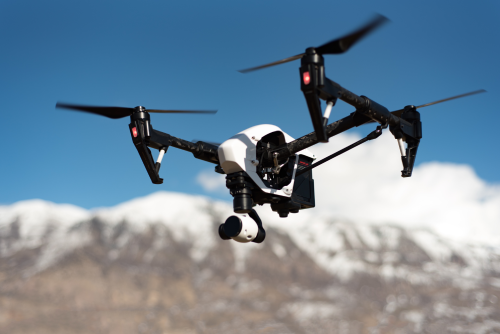
How drones are used in biodiversity studies is no longer a niche question. In India and around the world, drones have become practical tools for mapping habitats, tracking changes in ecosystems, and supporting wildlife research with faster, more repeatable data than many traditional field methods alone. They do not replace ecologists, forest staff, or ground surveys, but they can make biodiversity work more efficient, safer, and more precise.
Quick Take
- Drones help researchers study habitats, species distribution, vegetation health, wetlands, coasts, and restoration sites.
- The most common use is high-resolution aerial mapping using standard RGB cameras, but thermal, multispectral, and LiDAR sensors can add deeper insight.
- In biodiversity studies, drones work best as part of a larger workflow that includes field observations, GPS points, and ecological expertise.
- They are especially useful in hard-to-reach areas such as mangroves, marshes, cliffs, river islands, and degraded forest edges.
- In India, drone use near protected areas, wildlife habitats, and sensitive zones requires extra caution and often additional permissions. Always verify the latest DGCA, airspace, and site-specific rules before flying.
- Poor planning can disturb wildlife or produce misleading data. Flight height, timing, noise, weather, and repeatable survey design matter a lot.
Why drones matter in biodiversity studies
Biodiversity studies are about more than counting animals. They also examine habitat quality, landscape change, water availability, plant diversity, nesting sites, invasive species, forest structure, and ecological pressure from roads, mining, farming, or urban growth.
Drones sit in a useful middle ground between ground surveys and satellite imagery.
Compared with ground surveys
Ground surveys are detailed and scientifically important, but they can be slow, labour-intensive, and difficult in rough terrain. A drone can quickly scan a wetland, grassland, riverbank, or mangrove patch and show patterns that are hard to see from the ground.
Compared with satellites
Satellite images cover large areas, but they may not have the detail needed to identify nests, animal trails, small water pools, canopy gaps, or invasive plant patches. Cloud cover is also a major issue, especially in monsoon seasons. Drones can fly when a site needs to be checked and capture much finer detail.
Compared with manned aircraft
Helicopters and aircraft can cover more area, but they are expensive, noisy, and often impractical for smaller studies. Drones are more accessible for universities, conservation groups, consulting firms, and even student research teams working under proper supervision.
What drones can actually measure
A drone does not “measure biodiversity” directly. It captures data that helps researchers infer biodiversity patterns.
That difference is important.
For example, a drone may not tell you the exact number of insect species in a forest patch. But it can map:
- Canopy cover
- Water spread and seasonal change
- Nesting colony locations
- Forest fragmentation
- Vegetation stress
- Animal presence in open habitats
- Encroachment and habitat degradation
- Invasive plant spread
- Corridor connectivity between habitat patches
These are strong ecological indicators when combined with field validation.
Common drone sensors used in biodiversity work
| Sensor type | Best used for | Main strength | Main limitation |
|---|---|---|---|
| RGB camera | Habitat maps, animal counts in open areas, vegetation cover, shoreline change | Affordable, easy to use, high visual detail | Limited ability to detect temperature or hidden stress |
| Thermal camera | Detecting warm-bodied animals, nest heat signatures, early morning wildlife surveys | Useful when animals blend into the background visually | Can be expensive and may give false detections without field checks |
| Multispectral camera | Crop-like vegetation analysis, plant health, restoration monitoring, invasive species mapping | Captures light bands beyond normal colour | Requires careful calibration and interpretation |
| LiDAR | Canopy structure, terrain under partial vegetation, biomass estimation | Strong for 3D landscape and forest structure analysis | Usually costly and used in specialized projects |
For many biodiversity projects, a good RGB camera is the starting point. Thermal and multispectral systems are useful when the research question truly demands them.
Main ways drones are used in biodiversity studies
Habitat mapping and land-cover classification
This is one of the most common applications.
Researchers fly a grid over a study area, capture overlapping images, and process them into an orthomosaic, which is a stitched, map-like image corrected for perspective. From that, they can classify areas into forest, scrub, grassland, water, mudflat, mangrove, agriculture, settlement, or degraded land.
This helps answer practical questions such as:
- Is a wetland shrinking?
- How much grassland has turned into scrub?
- Are invasive plants expanding?
- Has road construction fragmented an animal corridor?
- Which forest patches are still connected?
Indian example
In a semi-arid landscape in Rajasthan or Gujarat, a drone survey can reveal how seasonal waterholes, open scrub, and grazing pressure change across months. For species that depend on specific habitat patches, that map can be more useful than a simple field note.
Wildlife counts in open habitats
Drones are increasingly used to count visible animals in places where the terrain is open enough for detection. This can include:
- Deer or antelope in grasslands
- Waterbirds in wetlands
- Nesting birds on islands or mudflats
- Crocodiles or large reptiles on riverbanks
- Livestock pressure inside sensitive habitats
The advantage is consistency. A carefully planned drone survey can cover the same route, same altitude, and same time window again and again. That makes trend monitoring more reliable.
But there are limits.
Dense canopy, thick reeds, rocky overhangs, and shadows can hide animals. Also, species that are easily disturbed should never be approached just to get a better count.
Nest and colony monitoring
For cliff-nesting birds, tree-top colonies, river islands, or marsh breeding sites, drones can sometimes reduce the need for people to physically enter sensitive nesting areas.
When done at a carefully chosen height and with ecological supervision, drone imagery can help estimate:
- Number of active nests
- Colony spread
- Breeding habitat condition
- Flood risk around nesting sites
- Human disturbance nearby
This is useful in wetlands and coastal systems, but birds are often among the most disturbance-sensitive species. A drone should not be flown low over a colony just because the camera can zoom in.
Forest health and canopy structure
In forests, drones are often better at studying the canopy than what is beneath it.
They can help assess:
- Canopy gaps after storms or fire
- Regeneration in degraded patches
- Plantation versus natural forest patterns
- Edge effects near roads or settlements
- Tree crown health
- Forest fragmentation
With multispectral or specialized analysis, researchers can detect vegetation stress patterns that may point to disease, drought, or invasive pressure. LiDAR is especially useful in advanced projects that need 3D canopy structure or terrain modelling.
Important limitation
In dense forests such as parts of the Western Ghats or Northeast India, a standard camera drone cannot see much below the canopy. So drones are useful, but not enough on their own. Ground plots, camera traps, and acoustic monitoring may still be essential.
Wetlands, rivers, and floodplain biodiversity
Wetlands are one of the best places to understand how drones are used in biodiversity studies.
They can map:
- Water extent during different seasons
- Bird congregation zones
- Reed bed spread
- Mudflat exposure
- Floating vegetation
- Encroachment at wetland edges
- Fishery infrastructure or disturbance
In large wetland systems, a drone survey can support bird counts, habitat zonation, and restoration planning. Along rivers, drones are also used to monitor sandbars, nesting islands, riparian vegetation, and bank erosion.
India-specific value
In a country where many wetlands are under pressure from land conversion, sewage inflow, siltation, and seasonal water stress, repeatable drone maps can be extremely useful for conservation planning and local management.
Mangroves and coastal biodiversity
Mangroves are hard to survey on foot. Tidal conditions, muddy ground, creeks, and dense roots make fieldwork slow and risky.
Drones can help map:
- Mangrove extent
- Canopy damage after storms
- Creek patterns
- Sedimentation
- Open mudflats used by birds
- Shoreline retreat
- Restoration survival
In coastal biodiversity studies, drones are also used to survey beaches, dunes, turtle nesting zones, and intertidal habitats. Over marine systems, they may support observations of surface activity, but wind, glare, and battery planning become more demanding.
Invasive species detection
When an invasive plant spreads through grassland, wetland margins, or open forest, it can change habitat quality for native species very quickly.
Drones can be used to:
- Detect invasion hotspots
- Measure spread over time
- Prioritize removal areas
- Check whether control efforts worked
This is one of the strongest use cases because the visual pattern of invasion is often easier to map from above than from ground level.
Human-wildlife conflict and corridor monitoring
Not every biodiversity study is deep inside a forest. Many happen in mixed landscapes where farms, roads, villages, canals, and habitat patches overlap.
Drones can support corridor and conflict studies by mapping:
- Bottlenecks between habitat blocks
- Fence lines and linear barriers
- Crop edges near wildlife movement zones
- New construction near critical habitat
- Water availability in dry months
Used carefully, this can help conservation teams understand how landscape change is affecting wildlife movement.
Restoration and long-term monitoring
Drones are especially useful after intervention.
For example, if a degraded wetland is restored, or a mined area is under ecological recovery, drone surveys can compare the site before and after action. Researchers can track:
- Plant cover increase
- Erosion reduction
- Water retention
- Survival of planted species
- Habitat complexity returning over time
This is where drones become less about one-time imagery and more about repeatable evidence.
A practical biodiversity drone workflow
Good biodiversity drone work is not just about owning a drone. It is about building a survey that can be repeated and defended scientifically.
1. Start with a clear ecological question
Ask exactly what you want to know.
Examples:
- Has mangrove cover changed in the last year?
- Which parts of a wetland are most suitable for nesting birds?
- How much invasive vegetation has spread in this grassland?
- Are canopy gaps increasing in a degraded forest patch?
The research question decides the sensor, altitude, timing, and processing method.
2. Choose the right drone and camera
A multirotor drone is often best for small to medium areas, careful hovering, and detailed mapping.
A fixed-wing drone may be better for large landscapes where longer flight endurance matters.
For many beginners, an RGB camera is enough to start learning habitat mapping. Thermal or multispectral systems are more useful when there is a clear need and someone on the team can interpret the data correctly.
3. Get permissions and define no-go conditions
Before any field deployment:
- Verify current airspace restrictions
- Check whether the site is in or near a protected area or sensitive zone
- Confirm permissions from relevant authorities, land managers, or institutions
- Create wildlife disturbance stop rules
For example, if birds flush, mammals show agitation, or staff observe behavioural stress, the flight should stop.
4. Plan for repeatability
If the goal is monitoring, consistency matters more than flashy flying.
Try to keep the following similar across surveys:
- Altitude
- Flight path
- Overlap
- Time of day
- Season or tidal condition
- Camera angle
- Weather conditions
This makes comparisons more meaningful.
5. Collect ground truth data
Ground truth means real observations on the ground used to validate what the drone images suggest.
This may include:
- GPS-marked vegetation plots
- Species lists
- Water depth notes
- Nest checks from a safe distance
- Signs such as tracks, pellets, or browsing evidence
Without ground truth, drone maps can look impressive but still be scientifically weak.
6. Process the imagery properly
Typical outputs include:
- Orthomosaics
- Digital surface models
- Vegetation or water classification maps
- Change-detection layers
- Count maps or habitat suitability layers
The important part is not just software skill. It is checking whether the output matches ecological reality.
7. Interpret with caution
A bright patch in an image does not automatically mean healthy vegetation. A hot spot in thermal footage does not always mean an animal. Shadow, reflected heat, water glare, and bare soil can mislead analysis.
Good biodiversity studies use drone data as evidence, not as guesswork.
India-specific challenges and field realities
Drone biodiversity work in India often faces practical conditions that shape mission planning.
Monsoon and cloud cover
Monsoon affects visibility, wind, landing safety, and site access. Wetlands may become inaccessible, riverbanks unstable, and batteries harder to manage in humid conditions.
Heat and battery performance
High summer temperatures in central, western, and southern India can affect battery efficiency and field operations. Midday flights may also reduce thermal contrast if you are trying to detect animals.
Dust, salt, and moisture
Arid zones, coastal sites, and marshes are tough on equipment. Gimbals, motors, and sensors need extra care.
Terrain and signal issues
Hilly areas, valleys, and forest edges can complicate line of sight, navigation, and safe recovery.
Community and site sensitivity
Many biodiversity-rich areas overlap with villages, pastoral use, sacred landscapes, or community-managed lands. A technically legal flight can still create concern if local people are not informed properly. Good field practice includes communication and respect, not just airspace compliance.
Safety, wildlife ethics, and compliance in India
Biodiversity work is one of the few drone applications where “Can we fly?” is only the first question. The second is “Should we fly here at all?”
Wildlife safety first
Some species tolerate drones reasonably well at higher altitudes. Others react strongly to sound or movement.
Use these principles:
- Avoid low passes over animals
- Never chase wildlife for identification shots
- Be especially cautious around nesting birds, denning animals, and mothers with young
- Use the minimum number of flights needed
- Keep a trained observer watching animal behaviour
- Stop immediately if signs of stress appear
Legal and permission checks
In India, always verify the latest official requirements before operating. Depending on the drone, location, and mission type, you may need to comply with current DGCA rules, airspace restrictions, approved flight processes, and platform requirements.
For biodiversity studies, there may also be separate permissions or restrictions from:
- Forest departments
- Wildlife authorities
- Protected area management
- Coastal or local administration
- Research institutions or landowners
Protected areas and ecologically sensitive sites often require more than normal drone planning. Never assume that a conservation purpose automatically gives permission to fly.
Data sensitivity and privacy
Drone imagery can reveal:
- Nesting locations
- Rare species habitats
- Anti-poaching routes
- Village layouts
- Private land use
That information should be handled responsibly. Not all biodiversity data should be widely shared.
Common mistakes in biodiversity drone surveys
Flying too low because “better detail is better”
Lower altitude can mean sharper images, but it can also increase wildlife disturbance and reduce survey efficiency. The best altitude is the lowest one that meets data needs without unnecessary risk.
Skipping field validation
A drone map without ground truth can lead to wrong conclusions, especially in vegetation classification or animal detection.
Using the wrong time of day
Examples:
- Midday thermal flights can reduce contrast
- Harsh noon light can create visual shadows
- Windy afternoons can distort repeatability over wetlands or coastlines
Changing flight settings every visit
If one month you fly at 60 metres and the next at 110 metres with a different camera angle, your comparison becomes weak.
Ignoring species behaviour
A technically successful flight is not a successful biodiversity survey if birds abandon a nest or animals are repeatedly disturbed.
Overestimating AI and automated counts
Machine learning can help classify vegetation or identify likely animals, but false positives are common. Human review is still essential.
Poor note-taking
Always record:
- Date and time
- Weather
- Location
- Altitude
- Sensor used
- Battery cycles
- Animal responses
- Tide or water level if relevant
Metadata is what turns imagery into usable science.
FAQ
Are drones better than camera traps for biodiversity studies?
Not better in every case. Drones are strong for aerial mapping and open-area surveys. Camera traps are better for under-canopy wildlife, night movement, and long-duration monitoring. In many projects, they complement each other.
Which type of drone is best for biodiversity work?
For most small and medium surveys, a multirotor drone is the practical choice because it is easier to launch, land, and hover. Fixed-wing drones suit large-area mapping but need more space and planning.
Can drones count animals accurately?
Sometimes, yes, especially in open habitats. But accuracy depends on species size, camouflage, vegetation cover, time of day, image resolution, and observer skill. Counts should be validated whenever possible.
Is thermal imaging always better for wildlife detection?
No. Thermal is useful when animals stand out from the background, often in cooler conditions. But sun-heated rocks, soil, and water edges can cause false detections.
Do I need special permission to fly in or near protected areas in India?
Often, yes, or there may be restrictions that go beyond normal drone operation. Always verify the latest DGCA airspace requirements and get any site-specific approvals from forest, wildlife, or local authorities before planning a survey.
Can drones study biodiversity in dense forests?
They can help map canopy condition and fragmentation, but standard drones have limited visibility below dense canopy. Ground surveys, camera traps, acoustic sensors, or LiDAR may still be needed.
What is the best season for biodiversity drone surveys?
It depends on the study question. Dry-season mapping can reveal habitat boundaries clearly, while wet-season surveys may capture breeding wetlands or floodplain dynamics. The key is to match season to the ecological objective and keep repeat surveys consistent.
Are consumer drones good enough for student projects?
For basic habitat mapping, shoreline documentation, and small restoration monitoring, a good RGB camera drone may be enough. But students should focus on method quality, permissions, and validation rather than chasing advanced sensors too early.
How much image overlap is needed for habitat mapping?
Enough to create reliable stitched maps and 3D outputs if required. The exact amount depends on terrain, camera, and software. What matters most is consistent planning and clean data capture.
What should a beginner in India do first?
Start with a small, legal, low-risk habitat mapping project in a non-sensitive area, work with an ecologist or mentor, and learn repeatable survey design before attempting wildlife-focused missions.
The real takeaway
Drones are most useful in biodiversity studies when they answer a specific ecological question, not when they are flown just because the technology is available. If you are a student, researcher, NGO, or field professional in India, start with habitat mapping, build a repeatable workflow, verify every permission, and treat wildlife disturbance as a hard stop. That is how drone data becomes genuinely valuable for conservation.
