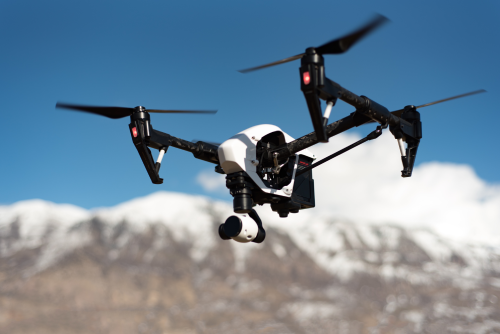
Forest fires are hard to spot early, especially in remote hills, dry forest edges, and areas where ground patrols cannot reach quickly. Drones help by giving forest teams a fast aerial view, spotting smoke and heat signatures, and sending location data that can turn a vague alert into an actionable response.
For Indian conditions, drones are most useful when they are part of a wider system that includes local watchers, satellite alerts, fire lines, and ground crews. They are not a magic replacement for all of these, but they can close the gap between “something may be burning” and “here is the exact hotspot.”
Quick Take
- Drones are used in forest fire detection to spot smoke, detect heat with thermal cameras, verify alerts, and map fire boundaries.
- They are especially useful in remote, hilly, and difficult-to-access areas where watchtowers and foot patrols have limits.
- The best results usually come from combining:
- RGB cameras for visible smoke and flames
- Thermal cameras for hotspots and heat sources
- GPS-tagged maps for ground response
- Multirotor drones are good for detailed inspection and hovering over a suspected area.
- Fixed-wing or hybrid VTOL drones are better when very large forest areas need regular patrol coverage.
- Drones can help before a fire grows large, but they do not replace satellites, watchtowers, local reporting, or trained firefighters.
- In India, any forest fire drone operation should be planned with safety, permissions, airspace rules, and local authority coordination in mind. Always verify the latest official DGCA and state-level requirements before flying.
Why forest fire detection is difficult
Forest fires are often easiest to control when caught early. The problem is that early signs are easy to miss.
A small ground fire may begin under dry leaves, pine needles, or grass. At that stage, there may be little visible flame from a distance. In hilly terrain, one ridge can block the view of another. Dense canopy can hide small hotspots from ground teams. By the time thick smoke is visible from a road or lookout point, the fire may already be spreading.
Traditional detection methods still matter:
- Watchtowers
- Ground patrols
- Local community reports
- Satellite-based alerts
- Camera towers and control rooms
But each has a trade-off. Satellites cover large areas but may not always provide the immediacy or resolution needed for quick local action. Ground patrols are slow. Fixed camera towers have blind spots. This is where drones fit well.
How drones are used in forest fire detection
Drones are not just for filming flames from above. Their real value is in detection, verification, and targeted monitoring.
Spotting early smoke plumes
One of the simplest uses is visual patrol.
A drone flies a planned route over a forest block, ridge line, plantation edge, or known high-risk zone during the dry season. Its normal camera looks for:
- Thin smoke rising from the forest floor
- Burn scars near roads or villages
- Flames near power lines, camp areas, or field edges
- Fresh ignition points after lightning or human activity
This is often more effective than waiting for a person on the ground to notice a fire from far away.
In practical terms, a drone can inspect a suspected area much faster than a team walking uphill through forest tracks.
Detecting hotspots with thermal cameras
A thermal camera shows differences in heat rather than visible light. This makes it one of the most important tools in forest fire detection.
Thermal drones can help find:
- Hidden hotspots under light smoke
- Smouldering areas that do not yet show strong flames
- Residual heat after a fire front appears to be controlled
- Fire spread along dry grass, leaf litter, or deadwood
This is especially useful in the evening, early morning, or low-light conditions when normal cameras struggle.
However, thermal imaging is not magic. Sun-heated rocks, metal roofs, exposed soil, or recently heated surfaces can create false alarms. Dense canopy can also hide a heat source beneath it.
Verifying alerts from other systems
In many situations, the drone is not the first detector. It is the fast verification tool.
For example, a control room may receive:
- A satellite-based fire alert
- A call from a villager
- A lookout report of smoke on a distant hill
- A possible fire signal near a rail line or road
Instead of sending a full team blindly into a large area, a drone can quickly verify:
- Whether there is really a fire
- How big it is
- Where it is moving
- Which access route is safest
- Whether homes, roads, or wildlife-sensitive areas are at risk
That verification role can save crucial time.
Scanning high-risk corridors
Some fires begin near human activity rather than deep inside untouched forest.
Drones are often useful for patrolling:
- Forest edges near villages
- Tourist zones and campsites
- Railway and roadside corridors
- Transmission line corridors
- Plantation boundaries
- Dry grass belts between settlements and forest land
These are practical patrol missions because the route is repeatable and the risk points are known.
In India, this matters because many forest fires begin in interface zones where forest, agriculture, and human movement overlap.
Mapping the fire edge and spread pattern
Once a fire is confirmed, detection is no longer just about finding “if” there is a fire. It becomes about finding exactly where the active edge is.
Drones can map:
- The current fire perimeter
- Active flame fronts
- Hotspots outside the main burn line
- Areas already burned
- Slopes or gullies where fire may run next
This information helps field teams decide where to create control lines, where to stage equipment, and which direction to approach from.
Finding residual hotspots after the main fire
Many forest fires re-ignite because small hot pockets remain.
After the main flame is brought under control, drones with thermal sensors can help detect:
- Buried embers
- Hot tree stumps
- Burning roots
- Patches under leaf litter
- Edge hotspots outside the visible burn zone
This is one of the most practical detection uses because it helps prevent a second flare-up.
The main sensors used in forest fire detection
Not every drone camera is equally useful. The sensor matters as much as the aircraft.
| Sensor or tool | What it helps detect | Best use | Main limitation |
|---|---|---|---|
| RGB camera | Visible smoke, flames, burn scars, access routes | Day patrols, verification, documentation | Harder in low light, haze, or heavy smoke |
| Thermal camera | Heat signatures, hotspots, smouldering areas | Early hotspot detection, night or dusk monitoring, mop-up checks | False positives from hot surfaces, limited by canopy and very dense smoke |
| Zoom camera | Distant smoke columns or suspicious activity without flying too close | Ridge-to-ridge inspection, safer stand-off observation | Narrow view, depends on stable flying and clear visibility |
| GPS mapping and geotagging | Exact coordinates of fire points | Sending usable location data to ground teams | Accuracy depends on system quality and mission setup |
| AI smoke detection software | Flags possible smoke or heat patterns in video | Large-area monitoring support | Should be treated as assistance, not final proof |
For most real-world forest fire detection work, the most useful combination is an RGB camera plus a thermal camera.
Which type of drone is used?
Different drone types suit different jobs.
Multirotor drones
These are the most familiar drones and are common for inspection work.
Best for:
- Hovering over a suspected hotspot
- Detailed thermal inspection
- Short-range patrols
- Launching from tight spaces
Trade-offs:
- Shorter flight time
- Smaller area covered per flight
Fixed-wing drones
These are more like small unmanned aircraft than hovering drones.
Best for:
- Long corridor patrols
- Covering large forest blocks
- Repeated area scans over longer distances
Trade-offs:
- Cannot hover
- Need more space and planning for launch or recovery
- Less ideal for close inspection of one exact point
Hybrid VTOL drones
VTOL means vertical take-off and landing. These combine some advantages of both categories.
Best for:
- Large-area patrols with more flexibility
- Operations where runway-style launch is impractical
Trade-offs:
- More complex systems
- Usually higher cost and training needs
A practical forest fire detection workflow
A good drone mission is not just “fly and look around.” The workflow matters.
1. Define the risk zone
Before flight, teams identify:
- High-risk forest blocks
- Dry grass belts
- Known ignition points
- Recent alert locations
- Villages or assets that need protection
This helps avoid wasting flight time.
2. Plan the route
The drone route should consider:
- Terrain
- Wind direction
- Battery limits
- Visual line of sight requirements
- Safe take-off and landing points
- Emergency landing options
In hilly areas, route planning is critical because valleys and ridges affect both visibility and signal quality.
3. Fly with the right sensor for the time of day
- Daylight patrol: RGB camera and zoom are often enough for smoke spotting
- Early morning, evening, or suspected hotspot mission: thermal becomes more important
- Verification of a reported fire: use both if available
4. Mark suspected fire points with coordinates
A useful detection flight should produce more than video. It should generate location data that ground teams can use.
The operator should be able to report:
- Coordinates
- Approximate fire size
- Access route
- Nearby hazards
- Fire direction, if visible
Without clear geotagging, a drone may create dramatic footage but limited operational value.
5. Confirm before escalation
A thermal hotspot or faint plume should be cross-checked. Teams may compare:
- Drone video
- Thermal image
- Satellite alert
- Ground report
- Nearby known heat source
This reduces false alarms.
6. Send targeted ground response
The main goal of detection is response.
Ground teams can be guided to:
- The closest safe entry point
- The uphill or downhill side, depending on terrain and fire behaviour
- Nearby water source or vehicle track
- Hotspots outside the obvious burn area
7. Repeat flights as conditions change
A single flight is not enough during an active event. Fire behaviour can change quickly due to wind, slope, and fuel load.
Repeated flights can help track:
- New ignition spots
- Spread rate
- Fire jumping a line
- Hidden heat after visible flames reduce
Where drones are especially useful in India
Indian forest conditions vary a lot, and that changes how drones are used.
Hilly and mountainous areas
In places such as Himalayan foothills and other steep forest regions, drones can inspect slopes that are slow and risky for teams to reach on foot.
Dry deciduous forests
In central and eastern India, dry leaf litter and seasonal heat can create fast-moving ground fires. Drones are useful for locating the exact line of spread.
Pine forest zones
In areas with dry pine needles on the ground, fire can move quickly across the surface. A drone can help detect the active edge and confirm whether a reported smoke point is expanding.
Forest-village interface zones
These are often high-risk areas because people, grazing activity, vehicles, and agricultural burning may be close to forest boundaries. Drones can patrol these edges more effectively than occasional manual checks.
Protected and remote areas
In remote reserves or difficult forest blocks, drones can reduce the time needed to verify a possible fire. But permissions and wildlife sensitivity become even more important here.
The biggest advantages of using drones
The practical benefits are clear when missions are planned properly.
- Faster verification than sending only foot patrols
- Better visibility over ridges, valleys, and inaccessible patches
- Safer initial assessment without exposing people too early
- More precise coordinates for response teams
- Useful thermal detection in low light
- Better records for incident review and planning
- Often more practical than manned aircraft for small to mid-scale local monitoring
For local agencies or land managers, the biggest win is often not “seeing everything,” but reducing uncertainty.
The limits you should understand
Drones are useful, but they also have real limits.
- Battery life restricts patrol duration
- Strong winds can make flying unsafe or unstable
- Heavy smoke can reduce visibility and image quality
- Dense canopy may hide a hotspot underneath
- Thermal cameras can misread hot rocks, roads, or exposed soil
- Remote areas may have weak communication links
- One drone cannot cover an entire district continuously
- Untrained interpretation can turn data into wrong decisions
This is why drones should be treated as one layer in a detection system, not the whole system.
Safety, legal, and compliance points in India
Forest fire operations can create pressure to act fast, but legal and safety discipline still matters.
Before any operational use in India, verify the latest official requirements from DGCA and any applicable state, district, forest, wildlife, or disaster-management authorities. Rules can change, and some operations may need additional permissions depending on the location, drone category, airspace, and mission type.
Key points to keep in mind:
- Check whether the intended flight area is allowed airspace.
- Use compliant equipment and operating procedures as required under current Indian rules.
- If the mission is in or near protected areas, wildlife zones, or sensitive government land, additional approvals may apply.
- Night operations, flights beyond normal visual range, or specialised emergency missions may need separate approval. Do not assume they are automatically permitted.
- Coordinate with the local forest department, administration, and any fire control room involved.
- Never interfere with manned aircraft or helicopters involved in firefighting or emergency work.
- Maintain safe stand-off distance from active flames, rising heat columns, and smoke turbulence.
- Protect privacy when flying near villages or settlements at forest edges.
- Use trained operators with emergency procedures, spare batteries, and clear communication plans.
In short, operational urgency is not a reason to skip compliance.
Common mistakes in forest fire detection with drones
These mistakes reduce the value of the mission and can create risk.
Flying only after the fire is already obvious
If the drone is launched only when flames are clearly visible from the ground, the main detection advantage is lost. Drones work best for early verification and routine patrols in risk periods.
Relying on thermal alone
Thermal imaging is powerful, but it can mislead. Always compare suspicious heat signatures with visible imagery and local knowledge.
Poor route planning
Random flying wastes battery and may miss critical areas. High-risk corridors should be mapped in advance.
Capturing video without useful coordinates
A dramatic video clip is not enough for field response. Detection missions need geotagged outputs and clear location reporting.
Ignoring weather and terrain
Wind, slope, sun angle, and smoke movement all affect what the drone sees. What looks like a fire source may just be drifting smoke from another direction.
No coordination with ground teams
A drone that finds a hotspot but does not pass structured information to field staff is only half useful.
Using consumer gear without an operations plan
A basic consumer drone may help in simple visual verification, but serious forest fire detection needs more than a camera in the air. It needs trained operation, batteries, communication, mission planning, and data handling.
FAQ
Can drones detect a forest fire before flames are visible?
Sometimes, yes. Thermal cameras can help detect heat and smouldering hotspots before large flames are obvious, especially in low light or light smoke. But detection still depends on canopy cover, weather, sensor quality, and flight timing.
Are drones better than satellites for forest fire detection?
Not exactly. Satellites are better for broad regional monitoring, while drones are better for close-range verification, detailed inspection, and actionable local mapping. In practice, they work best together.
Can thermal drones see through trees?
Not reliably. A thermal camera may pick up heat in gaps or open areas, but dense canopy can block or weaken detection of heat sources below. This is a major limitation in thick forest.
Which drone type is best for forest fire detection?
For close verification and hotspot inspection, multirotor drones are usually the easiest choice. For larger patrol areas, fixed-wing or hybrid VTOL platforms can be more efficient. The right choice depends on area size, terrain, and sensor needs.
Can a normal camera drone be used for fire detection?
It can help with visible smoke spotting and verification in daylight. But for serious hotspot detection, a thermal payload is much more useful. A normal camera alone is limited, especially in low light or when the fire is still small.
Is night flying useful for forest fire detection?
Yes, thermal detection can be very useful at night or around dawn and dusk. But night operations may involve additional operational difficulty and legal requirements. Always verify the latest official rules and permissions before attempting such flights.
Do drones replace watchtowers and patrol teams?
No. Drones are best used as a supplement. Watchtowers, local reports, satellite alerts, and ground crews are still essential. The drone adds speed, perspective, and better location accuracy.
How accurate are the hotspot locations from a drone?
That depends on the drone, the sensor, GPS quality, and mission setup. A well-run operation can provide very useful coordinates, but teams should still confirm on the ground before committing major response decisions.
Can small businesses or service providers offer this as a professional service?
Potentially, yes, but only with the right permissions, trained pilots, suitable equipment, clear SOPs, and strong coordination with official agencies or land managers. This is not a casual “camera job.”
What matters more: camera quality or flight time?
Both matter, but for fire detection the sensor quality and operational workflow usually matter more than just long flight time. A long-endurance drone without reliable thermal data or good coordinates may still be less useful than a shorter-flight system with the right payload.
Final takeaway
The best way to understand how drones are used in forest fire detection is this: they shorten the time between suspicion and certainty. If you are planning a real-world setup in India, focus less on flashy footage and more on the full system: the right sensor, the right flight plan, trained operators, geotagged outputs, coordination with ground teams, and verified legal compliance before the first take-off.
