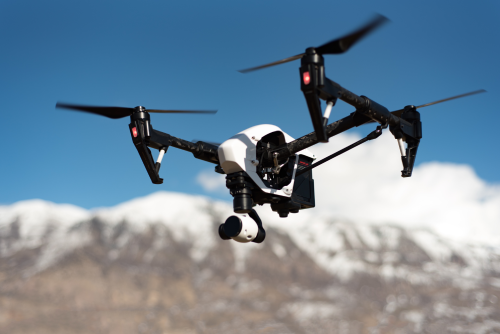
The top 50 real-world uses of drones across industries go far beyond scenic aerial videos. In India, drones are already helping farmers, engineers, filmmakers, surveyors, emergency teams, and small businesses work faster, safer, and with better data.
Quick Take
- Drones are most useful where work is dangerous, repetitive, slow, or hard to document from the ground.
- The biggest value is not the drone itself, but the output: a map, inspection report, thermal scan, 3D model, crop health view, or delivery run.
- Different jobs need different payloads. A camera drone, a thermal inspection drone, and an agricultural spraying drone are not the same tool.
- In India, strong practical use cases include agriculture, construction, solar inspection, infrastructure surveys, public safety, real estate, and media production.
- Some applications in this list require trained teams, specialised permissions, or agency-level coordination. Always verify the latest official rules before flying.
The payloads behind most drone jobs
Most commercial drone work falls into a few clear categories.
| Payload type | Best for | Typical output |
|---|---|---|
| RGB camera | Photos, video, maps, inspections | Images, stitched site maps, 3D models |
| Thermal camera | Heat-related faults, fire, solar, search work | Heat maps, hotspot reports |
| Multispectral camera | Crop monitoring | Plant health maps |
| LiDAR, or laser scanning | Terrain, corridors, dense vegetation | High-detail elevation and terrain data |
| Sprayer or spreader system | Farming applications | Treated-area logs, field coverage records |
A beginner mistake is assuming one drone can do all of this. In reality, the right platform depends on the job, the sensor, the site, and the legal requirements.
Top 50 Real-World Uses of Drones Across Industries
Agriculture and rural operations
1. Crop health scouting
Drones help farmers quickly scan fields for stress, pest attack, waterlogging, or uneven growth. A normal RGB camera can reveal visible damage, while a multispectral sensor can show plant stress before it is obvious from the ground.
2. Precision spraying
Agricultural drones can apply crop protection chemicals or nutrients more evenly in certain conditions than manual methods. They are especially useful where field access is difficult, but they require proper calibration, trained operation, and safe chemical handling.
3. Seed broadcasting
Some agricultural drones can spread seeds, micronutrients, or granular inputs. This is useful for re-seeding patches, cover cropping, and work in hard-to-reach or muddy terrain.
4. Irrigation leak detection
A drone can quickly spot dry zones, blocked drip lines, broken pipes, or poor water distribution. On larger farms, orchards, and plantations, this saves field inspection time.
5. Orchard and plantation monitoring
Tea gardens, coffee estates, mango orchards, and similar operations can use drones to check canopy health, count missing plants, and identify disease-prone zones. This is far faster than walking every row.
6. Livestock and pasture checks
On large rural properties, drones can help locate animals, inspect fences, and check water points. Operators should fly carefully and avoid stressing animals with low, noisy passes.
7. Farm boundary and acreage mapping
Drones can create visual field maps for planning, input estimation, and contractor work records. For legal land disputes or official land records, readers should verify whether additional survey standards or government procedures apply.
8. Crop damage assessment
After floods, hail, pest attack, or strong winds, drones provide quick visual evidence of affected areas. This can support insurance documentation, input planning, and farm recovery decisions.
Construction, land, and infrastructure
9. Land surveys and topographic mapping
Before construction starts, drones can capture a detailed site overview and terrain model. This helps with planning layouts, drainage, cut-and-fill decisions, and early project estimates.
10. Construction progress tracking
Weekly or monthly drone flights give builders and clients a clear record of site progress. This is especially useful for apartments, roads, industrial sheds, and township projects.
11. 3D models and digital twins
A digital twin is a visual 3D representation of a real site or structure. Drones help create these models for planning, design comparison, stakeholder updates, and remote review.
12. Stockpile and earthwork measurement
Construction firms, quarries, and materials yards use drones to measure sand, aggregate, soil heaps, and excavation volumes. This is faster and often safer than manual estimation from the ground.
13. Roof and building exterior inspection
Drones are widely used to inspect roofs, water tanks, gutters, façades, and exterior damage on homes, factories, schools, and commercial buildings. This reduces the need for ladders, scaffolding, and risky access.
14. Bridge inspection
A drone can capture close visual views of joints, cracks, undersides, and hard-to-reach sections. It does not replace structural engineering judgment, but it can speed up inspection planning and documentation.
15. Road and highway corridor surveys
Road projects use drones to review alignments, drainage paths, earthwork progress, nearby encroachments, and traffic interfaces. This is valuable for both new roads and maintenance work.
16. Railway inspection support
Drones can help monitor embankments, vegetation growth, drainage, and visible asset conditions along railway corridors. In practice, this is typically done by authorised teams or contractors working with the relevant agency.
17. Telecom tower inspection
Tower companies use drones to inspect antennas, cable routes, corrosion, loose fittings, and post-storm damage. This can reduce the need for repeated tower climbs.
Energy, utilities, and industrial assets
18. Power line inspection
Drones help utilities inspect insulators, line clearances, poles, and vegetation growth near transmission or distribution assets. Thermal imaging can also help detect overheating components.
19. Solar plant thermal inspection
Large solar farms in India can be checked quickly with thermal drones to find hot spots, underperforming panels, and string-level issues. This is one of the clearest business cases for thermal inspection.
20. Wind turbine inspection
Drones capture detailed blade images to spot cracks, erosion, or lightning damage. This reduces manual rope access and can shorten shutdown time.
21. Oil and gas pipeline monitoring
Long pipelines are difficult to patrol only by vehicle or foot. Drones can help check right-of-way encroachment, visible damage, ground disturbance, or suspicious changes along the route.
22. Chimney and flare stack inspection
Industrial plants use drones to inspect chimneys, stacks, and tall structures where access is difficult. This can reduce the need for scaffolding during preliminary inspection work.
23. Thermal leak detection in factories
Thermal drones can identify heat loss from furnaces, boilers, steam lines, insulation gaps, and industrial equipment. This supports maintenance planning and energy efficiency work.
24. Dam and canal inspection
Water infrastructure teams can use drones to inspect cracks, seepage signs, blocked sections, silt build-up, embankment erosion, and gate conditions. This is particularly useful after monsoon stress.
25. Mine and quarry surveying
Mining and quarry operations use drones for pit mapping, stock measurement, haul road review, slope monitoring, and visual safety documentation. This gives managers faster updates than many ground-only methods.
Public safety, governance, and emergency response
26. Disaster damage assessment
After floods, cyclones, landslides, or earthquakes, drones can quickly show the scale of damage. This helps teams prioritise access routes, relief planning, and early damage reporting.
27. Search and rescue
Thermal and zoom-capable drones can help locate missing persons in forests, riverbanks, collapsed structures, or low-visibility conditions. These operations are best handled by trained responders or authorised teams.
28. Flood monitoring and embankment checks
During heavy rain and monsoon events, drones can track water spread, breach points, stranded settlements, and weak embankment sections. This is especially relevant in flood-prone districts.
29. Fire scene situational awareness
Fire services can use drones to assess roof heat, spread direction, access routes, and nearby hazards. A real-time aerial view can improve ground decision-making.
30. Traffic accident documentation
Drones can quickly capture the full scene of a road accident for reconstruction and reporting. This can help reduce road closure time, though it should be done by trained or authorised personnel.
31. Crowd and route planning for large events
For major gatherings, drones can help assess entry routes, bottlenecks, parking overflow, and crowd movement patterns. This must be done lawfully and never in a reckless way over dense crowds.
32. Municipal GIS and property mapping
Cities and towns use drones to update base maps, drainage layouts, road networks, and building footprints. GIS means a location-based mapping system used for planning and administration.
33. Coastal and riverbank surveillance
Drones can monitor shoreline changes, unsafe riverbank conditions, stranded boats, and flood-prone stretches. Coastal states and river authorities can use this for faster field review.
34. Forest fire early detection
In large forest areas, drones can spot smoke lines, flame spread, and access challenges before ground teams arrive. Early aerial visibility can matter a lot in dry-season fire response.
Media, marketing, and creative work
35. Real estate marketing
Builders, brokers, and property managers use drones to show plot access, neighbourhood context, amenities, and site scale. This works especially well for villas, plotted developments, resorts, and large housing projects.
36. Weddings and live events
Drones are common for venue reveals, outdoor processions, and cinematic event coverage. The safest approach is controlled flying with clear takeoff zones, not low passes over guests.
37. Film and TV production
Drone shots now replace many crane, cable, or helicopter shots for establishing scenes and location movement. They are widely used in ads, music videos, web series, and documentaries.
38. Tourism and destination promotion
Hotels, resorts, state tourism campaigns, and travel creators use drones to show landscapes, beaches, forts, lakes, and hill stays. Good drone footage helps viewers understand the setting in seconds.
39. Sports filming and performance analysis
Coaches and organisers use drones for tactical views in training, race coverage, and venue overviews. This can be useful in athletics, cycling, motorsport, rowing, and outdoor academies.
40. News gathering and documentary coverage
Drones add context to civic stories, weather events, environmental reporting, and long-form documentaries. Operators must still respect emergency operations, privacy, and local restrictions.
Environment, science, and conservation
41. Wildlife surveys
Drones can help count nests, herds, waterbird clusters, or animal movement patterns with less disturbance than many traditional methods. Flight planning matters, because careless flying can still stress wildlife.
42. Forest health and biodiversity mapping
Researchers and forestry teams use drones to monitor canopy gaps, invasive growth, regeneration zones, and plantation performance. This improves field sampling efficiency.
43. Wetland, coastline, and erosion monitoring
Drones are well suited to tracking lake shrinkage, mangrove edges, beach erosion, river course shifts, and seasonal wetland change. Repeat flights make change detection much easier.
44. Pollution and air or water sampling support
Specialist research drones can carry sensors or guide sampling in places that are hard or unsafe to reach. This remains a more advanced use case, but it is very real in academic and industrial research.
45. Archaeology and heritage documentation
Drones are used to create detailed visual records and 3D models of forts, temples, excavation areas, and old structures. This supports conservation planning and public documentation.
46. Academic research and student projects
Engineering, agriculture, geography, and disaster management students increasingly use drones for data collection and prototype work. The real value comes when the project solves an actual field problem.
Logistics, services, and business operations
47. Insurance claim assessment
After storms, fires, floods, or structural damage, drones help insurers and surveyors inspect roofs, fields, factories, and large properties faster. This can improve documentation quality and reduce repeat visits.
48. Building maintenance and facility inspection
Malls, campuses, factories, warehouses, and large institutions use drones to inspect roofs, cladding, cooling units, external piping, and drainage systems. It is often cheaper than frequent manual access work.
49. Warehouse inventory and yard management
In large outdoor yards or industrial logistics spaces, drones can help scan storage areas, container stacks, vehicle zones, and material movement. Indoor inventory drones also exist, but they are a more specialised category.
50. Medical, emergency, and last-mile delivery pilots
Delivery drones are being tested for medicines, blood, lab samples, and urgent supplies in hard-to-reach areas. This is promising, but it usually happens under controlled projects and approved operating frameworks rather than open free-for-all use.
Safety, legal, and compliance checks in India
Before trying any commercial drone use case, do these checks first:
- Verify the latest DGCA and Digital Sky requirements for your drone category and operation.
- Confirm whether your aircraft and operation need specific compliance features or approvals, including NPNT, which stands for No Permission, No Takeoff, where applicable.
- Check local airspace restrictions, especially near airports, strategic sites, government areas, and sensitive infrastructure.
- Get site-owner or client permission before inspecting private property, farms, industrial plants, or event venues.
- Do not fly recklessly over people, moving traffic, or crowded event areas.
- Respect privacy. Just because a drone can see something does not mean you should record it.
- Plan for weather, battery reserves, return-to-home behaviour, and emergency landing options.
- For public safety, delivery, rail, utility, or government-related work, expect higher operational scrutiny and more formal coordination.
- Consider insurance where sensible or contractually required, especially for commercial jobs.
How to choose the right drone use case for your business
If you are a freelancer, startup, or small business, pick the problem first and the drone second.
-
Define the actual client need.
Is the client asking for a cinematic video, a map, a thermal report, a crop spray job, or a 3D model? -
Decide the deliverable.
The output could be edited video, stitched site maps, inspection photos, defect reports, or area measurements. -
Match the sensor to the job.
A camera drone may suit marketing and basic inspections. Thermal is better for solar and electrical work. Multispectral suits agriculture. Spraying needs a dedicated agricultural platform. -
Check the site and compliance burden.
Urban work, industrial sites, public events, and critical infrastructure are more demanding than open private land. -
Run a pilot project first.
A one-site test reveals whether the workflow, accuracy, reporting, and client value actually make business sense.
Common mistakes people make with drone applications
-
Buying on camera specs alone
A sharp camera does not automatically make a drone suitable for surveying, thermal inspection, or spraying. -
Ignoring the data workflow
Flying is only half the job. Processing, reporting, storage, and client-ready delivery often take more time than the mission itself. -
Promising survey-level accuracy without proper methods
Good maps need the right flight planning, overlaps, processing, and sometimes ground control points depending on the use case. -
Treating regulated jobs like casual content shoots
Event coverage, infrastructure inspection, delivery trials, and public safety work need stricter planning and permissions. -
Underestimating weather and batteries
Wind, heat, dust, and monsoon conditions can change results quickly, especially in India. -
Forgetting safety around people and property
The most avoidable drone problems usually come from rushed takeoffs, poor site control, and risky flying for dramatic shots.
FAQ
Which drone uses are most practical in India right now?
Agriculture, site mapping, construction progress tracking, solar inspection, telecom tower inspection, real estate marketing, and roof inspection are among the most practical and active use cases.
Can one drone handle multiple industries?
Sometimes, yes. A good RGB camera drone can cover marketing, basic inspection, and some mapping work. But thermal, spraying, and advanced survey jobs usually need specialised equipment.
Are drone maps legally valid for land disputes?
Not automatically. A drone map can be useful evidence or planning support, but official legal validity depends on the purpose and the relevant authority or survey standard. Verify before relying on it.
When is a thermal drone worth the extra cost?
Thermal becomes valuable when heat differences matter, such as solar plants, electrical assets, factory maintenance, fire response, and some search operations.
Is drone spraying suitable for every farm?
No. It depends on crop type, field size, crop stage, chemical compatibility, local conditions, operator training, and the latest rules. It is a tool, not a universal replacement for every method.
Are delivery drones already common in India?
They exist in pilot projects and controlled operations, especially for medical and urgent logistics use cases. Large-scale routine delivery is still a developing area.
What extra equipment is usually needed beyond the drone?
Spare batteries, chargers, memory cards, a tablet or controller, landing pad, safety gear, processing software, and sometimes survey markers or specialised sensors.
What should a beginner learn first if they want to work professionally?
Start with safe flying, airspace awareness, shot planning, battery management, and data handling. Then choose one vertical such as mapping, inspection, agriculture, or video production and build a repeatable workflow.
Final takeaway
The best way to understand drone applications is simple: drones are not just flying cameras, they are tools for faster decisions. If you want to enter this space, pick one real problem to solve first, learn the workflow around it, and verify the legal requirements before you fly.
