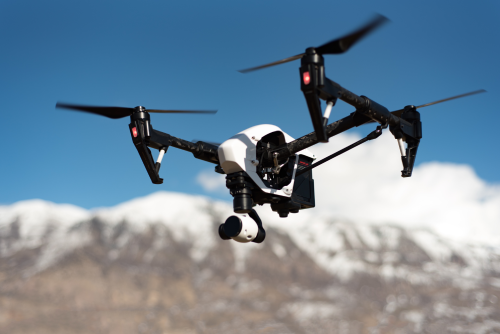
The top 25 uses of drones in India go far beyond travel videos and wedding shots. Today, drones help farmers spray fields, survey land, inspect power lines, map flood damage, and create marketing content faster and more safely than older methods. If you want to understand where drones are actually useful in India, this guide breaks down the most practical use cases, who they suit, and where the limits are.
Quick Take
- In India, the best drone use cases usually fall into three buckets: seeing from above, measuring accurately, or carrying/applying something.
- The strongest real-world demand today is in agriculture, surveying, infrastructure inspection, construction, public safety, and media production.
- Not every job can be done with one drone. A wedding drone, a mapping drone, and a spray drone are very different tools.
- The real value is often not the flight itself, but the output after the flight: a map, inspection report, crop plan, progress update, or client-ready video.
- Before any commercial or sensitive operation, verify the latest DGCA, Digital Sky, and local airspace requirements. Rules and permissions can change.
Why drones matter so much in India
India is a strong market for drone applications because the country combines:
- Large farms and varied crop types
- Fast-moving infrastructure and construction activity
- Difficult terrain, from mountains to coasts to flood-prone plains
- Dense cities where visual documentation matters
- A growing need for faster, safer, data-driven field work
That is why the most useful drone jobs in India are not just about taking pretty aerial shots. They are about saving time, reducing manual risk, improving decisions, and documenting work clearly.
Top 25 uses of drones in India
Agriculture and rural operations
1. Crop health monitoring
Drones help farmers and agronomists spot stressed areas in a field before the problem becomes obvious from the ground. A quick flight can reveal waterlogging, patchy growth, pest-hit sections, or uneven plant vigor in crops such as paddy, cotton, sugarcane, grapes, and orchards.
This is useful because a farmer does not need to walk every corner of the field first. The drone shows where to inspect closely. It saves time, but it does not replace on-ground crop advice.
2. Precision spraying
Agricultural spray drones are one of the most important commercial uses of drones in India. They can apply pesticides, micronutrients, or liquid inputs more quickly than manual backpack spraying, especially in taller crops or larger farms.
They also reduce direct human exposure to chemicals. But good spraying depends on trained operators, the right nozzle setup, weather, field conditions, and following approved usage guidance for the input being applied.
3. Farm planning, irrigation checks, and field measurement
Drones are also used to map field boundaries, bunds, slope, drainage paths, and irrigation gaps. That helps with land leveling, drip planning, farm road layout, and work verification after heavy rain.
For farmer groups, agri service providers, and rural consultants, drone-based area estimates can also reduce confusion about how much land was actually covered. The important point is that official or legal acceptance may still depend on the method required by the client or authority.
Land, construction, and infrastructure
4. Land surveying and topographic mapping
Surveyors use drones to create top-view maps and 3D surface models of plots, layouts, industrial campuses, and large tracts of land. This can be much faster than relying only on ground measurements.
For many commercial projects, the drone is not just taking photos. It is feeding software that turns overlapping images into a measured map. For high-accuracy work, equipment quality and survey method matter just as much as pilot skill.
5. Construction progress tracking
Builders, contractors, and project managers use drones to monitor excavation, shuttering, concrete work, material stock, and site progress over time. A fixed weekly or monthly drone route creates an easy before-and-after view.
This is especially useful for reporting to clients, investors, and head office teams who cannot visit every site. In crowded Indian cities, though, airspace checks and safe operating space around the project are essential.
6. Real estate marketing
For real estate, drones show the one thing ground photos often miss: context. Buyers can see road access, surrounding development, amenities, open space, project scale, and nearby landmarks in a single shot.
Developers, brokers, and builders use drones for residential projects, villas, plotted developments, and commercial sites. The best videos mix aerial views with useful facts. The weakest ones are visually flashy but hide the real site condition.
7. Road inspection
Drones are useful for inspecting highways, village roads, city roads, and flyovers for cracks, shoulder damage, drainage issues, erosion, pothole patterns, and work progress. They help teams review long stretches faster than walking or driving slowly through every segment.
They are also useful for documenting new road projects before and after monsoon damage. Consistency matters here: repeated flights over the same route give far better insights than random one-off footage.
8. Bridge inspection
Bridges are a separate use case because they are harder and riskier to inspect manually. Drones can capture deck condition, side walls, joints, undersides, nearby water flow, and visible damage without putting workers in awkward positions too early.
This is not a full replacement for structural engineering inspection, but it is an efficient first step. It helps engineers decide where detailed manual checks are needed.
9. Railway, canal, and pipeline corridor monitoring
Long linear assets are difficult to monitor from the ground. Drones help track encroachments, vegetation growth, erosion, access roads, construction progress, and problem spots across extended corridors.
For railway and pipeline contractors, this improves documentation and reporting. Because these corridors can cross sensitive or restricted areas, flight planning and permissions should never be treated casually.
10. Power line and substation inspection
Electric utilities and contractors use drones to inspect towers, insulators, conductors, substations, and approach paths. A zoom camera can often spot visible defects from a safe distance, reducing the need to send workers close to live equipment for basic visual review.
This is one of the clearest examples of drones improving safety. The challenge is that inspection quality depends on stable flying, good zoom detail, and a crew that understands what defects to look for.
11. Solar plant inspection
India’s solar sector is a natural fit for drones. Large ground-mounted plants are time-consuming to inspect manually, and thermal cameras can help identify hot spots or underperforming panels much faster.
For rooftop solar too, drones can help document installation condition and panel layout. But thermal results need proper interpretation. A hot panel is a clue, not a final diagnosis by itself.
12. Telecom tower inspection
Telecom tower companies and maintenance vendors use drones to inspect tower condition, mounted equipment, cables, and rooftop access areas. This is faster than climbing for every basic visual check.
In urban areas, this use case is common but tricky. Towers may be surrounded by people, buildings, wires, and tight takeoff space. Good site discipline matters as much as the drone.
13. Mining and quarry measurement
In mines, quarries, and stockyards, drones help measure stockpile volume, pit changes, haul roads, and excavation progress. That supports planning, contractor billing, and safety reviews.
This is one of the most practical industrial drone uses because aerial measurements save a lot of manual field time. Dust, heavy vehicles, and blast schedules make coordination important.
14. Urban planning and municipal mapping
Municipal bodies, planners, and consultants use drones to map drains, lakes, roads, waste sites, public land, informal settlements, and civic assets. This helps with planning, maintenance, encroachment review, and infrastructure upgrades.
In Indian cities, this use case is valuable because change happens fast. But it also brings serious privacy and compliance responsibilities, especially in dense neighborhoods.
Public safety, environment, and essential services
15. Disaster response and flood assessment
After floods, cyclones, landslides, or storm damage, drones can quickly show which roads are cut off, where water is still rising, and which settlements are hardest to reach. That allows response teams to prioritise resources faster.
This is especially important in states that face recurring flood or cyclone impact. The biggest limitation is obvious but important: bad weather can delay flights exactly when they are needed most.
16. Search and rescue
Drones can scan riverbanks, forests, ravines, open fields, and damaged structures when a missing person has to be located quickly. Some teams also use thermal cameras, spotlights, or loudspeakers depending on the situation.
A drone helps cover ground faster, but search and rescue is not casual flying. It needs grid planning, communication, team coordination, and careful evidence handling where necessary.
17. Forest monitoring and wildfire detection
Forest teams can use drones to monitor illegal clearing, check fire lines, inspect remote stretches, and spot smoke or burning patches earlier than a ground patrol might. In hilly regions, that saves time and reduces risk.
This use case is growing because many forest areas are hard to access quickly. Flights in sensitive zones, however, require careful coordination and an understanding of local wildlife impact.
18. Wildlife census and anti-poaching support
Drones can support animal counting, waterhole observation, habitat checks, and surveillance of vulnerable stretches near protected areas. In wetlands or grasslands, an aerial view can reveal patterns that are hard to see from the ground.
But this must be done responsibly. Flying too low can disturb animals, so wildlife operations need expert supervision, the right altitude, and species-sensitive planning.
19. Coastal surveillance and fisheries support
With India’s long coastline, drones are useful for shoreline mapping, beach erosion review, coastal asset inspection, and selected surveillance tasks. Some fisheries and coastal communities also explore drones for nearshore situational awareness.
This is highly location-specific work. Wind, salt exposure, and restricted maritime zones make coastal drone flying more demanding than many inland jobs.
20. Traffic monitoring and accident documentation
Traffic police and civic agencies can use drones to understand congestion patterns, bottlenecks, diversion performance, and event-related road pressure. After a major accident, an aerial record can document the scene more clearly than scattered ground photos.
This helps with both immediate management and later review. The operation must be controlled carefully so the drone does not add distraction or risk near active traffic.
21. Police, crowd, and event management
For large festivals, rallies, sports events, and religious gatherings, drones offer a top-down view of crowd density, blocked exits, traffic spillover, and movement patterns. That makes them useful for public safety planning.
This is one of the most sensitive use cases because it often involves dense crowds and high-security environments. Only trained teams with proper approvals and procedures should handle it.
22. Healthcare logistics in remote areas
Drones have been used in selected programs to move medicines, vaccines, blood products, and lab samples in difficult terrain or during emergencies. In hilly regions, islands, or flood-hit zones, that can save critical time.
This is promising, but it is not an everyday plug-and-play service for most clinics. Medical drone logistics involves strict operational planning, packaging, route control, and regulatory oversight.
Media, business, and education
23. Insurance inspection and claims assessment
After storms, fires, crop damage, or property loss, drones help assessors capture the extent of damage quickly and systematically. This is useful for houses, commercial sites, warehouses, farms, and industrial properties.
The advantage is speed and documentation quality. The best practice is to combine aerial evidence with ground verification rather than treat drone footage as the only source of truth.
24. Film, wedding, tourism, and creator content
This is the most visible drone use in India for hobbyists and small businesses. Aerial shots add scale, reveal location, and create movement that normal handheld footage cannot.
Weddings, resorts, tourism campaigns, YouTube channels, and independent films all benefit from drone visuals. But professional results come from planning, permissions, crowd separation, and shot discipline, not just owning a drone with a good camera.
25. Education, training, and research
Colleges, drone labs, training centres, and startups use drones to teach aerodynamics, robotics, mapping, agriculture technology, and data analysis. Students also use drones for project work in civil engineering, environmental science, and computer vision.
This matters because future drone careers in India will involve more than flying. Data processing, maintenance, mission planning, and industry-specific knowledge are becoming just as important.
Which drone type fits which use?
A lot of beginners assume one drone can do everything. In practice, the right drone depends on the job.
Camera drones
Best for:
- Weddings
- Real estate
- Tourism content
- Basic site documentation
- Social media and YouTube work
Look for good image quality, stable flight, easy repair support, and reliable batteries.
Mapping drones
Best for:
- Surveying
- Mining
- Construction measurement
- Municipal mapping
Look for accurate positioning, software compatibility, and a workflow built for measured outputs, not just nice photos.
Inspection drones
Best for:
- Power lines
- Solar plants
- Towers
- Industrial assets
- Bridges
Useful features include zoom capability, stable hover, obstacle sensing, and sometimes thermal imaging.
Spray drones
Best for:
- Farm service businesses
- FPOs
- Large fields
- Agri contractors
Payload size matters, but training, field servicing, spare parts, and safe spray procedures matter more.
Safety, legal, and compliance checks in India
Because many drone use cases in this list involve commercial work or sensitive locations, safety and compliance are not optional.
Before any flight, verify these basics
- Check the latest official airspace status for the location.
- Confirm whether your drone and operation meet current DGCA and Digital Sky requirements.
- Make sure any required registrations, pilot qualifications, or permissions are in place for your specific use case.
- Get site permission from the landowner, client, venue, or agency where needed.
- Avoid airports, military areas, strategic sites, and other restricted or sensitive locations unless you are specifically authorised.
- Do not fly recklessly over crowds, roads, homes, or moving traffic.
- Respect privacy and avoid filming people or private property without a clear, legitimate reason.
- Keep a battery reserve and a safe emergency landing plan.
- For paid work, also think about contracts, liability, data storage, and whether insurance is appropriate for the project.
If your drone or workflow mentions features such as NPNT or automated compliance controls, treat them as helpful tools, not as a substitute for checking the current rule yourself.
Common mistakes people make when using drones for work
Buying the wrong kind of drone
A creator drone is not automatically a survey drone. A survey drone is not a spray drone. Match the machine to the job.
Focusing only on flying, not the output
Clients usually do not pay for takeoff and landing. They pay for a map, inspection report, crop insight, or finished video.
Ignoring software and data workflow
For surveying, inspection, and agriculture, the real work often starts after the flight. If you cannot process and present the data well, the drone adds less value.
Underestimating permissions
Weddings, city shoots, public events, industrial sites, and government-linked work often need coordination before the flight day, not after.
Flying in poor weather
Heat, wind, dust, and monsoon conditions affect batteries, stability, visibility, and safety. Many good missions are cancelled because conditions are not right.
Overselling accuracy
Basic drone mapping is useful, but not every drone output is legal-grade or survey-grade. Be honest about what the data can and cannot support.
Neglecting maintenance
Propellers, batteries, firmware, motors, and storage practices affect safety and reliability. Small maintenance failures often cause big project delays.
FAQ
1. What are the most commercially viable drone uses in India today?
The strongest practical demand is usually in agriculture spraying, land surveying, construction tracking, real estate content, solar inspection, telecom tower inspection, and event videography. The best option depends on your local market and compliance readiness.
2. Can one drone handle all these jobs?
Usually no. A general camera drone can cover content creation and simple site documentation, but serious mapping, spraying, or industrial inspection often needs specialised hardware and software.
3. Are drones useful for small farms or only large farms?
They can help both. For small farms, shared services through local operators, cooperatives, or FPOs are often more practical than buying an expensive spray drone outright.
4. Is drone delivery already common for normal businesses in India?
Not in the same way as regular road delivery. It exists mainly in pilot projects, controlled operations, or specialised routes where the operational case is strong.
5. Do I need permission to fly at a wedding or for a real estate shoot?
You may need to verify airspace status, venue permission, and any applicable operational requirements before the flight. Never assume a private event automatically makes the flight legal or safe.
6. What skills matter most for drone work?
Flying skill matters, but so do planning, airspace checking, battery management, client communication, software workflow, and industry knowledge. A survey job and a wedding job need very different skills.
7. Are drones replacing ground teams?
No. Drones usually make ground teams faster and safer by giving them an aerial view first. Final inspection, engineering judgment, crop advice, or legal verification often still requires people on site.
8. What is the best drone use case for a student to start with?
Safe, supervised work in aerial photography, small mapping exercises, inspection demos, or research projects is a good starting point. It builds both flying confidence and data-handling skills.
9. How important is software after the flight?
Very important. In mapping, inspection, agriculture, and reporting work, the processed output is often more valuable than the raw footage itself.
Final takeaway
If you are exploring the top 25 uses of drones in India, start with one simple question: do you need visuals, measurements, or payload work? That answer will immediately tell you what kind of drone, training, software, and compliance path you actually need. For most people in India, the smartest next step is not buying the biggest drone first, but choosing the clearest use case first.
