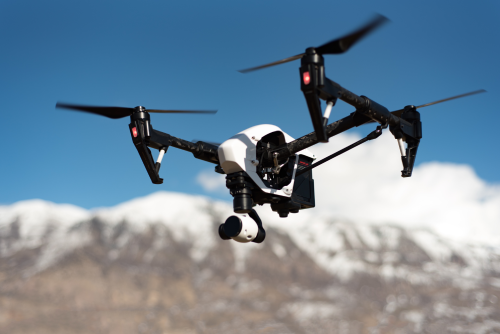
Knowing how to use ND filters for drone video can make the difference between footage that looks harsh and footage that feels smooth, natural, and controlled. For most drone pilots, especially in India’s bright outdoor conditions, ND filters are less about “cinematic magic” and more about helping you keep the right shutter speed in daylight.
Quick Take
- An ND filter is basically sunglasses for your drone camera.
- Its main job in video is to reduce light so you can use a slower, more natural-looking shutter speed.
- A simple starting rule is the 180-degree shutter rule:
- 25 fps video: aim for 1/50 shutter
- 30 fps video: aim for 1/60
- 50 fps video: aim for 1/100
- 60 fps video: aim for 1/120
- In India’s strong daylight, ND16 and ND32 are often the most useful for daytime drone video.
- Set ISO to your drone camera’s lowest native or base setting, lock white balance, and use manual exposure if your drone allows it.
- Re-check your filter choice whenever light changes, especially during clouds, golden hour, or hazy afternoons.
- Remove the ND filter when light gets low. A filter that helps at noon can ruin footage near sunset.
- Always verify the latest DGCA and local airspace rules before flying.
What an ND filter actually does
ND stands for Neutral Density.
A neutral density filter cuts the amount of light entering the camera without changing the scene itself. In simple terms, it darkens the image so you can use camera settings that would otherwise be too bright.
For drone video, that matters because most camera drones have limited exposure controls:
- Many drones have a fixed aperture
- In bright sun, shutter speed shoots up very quickly
- Fast shutter speeds make motion look too crisp and jittery
- ND filters bring shutter speed back down
That is why ND filters are so popular for aerial video.
Understanding ND numbers
The bigger the ND number, the more light it blocks.
| Filter | Light Reduction | Typical Use |
|---|---|---|
| ND4 | 2 stops | Mild overcast, early morning, late evening |
| ND8 | 3 stops | Soft morning light, hazy conditions, light cloud |
| ND16 | 4 stops | Bright daytime, many regular outdoor shoots |
| ND32 | 5 stops | Strong midday sun, beaches, open fields |
| ND64 | 6 stops | Very harsh sunlight, snow, water glare, desert conditions |
A “stop” means half the light. So each step up cuts more light and allows a slower shutter.
For most beginner drone video shooters, a set with ND8, ND16, and ND32 covers most situations.
Why ND filters matter on drones more than you think
A lot of beginners assume ND filters improve image quality by making footage sharper. That is not really their job.
They help with motion.
When shutter speed is too fast, each frame looks very crisp. That might sound good, but in motion it can make drone footage feel nervous, stuttery, or overly digital, especially during pans, reveals, and side-tracking shots.
When shutter speed is closer to the classic cinema guideline, moving objects and camera movement get a small amount of motion blur. That blur helps your brain connect the frames more smoothly.
The 180-degree shutter rule, explained simply
This is the common starting point for video:
- Shoot 25 fps, use about 1/50 shutter
- Shoot 30 fps, use about 1/60 shutter
- Shoot 50 fps, use about 1/100 shutter
- Shoot 60 fps, use about 1/120 shutter
It is called the 180-degree shutter rule because it comes from motion picture camera design, but you do not need the history to use it.
Just remember: shutter speed should usually be about double your frame rate.
That said, it is a guideline, not a law.
If you are filming very fast action, rough wind, or something you may need to slow down in post, you might choose a slightly faster shutter for cleaner individual frames. But for normal cinematic drone video, the rule is a very reliable starting point.
The camera settings that make ND filters work
An ND filter only helps if the rest of your settings make sense.
Before you even think about the filter, set up the camera properly.
1. Choose your frame rate first
Your frame rate affects your target shutter speed.
For Indian creators, these are common choices:
- 25 fps for standard cinematic delivery
- 50 fps if you want smoother motion or plan slight slow motion
- 30 fps or 60 fps if your platform, client, or workflow is built around those
If you are shooting around artificial lights, interiors, or urban evening scenes in India, 25 fps and 50 fps often work better because India uses 50 Hz mains electricity. That can reduce flicker from some lights.
2. Set your target shutter speed
Once frame rate is chosen, set shutter accordingly.
Examples:
- 25 fps -> 1/50
- 50 fps -> 1/100
3. Keep ISO low
Set ISO to the camera’s lowest native or base value, or simply the lowest clean setting your drone allows if you are unsure.
Why:
- Lower ISO keeps noise down
- It preserves more image quality
- It gives the ND filter a proper role in exposure control
4. Lock white balance
Do not leave white balance on auto if you want consistent footage.
As the drone turns or the scene changes from greenery to buildings to sky, auto white balance may shift, which makes editing harder.
A practical starting point:
- Daylight: set a daylight white balance manually
- Cloudy: use a slightly warmer preset or manual Kelvin value
- Keep it locked for the shot
5. Use manual exposure when possible
If your drone has a Pro or Manual mode, use it.
If you leave shutter on auto, the camera may simply increase shutter speed again, and the ND filter stops serving its main purpose.
How to choose the right ND strength
This is the part beginners overthink.
You do not need to guess blindly. You can choose the filter based on how bright the scene is and what shutter speed the camera wants without a filter.
A simple field method
- Set your frame rate.
- Set the target shutter speed.
- Set ISO low.
- Look at exposure without a filter.
- If the image is too bright, add ND until exposure comes into range.
A faster way is to check what shutter speed looks correct without ND, then match that to the filter you need.
| Correct Exposure Without ND | To Reach About 1/50 | Approx Filter |
|---|---|---|
| 1/100 | 1 stop slower | ND2 if available, or accept slight compromise |
| 1/200 | 2 stops slower | ND4 |
| 1/400 | 3 stops slower | ND8 |
| 1/800 | 4 stops slower | ND16 |
| 1/1600 | 5 stops slower | ND32 |
| 1/3200 | 6 stops slower | ND64 |
This example assumes you are targeting 1/50 for 25 fps.
If you are targeting 1/100 for 50 fps, adjust the math accordingly.
Quick practical guide for Indian conditions
These are only starting points, not strict rules:
- Early morning in Bengaluru, Pune, or Hyderabad with soft light: ND8
- Golden hour over water in Kerala or Goa: ND8 or ND16
- Bright noon in open fields or construction sites: ND16 or ND32
- Harsh summer light in Rajasthan or dry central Indian plains: ND32, sometimes ND64
- Snow scenes in Himachal, Kashmir, or Uttarakhand: ND32 or ND64
- Hazy monsoon afternoon with cloud cover: ND4 or ND8
The final decision should come from your exposure readout, histogram, and test clip, not from the label alone.
Step-by-step: how to use ND filters for drone video
Here is a practical workflow you can follow on every shoot.
1. Decide the final look before takeoff
Ask yourself:
- Is this normal-speed cinematic footage?
- Do I want slow motion?
- Am I shooting for Instagram reels, YouTube, real estate, tourism, or client work?
Then choose frame rate.
Examples:
- Cinematic travel shot: 25 fps
- Slight slow motion in edit: 50 fps
- Action-heavy content: maybe 50 or 60 fps
2. Set the camera first
Before installing the filter:
- Choose frame rate
- Set target shutter
- Set ISO low
- Lock white balance
- Choose your picture profile if your drone offers one
3. Attach the filter carefully
Install the ND filter while the drone is powered off, or before the gimbal starts its calibration.
Check these things:
- The filter is made for your exact drone model
- It clicks or sits firmly in place
- It does not rub against the gimbal
- The lens is clean before fitting
A dusty or smudged filter can reduce contrast badly, which is a common issue in dry Indian conditions.
4. Confirm exposure
Now look at the live image.
If it is still overexposed at your chosen shutter and ISO:
- Move to a stronger ND
If it is too dark:
- Move to a weaker ND
- Or remove the filter entirely
Use the histogram or exposure meter if your app provides one. Try not to judge only by the brightness of your phone screen in sunlight.
5. Record a short test clip
Before flying the full route, record 5 to 10 seconds.
Check for:
- Proper exposure
- Natural motion blur
- No strange color shift
- No dark corners or vignetting
- No gimbal imbalance or shaking
6. Fly smoothly
ND filters do not magically create cinematic video.
They work best when your flying is controlled:
- Slow yaw movements
- Gentle push-ins
- Smooth reveals
- Consistent altitude
- No sudden stick jerks
If you fly aggressively with a slow shutter, the footage can become smeary instead of cinematic.
7. Re-check when light changes
This matters a lot in India, where light can shift quickly due to haze, sun angle, and moving clouds.
Change the filter when:
- The sun goes behind clouds
- You move from open field to shaded buildings
- You shift from noon to late afternoon
- You move from dry land to reflective water or sand
Do not assume one filter will work all day.
Example setups for common shooting situations
Travel video at sunrise
- Frame rate: 25 fps
- Target shutter: 1/50
- ISO: base or lowest clean setting
- Likely filter: none, ND4, or ND8
At sunrise, beginners often keep too strong an ND on the lens from an earlier test. That makes footage muddy and noisy. Start light.
Midday real estate exterior
- Frame rate: 25 fps
- Target shutter: 1/50
- ISO: low
- Likely filter: ND16 or ND32
This is one of the most common drone video situations in India. Bright concrete, reflective windows, and strong sunlight can easily push you into very fast shutter speeds without ND.
Coastal or lake footage
- Frame rate: 25 fps
- Target shutter: 1/50
- ISO: low
- Likely filter: ND16, ND32, sometimes ND/PL
Water reflections can be intense. Plain ND works well. ND/PL may help with glare, but only if you understand its trade-offs.
ND vs ND/PL vs UV filters
This confuses many drone buyers.
Plain ND
Best starting choice for most drone video.
Use it when your goal is simple: – reduce light – control shutter speed – keep exposure consistent
If you are new, buy plain ND filters first.
ND/PL
This combines ND with a polarizing filter.
It can help reduce:
- reflections from water
- glare on leaves
- some surface shine
But there is a catch. Polarization changes depending on angle to the sun and the direction the camera faces. Since drones rotate during flight, the effect can change mid-shot.
That means:
- skies may darken unevenly
- reflections may change during a pan
- shots can become inconsistent
For beginners, plain ND is usually safer and easier.
UV or clear filters
These are mostly for lens protection.
They do not solve the shutter-speed problem for video in bright daylight.
When you should not use an ND filter
ND filters are useful, but not always.
Do not use one just because it is already attached.
Skip ND when:
- Light is already low
- Your shutter is naturally near the target
- You are shooting at dusk or near sunset
- You need a faster shutter for a special reason
- You are shooting still photos that do not require long exposure
- The filter makes the live view too dark to judge safely
For example, if you are filming after sunset and your shutter at 25 fps is already around 1/50 without a filter, adding ND only hurts you.
Safety, legal and compliance checks in India
ND filters are a camera tool, but every drone video shoot still needs safe and legal flying.
Before flying in India:
- Verify the latest DGCA and Digital Sky requirements for your drone category and location
- Check whether the area has restricted, prohibited, or otherwise sensitive airspace
- Avoid airports, defence areas, government-sensitive zones, and crowded public spaces unless you have the required authorisation
- Maintain visual line of sight and fly conservatively
- Respect privacy, local security instructions, and site permissions
- Do not let filter changes distract you from battery level, wind, or surroundings
A few extra ND-related safety tips:
- Fit the filter securely before takeoff
- Make sure the gimbal moves freely
- Re-check the camera feed after fitting any filter
- If conditions are changing quickly and you are unsure, land and swap filters rather than guessing in the air
- If a filter makes the scene too dark, remove it instead of trying to “fix everything in post”
Always confirm the latest official rules before acting. Drone compliance can change, and location-specific restrictions matter.
Common mistakes beginners make
1. Using ND filters in auto mode and expecting magic
If shutter stays on auto, the camera may simply increase shutter speed again. That defeats the point.
2. Picking a filter because someone online recommended it
There is no universal “best” ND. Light changes by place, time, season, haze, and surface reflections.
3. Leaving the same ND on all day
Morning and noon may need very different filters.
4. Using too strong a filter
If exposure becomes too dark, the camera may raise ISO, which adds noise and removes the benefit.
5. Forgetting white balance
Auto white balance can shift during flight, giving you color jumps that look amateur.
6. Ignoring Indian lighting flicker issues
Under some artificial lights, 25 fps or 50 fps may behave better than 30 fps or 60 fps due to 50 Hz power.
7. Flying too aggressively
Good motion blur cannot save jerky stick inputs.
8. Using dirty filters
Fingerprints, dust, and salt spray can flatten contrast and make highlights bloom.
9. Buying poor-quality filters
Cheap filters can introduce color casts, softness, or gimbal issues. Buy filters designed specifically for your drone model.
10. Thinking ND fixes overexposure from bad planning
If the sun is extreme, the composition is reflective, and the route is rushed, a filter alone will not solve everything. Time of day still matters.
FAQ
Do I need ND filters for every drone video?
No. Use them when the scene is bright enough that you cannot maintain a natural shutter speed without overexposure. In low light, they are often unnecessary and harmful.
Which ND filter should a beginner buy first?
A simple set with ND8, ND16, and ND32 is the most practical starting point for drone video. If you mostly shoot in softer light, ND4 can also be useful.
Is 25 fps better than 30 fps in India?
Not always, but 25 fps is a very practical choice in India, especially if you shoot around artificial lighting or want a classic cinematic feel. It also aligns better with 50 Hz power systems.
Can I use ND filters in auto mode?
You can, but you will not get the main benefit reliably. ND filters work best when you control shutter speed manually.
What if my drone has an adjustable aperture?
Then you have more flexibility, but ND filters are still useful. If you want to keep aperture and shutter where you want them, ND helps control exposure in bright light.
Do ND filters improve image quality?
Not directly. They do not add detail or dynamic range. Their main benefit is more natural motion blur and more controlled exposure choices.
Are ND/PL filters better than plain ND filters?
Not necessarily. ND/PL can help with glare, but it is less predictable during drone movement. For most beginners, plain ND is the better first choice.
How do I know my ND filter is too strong?
If the image looks too dark at your target shutter and low ISO, or if the camera starts pushing ISO up to compensate, the filter is too strong.
Can I leave an ND filter on the drone all the time?
It is better not to. Conditions change too much. A filter that is perfect at noon can ruin your footage at sunset.
Final takeaway
If you want to learn how to use ND filters for drone video properly, keep it simple: pick your frame rate first, set a shutter speed at about double that frame rate, keep ISO low, and then add just enough ND to hold exposure. For most Indian daytime shoots, an ND16 or ND32 will be your most-used filter, but the right choice always depends on the light in front of you.
