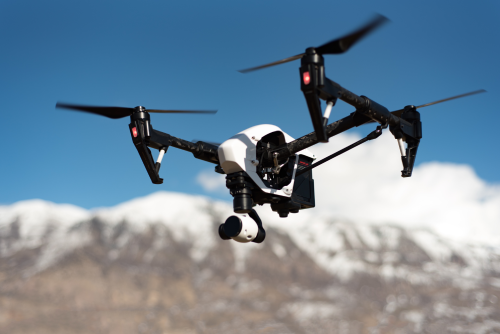
Learning how to shoot roads and highways with a drone is less about flying over traffic and more about planning light, angles, and safety. The best footage usually comes from a smart offset position, a simple camera move, and a location that gives the road strong shape in the frame. If you get those three things right, even a basic drone can produce professional-looking road shots.
Quick Take
- The safest and most cinematic road footage is usually shot from the side, above open land, or over quieter stretches, not directly above moving traffic.
- Sunrise and sunset are the easiest times to make roads look good because the low sun adds texture, contrast, and long shadows.
- Roads look strongest when they create a clear line: straight highways, S-curves, flyovers, bridges, and mountain hairpins.
- Use simple movements: slow rise, gentle push-in, top-down hover, or a side track with visible background movement.
- For video, lock exposure and white balance if possible so brightness and colour do not shift mid-shot.
- In India, always verify current DGCA and Digital Sky requirements, airspace status, and any local permissions before flying.
- Never launch from a road shoulder, median, toll lane, or any place that puts you, the drone, or drivers at risk.
Why roads look so good from the air
Roads and highways are naturally photogenic from above because they create what photographers call leading lines. A leading line pulls the viewer’s eye through the frame and makes even a simple shot feel structured.
From a drone, roads can also show:
- Symmetry in straight stretches
- Rhythm in lane markings and light poles
- Contrast between human-made infrastructure and natural landscape
- Scale, especially when vehicles appear small against a large scene
- Movement, even if the drone itself is almost still
That is why road footage works so well in travel reels, infrastructure videos, tourism films, real estate promos, documentary B-roll, and automotive content.
Safety and legal checks before filming roads in India
This is the part many beginners skip. Do not.
Roads and highways may look open, but they can pass through controlled airspace, sensitive areas, or places where flying can distract drivers or create risk. Rules can also change, so verify the latest official guidance before every shoot.
Check airspace first
Before you fly, verify:
- Current airspace status through the official Indian system
- Whether your drone and type of operation fall under current DGCA and Digital Sky requirements
- Whether your model requires NPNT compliance, where applicable
- Whether the location is near an airport, helipad, military area, government site, border zone, refinery, port, railway yard, or other sensitive infrastructure
A road that looks empty on the ground may still be in a location where drone use is restricted.
Do not endanger traffic
Even if a shot looks tempting, avoid anything that could distract drivers or create a hazard.
That means:
- Do not hover low over moving vehicles
- Do not chase traffic on a public highway
- Do not fly near toll plazas, accident sites, or active roadwork
- Do not position yourself on a carriageway, median, or narrow shoulder
- Do not attempt “car follow” shots unless you are on private land or a fully controlled and permitted setup
A cinematic shot is never worth creating panic on a live road.
Think about takeoff and landing
The most overlooked risk in road filming is the launch point.
Use a safe launch and landing area such as:
- A field beside the road, with the owner’s permission
- A parking area away from active traffic
- A service lane with enough separation and no obstruction
- Open private property where flying is allowed
Avoid taking off from:
- Highway shoulders
- Medians
- Bridge walkways
- Busy rooftops near the road
- Crowded public areas
Local permissions can still matter
Even if airspace looks clear, you may still need permission depending on the location and purpose of the shoot.
Be especially careful around:
- Expressways
- Controlled-access highways
- Major bridges
- Flyovers in dense cities
- Industrial corridors
- Government-owned land
- Commercial shoots for clients
For paid shoots, it is wise to verify site access, insurance expectations, and any permissions required by the land owner, local authority, or client.
Use a spotter if possible
A spotter is a second person who watches the drone, the surroundings, and any developing hazard while you focus on the controls and framing.
For road filming, a spotter helps with:
- Monitoring approaching people or vehicles near your takeoff area
- Warning you about birds, wires, or sudden wind
- Keeping visual line of sight if you are framing a shot carefully
- Making sure you are not drifting toward traffic
If you shoot alone, be more conservative.
Plan the shot before you power on
Road footage gets better when you plan it like a sequence, not like random flying.
1. Scout on a map first
Use satellite view and terrain view to look for:
- Curves and S-bends
- Bridges and flyovers
- Roads cutting through forest, fields, desert, coastline, or hills
- Parallel access roads or open land for a safe launch
- Power lines, towers, and rail crossings nearby
Straight roads can work, but curves are often more cinematic because they show shape and depth.
2. Visit the spot on the ground
A quick ground recce saves batteries and bad decisions.
Check:
- Traffic density
- Wind direction
- Safe launch area
- Trees, wires, poles, towers, and birds
- Whether the road is actually visible from the angle you imagined
- Whether haze, dust, or smoke is affecting visibility
In India, this step matters even more because many otherwise beautiful locations have hidden hazards like unmarked wires, informal activity near the roadside, or sudden local congestion.
3. Decide what story you want
Ask yourself what the road is doing in the shot.
Is it:
- A travel route through a landscape?
- A geometric pattern from above?
- A fast-moving urban transport corridor?
- A mountain road with dramatic elevation?
- A quiet empty road used as a visual transition?
The answer changes your angle, altitude, and movement.
4. Build a short shot list
For a simple road video, five clips are usually enough:
- High establishing shot
- Top-down shot
- Slow reveal or rise
- Side movement with parallax
- Static shot with vehicles passing through frame
That gives you enough variety for a clean 15 to 30 second edit.
5. Watch the weather
Road scenes react strongly to weather.
- Clear mornings give clean detail
- Overcast skies reduce harsh contrast
- Post-rain roads can look rich and reflective
- Summer afternoons often add heat haze
- Monsoon wind gusts can be unpredictable
- In North India, winter smog can flatten the entire scene
If conditions are not right, changing the time of day is often better than forcing the shot.
Best time of day to shoot roads and highways
Sunrise
For most drone road shoots in India, sunrise is the easiest win.
Why it works:
- Softer light
- Lower traffic in many areas
- Longer shadows that reveal texture
- Better colour separation
- Cooler air and often steadier conditions
This is especially useful for highways through fields, industrial outskirts, and urban ring roads before the day gets visually messy.
Sunset
Sunset can be equally good, especially if the road runs toward the sun or catches side light.
Best for:
- Warm travel visuals
- Silhouettes
- Coastal roads
- City flyovers with emerging lights
The downside is that evening traffic is often heavier.
Overcast days
Cloudy light is underrated for road shooting.
It works well when you want:
- Even exposure
- Better detail in bright concrete roads
- Less harsh shadows
- Cleaner colour for infrastructure work
The result is less dramatic, but often more usable for commercial jobs.
Avoid harsh midday light unless the shape is the hero
Midday can work for top-down geometry, especially flyovers, intersections, and straight roads with strong patterns. But for most cinematic footage, it creates:
- Flat colour
- Harsh reflections
- Short shadows
- Heat haze
- Washed-out landscapes
If you must shoot at noon, focus on graphic compositions rather than mood.
Camera settings that work well for road footage
You do not need complicated settings, but you do need consistency.
For video
A good starting point:
- Shoot in 4K if your drone supports it, even if you deliver in 1080p
- Use 25 fps or 30 fps for normal motion
- Use 50 fps or 60 fps only if you want smoother motion or slow motion in editing
- Keep ISO as low as possible
- Lock white balance so colour does not shift during the shot
- Lock exposure if lighting is stable
A common rule for natural-looking motion blur is to keep shutter speed at roughly double your frame rate. For example:
- 25 fps: around 1/50
- 30 fps: around 1/60
In bright daylight, you may need an ND filter. An ND filter is like sunglasses for the camera. It reduces light so you can use a slower shutter speed without overexposing the image.
Colour profile: normal or flat?
Many drones offer a normal colour profile and a flatter profile such as D-Log or D-Cinelike.
Use normal if:
- You want footage ready quickly
- You do not enjoy colour grading
- You are a beginner
Use a flat profile if:
- You know how to grade footage later
- The scene has strong contrast
- You want more control in post-production
If you are unsure, shoot normal. A well-exposed normal profile usually looks better than badly graded log footage.
Gimbal angle matters a lot
For roads, try three gimbal angles:
- Straight down for patterns and geometry
- Slightly downward for depth and direction
- More level for landscape context and travel feel
Beginners often keep the camera too low or too steep. Change the gimbal based on the type of road shot, not by habit.
For still photography
If you are shooting photos as well:
- Use RAW if available
- Try bracketed exposures in high-contrast scenes
- Shoot both top-down and angled versions
- Consider pano mode for long road stretches
Top-down photos work best when the road shape is the main subject. Angled photos work better when the road interacts with hills, water, buildings, or trees.
The best drone shots for roads and highways
Here are the road shots that consistently work well, along with the safer way to capture them.
| Shot type | Why it works | Safer way to shoot it |
|---|---|---|
| High establishing shot | Shows the road in context with landscape or city | Launch from an off-road open area and keep a wide offset from traffic |
| Straight-down top shot | Great for lane patterns, bridges, medians, and symmetry | Use over quiet sections or areas where you are not directly above active traffic |
| Rising reveal | Hides the road at first, then reveals its shape | Start behind trees, a slope, or a structure from a safe side position |
| Side parallax shot | Background moves differently from the road, creating depth | Fly parallel from open land or a service road, not above the carriageway |
| Push-in along the road | Adds forward energy and scale | Keep the drone offset to one side and pointed diagonally toward the road |
| Static lock-off | Clean and professional; lets vehicles create motion naturally | Hover safely at a distance and let traffic pass through frame |
| Curve or hairpin shot | Highlights shape and terrain | Position outside the bend with extra attention to mountain wind and obstacles |
| Flyover or interchange orbit | Strong geometric visuals | Stay wide and high enough to avoid any conflict with vehicles, poles, and signs |
A note on follow shots
Many people search for road drone shots because they want to follow a moving vehicle. That is one of the easiest ways to make unsafe choices.
If you want that look, the safer approach is usually:
- Shoot from the side, not directly behind or above
- Keep the vehicle small in frame
- Let the road carry the composition
- Use a gentle diagonal move instead of a chase
For public highways, do not treat active traffic like a film set.
A simple 15-minute road shooting workflow
If you arrive at a good location and do not want to overcomplicate it, use this sequence.
1. Start wide
Get one high establishing shot that shows:
- Where the road sits in the landscape
- Weather and light
- Nearby features like hills, water, fields, or buildings
2. Get one top-down composition
Look for:
- Clean lane markings
- Strong shadows
- A curve
- A bridge
- Repetition and symmetry
3. Capture one movement shot
Choose one:
- Slow rise
- Gentle side move
- Slow push-in
Do not combine too many inputs. A simple move always looks better than a jerky one.
4. Capture one static shot
Hover, frame carefully, and let the scene move by itself. Vehicles entering and leaving the frame create natural rhythm.
5. Finish with one detail or transition shot
Examples:
- Road disappearing into fog
- A bend behind trees
- Sunlight crossing the lane markings
- A flyover entering the frame from one corner
That is enough material for a strong short edit.
How to edit road drone footage so it feels polished
Road footage usually looks best when the edit is clean and restrained.
Keep these editing habits in mind
- Start wide, then move closer
- Match direction of travel between clips
- Mix moving shots with at least one static shot
- Use stabilisation lightly, not aggressively
- Add contrast carefully; road surfaces clip highlights easily
- Use dehaze only if needed
- Do not overuse speed ramps and flashy transitions
For vertical reels, road shots crop well if the road runs from bottom to top through the frame. Straight roads, bridges, and hairpins work especially well in 9:16.
Common mistakes when shooting roads and highways with a drone
Flying too close to active traffic
This is the biggest mistake. It is risky, distracting, and usually unnecessary. A wider shot often looks better anyway.
Choosing the wrong launch point
A dramatic road is useless if your takeoff area is unsafe. If you cannot launch and land comfortably, skip the location.
Shooting only while moving
Not every clip should be dynamic. Static shots create contrast and make your sequence feel more professional.
Using auto exposure for every shot
On roads, bright surfaces, shadows, and moving vehicles can make auto exposure pulse or flicker. Lock it when possible.
Yawing too much
Yaw is rotating the drone left or right. Small yaw inputs can work, but too much makes road footage look nervous and amateur.
Ignoring wires and poles
Road corridors often include:
- Utility wires
- Street lights
- Sign gantries
- Telecom towers
- Bridge cables
These are far more dangerous than the road itself because they are easy to miss in the screen view.
Not accounting for Indian weather conditions
Heat shimmer, dust, smog, and monsoon gusts can ruin footage even when the drone is flying normally. If the atmosphere looks messy to your eyes, the camera will often make it look worse.
Trying to copy FPV-style car chasing with a standard drone
A normal camera drone is not meant for reckless pursuit shots. Keep your style smooth, controlled, and cinematic.
FAQ
Is it legal to film a highway with a drone in India?
It depends on the exact location, airspace status, drone category, and purpose of the shoot. Always verify the latest DGCA and Digital Sky guidance, and check whether any local or site-specific permissions are needed before flying.
Can I follow a moving car on a public road with my drone?
For beginners and most public-road situations, this is not a good idea. It can distract drivers and create risk. If a vehicle shot is essential, use a controlled setup on private property or a properly permitted environment with safety planning and spotters.
What altitude works best for road shots?
There is no single best altitude. Lower heights show texture and vehicle detail, while higher heights show geometry and scale. Stay within current legal limits, maintain visual line of sight, and choose the lowest-risk altitude that gives the composition you want.
What are the best settings for highway video?
A practical starting point is 4K, 25 or 30 fps, low ISO, locked white balance, and a shutter speed around double the frame rate. Use an ND filter in bright daylight if needed.
Should I shoot top-down or at an angle?
Use both. Top-down is best for patterns, lane markings, bridges, and symmetry. Angled shots are better when you want depth, landscape, and a stronger sense of travel.
What time is best for road drone photography in India?
Usually sunrise or early morning. You get softer light, less heat haze, and often lighter traffic. Sunset also works well, but traffic may be heavier in many places.
How do I shoot mountain roads or hairpin bends?
Position the drone outside the curve and compose the road so it layers through the frame. Watch for wind, terrain-induced turbulence, birds, and limited GPS confidence in steep terrain.
Is night shooting with headlights a good idea?
It can look great, but it is not beginner-friendly. Visibility is lower, orientation is harder, and location rules may be more restrictive. Only attempt it if the location and current rules allow it and you can operate safely.
Do I need insurance for a commercial road shoot?
Insurance is often a smart idea for commercial work, especially where infrastructure, clients, or third-party property are involved. Requirements vary, so check your client contract and current operating needs before the shoot.
What is the easiest road shot for beginners?
A high static or slow side-offset shot at sunrise is usually the easiest and safest. It gives you strong composition without needing aggressive flying.
Final takeaway
If you want better road and highway footage, do not start by flying closer. Start by planning better. Pick a safe off-road launch point, shoot at sunrise, capture five simple clips, and let the road’s shape do the work.
