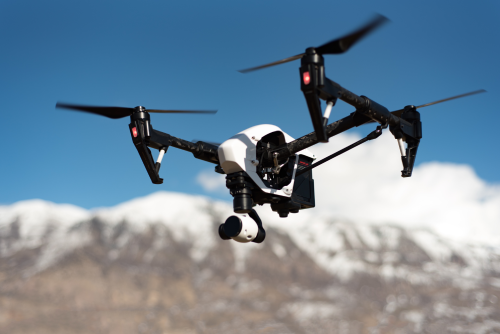
Property walkthrough videos with a drone can make a flat, villa, plot, resort, or commercial site feel more real than still photos. The best ones are not about aggressive flying; they are about showing location, access, scale, layout, and surroundings in a clear order. If you want to know how to shoot property walkthrough videos with a drone in India, think like a buyer first: what would I need to see before I schedule a visit?
Quick Take
- A good property walkthrough video with a drone is usually a guided visual tour, not random aerial clips.
- For beginners, the safest and most useful approach is an exterior-led walkthrough: entrance, facade, layout, amenities, view, and neighborhood context.
- A true indoor drone fly-through is an advanced FPV technique and is not the best starting point for most creators.
- Plan the story before takeoff: who is the buyer, what is the strongest selling point, and what must be shown in order?
- Fly slow, keep movements simple, and avoid overusing spins and high-altitude shots.
- Lock exposure and white balance so the video does not keep changing brightness and colour mid-shot.
- In India, always verify current airspace and compliance requirements before flight, and get clear permission from the owner or site manager.
- Edit the final video tightly. For most listings, 45 to 90 seconds is enough.
Choose the right walkthrough style
Not every “property walkthrough” means the same thing. There are three common styles.
| Style | Best for | Difficulty | What it looks like |
|---|---|---|---|
| Standard cinematic drone walkthrough | Villas, farmhouses, plots, resorts, commercial campuses, apartment exteriors | Beginner-friendly | Slow reveals, approach shots, top views, amenity coverage |
| FPV indoor fly-through | Furnished homes, cafes, show flats, hospitality spaces | Advanced | One continuous or near-continuous flying shot through rooms |
| Hybrid walkthrough | Most professional real-estate work | Moderate | Drone for exterior and context, ground camera for interiors |
For most beginners, the best answer to “how to shoot property walkthrough videos with a drone” is this:
Start with an exterior-led walkthrough
Use the drone to show:
- the road approach
- the gate or main entry
- the building front
- side and rear elevation
- balcony or terrace view
- amenities
- nearby access and surroundings
This gives buyers the context that ground video often cannot.
Treat indoor fly-throughs as a separate skill
A one-take indoor FPV walkthrough looks impressive, but it requires:
- a different type of drone
- stronger piloting skills
- more safety control
- more prep inside the property
If you are still learning, do not force a normal camera drone into tight interior spaces.
Safety, privacy, and compliance in India
Before any property shoot, do the legal and practical checks first.
Verify the current flight rules
Drone rules in India can change, and requirements may differ based on the drone category, airspace, and the type of operation. Before flying, verify the latest official guidance on:
- airspace status for the location
- any applicable DGCA and Digital Sky requirements
- whether your drone and operation must meet current registration, pilot, or NPNT-related conditions
- any local restrictions or temporary no-fly limitations
Do not assume a property is flyable just because the client invited you.
Get property permission clearly
Even if the owner hired you, also confirm:
- access to the property
- permission to launch and land on site
- permission to film exterior areas
- society, RWA, apartment management, or campus approval if relevant
- a quiet time slot with minimal movement of people and vehicles
In Indian residential communities, society management or security staff may stop a shoot even when the client says it is fine. Written confirmation helps.
Respect privacy and safety
- Avoid filming neighboring balconies, windows, terraces, or private areas unless there is a legitimate reason and permission.
- Do not fly above crowds, parking congestion, children playing, domestic staff movement, or busy public roads just to get a dramatic shot.
- Stay extra cautious near airports, helipads, cantonment areas, refineries, prisons, power infrastructure, and government or sensitive sites.
- Use a spotter when possible.
- If conditions feel unsafe, stop the shoot.
Plan the video before you power on
Most weak property videos fail before the first battery goes in. Planning is what makes the shoot look professional.
1. Understand the property and the target buyer
Ask these questions:
- Is this a luxury villa, budget apartment, plotted development, office space, resort, or farmhouse?
- Who is likely to watch the video: end buyer, investor, tenant, wedding venue client, or business owner?
- What is the main selling point: road access, greenery, plot size, skyline view, swimming pool, clubhouse, terrace, or surrounding area?
A family buying an apartment cares about access, tower entrance, amenities, parking, and balcony view. A buyer looking at a farmhouse cares more about land extent, boundary, road approach, and surroundings.
2. Walk the property on foot first
Before takeoff, inspect:
- wires and poles
- trees and branches
- antennas
- tight takeoff spaces
- reflective glass
- moving traffic
- people flow
- pets
- security concerns
You will often find the real problems at property level, not in the sky. Indian sites especially can have hidden power lines, temporary construction material, water tanks, and narrow terraces.
3. Choose the right time of day
Lighting can make an average property look premium.
Best times:
- early morning for soft light and cleaner shadows
- late afternoon for warm contrast
- golden hour for the final hero shot
Usually avoid:
- harsh midday sun in summer
- strong monsoon wind
- hazy winter afternoons in some cities
- low-visibility days after dust or pollution spikes
For balconies or front elevations, choose the time when the main facade gets flattering light.
4. Build a shot list
A shot list prevents wasted batteries and random flying.
Here is a simple property walkthrough shot plan:
| Shot | Purpose | Typical duration |
|---|---|---|
| High wide establish | Show location and context | 4 to 6 sec |
| Entrance approach | Show how you arrive | 4 to 6 sec |
| Rising reveal | Show building beyond gate or boundary | 4 to 5 sec |
| Front hero angle | Show best facade view | 5 to 7 sec |
| Side or rear track | Show depth and size | 4 to 6 sec |
| Terrace or balcony pull-out | Show view | 4 to 6 sec |
| Amenity connection shot | Show pool, garden, clubhouse, parking, etc. | 4 to 6 sec |
| Top-down or angled overhead | Show layout or plot shape | 3 to 5 sec |
| Neighborhood context | Show road, greenery, nearby features | 4 to 6 sec |
| Closing hero shot | End with best angle | 5 to 7 sec |
You do not need all of these on every job, but you do need a structure.
Gear that matters more than people think
You do not need a huge kit, but a few items make a major difference.
Basic drone shoot kit
- a stable camera drone with a 3-axis gimbal
- at least a few fully charged batteries
- ND filters for bright daylight
- spare propellers
- fast memory cards
- landing pad if the site is dusty
- a sunshade or clear screen view for your controller
- a spotter or assistant if possible
For advanced indoor fly-through work
- a small ducted FPV drone
- extra prop guards or ducts if applicable
- a rehearsed flight path
- very clear room control and safety procedures
If you are shooting normal real-estate work, your money is often better spent on extra batteries and ND filters than on exotic accessories.
Camera settings for clean property videos
Good real-estate footage looks calm and consistent. Settings matter.
Resolution and frame rate
A safe starting point is:
- 4K for delivery or editing flexibility
- 25 fps or 30 fps for normal motion
- 50 or 60 fps only when you know you want slow motion
If your final video is for general listing use, keep it simple and consistent.
Shutter speed and ND filters
For natural motion blur, keep shutter speed roughly near double the frame rate:
- around 1/50 for 25 fps
- around 1/60 for 30 fps
In bright Indian daylight, this usually means you need ND filters. Without them, your shutter becomes too fast and movement starts looking choppy and harsh.
ISO
Keep ISO as low as possible. Property videos should look clean, not noisy.
White balance
Do not leave white balance on auto if the light is stable. Lock it. Otherwise the colour may shift during the shot, especially when moving from greenery to concrete or from shadow into sunlight.
Colour profile
- Use a standard colour profile if you need quick delivery and simple editing.
- Use a flatter profile only if you are comfortable grading footage later.
A poorly graded flat profile often looks worse than a well-exposed standard profile.
Exposure
Avoid full auto exposure when the frame changes a lot during the shot. If the app allows, lock exposure before recording. This keeps the facade, sky, and greenery from “pumping” brighter and darker mid-flight.
Gimbal and control settings
If your drone app allows it, reduce:
- yaw sensitivity
- gimbal pitch speed
- braking aggressiveness
The result is smoother camera movement, which is exactly what property videos need.
The 10 essential drone shots for a property walkthrough
These shots work for most real-estate jobs. You do not need to fly fast. You need to fly deliberately.
1. High wide establishing shot
Start with a broad view that shows where the property sits.
Best for: – villas – plots – farmhouses – commercial sites – towers with surrounding amenities
Tip: do not fly unnecessarily high. Buyers need useful context, not a satellite view.
2. Road-to-property approach shot
Fly slowly toward the entrance or building to show how the property is approached.
Why it works: – gives a “viewer arriving on site” feeling – shows frontage and access – instantly adds walkthrough logic
Keep the movement straight and smooth. This is often better than a dramatic orbit.
3. Rising reveal
Start low, with the boundary wall, gate, trees, or foreground blocking part of the view, then gently rise to reveal the full property.
Why it works: – feels cinematic without being flashy – shows scale – hides clutter at ground level at the beginning
Use this carefully. Too fast, and it feels like a generic drone reel.
4. Front three-quarter hero shot
Position the drone at an angle to the front of the building instead of directly facing it.
Why it works: – shows depth better than a flat head-on view – makes balconies, gardens, and elevation lines more visible
This is often the most important shot for villas and independent homes.
5. Side tracking shot
Move parallel to the building to show its length, design, and exterior details.
Good for: – villas – row houses – office fronts – warehouse exteriors – long plot boundaries
Fly slowly and keep a steady distance.
6. Backyard, lawn, or amenity reveal
If the property has a pool, lawn, patio, rooftop, club area, or open terrace, show it with a reveal shot or angled drift.
This is where many listings gain emotional appeal.
7. Balcony or terrace pull-out
Start near the balcony, terrace edge, or rooftop zone and slowly pull back or rise to reveal the view beyond.
Useful for: – high-rise apartments – penthouses – villas with outdoor seating – hill or beach properties
Be extremely careful with nearby buildings and privacy.
8. Top-down or angled overhead layout shot
A straight-down shot or slightly tilted overhead shot can explain:
- plot shape
- parking layout
- garden placement
- driveway flow
- roof area
- boundary lines
This is especially helpful for plots, villas, schools, warehouses, and farmhouses.
9. Context shot connecting the property to amenities
Show how the property relates to visible nearby features such as:
- internal roads
- parks
- clubhouse
- open green spaces
- water body
- office complex layout
Be honest. Do not imply adjacency to something that is actually far away.
10. Closing golden-hour hero shot
End with your best, cleanest, most flattering angle.
A good closing shot can be:
- a slow orbit in calm wind
- a gentle rise with warm light
- a soft pull-back showing the full site
If the wind is strong, skip the orbit and use a simpler move.
A simple on-location workflow that saves batteries
When you reach the property, do this in order:
-
Walk the site again – Confirm obstacles, people flow, and wind.
-
Pick a safe takeoff and landing zone – Dust, loose plastic, and gravel can ruin a clean launch.
-
Shoot the must-have shots first – Entrance, front hero, top view, balcony view, and context shot.
-
Check footage between batteries – Do not discover focus or exposure problems after packing up.
-
Reshoot the best angle if light improves – Often the closing hero shot becomes stronger later in the session.
-
Back up footage immediately after the shoot – Property jobs are usually deadline-driven.
Can you shoot interiors with a drone?
Yes, but this needs a reality check.
A true indoor walkthrough is usually FPV work
If the client wants one continuous shot entering through the gate, moving into the living room, climbing visually through spaces, and exiting to a balcony, that is usually done with a small FPV drone, not a regular camera drone.
Why beginners should be cautious
Indoor drone work is harder because:
- GPS may be weak or absent
- obstacle sensing can be unreliable near glass and thin objects
- rooms may be narrow
- lights, fans, decor, and furniture are fragile
- one mistake can damage property
If you still plan indoor drone footage
Only do it when:
- you have the right drone for the job
- the owner understands the setup and risk
- rooms are cleared and controlled
- fans are off
- doors are propped open
- people and pets are out of the path
- you have rehearsed the route on foot
- you have a spotter
For most beginners, the smarter professional choice is simple: use the drone outdoors and use a handheld gimbal or phone indoors.
Edit the walkthrough into a story
A good property video is usually won in the edit.
Use a clear sequence
A simple edit structure:
- 0 to 4 sec: establish the property in context
- 4 to 10 sec: approach the entrance
- 10 to 20 sec: reveal the main facade
- 20 to 35 sec: show side/rear/amenities
- 35 to 50 sec: balcony, terrace, or layout shot
- 50 to 70 sec: neighborhood or access context
- 70 to 90 sec: strongest closing hero shot
Keep clips short
Most drone clips only need 3 to 6 usable seconds. Long, wandering shots make property videos feel slow.
Use transitions sparingly
Simple cuts are better than overdone digital transitions. The drone movement already provides visual flow.
Add text only if it helps
Useful overlays may include:
- property type
- location
- plot size or built-up area if confirmed by the client
- key feature labels such as terrace, pool, parking, or clubhouse
Do not add unverified claims.
Choose music that supports the property
- calm, premium track for luxury homes
- light corporate music for office or retail
- warm lifestyle track for resort or farmhouse
Keep it subtle. The property should feel aspirational, not loud.
Export versions based on platform
You may need:
- horizontal version for websites and YouTube
- vertical or square cut for Instagram or short-form social
- shorter teaser version for ads or WhatsApp sharing
Shoot wide enough so you can crop safely later if needed.
Common mistakes that make property videos look amateur
Flying too high
Very high shots often hide the property’s practical details. Stay only as high as needed to tell the story.
Overusing orbits
A slow orbit can work once. Five of them in one video feel repetitive.
Shooting at noon without a reason
Hard shadows and washed roofs make most properties look worse.
Using auto settings for everything
Auto exposure and auto white balance can shift mid-shot and make clips hard to match.
Ignoring clutter
Open tanks, parked scooters, construction debris, laundry, and random staff movement can reduce the premium feel. If possible, request basic cleanup before the shoot.
Making the video about the drone, not the property
Viewers are not watching to admire your piloting. They are watching to understand the place.
Trying indoor flights too early
This is one of the quickest ways to damage property and lose client trust.
Not checking the background
A beautiful front facade can be ruined by a distracting billboard, garbage area, or neighboring unfinished structure. Change angle if needed.
FAQ
1. Can I shoot a property walkthrough video with only a regular camera drone?
Yes, for most exterior-led walkthroughs. You can create a strong property video using only a standard camera drone. A true indoor one-take fly-through is a different, more advanced job.
2. What is the best time to shoot real-estate drone videos in India?
Usually early morning or late afternoon. These times give softer light, better shadows, and more attractive colours. Avoid harsh midday sun unless the site schedule leaves no choice.
3. Do I need permission from the apartment society or property manager?
In many cases, yes. Even when the owner or broker hired you, building management, security, or society rules can still affect access. Get site permission clearly, and also verify the official airspace and compliance position before flying.
4. Should I use 24 fps, 25 fps, or 30 fps?
25 fps or 30 fps are both practical choices. The main thing is consistency across the project. If you are shooting around artificial lighting or mixed environments, test for flicker and keep your settings stable.
5. How long should the final property walkthrough be?
For most listings, 45 to 90 seconds is ideal. For larger villas, resorts, or commercial campuses, 90 to 180 seconds can work if every section adds value.
6. How many batteries do I need for a property shoot?
Enough to cover scouting, must-have shots, retakes, and a final hero pass. For most jobs, one battery is rarely enough. Carry spares so you are not forced to rush.
7. Is one continuous shot better than a normal edited video?
Not usually. A one-take video is harder, riskier, and often less clear for normal listings. A well-edited sequence of short, stable shots is more practical and more beginner-friendly.
8. What is the best drone movement for real-estate videos?
Slow forward pushes, gentle pull-backs, rising reveals, and steady side tracks. Smooth, readable movement beats speed every time.
9. Can I fly in light wind?
Sometimes, yes, but be careful. Light breeze may be manageable, but gusty conditions can ruin smooth shots, especially orbits and close facade work. If the drone is fighting wind, postpone or simplify the shoot.
10. Should I show nearby landmarks in the video?
Only if they are relevant and honestly represented. Showing the road approach, visible park, or clubhouse can help. Do not exaggerate proximity or imply access that the property does not actually have.
Final takeaway
If you are new, do not chase flashy indoor FPV shots on day one. Start with a clean exterior story: establish the location, approach the entrance, reveal the facade, show the layout, highlight the best feature, and end on a strong hero shot. Fly slow, lock your settings, verify permissions, and once you can deliver that safely every time, your property walkthrough videos will already look more professional than most.
