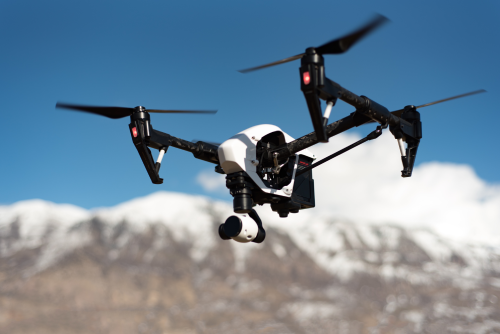
Mountain landscapes can give you some of the most cinematic drone footage you will ever shoot, but they can also expose every weakness in your planning, flying, and camera settings. If you want to learn how to shoot mountain videos with a drone, the secret is not flying higher or faster. It is choosing the right light, flying smoother lines, and staying conservative with safety in difficult terrain.
Quick Take
- Shoot mountains early in the morning or late in the afternoon for better light, deeper shadows, and more texture.
- Use slow, simple moves like reveals, side slides, and pullbacks. Mountains usually look better with calm motion than aggressive flying.
- Keep your camera settings controlled: low ISO, locked white balance, and a shutter speed that matches your frame rate.
- In cold and high-altitude conditions, battery performance can drop faster than expected. Land earlier than usual.
- Do not rely blindly on Return to Home in mountainous terrain. Cliffs, ridges, and changing ground elevation can make automatic behaviour risky.
- In India, always verify current airspace, local restrictions, forest or protected-area rules, and any border or security-related limits before flying.
- To make mountains feel big on video, include layers: foreground, midground, and distant peaks.
Why mountain drone videos are special
Mountains give you three things that look fantastic on camera:
- Scale
- Depth
- Atmosphere
A good mountain shot has layers of ridges, changing light, clouds or haze, and often a subject such as a road, hiker, river, or temple that gives the scene scale.
But mountains are also hard for drones because of:
- Fast-changing wind
- Cold batteries
- Bright highlights and deep shadows in the same frame
- Narrow valleys and ridgelines that can affect signal and line of sight
- Tourist crowds, wildlife, and local restrictions
That is why good mountain footage comes from patience, not just flying skill.
Plan the shoot before you leave home
Mountain videography starts long before takeoff.
Research the location properly
Before you travel, check:
- Whether drones are allowed in that area
- If the spot falls inside restricted, sensitive, forest, wildlife, or border zones
- Sunrise and sunset direction
- Whether there is a safe and open takeoff area
- Local weather pattern for that season
- Whether crowds build up after a certain time
In India, this matters a lot. Many mountain destinations overlap with:
- National parks and wildlife sanctuaries
- Forest land
- Army or security-sensitive areas
- Border belts
- Tourist viewpoints with heavy crowding
- Helipad or rescue helicopter routes
A beautiful viewpoint does not automatically mean a legal or safe drone location.
Check the weather beyond just rain
For mountains, do not check only “rain” or “clear sky.” Also look for:
- Wind speed at ground level and higher elevations
- Cloud cover
- Visibility
- Temperature
- Chance of fog or mist
- Storm buildup in the afternoon
A common pattern in hills is calm morning air and stronger wind later in the day. That is one reason sunrise shoots are so popular.
Know what story you want
Beginners often reach a mountain viewpoint and randomly start flying. That usually leads to repetitive wide shots.
Instead, decide what you want the final video to say:
- Is it about the location’s scale?
- A travel mood piece?
- A road trip through the hills?
- A solo hiker or biker in the landscape?
- A monsoon cloud scene?
- A snow-covered ridge at sunrise?
When your story is clear, your shots become more intentional.
India-specific legal and local checks
Rules and permissions can change, so verify the latest official guidance before flying. Do not assume that one state or hill station follows the same practice as another.
Before a mountain shoot in India, verify:
- Current DGCA requirements applicable to your drone and operation
- Airspace status and any permissions needed through the official system
- Whether the area is near an airport, helipad, military zone, or other restricted airspace
- Whether local police, district administration, forest department, tourism authority, or site management permission is required
- Whether the location is inside a protected forest, national park, sanctuary, eco-sensitive area, or pilgrimage zone
- Whether there are specific restrictions in border states or high-security regions
Also remember:
- Privacy matters in tourist hill stations and homestay areas
- Wildlife disturbance is a real risk in mountain ecosystems
- Rescue, military, and medical helicopters may operate in hill regions with little warning
If there is doubt, do not fly until you have clarity.
What gear helps most in the mountains
You do not need the most expensive drone to shoot good mountain videos. You do need a setup that is predictable and easy to control.
Useful gear checklist
Carry:
- A reliable GPS camera drone you already know how to fly
- Fully charged batteries
- Extra batteries stored warm in cold conditions
- Spare propellers
- ND filters if your drone supports them
- Fast memory cards
- A landing pad or clean flat surface for takeoff and landing
- A microfiber cloth for lens cleaning
- Power bank or charging solution for long travel days
- Sun protection for the controller screen if needed
Why batteries matter more in the cold
Cold weather reduces battery performance. In mountain areas, especially early mornings, this can show up as:
- Faster battery percentage drop
- Lower power under load
- Earlier warning messages
- Less safe margin for return
Practical habit:
- Start with warm batteries
- Hover briefly after takeoff and watch battery behaviour
- Avoid pushing deep into the valley on a low battery
- Land earlier than you would on a warm city shoot
Check your drone’s limits before the trip
Every drone has manufacturer limits for:
- Operating temperature
- Wind resistance
- Maximum service altitude
- Battery performance
Do not assume your drone will behave the same way at high elevations as it does in a park near home. Read the manual for your specific model before heading into the mountains.
Best camera settings for mountain drone videos
You do not need complicated cinema settings. You need consistent settings.
A simple starting point
- Resolution: 4K if your drone and edit system can handle it
- Frame rate: 25 fps or 30 fps for normal motion
- Slow motion: 50 fps or 60 fps when you know you want slow-motion playback
- ISO: Keep at the lowest native or lowest practical value
- White balance: Lock it manually so colour does not shift mid-shot
- Focus: Confirm focus before each important clip
- Exposure: Protect highlights, especially clouds and snow
Camera settings cheat sheet
| Situation | Frame rate | Shutter speed target | White balance | Notes |
|---|---|---|---|---|
| Normal daylight mountain scene | 25 fps | Around 1/50 | Lock to daylight | Use ND filter if scene is too bright |
| Normal daylight mountain scene | 30 fps | Around 1/60 | Lock to daylight | Good for most creators |
| Slow motion of moving clouds, road, riders, or waterfalls | 50/60 fps | Around 1/100 to 1/120 | Lock manually | Only use when you plan to slow it down |
| Snow or very bright clouds | 25/30 fps | As above | Lock manually | Slightly protect highlights to avoid clipping |
| Overcast or misty scene | 25/30 fps | As above | Lock to cloudy or set manually | Watch for low contrast and flat colour |
Should you use ND filters?
Yes, if your drone supports them and you want natural-looking motion blur.
An ND filter is like sunglasses for the camera. It reduces light so you can keep the shutter speed lower. Without it, bright mountain sunlight can force very fast shutter speeds, which makes movement look sharp and choppy.
If you are a beginner:
- Carry a small set of ND filters
- Use the lightest one that helps you reach your target shutter speed
- Do not waste the best light changing filters every two minutes
Normal colour profile or flat/log profile?
If you are new to editing, shoot in the normal or standard profile.
If you already know colour grading well, a flat or log profile can preserve more dynamic range, which helps in mountain scenes with bright skies and dark valleys.
Do not choose a flat profile for an important trip if you have never graded it before.
The best drone moves for mountain videos
You do not need ten fancy moves. You need a few clean ones.
1. The reveal shot
Start with a foreground object blocking part of the view, such as:
- A ridge
- Tree line
- Rock face
- Prayer flags or safe static foreground
Then slowly rise or slide sideways to reveal the valley or peaks.
Why it works: – It creates surprise – It makes the mountain feel larger – It adds depth immediately
2. The slow side slide
Fly left or right while keeping your subject framed.
Good subjects: – A winding road – A ridge line – A monastery or hilltop structure – A lone hiker with mountains behind
Why it works: – Side movement creates parallax, which means foreground and background move at different speeds – Parallax is one of the best ways to show depth in mountains
3. The push-in
Slowly fly forward toward a mountain feature, valley opening, or subject.
Use it for: – Entering a valley – Approaching a ridge – Moving toward a viewpoint – Building anticipation
Tip: Keep the speed low. A push-in usually looks better when it feels deliberate, not rushed.
4. The pullback
Start with a tighter composition on a subject, then slowly fly backward and slightly up.
Use it for: – Ending a sequence – Revealing how small the subject is inside the landscape – Travel intros or outros
This is one of the easiest cinematic moves for beginners.
5. The rise and tilt
Climb gently while tilting the camera down or up to change what the viewer sees.
Example: Start on a cliff edge or road, then rise to reveal the valley behind it.
This adds a dramatic sense of scale without needing high speed.
6. The top-down shot
A straight-down shot works well for:
- Winding roads
- River bends
- Pine forests
- Terraced farms
- Snow patterns
- Mountain trails
Top-down shots are excellent for adding visual variety so your full video is not just horizon-level wide shots.
7. The cautious orbit
Orbiting can look great around a structure or isolated subject, but in mountains it must be done carefully.
Good orbit subjects: – Watchtowers – Temples on ridges – Lone trees – A safe and stationary subject in open space
Why “cautious” matters: – Cliffs, wires, trees, and uneven terrain make mountain orbits riskier than they look – Wide-angle lenses can hide how close you really are
8. The ridge-follow shot
Follow the shape of a ridge or road from a safe distance rather than pointing the drone straight at it.
Why it works: – The viewer feels the terrain’s flow – The scene looks more dynamic – It preserves depth better than simply flying forward into an open view
How to make mountains look bigger on video
A common complaint is: “It looked massive in real life, but small in the footage.”
That usually happens because drone cameras are wide-angle. Wide lenses can make distant mountains feel less dramatic.
Here is how to fix that.
Use layers
The strongest mountain composition usually includes:
- Foreground: tree, ridge, rock, road, building
- Midground: valley, slope, lake
- Background: distant peaks or clouds
If you film only far-away mountains with empty space in front, the scene can look flat.
Add a scale reference
A mountain becomes more impressive when the viewer can compare it to something familiar.
Useful scale references: – A tiny road – A safe, stationary person – A hut or temple – A bridge – A line of trees
Do not fly close to people just for scale. Keep a safe distance and never pressure strangers into your shot.
Use longer focal length if your drone has it
Some drones offer medium telephoto options. A slightly longer focal length can make distant ridges feel denser and more dramatic than an ultra-wide view.
Wide shots are still useful, but do not rely on them alone.
Shoot across the landscape, not only into it
Sometimes the best mountain shot is not straight ahead. Flying across a valley or along a ridgeline can create stronger depth because multiple layers pass through the frame.
Wait for atmosphere
Mist, haze, cloud shadow, and golden-hour light can separate one mountain layer from another.
In India, especially in the Himalayas and Western Ghats, weather can transform a plain scene into a cinematic one in minutes. Patience often matters more than travel distance.
How to fly smoothly in mountains
Great mountain footage is usually about controlled movement.
Use soft inputs
Avoid sudden:
- Yaw turns
- Braking
- Vertical punches
- Fast corrections
A mountain scene already has visual drama. Your job is to move through it smoothly.
Keep each shot short and usable
For most edits, a clean 8 to 15 second clip is more useful than a 50 second wandering flight.
Try this:
- Frame the shot first
- Start recording
- Hold steady for a second
- Execute one clear move
- Hold steady at the end
- Stop recording
This gives you cleaner edit points.
Be conservative near ridges and valleys
Terrain changes can create complicated wind and signal conditions.
Be careful with:
- Flying behind ridges where signal can drop
- Cresting a ridge without enough altitude margin
- Descending deep into a valley and assuming the return will be easy
- Flying in rotor wash or turbulent air near cliff edges
A safe habit is to climb to a comfortable margin before crossing terrain features, while still staying within applicable rules and maintaining visual line of sight.
Do not trust Return to Home blindly
Return to Home can be useful, but mountainous terrain is not the place to “test” it casually.
Potential problems:
- Ground elevation changes dramatically
- A safe path back may not be the same as the path out
- Trees, ridges, and cliffs can make an automatic route unsafe
- Signal loss near terrain can happen at the worst moment
Before takeoff:
- Understand how your drone calculates RTH
- Check the RTH altitude and whether it makes sense for the terrain
- Prefer to keep the drone where you can manually and safely return it
Watch birds and helicopters
Bird activity is common in hills. Raptors and territorial birds may approach drones.
If birds show interest:
- Stop advancing
- Increase separation calmly
- Descend and land if needed
Also stay alert for:
- Tourist helicopter routes
- Medical or rescue helicopters
- Army aviation in sensitive areas
If you hear or see manned aircraft, get lower only if safe, clear the area, and land promptly.
A simple shot plan for beginners
If you are overwhelmed, do this five-shot sequence at one mountain location.
Shot 1: Wide establishing reveal
Show the full valley or peaks.
Shot 2: Lateral parallax move
Slide sideways to create depth.
Shot 3: Push-in to a subject
Move toward a road, ridge, hut, or viewpoint.
Shot 4: Top-down texture shot
Capture road curves, trees, river shape, or terraces.
Shot 5: Pullback ending shot
Reveal the full scale of the landscape.
That is enough for a short, polished edit.
Editing mountain drone footage
Editing is where a “nice flight” becomes a good video.
Keep the sequence simple
A beginner-friendly order:
- Establish the location
- Show movement through the landscape
- Add one or two scale shots
- Include one detail or top-down shot
- Finish with a wider closing reveal or pullback
Colour correction matters more than heavy effects
Mountain footage often needs:
- Highlight recovery
- Slight shadow lift
- Better contrast
- White balance correction
- Mild dehaze, used carefully
Do not overdo saturation. Forest greens, sunrise oranges, and snow scenes can look artificial very quickly.
Use speed ramps carefully
A small speed change can add energy, but too many speed ramps make mountain footage feel like social media filler instead of a cinematic sequence.
Remember that drone audio is rarely useful
Drone onboard audio is mostly propeller noise. If you want a more immersive film, add:
- Music
- Voiceover
- Ambient sound recorded separately on the ground
Safety and compliance checklist for mountain drone shoots in India
Before every flight, check these points:
- Verify the latest DGCA and official airspace guidance applicable to your drone and operation
- Confirm whether the location is restricted, sensitive, or permission-based
- Avoid flying in national parks, sanctuaries, forest zones, and border-sensitive areas unless you have the required approvals
- Maintain visual line of sight
- Respect applicable altitude and operating limits
- Stay clear of crowds, roads, moving traffic, and occupied viewpoints
- Do not fly in rain, low visibility, heavy fog, or strong wind
- Leave extra battery margin for the return flight
- Keep away from wildlife, especially nesting birds and animals in protected habitats
- Do not launch from unsafe, unstable, or crowded ground
If a location feels doubtful from a legal or safety perspective, the right decision is often to keep the drone packed.
Common mistakes when shooting mountain videos with a drone
Flying too high for every shot
Higher is not always better. Many great mountain shots are low-to-medium height with strong foreground and layering.
Moving too fast
Fast flight makes mountains feel smaller and less cinematic.
Using only wide, empty shots
Without foreground or scale, the scene can look flat.
Leaving exposure on full auto
Auto exposure may shift during the shot and ruin consistency.
Forgetting to lock white balance
Colour changes mid-clip are hard to fix later.
Ignoring cold battery behaviour
This is one of the easiest ways to shorten a safe flight unexpectedly.
Trusting RTH without thinking about terrain
In mountains, automatic behaviour needs extra caution.
Shooting only in midday light
Harsh overhead sun removes texture from ridges and valleys.
Not checking local restrictions
A beautiful viewpoint can still be a bad place to fly.
Trying complex moves too close to terrain
Mountain air and perspective can trick you. Keep it simple.
FAQ
Is sunrise really the best time to shoot mountain drone videos?
Usually, yes. Early light gives better texture, calmer wind, fewer crowds, and warmer colour. Late afternoon can be just as good.
Can I fly a drone in places like Himachal, Uttarakhand, Ladakh, Sikkim, or the Northeast?
Maybe, but never assume. Many mountain regions have airspace, forest, border, military, or local administrative restrictions. Verify the latest official rules and local permissions before flying.
What is the best frame rate for mountain drone videos?
For normal motion, 25 fps or 30 fps works well. Use 50 fps or 60 fps only when you plan to slow the footage down in editing.
Why do mountains look smaller in my footage than in real life?
Wide-angle drone lenses can reduce the sense of scale. Add foreground, shoot across layers, include a size reference, and use a longer focal length if your drone offers one.
Do I need ND filters in the mountains?
If you want smoother, more cinematic motion in bright light, yes. ND filters help you keep the shutter speed low enough for natural-looking movement.
How much battery should I keep in reserve in the mountains?
More than you think. Wind, cold, and distance over uneven terrain can reduce your safety margin quickly. Land earlier than you would in an easy local flight.
Is fog good for mountain drone videos?
Light mist can look beautiful because it adds atmosphere and layers. Dense fog is a safety risk and can ruin visibility. If you cannot maintain clear visual awareness and safe control, do not fly.
Can I use orbit shots around cliffs and ridges?
Only with great caution and lots of space. Terrain, trees, and perspective make orbits riskier in mountains. Beginners should prefer reveals, slides, and pullbacks.
What is the easiest mountain shot for a beginner?
A slow pullback or side slide is usually the easiest clean shot. Both look cinematic and are safer than complicated close-proximity moves.
Should I shoot in log/flat colour profile?
Only if you know how to grade it properly. If not, use the normal profile and focus on getting good light and stable shots.
Final takeaway
If you want better mountain drone videos, do three things on your next trip: fly at the right time, keep your moves simple, and stay conservative with safety. Start with one sunrise location, capture five clean shots, lock your camera settings, and never force a flight in doubtful weather or restricted areas. Mountains reward restraint far more than showing off.
