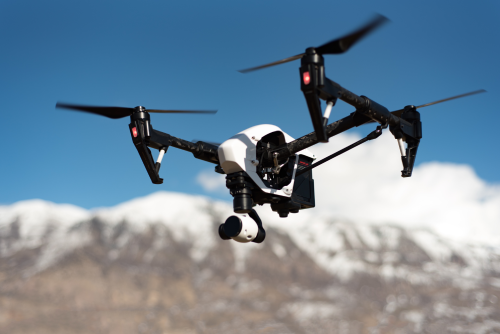
If you want to know how to shoot Instagram Reels with a drone, the biggest shift is this: you are not making a long aerial video, you are making a short vertical story. That means planning for 9:16 framing, quick movement, and a strong first two seconds, while still flying safely and legally in Indian conditions.
Quick Take
- Shoot with the Reel format in mind: vertical 9:16, short clips, fast pacing.
- For most beginners, a standard camera drone is better than FPV because it is easier to control and frame.
- Record in the highest practical resolution, ideally 4K, so you can crop for vertical without losing too much quality.
- Use slow, smooth movements: reveal, rise-up, orbit, push-in, pull-back.
- Lock exposure, white balance, and frame rate if possible so clips match each other.
- Golden hour is easiest for cinematic results. Midday light can still work for top-down shots, buildings, roads, and patterns.
- Do not fly over crowds, traffic, or sensitive areas. In India, always verify the latest DGCA, Digital Sky, local airspace, property, and event restrictions before shooting.
- Edit tightly: 1 to 3 seconds per clip is often enough for a Reel.
- Keep your subject near the centre so Instagram’s interface does not cover important details.
- A 15 to 30 second Reel with 5 to 7 good clips usually performs better than a long video with too many average shots.
What makes a drone Reel actually work
A drone gives you height, motion, and perspective. But on Instagram, that alone is not enough. Reels work when they combine three things:
1. A clear visual hook
The first shot must make people stop scrolling.
Good hooks include:
- A reveal from behind trees, a wall, or a building
- A rise-up shot that suddenly opens to a beach, fort, field, or skyline
- A top-down shot with strong patterns
- A clean pull-back from a person, car, temple road, or property
2. Fast storytelling
Most good Reels are not one long drone shot. They are a sequence of short, purposeful clips.
A simple structure is:
- Hook shot
- Wide location shot
- Side movement or orbit
- Detail shot from above or low-altitude perspective
- Closing pull-back or rise-up
3. Vertical-friendly composition
This is where many beginners go wrong. A drone camera may record horizontally, but Instagram Reels are vertical. If your subject sits too close to the left or right edge, it may get cut off when you crop.
For Reels:
- Keep the main subject close to the centre
- Avoid placing key details at the top or bottom edge
- Leave space for on-screen text and Instagram interface elements
- Think “tall frame,” not “wide landscape”
Choose the right drone setup
You do not need a premium drone to shoot good Reels, but a few features make the job much easier.
What helps most
- A 3-axis gimbal for stable footage
- 4K video recording
- Good low-speed control or a cinematic mode
- Reliable GPS positioning
- Decent battery life
- Obstacle sensing, if available
- Vertical shooting support, if your drone offers it
If your drone cannot shoot true vertical video, do not worry. Many creators still shoot in horizontal 4K and crop later to 9:16.
Helpful extras
- ND filters: These are like sunglasses for the camera. They help you keep natural-looking motion blur in bright daylight.
- Extra batteries: Reels often need repeat takes.
- Fast memory card: Avoid recording issues.
- Sunshade or bright phone screen: Useful in harsh Indian sunlight.
- Landing pad: Helps in dusty grounds, farms, beaches, and open fields.
Camera drone or FPV?
For beginners, a camera drone is the better choice for Instagram Reels.
Why:
- Easier to control
- Easier to compose vertical-safe shots
- Safer around simple locations
- Better for smooth commercial, travel, and real-estate content
FPV drones can create dramatic footage, but they demand much more skill, more planning, and stricter safety awareness.
Safety and legal checks in India
This is not the glamorous part, but it matters more than the edit.
Drone rules in India can depend on the drone category, location, purpose of use, and current official guidance. Before any public, client, or commercial shoot, verify the latest DGCA and Digital Sky requirements, including airspace restrictions and any applicable NPNT workflow. NPNT means “No Permission, No Takeoff.”
Basic precautions you should follow
- Check whether flying is allowed at your location
- Avoid airports, military areas, government-sensitive sites, and restricted zones
- Do not fly over crowds, moving traffic, or dense public gatherings
- Respect privacy. Do not hover near homes, balconies, windows, or private spaces
- Keep the drone within visual line of sight unless specifically allowed otherwise
- Get local permission where needed, such as from property owners, event organisers, or venue managers
- Be extra careful at beaches, hill stations, and tourist spots where local restrictions may apply
- During weddings, festivals, and public events, verify both legal and venue permissions before flying
India-specific practical concerns
- Summer heat can affect batteries. Keep them shaded and never leave them in a hot car.
- Monsoon winds can turn a smooth shot into shaky footage very quickly.
- Dusty grounds can damage motors or dirty the gimbal. Use a clean launch area.
- Crowded urban locations are often the worst places for beginner Reel shoots. Open, controlled spaces are safer and easier.
When in doubt, do not take off. A Reel is never worth an unsafe or non-compliant flight.
Plan the Reel before takeoff
The easiest way to waste battery is to arrive with no shot list.
Before you fly, decide what the Reel is about. Is it:
- A travel spot
- A resort or homestay
- A real-estate property
- A college campus
- A wedding venue
- A farm or landscape
- A café or small business location
Each one needs different shots.
Build a simple 15 to 30 second shot list
For most Reels, 5 to 7 clips are enough.
Here is a practical format:
- Hook: rise-up reveal from behind a tree, wall, gate, or roof
- Establishing shot: wide view of the full location
- Movement shot: orbit or sideways parallax around the subject
- Pattern shot: top-down of road, pool, crops, courtyard, or architecture
- Hero shot: push-in toward the most attractive angle
- Exit shot: pull-back or high ascending shot
- Optional close detail: signage, pathway, entry gate, symmetry, or water feature
Two mini examples
Travel Reel for a hill station viewpoint
- Start behind trees
- Rise up to reveal valley
- Side drift along railing or cliff edge
- Top-down of zig-zag road
- Slow pull-back of the full landscape
Real-estate Reel for a villa or resort
- Reveal the property from behind the gate
- Slow orbit showing front elevation
- Top-down of pool and layout
- Push-in toward entrance
- High pull-back showing surroundings
A pre-planned sequence makes editing much faster later.
Best camera settings for Instagram Reels
You do not need complicated cinema settings, but you do need consistency.
Good starting settings
| Setting | Beginner-friendly starting point | Why it works |
|---|---|---|
| Resolution | 4K if available | Gives room to crop to vertical |
| Aspect ratio | Vertical if supported, otherwise horizontal and crop | Helps fit 9:16 Reel format |
| Frame rate | 24/25 fps for cinematic feel, 30 fps for general use | Natural look for social video |
| Slow motion | 50/60 fps only when you plan to slow clips down | Useful for dramatic reveals |
| Shutter speed | Roughly double the frame rate | Keeps motion natural |
| ISO | Keep as low as possible | Reduces noise and keeps image clean |
| White balance | Lock it instead of auto | Prevents colour shifts between shots |
| Colour profile | Normal for quick edits; flat/log only if you know grading | Simpler workflow for beginners |
| Exposure | Manual or exposure lock when possible | Avoids brightness pumping |
| Flight mode | Cine/Cinematic/Smooth mode | Makes movement less jerky |
Resolution and cropping
If your drone can shoot true vertical video, that is the simplest option.
If not:
- Shoot in 4K horizontal
- Reframe in editing to 9:16
- Keep the subject centred while shooting so cropping is easy
If you only shoot 1080p and then crop hard to vertical, quality can fall quickly.
Frame rate
Use:
- 24 or 25 fps for a cinematic travel look
- 30 fps for general Instagram use
- 50 or 60 fps only if you want smooth slow motion
Do not mix frame rates randomly in one Reel unless you know why you are doing it.
Shutter speed and ND filters
A simple rule is to keep shutter speed around double your frame rate.
Examples:
- 25 fps -> around 1/50
- 30 fps -> around 1/60
- 60 fps -> around 1/120
In bright Indian daylight, that may be impossible without an ND filter. If your footage looks too sharp or stuttery, ND filters can help make motion feel smoother.
White balance
Auto white balance often changes mid-shot when the camera turns from shadow to sunlight. That makes clips look inconsistent.
Instead:
- Set a white balance manually
- Keep it fixed for the scene
- Change it only if the lighting truly changes
Colour profile
If you are new:
- Shoot in the normal colour profile
- Focus on getting exposure right
If you already know colour grading, a flat or log profile can preserve more detail, but it also adds work in post-production. For quick Reels, simple is often better.
Drone moves that look great in vertical video
Not every classic drone shot works well in a Reel. Vertical video rewards clear subject placement and controlled movement.
1. The reveal
Start behind an object and move up or sideways to reveal the scene.
Best for:
- Travel views
- Resorts
- Monuments from an allowed distance
- Landscapes
Tip: Keep the move slow and deliberate.
2. The rise-up
Lift the drone straight up to show the full location.
Best for:
- Valleys
- Properties
- Waterfalls
- Campuses
Tip: Watch your top and bottom framing for vertical crop.
3. The push-in
Fly slowly toward the subject.
Best for:
- Entrances
- Buildings
- Boats at a safe distance
- Roads with leading lines
Tip: Slightly raise or lower gimbal for a more cinematic feel.
4. The pull-back
Move away from the subject to reveal context.
Best for:
- Lone subject in a large landscape
- Beach scenes
- Fields and farms
- Architecture
Tip: One clean pull-back often works as a great final shot.
5. The orbit
Circle around a subject while keeping it framed.
Best for:
- Buildings
- Statues where permitted
- Trees
- Towers in allowed locations
Tip: Beginners should orbit slowly and at a safe distance. Fast orbits often look messy.
6. The top-down
Point the camera straight down and move gently.
Best for:
- Roads
- Crops
- Waves
- Courtyards
- Pools
- Patterns and symmetry
Tip: Midday light is less attractive for normal shots but can work very well for top-down geometry.
7. The sideways drift
Fly left or right while keeping the subject in frame.
Best for:
- Roads
- Shorelines
- Long buildings
- People walking in open safe spaces
Tip: This creates a parallax effect, where foreground and background move at different speeds.
8. The crane move
Combine forward movement with a gentle gimbal tilt.
Best for:
- Entry sequences
- Revealing building height
- Smooth transitions into the next shot
Tip: Practise this one before a client shoot. It looks easy, but coordination matters.
A simple on-location workflow
A good Reel shoot is usually calm, repeatable, and organised.
Step 1: Scout the location on foot
Before takeoff, look for:
- Launch and landing area
- Wires and poles
- Trees and branches
- Crowd movement
- Wind direction
- Best light angle
- Possible reveal objects like gates, walls, or trees
Step 2: Decide the vertical crop
Hold your phone upright and imagine the frame.
Ask:
- What is the main subject?
- Will it stay in the centre?
- Will any part get cut off when cropped?
- Where will text go?
Step 3: Capture the safe, easy shots first
Start with:
- Wide establishing shot
- Straight rise-up
- Pull-back
- Top-down
Then move to harder shots like orbits or combined movements.
Step 4: Record more than you think you need
For each shot:
- Roll 2 seconds before the move
- Execute the movement
- Keep recording 2 seconds after the move ends
This gives you cleaner edit points.
Step 5: Review clips on location
Do not trust the tiny live feed alone.
Check:
- Was the horizon level?
- Did exposure shift?
- Was movement smooth?
- Is the subject centred enough for vertical crop?
- Did wind ruin the shot?
If needed, repeat immediately while the light is still good.
Edit for Instagram, not just for YouTube
A great aerial clip can still fail as a Reel if the edit is too slow.
Keep it short
For most drone Reels:
- 10 to 20 seconds is enough for pure visual content
- 20 to 30 seconds works for travel, property, or promotional storytelling
Use short clip lengths
A simple rule:
- 1 to 2 seconds for high-energy cuts
- 2 to 3 seconds for cinematic pacing
If a shot does not add something new, trim it.
Build around the music or beat
Even basic editing feels more professional when cuts land with the audio.
You can also use:
- Speed ramps sparingly
- Gentle zoom-in on cropped clips
- Text overlays for location or brand
- Simple colour correction for consistency
Do not overdo transitions. Clean cuts usually look better than flashy effects.
Compose for Instagram’s interface
Important details can get covered by buttons, usernames, and captions.
So:
- Keep the main subject close to the centre
- Avoid putting text too low
- Avoid cropping faces or buildings too close to the top edge
Colour and contrast
For social media, slightly stronger contrast and colour often works well, but avoid making skies unnatural or greens too neon. Realistic footage usually ages better than over-processed footage.
Common mistakes beginners make
Flying too fast
Fast movement looks exciting on the controller screen, but on a Reel it often feels shaky and hard to watch. Slow down.
Forgetting the vertical crop
A wide, beautiful landscape can become useless if the important subject ends up outside the 9:16 frame.
Using auto settings for everything
Auto exposure and auto white balance can shift between shots, making the Reel look inconsistent.
Shooting only one type of clip
Five wide shots from similar height do not make a story. Mix reveals, top-downs, side drifts, and pull-backs.
Ignoring wind
A Reel magnifies small shakes. If the wind is strong, either change the plan or wait.
Flying too low near people or traffic
This is unsafe, unprofessional, and often non-compliant. Keep distance.
Not reviewing footage on location
You may discover later that the best clip had focus issues, horizon tilt, or exposure pumping. Check early.
Overediting
Too many transitions, too much speed ramping, and heavy colour filters can make good drone footage look cheap.
FAQ
Is a drone with true vertical shooting necessary for Instagram Reels?
No. It is convenient, but not necessary. Many creators shoot in 4K horizontal and crop to 9:16 later. Just keep the subject centred while filming.
What frame rate is best for drone Reels?
For most creators, 24/25 fps or 30 fps is best. Use 50/60 fps only when you know you want slow motion.
Is 1080p enough for Reels?
It can work, but 4K is better because vertical cropping reduces usable resolution. If your drone can record 4K, use it.
Should I use auto mode or manual settings?
A mix works well for beginners. Manual or locked settings for white balance and exposure usually give cleaner results. Full auto can cause visible shifts during a shot.
How long should each drone clip be in the final Reel?
Usually 1 to 3 seconds per clip works best. Longer clips can work if the movement is especially strong, but most Reels benefit from tighter pacing.
What is the easiest drone shot for beginners?
A slow rise-up, pull-back, or straight push-in. These are simple, safe, and edit well into Reels.
Can I shoot drone Reels in crowded city areas?
Be very careful. Crowded urban spaces create safety, privacy, and compliance issues. For beginners, open and controlled locations are much better. Always verify current Indian airspace and local restrictions before flying.
Can I make client Reels for weddings, resorts, or real estate with a small drone?
Yes, small drones are commonly used for these jobs, but the size of the drone does not remove your responsibility. You still need to check the latest legal, venue, airspace, and safety requirements before shooting.
Do I need ND filters for Reels?
Not always, but they help in bright sunlight. If your footage looks too sharp or jerky in daylight, ND filters can improve motion rendering.
Final takeaway
The best way to shoot Instagram Reels with a drone is to think like an editor before you fly: plan 5 to 7 vertical-friendly shots, keep movements slow, lock key settings, and shoot only where it is safe and permitted. On your next outing, skip the random flying and go with one Reel idea, one short shot list, and one goal: come back with a clean hook, three strong middle shots, and a solid ending.
