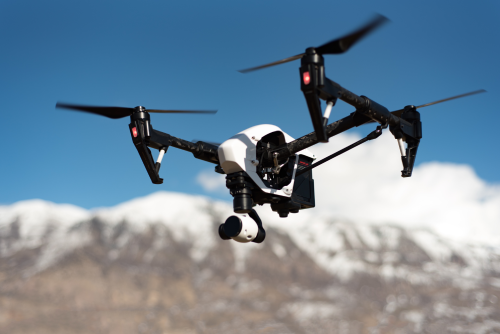
Farms and fields are some of the most rewarding landscapes to shoot from the air. If you want to learn how to shoot farms and fields with a drone, the real trick is not just flying high. It is about reading patterns, using light well, moving slowly, and respecting the people, crops, and land below.
A good farm shoot can give you patchwork geometry, rich colour, seasonal storytelling, and strong commercial visuals. A bad one can look flat, shaky, overexposed, or worse, unsafe and intrusive.
Quick Take
- Shoot early morning or late afternoon for softer light, longer shadows, and better texture.
- Ask the landowner, farm manager, or client before you launch. Rural land is still private space.
- In India, always verify the latest official DGCA and Digital Sky requirements before flying. Do not assume a farm area is automatically okay.
- Farms look best when you mix three heights: low for texture, medium for structure, and high for patterns.
- Pick one main subject before takeoff: crop rows, irrigation channels, a tractor, a lone tree, terraced lines, or a harvest scene.
- Lock white balance, keep ISO low, and protect highlights in bright water or sky.
- Fly slower than you think. Fields usually look better with gentle movement than aggressive camera moves.
- Stay well clear of workers, livestock, machinery, wires, and village homes.
- Shoot both straight-down frames and angled views. The first gives patterns, the second gives depth.
- Edit for natural colour. Overdone greens make farm footage look fake very quickly.
Why farms and fields work so well from the air
Many beginners launch over a field, go straight up, record for 30 seconds, and wonder why the result feels boring.
The reason is simple: farms are not interesting just because they are large. They become visually strong when you find order, contrast, and story.
From a drone, fields can show:
- repeating crop rows
- geometric plot boundaries
- contrast between wet and dry land
- irrigation lines and canals
- seasonal colour changes
- human scale, such as a tractor, harvester, or workers
- natural borders like a road, bund, tree line, or pond
Before you fly, decide what the real subject is. The subject is not “the whole farm.” It is usually one of these:
- a mustard field in bloom
- paddy reflections at sunrise
- a tractor cutting through stubble
- a canal dividing green plots
- terraced farming on a hillside
- a lone tree, pump house, or well that gives the frame an anchor
Once you choose a subject, your camera movement becomes much easier.
Before you fly: permissions, safety, and India-specific checks
This matters more on farms than many beginners realise.
A field may look open, but it can still be close to homes, roads, power lines, birds, and sensitive airspace. Some agricultural areas in India are also near border regions, defence zones, industrial infrastructure, or air routes. Always verify the latest official rules before any flight.
India-specific legal and compliance notes
Be conservative here.
- Check the latest official DGCA and Digital Sky guidance for your drone type, location, and purpose of use.
- Use a legally compliant drone and confirm whether your planned flight area is permitted.
- Do not assume that a rural area means unrestricted airspace.
- Get the landowner’s or farm manager’s permission before flying over private farmland.
- If people are visible or identifiable, especially workers, get clear consent for commercial use.
- Avoid flying near airports, helipads, military areas, border-sensitive zones, and other restricted or sensitive locations.
- Respect privacy. Farms are often close to village homes, courtyards, and roads.
If you are unsure, pause and verify before you fly.
A simple pre-flight checklist for farm shoots
-
Confirm the location is suitable to fly Check the latest official airspace information and local restrictions.
-
Get permission from the person in charge of the land This avoids conflict and usually helps you find better shot locations too.
-
Walk the field edge first Look for power lines, poles, trees, pumps, sprinkler rigs, nets, scare lines, towers, and farm machinery.
-
Choose a clean takeoff and landing spot Dry dust, loose soil, and crop residue can be a problem. A landing pad or clean hard surface helps.
-
Check wind, haze, and weather An open farm can feel much windier than it looks from the ground.
-
Set up your drone properly Confirm battery level, home point, compass status if needed, camera settings, and return-to-home settings. Return-to-home is the automatic function that brings the drone back if signal drops or battery gets low.
-
Tell nearby people what you are doing Workers, family members, and machine operators should know where the drone will be.
Farm-specific safety tips
- Do not fly low over workers, children, or livestock.
- Keep extra distance from tractors, combines, threshers, and moving equipment.
- Be very careful around overhead power lines. Thin wires are easy to miss on a screen.
- Avoid spraying operations. Chemical mist, strong downdraft, and distraction can create serious risk.
- Do not hover repeatedly over animals. Cattle, buffaloes, goats, and poultry can react to drone noise.
- In hot Indian summers, do not leave batteries sitting in direct sunlight before flight.
Choose the best light and season
If you only change one thing about your farm footage, change the light.
Early morning and late afternoon are usually the best times because the lower sun creates depth. Shadows reveal rows, furrows, ridges, terraces, and texture that flat midday light often hides.
Midday is not always bad, though. It can work well for very graphic, straight-down shots where you want clean shapes and fewer long shadows.
What usually works best
| Scene | Best angle | Best light | Why it works |
|---|---|---|---|
| Freshly ploughed field | Straight-down or medium-high angle | Morning or late afternoon | Soil texture and line patterns stand out |
| Paddy with water | Low angled view | Sunrise or sunset | Reflections look rich, but protect highlights |
| Mustard or flowering crops | Medium-high angled view | Golden hour | Colour blocks look fuller and softer |
| Harvest activity | Side tracking or pullback | Early or late light | Dust, motion, and scale feel more dramatic |
| Terraced fields | Oblique side view | Morning | Contours and elevation read clearly |
| Canal, road, or bund through a field | Tracking shot | Soft light | Strong leading lines pull the eye through the frame |
Seasonal timing matters more than many people think
The same location can look completely different across the year.
- Sowing season gives you fresh soil patterns, machinery, and human activity.
- Growing season gives you lush texture and colour separation between plots.
- Flowering season can create strong visual blocks, especially with mustard or other bright crops.
- Harvest season adds movement, dust, machinery, and storytelling.
- Post-harvest can look graphic and earthy, especially in dry regions.
In India, haze can be a big issue in summer and some winter mornings. If distant shots look washed out, shoot earlier, lower, or closer to the subject rather than relying only on very high altitude.
Weather tips
- Light overcast can be good for even colour, especially for stills.
- Strong midday sun often blows out water and pale soil.
- Wind is usually worse than it seems in open fields.
- After rain, fields can look beautiful, but only fly if conditions are safe and your takeoff area is dry.
- During monsoon, be cautious. Many consumer drones are not meant for rain or heavy moisture.
Camera settings that work well on farms
You do not need complicated settings to shoot fields well. You need consistent settings.
For photos
- Shoot in RAW if your drone supports it. RAW keeps more editing flexibility.
- Use the lowest ISO you can.
- If your drone allows aspect ratio choices, 4:3 often gives more cropping room than 16:9.
- For bright scenes with clouds or water, consider slightly darker exposure to save highlights.
- If the drone supports exposure bracketing and the scene is mostly static, it can help with very high-contrast light.
For video
- Shoot in the highest practical resolution your drone handles comfortably, often 4K if available.
- Use 25 fps or 30 fps for normal motion.
- Use 50 fps or 60 fps only if you specifically want slow motion and have enough light.
- Keep ISO low. Grain gets ugly fast in large areas of colour like crops or soil.
- Lock white balance. This stops the colour from shifting during the shot.
Shutter speed and ND filters
For natural-looking motion in video, many creators aim for shutter speed close to roughly double the frame rate. In bright daylight, that often means using an ND filter, which is like sunglasses for the camera.
For example:
- 25 fps video often pairs with shutter around 1/50
- 30 fps video often pairs with shutter around 1/60
You do not have to be perfect. The bigger point is this: if your shutter is too fast in harsh sun, movement can look choppy and unnatural.
Extra camera habits that help
- Use the histogram if your app offers it. It helps you see whether highlights are being clipped.
- If your drone supports manual focus or tap-to-focus, confirm focus before recording.
- For beginners, a normal colour profile is often easier to manage than a flat profile. A flat or log profile only helps if you know how to grade it later.
- Keep the horizon level unless you are intentionally shooting straight down.
Shot ideas that make farms and fields look good
You do not need twenty fancy moves. You need a few repeatable ones.
1. High establishing shot
Start with a wide view that shows the full layout of the land.
This tells the viewer where they are. Rise slowly, then hold for a moment. Do not rush the climb.
2. Straight-down patchwork shot
Point the camera straight down and look for geometry.
This works especially well with: – plot boundaries – ploughed rows – irrigation channels – colour differences between crops – hay stacks or patterned planting
This is one of the best ways to make ordinary farmland look graphic and premium.
3. Edge reveal
Start low behind a hedge, bund, crop edge, or tree line, then rise gently to reveal the field.
It adds drama and gives the viewer a sense of discovery.
4. Side track along crop rows
Fly parallel to crop lines at a steady speed.
Rows naturally create leading lines, which guide the eye through the frame. This works beautifully with sugarcane, wheat, paddy boundaries, and vegetable rows.
5. Rise over an irrigation channel or path
Use a canal, dirt road, or narrow path as the entry line in the frame.
Begin with the line close to the camera, then rise or move forward slowly. It makes the scene feel organized and intentional.
6. Orbit around a fixed feature
Find one strong anchor such as: – a lone tree – a well – a pump house – a hay mound – a tractor parked safely away from people
Then make a slow orbit. Keep it smooth and avoid strong wind.
7. Safe pullback from activity
If you have permission and safe spacing, frame a tractor, harvester, or a small group of workers from a respectful distance, then pull back slowly to reveal the scale of the land.
This is often more powerful than flying toward the subject.
8. Diagonal crossing shot
Fields often look better when you cut across them diagonally instead of square-on.
A diagonal composition usually feels more dynamic and gives stronger depth.
9. Low foreground parallax shot
Parallax means the foreground appears to move faster than the background, which creates depth.
Use a tree branch edge, a bund, or a field corner in the foreground, then move sideways. Even a simple move becomes more cinematic with this effect.
10. Three-height sequence
For one subject, record three versions: – low – medium – high
This gives you edit flexibility and instantly makes your final video feel more complete.
A good beginner rule is to leave every location with at least: – one wide shot – one straight-down shot – one movement shot – one detail-oriented shot – one human-scale shot, if permission and safety allow
Fly smoothly: movement and framing tips
Most farm footage looks weak for one reason: the pilot is doing too much at once.
Try these habits instead:
- Use your drone’s smooth or cine mode if available.
- Make one movement the priority: forward, sideways, upward, or orbit. Not all at once.
- Slow down your yaw. Yaw is the left-right rotation of the drone, and fast yaw looks amateur very quickly.
- Start recording a couple of seconds before the move begins.
- Hold the end of the shot for a couple of seconds too.
- Let roads, canals, ridges, and crop rows enter from the corners of the frame when possible.
- Keep the horizon in the top third only if the sky is actually interesting. If the sky is plain, show more land.
- Use people or vehicles sparingly to show scale, not just because they are there.
If the wind is strong, simplify your shots. Straight tracking is easier than complex orbits.
Build a story, not just a collection of clips
A farm video becomes memorable when it answers four simple questions:
- Where are we?
- What is being grown or shown?
- Who is working here?
- What makes this place different?
A simple 5-shot farm sequence
If you are a beginner, try this exact sequence:
- Establishing wide shot of the whole farm
- Straight-down pattern shot of plots or rows
- Tracking shot along a canal, path, or crop line
- Activity shot with a tractor or workers, filmed safely and with consent
- Closing reveal or pullback that ends on the wider landscape
That is enough for a strong 20 to 40 second edit.
For commercial work
If you are shooting for a farm owner, agribusiness, resort, or land developer, ask what they need before you fly.
They may want: – scale of land – irrigation infrastructure – access roads – healthy crop appearance – harvest activity – a vertical version for social media – a horizontal version for website or YouTube
Do not deliver only pretty aerial clips if the client actually needs useful coverage.
India-specific conditions that affect farm drone shoots
Dust and loose soil
Dry fields in many parts of India can throw dust into the motors or camera area during takeoff and landing.
Use: – a landing pad – a road edge or hard patch, if safe and permitted – hand launch and catch only if you are properly trained and it is safe for your drone model
Haze and heat
North Indian plains, dry western states, and hot summer afternoons can reduce contrast badly.
To handle this: – shoot earlier – avoid very long-distance compositions – expose carefully – add contrast gently in post instead of crushing the image
Reflections in paddy and wet fields
Water looks beautiful, but it can fool your exposure.
- Watch highlights carefully.
- Slightly darker exposure is often safer than blowing out the reflections.
- Angled shots usually read better than straight-down when you want the shine and sky reflection.
Terraced or hilly farms
Terraced fields can look stunning, but altitude changes make judging clearance harder.
- Walk the area first.
- Keep strong awareness of uphill trees and poles.
- If your drone has terrain-follow features, use them only if you understand their limits.
Birds and wildlife
Open agricultural areas attract birds.
- If birds start circling or approaching, back off and land.
- Do not chase wildlife for dramatic footage.
- Avoid nesting areas and waterbird clusters.
Editing tips for farm photos and videos
Editing should make the field look believable, not artificial.
For photos
- Straighten the frame carefully, especially for top-down geometry.
- Use contrast and clarity lightly to bring out soil or crop texture.
- Keep greens realistic. Many beginners push saturation too far.
- Crop with purpose. Square or vertical crops can work very well for top-down field patterns.
For videos
- Cut down hard. Five strong clips beat fifteen average ones.
- Alternate wide and medium shots for rhythm.
- Use slow motion only where it adds something, such as harvest dust or water movement.
- Match white balance across clips so different parts of the farm feel consistent.
- If you use music, cut movement to the pace of the track, but do not let editing become faster than the landscape can support.
A useful rule: if a clip feels repetitive after two seconds, shorten it.
Common mistakes when shooting farms and fields
-
Flying only high High shots show layout, but low and medium shots add depth and texture.
-
Shooting at the wrong time Harsh noon light can flatten everything unless you specifically want a graphic top-down look.
-
Ignoring permission Open land is not the same as public permission. Always ask.
-
Recording in full auto Auto white balance and auto exposure shifts can ruin otherwise good clips.
-
Moving too fast Farms usually need calm, deliberate motion.
-
Trying too many stick inputs at once Complex movement looks messy unless executed very smoothly.
-
Forgetting scale A tractor, person, tree, or pump house gives the land size and context.
-
Overexposing water or pale soil Watch highlights, especially in paddy and after rain.
-
Flying low over people or animals It is unsafe, distracting, and often unnecessary.
-
Taking off from loose dirt Dust and straw can create problems before the flight even starts.
FAQ
What altitude makes fields look best?
There is no single best altitude. As a creative starting point, try low height for texture, medium height for structure, and higher views for patterns and scale, while staying within safe and legal limits for your location and operation.
Is sunrise better than sunset for farm shoots?
Both can work. Sunrise often gives calmer wind, fresher light, and cleaner air. Sunset can give warmer colour and stronger mood. Choose based on field orientation, activity, and weather.
Should I shoot RAW or JPEG for farm photos?
If your drone supports RAW, use RAW for important shoots. It gives you more control over highlights, shadows, and colour. JPEG is fine for quick social posts if you expose well.
Do I need ND filters?
For video in bright daylight, ND filters are very useful because they help you keep shutter speed in a more natural range. For still photos, they are usually less important.
Can I fly low over crops for dramatic footage?
Be careful. Low passes can create prop wash, disturb plants, and increase crash risk near wires, poles, and uneven terrain. Use low shots only when you have clear space, strong control, and landowner approval.
How do I film farmers or workers respectfully?
Ask first. Explain what you are shooting, keep a safe distance, avoid interrupting work, and do not hover directly above people. For commercial use, make sure your permissions are clear.
What should I do if it is windy?
Simplify the plan. Use fewer complex moves, avoid low precision shots near obstacles, and land early if stability drops. Open fields can become much windier above crop height.
How many batteries should I carry for a farm shoot?
Enough to cover scouting, one main pass, and backup takes. In practice, more than one battery is highly useful because fields are large and you often want to repeat shots from different heights.
Is vertical video worth shooting for farm content?
Yes, especially for social media and short-form client content. If possible, plan your framing so you can capture both horizontal and vertical-friendly compositions from the same location.
Final takeaway
The best farm drone footage does not come from flying higher. It comes from flying smarter. On your next shoot, get permission, pick one anchor subject, plan five deliberate shots at three different heights, and fly slowly in the best light you can get. That simple approach will improve your farm videos more than any fancy move.
