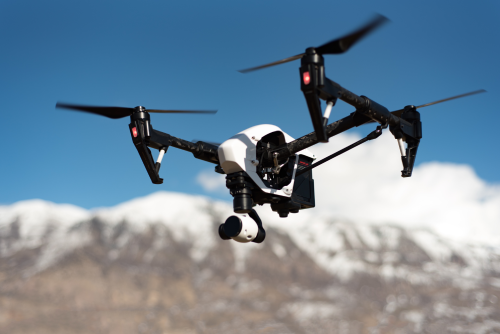
Learning how to shoot drone B-roll like a pro is less about fancy gear and more about smooth movement, good light, and a clear plan. If your footage feels random or shaky, a few simple changes in shot selection, camera settings, and editing can make it look far more cinematic. This guide breaks down a practical workflow for Indian creators, beginners, and small businesses.
Quick Take
- Good drone B-roll supports a story. It is not just random aerial clips.
- Plan 5 to 8 shots before takeoff instead of improvising everything in the air.
- Use slow, simple movements. One clean move usually looks better than three moves at once.
- In bright daylight, ND filters help you keep natural motion blur.
- Lock important settings like frame rate, white balance, and exposure when possible.
- Shoot during early morning or late afternoon for better light, less haze, and more texture.
- Leave extra seconds before and after each move so editing is easier.
- In India, always verify the latest official airspace, permissions, and local restrictions before flying.
What makes drone B-roll look professional
B-roll is the supporting footage that adds mood, context, and visual variety to your main video. If you are filming a travel reel, resort promo, property walkthrough, wedding venue, farm, or YouTube vlog, drone B-roll usually does three jobs:
- It establishes the location
- It reveals scale and surroundings
- It adds smooth transitions between scenes
Professional-looking drone B-roll usually has five qualities:
It has a purpose
Each shot should answer a simple question:
- Where are we?
- What is the subject?
- What should the viewer feel?
A top-down shot of a beach, a rising reveal over a fort wall, or a slow orbit around a villa each creates a different feeling. Random clips without intent feel expensive but forgettable.
It is smooth
Most amateur drone footage looks amateur because the pilot moves too fast, yaws too much, or changes direction halfway through the shot.
It is exposed well
Blown-out skies, overly dark shadows, and shifting auto white balance make footage look cheap quickly.
It uses good light
Even a basic drone can produce attractive footage in soft light. A premium drone in harsh noon sun can still look flat.
It cuts together cleanly
Great B-roll is not just about individual shots. It is about how the shots connect in the edit.
Plan the story before you charge the batteries
The easiest way to shoot drone B-roll like a pro is to stop thinking like a pilot for a minute and think like an editor.
Before you fly, define three things:
- The subject
- The mood
- The sequence
If you know those, your shoot becomes much more efficient.
Build a simple shot list
A basic shot list for a 30 to 45 second drone sequence can be as simple as this:
- Wide establishing shot
- Reveal shot
- Side movement shot
- Top-down detail shot
- Slow orbit or arc
- Exit shot or pull-away
That is enough for many short social edits.
For example, if you are filming a homestay in Coorg, your shot list could be:
- Wide shot showing property and surrounding greenery
- Slow rise above trees to reveal the building
- Side slide across the front façade
- Top-down shot of pool or courtyard
- Gentle orbit showing property depth
- Pull-back shot at sunset
Now compare that with turning on the drone and flying around aimlessly. The difference in the final edit is huge.
Scout the location first
Whenever possible, scout the location on foot before takeoff.
Look for:
- Power lines
- Trees and poles
- Birds
- Crowds
- Narrow gaps
- Reflective water
- Wind direction
- Good foreground elements
- Safe takeoff and landing area
In India, this matters even more in dense urban areas, tourist spots, near highways, and around uneven terrain like hill stations or coastal cliffs.
Think in sequences, not hero shots
Beginners often chase one “wow” shot. Pros build a sequence.
A useful sequence usually has:
- An opening shot to set the place
- A middle shot to add movement or detail
- A closing shot to transition out
That flow makes your B-roll feel intentional.
Camera settings that give you cinematic footage
You do not need complicated settings, but you do need consistent settings.
Frame rate
For normal cinematic playback, use:
- 24 fps or 25 fps for a film-like look
- 30 fps for a slightly smoother, more digital feel
- 50 fps or 60 fps only if you know you want slow motion in editing
For many Indian creators, 25 fps is a practical choice, especially if your final project also includes footage shot under artificial lighting.
Shutter speed
A simple rule is to keep shutter speed roughly double your frame rate.
Examples:
- 25 fps: around 1/50
- 30 fps: around 1/60
- 50 fps: around 1/100
This creates natural motion blur. Without it, movement can look choppy and overly sharp.
In bright Indian daylight, you often cannot hit those shutter speeds unless you use ND filters. ND filters are like sunglasses for your camera. They cut light so you can keep your shutter speed under control.
ISO
Keep ISO as low as possible.
Low ISO usually means:
- Cleaner image
- Better colour
- Less noise in shadows
If the light is poor and your footage is getting noisy, it is often better to fly lower-risk, simpler shots and avoid pushing the camera too hard.
White balance
Do not leave white balance on auto if your drone allows you to lock it.
Why it matters:
- Auto white balance can shift during a shot
- The sky and landscape may change colour mid-clip
- Matching clips in editing becomes harder
Locking white balance keeps your sequence consistent.
Colour profile
If you are a beginner:
- Use the normal or standard colour profile for quick, easy editing
If you already know basic colour correction:
- A flatter or log-style profile can give you more flexibility in grading
But do not use a flat profile just because it sounds professional. Poorly graded log footage often looks worse than well-exposed standard footage.
Exposure control
If your drone gives you manual exposure options, use them.
Also keep an eye on:
- Highlights in clouds or white buildings
- Shadow detail in trees
- Histograms or exposure aids if available
When in doubt, protect highlights. A slightly darker image is often easier to recover than a blown-out sky.
The 8 drone B-roll shots worth mastering
You do not need 25 complex manoeuvres. You need a handful of reliable shots you can repeat well.
| Shot type | Best use | Beginner tip |
|---|---|---|
| Push-in | Approaching a subject for drama or focus | Fly slowly and keep height steady |
| Pull-back reveal | Showing the full location gradually | Start closer, then move back smoothly |
| Rise reveal | Revealing a scene over trees, walls, or rooftops | Great for forts, villas, lakes, and landscapes |
| Top-down | Patterns, roads, fields, rooftops, shorelines | Keep composition simple and symmetrical |
| Lateral slide | Moving left or right to create parallax | Works best with foreground and background layers |
| Slow orbit | Highlighting a building, statue, boat, or landscape feature | Keep subject framed and avoid too-tight circles |
| Tilt and move | Gimbal tilts while drone moves slowly | Use gently; too much tilt looks busy |
| Dronie or pull-away exit | Ending a sequence with scale | Best used as a closing shot, not every shot |
Use the right shot for the subject
A few examples:
- Real estate: rise reveal, lateral slide, orbit, top-down
- Travel: establish, reveal, parallax side move, pull-away
- Nature: top-down, gentle forward move, rising shot, wide static hover
- Commercial venue: push-in to entrance, side slide, orbit, sunset pull-back
How to fly smoother than most beginners
Professional drone footage usually comes from restraint, not aggression.
Move on one or two axes at a time
The most common mistake is doing too much at once:
- Moving forward
- Climbing
- Turning
- Tilting the gimbal
All in one shot
That is hard to control cleanly. Instead, start with simple combinations:
- Forward only
- Up only
- Sideways only
- Forward plus slight gimbal tilt
- Orbit plus steady framing
Use Cine or Tripod mode if your drone has it
These slower flight modes soften control inputs and make movement easier to manage. They are extremely useful for B-roll.
If your app lets you adjust:
- Yaw sensitivity
- Expo
- Gimbal pitch speed
Reduce them slightly for smoother moves.
Start and end with stillness
Record a couple of seconds before your move starts and a couple of seconds after it ends.
This gives you clean edit points and makes your footage feel more polished.
Match speed to the scene
A large temple exterior, resort, tea estate, riverbank, or mountain ridge usually benefits from slower movement.
Fast movement works better for:
- Action scenes
- Sports
- Vehicles
- FPV-style content
If everything is fast, nothing feels cinematic.
Repeat shots
Pros often shoot the same move two or three times.
Why?
- Wind changes
- Framing changes
- Tiny control errors happen
- You want options in the edit
One clean repeated shot is better than six messy experiments.
Composition tricks that instantly improve footage
Good flying is only half the job. Good framing matters just as much.
Use foreground for depth
A shot becomes more cinematic when it has layers.
Try to include:
- Trees in the foreground
- Walls or gates near the lens
- A road, ridge, or waterline leading into the frame
This works especially well in Indian landscapes with plantations, old architecture, ghats, and winding roads.
Keep the horizon level
A tilted horizon can ruin an otherwise great shot. Check it often, especially after fast movement or in windy conditions.
Give the subject room
If a car, boat, or person is moving through the frame, leave space in the direction of travel. It feels more natural than crowding the subject against the frame edge.
Look for leading lines
Roads, rivers, railway lines, steps, coastlines, and farm boundaries can guide the viewer’s eye through the frame.
Use height with purpose
Do not fly high just because you can.
Lower-altitude shots often feel more dynamic because:
- The subject appears larger
- Foreground moves faster
- Depth becomes more obvious
High shots are useful for scale, but too many of them flatten the edit.
Top-down is powerful, but easy to overuse
Top-down drone shots look great, but an entire sequence of straight-down footage gets repetitive. Use them as visual variety, not the whole video.
Best light and weather for drone B-roll in India
India offers incredible drone locations, but also tricky shooting conditions.
The best time is usually early or late
Morning and late afternoon often give you:
- Softer shadows
- Better texture
- More colour
- Less haze than midday
- More attractive building exteriors and landscapes
This is especially useful in cities, coastal areas, and plains where harsh sun can make footage look flat.
Midday is harder
Noon light can still work for:
- Blue water
- Bright architecture
- Clean overhead top-down shots
But it often creates:
- Harsh shadows
- Flat colours
- Blown highlights
- Unflattering building façades
Watch for haze and pollution
In many Indian cities and some winter conditions, haze can reduce contrast badly.
If the scene looks washed out:
- Shoot earlier in the day
- Avoid very distant views
- Compose tighter
- Focus on shapes and movement instead of skyline detail
Be careful with wind and monsoon conditions
Strong wind makes smooth B-roll difficult and can become unsafe quickly.
Be extra cautious in:
- Coastal areas
- Hill stations
- Open fields
- Cliff edges
- Monsoon weather windows
If the drone is fighting to hold position, land and wait. Good B-roll is never worth a risky flight.
Safety, legal and compliance checks in India
Drone B-roll is still a real flight operation. Before every shoot, especially in India, verify the latest official requirements instead of relying on old social media advice.
Check legality before creativity
Before flying, verify:
- Current airspace status
- Any Digital Sky or other official requirements that apply to your drone and operation
- Local permissions if required
- Property owner permission when appropriate
- Event restrictions, heritage site rules, or wildlife area restrictions if relevant
Rules can change, and some places may have local restrictions beyond general drone guidance.
Avoid unsafe or sensitive flights
Do not treat B-roll as an excuse to take risky shots.
Avoid or be extremely cautious around:
- Crowds
- Roads with traffic
- Airports and approach paths
- Sensitive government or defence areas
- Railway infrastructure
- Wildlife habitats
- Religious or tourist locations with heavy footfall
- Private homes where privacy may be affected
Also avoid flying backward unless the area is fully clear and you are confident about obstacles. Many crashes happen during “cinematic” reverse shots.
Do your pre-flight checks
Before takeoff:
- Confirm battery level on drone and controller
- Set home point correctly
- Check return-to-home settings
- Inspect props
- Wait for strong GNSS/GPS lock if required by your system
- Check compass or sensor warnings
- Look up for birds, wires, and tree branches
A beautiful shot is useless if the drone never comes back safely.
A pro workflow from takeoff to edit
The best drone creators follow a repeatable system.
On location
-
Walk the site first
Do not launch immediately. Find obstacles, best angles, and safe launch points. -
Start with the safest wide shot
Get one clean establishing clip early. Even if conditions change later, you have a usable opener. -
Shoot wide, medium, and detail-style aerials
Even with a drone, you need variation.
– Wide: full location
– Medium: subject with surroundings
– Detail: top-down pool, courtyard, roofline, path, water edge -
Get at least one reveal shot
Reveals are among the most useful B-roll clips because they create curiosity and transition well. -
Collect left-to-right and right-to-left motion
This helps in editing. If every shot moves in one direction, the sequence can feel repetitive. -
Record longer than you think you need
Aim for clips around 8 to 15 seconds where possible, with extra seconds at the start and end. -
Review footage before leaving
Check focus, exposure, and smoothness on location. Small screens can hide problems.
In the edit
Editing is where B-roll becomes professional.
A simple structure works well:
- Establish the place
- Reveal the subject
- Show shape and scale
- Add detail
- End with a pull-away or wide closer
Keep the sequence moving
Do not use five similar high-altitude clips in a row.
Instead, vary:
- Height
- Direction
- Subject distance
- Camera angle
- Shot purpose
Cut on movement
If one shot is moving left to right, the next shot should either continue that energy naturally or deliberately contrast it. Abrupt random changes can feel messy.
Colour-match your clips
Even footage from the same drone can vary from shot to shot if exposure changes.
At minimum, match:
- Brightness
- Contrast
- White balance
- Saturation
Heavy grading is optional. Consistency is not.
Do not over-stabilise
Most drone footage is already stabilised by the gimbal. Extra stabilisation in editing can create warping. Use it lightly, only if needed.
Common mistakes that ruin drone B-roll
These mistakes are common, easy to fix, and responsible for most average-looking drone edits.
Flying too fast
Fast footage looks less premium unless the subject demands speed.
Making every shot flashy
Not every clip needs an orbit, reveal, and tilt together. Simpler usually looks more expensive.
Using auto settings for everything
Auto exposure and auto white balance can shift mid-shot and make clips hard to match.
Shooting in bad light every time
If you only fly in harsh afternoon sun, your footage will keep looking harsh.
Forgetting the edit
A good drone pilot can still shoot bad B-roll if the clips do not cut together.
No foreground, no depth
Wide empty shots can feel flat. Add layers whenever possible.
Overusing top-downs
They are strong accent shots, not a full visual language.
Unsafe “cinematic” moves
Backward flight near trees, low passes over people, tight gaps, and close orbits around poles or wires are not professional. They are just risky.
Not checking the horizon
A slanted horizon makes footage feel careless.
Leaving too little handle
If your clip starts and stops abruptly, editing becomes frustrating. Leave breathing room.
FAQ
Is 4K necessary for drone B-roll?
No, but it helps. 4K gives you more room to crop, stabilise lightly, or reframe in editing. If your drone shoots good 1080p and you expose it well, you can still get strong results.
What frame rate is best for cinematic drone footage?
For normal playback, 24 fps or 25 fps are common choices. Use 50 fps or 60 fps only if you want smooth slow motion later.
Do I really need ND filters?
In bright daylight, usually yes. They make it easier to keep a natural shutter speed and avoid overly crisp, stuttery-looking motion.
How long should each drone B-roll clip be?
A practical target is 8 to 15 seconds, including a couple of seconds before and after the movement. Shorter clips can work, but you need enough room to edit cleanly.
Which drone mode is best for smooth B-roll?
Cine mode, Tripod mode, or any slower response mode is usually the easiest for smooth footage. It reduces aggressive stick response.
Can I shoot drone B-roll in windy conditions?
Only if the wind is mild, predictable, and within your drone’s safe capability. Even if the drone can stay airborne, strong wind can still ruin smooth movement and make the footage look unstable.
Should beginners shoot in a flat or log colour profile?
Only if they are comfortable with colour correction. Otherwise, a standard profile is often the better choice for cleaner and faster results.
How many shots do I need for a 30-second edit?
Usually 8 to 12 strong clips are enough. It is better to have 10 good shots than 30 average ones.
What is the easiest pro-looking drone shot for beginners?
A slow rise reveal or a gentle push-in. Both are simple, useful, and look polished when done smoothly.
How do I make drone footage feel less random?
Plan a sequence before takeoff: opener, reveal, side move, detail, closer. When each shot has a role, the edit feels intentional.
Final takeaway
On your next flight, do not try to be clever. Try to be clean. Plan six shots, fly them slowly, lock your settings, shoot in better light, and leave enough room for the edit. That one change alone will get you much closer to shooting drone B-roll like a pro.
