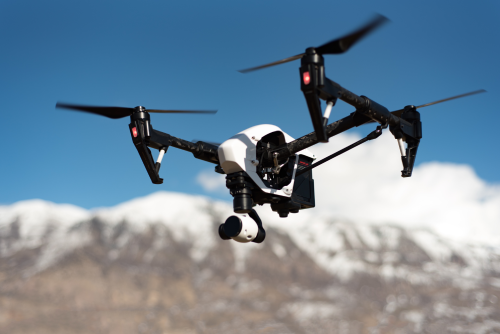
Great drone footage is usually less about an expensive aircraft and more about light, planning, and control. If you want to know how to shoot better footage with beginner drones, the biggest upgrades come from simple habits: shoot at the right time, use sensible camera settings, fly smoothly, and capture a short planned sequence instead of random clips.
That is especially true in India, where harsh midday sun, haze, wind, crowded environments, and mixed lighting can make beginner drone footage look worse than it should. The good news: you can improve a lot without buying a new drone.
Quick Take
- Shoot in good light, especially early morning or late afternoon.
- Use a normal frame rate for normal video: usually 25 fps or 30 fps.
- Keep shutter speed roughly double your frame rate for natural-looking motion blur.
- Keep ISO low to avoid noisy, soft footage.
- Lock white balance if your drone allows it, so colours do not shift mid-shot.
- Fly in Cine or smooth mode when available, and make slower stick inputs.
- Record simple, repeatable moves like reveals, slow push-ins, and side passes.
- Hold each shot for a few seconds before and after the movement.
- Plan 4 to 6 shots before takeoff so your video tells a story.
- In India, always verify the latest DGCA and Digital Sky guidance, airspace limits, and local permissions before flying.
Why beginner drone footage often looks weak
Most bad-looking drone video is not caused by the camera. It usually comes from one or more of these issues:
- Flying too fast
- Shooting in harsh light
- Letting the camera stay on full auto
- Turning, rising, and moving forward all at once
- Recording lots of clips with no subject or story
- Over-editing with too much sharpening, saturation, or transitions
Beginner drones usually have small camera sensors. That means they struggle more in very bright and very dark scenes. Their dynamic range, which is the camera’s ability to keep detail in both highlights and shadows, is limited compared with larger professional systems.
So instead of forcing a small camera to do everything, work with its strengths:
- Good light
- Simple compositions
- Slow movement
- Controlled exposure
- Short, usable clips
If you nail these basics, even an entry-level drone can produce footage that looks clean and polished.
Start before takeoff: plan the shot, not just the flight
A lot of beginners launch first and think later. That usually leads to wasted battery, random clips, and rushed decisions.
Use this quick pre-shoot workflow.
1. Pick one clear subject
Do not fly just because the view is wide. Choose a subject:
- A farmhouse
- A café or homestay
- A lake edge
- A warehouse or factory exterior with permission
- A sports ground
- A line of trees, road, or river bend
The drone should show something, not just empty space.
2. Choose the right time of day
For most beginner drones, light matters more than resolution.
Best times:
- Early morning
- Late afternoon
- Golden hour, when the sun is low and the light is softer
Avoid harsh noon light if possible, especially in summer. In many parts of India, midday light creates:
- Blown-out skies
- Hard shadows
- Washed-out colours
- Hazy, flat-looking landscapes
If you must shoot midday, keep compositions simple and avoid pointing too close to the sun.
3. Check wind and visibility
Beginner drones are easily affected by gusts.
Be extra careful in:
- Coastal areas
- Open fields
- Hill stations and mountain roads
- Rooftop launch spots
- Monsoon season or pre-storm conditions
Even if the drone can stay in the air, footage may look shaky or jerky in wind.
4. Clean the lens
A tiny smudge can ruin contrast and make footage look soft. This is one of the easiest fixes and one of the most ignored.
Before every flight:
- Clean the lens gently with a proper microfiber cloth
- Check for fingerprints
- Remove dust from the gimbal area
5. Set your home point and return-to-home height
This is a safety step, but it affects your footage too. If you are rushed or worried about battery or signal, you will fly badly.
Before takeoff:
- Confirm GPS lock if required by your drone
- Set a safe return-to-home altitude with nearby buildings or trees in mind
- Check battery levels in the drone and controller
- Ensure enough free storage on the memory card
6. Decide your shot list before the first takeoff
For a short reel or property video, 4 to 6 planned shots are enough.
Example shot list for a small resort or farmhouse:
- Wide establishing shot from a distance
- Slow rise to reveal the full property
- Side pass showing the entrance or front face
- Top-down shot of the key area
- Slow pull-back at sunset
- Optional closing shot with movement away from the location
That is far better than recording 20 random clips.
Camera settings that matter most
You do not need to obsess over every menu item. But a few settings make a big difference.
Best starting camera settings for beginner drones
| Setting | Good starting point | Why it helps |
|---|---|---|
| Resolution | Highest practical resolution your device can edit smoothly | Gives more detail and room to crop slightly in editing |
| Frame rate | 25 fps or 30 fps for normal video; 50/60 fps only for slow motion | Keeps motion natural and editing simpler |
| Shutter speed | Around double the frame rate | Creates natural motion blur instead of choppy movement |
| ISO | Lowest possible | Reduces noise and preserves detail |
| White balance | Lock it instead of Auto when possible | Prevents colour shifts during a shot |
| Exposure | Slightly protect highlights if the sky is very bright | Helps avoid blown-out clouds and skies |
| Colour profile | Normal for easy editing; flat/log only if you know how to grade | Avoids dull footage that you cannot finish properly |
Frame rate: 25 fps, 30 fps, or 60 fps?
Frame rate means how many frames, or individual images, the camera records per second.
A simple guide:
- Use 25 fps or 30 fps for normal cinematic-looking video
- Use 50 fps or 60 fps only if you plan to slow the clip down in editing
In India, 25 fps and 50 fps can be useful around artificial lighting because our mains electricity is commonly 50 Hz. That can help reduce flicker under some streetlights, decorative lighting, or indoor-outdoor event setups. For daylight outdoor shooting, either 25 fps or 30 fps can work well.
A common mistake is shooting everything in 60 fps even when you will not slow it down. That often makes motion look more like action footage than cinematic footage.
Shutter speed: the setting most beginners ignore
Shutter speed controls how long each frame is exposed to light.
For natural-looking motion blur, use this as a starting rule:
- 25 fps: around 1/50
- 30 fps: around 1/60
- 50 fps: around 1/100
- 60 fps: around 1/120
Why this matters: if shutter speed is too fast, movement looks sharp and stuttery. Drone footage then feels nervous and cheap, especially during pans and side movement.
Do you need ND filters?
Often, yes.
An ND filter, short for neutral density filter, is like sunglasses for the camera. It reduces light so you can keep shutter speed in the right range.
They are especially useful on beginner drones because many have:
- Fixed apertures
- Small sensors
- Very bright daytime conditions in India
If your footage looks too crisp and jittery in daylight, an ND filter can help. If you only fly casually and your drone stays mostly on auto, you can still get decent results without one. But once you start caring about smoother motion, ND filters are worth learning.
Keep ISO low
ISO increases brightness digitally, but it also increases image noise.
As a rule:
- Keep ISO at the lowest setting possible
- Avoid pushing ISO high unless you truly need the shot
- Do not expect clean results from a small sensor after sunset
Beginner drones do best in good light. If the scene is too dark, the answer is usually better timing, not a higher ISO.
Lock white balance
White balance controls how warm or cool the footage looks.
If white balance stays on Auto, the drone may keep changing colour during the shot. You will notice this as the image shifting from warm to cool or vice versa while flying.
If your drone allows manual white balance:
- Set it once for the scene
- Keep it locked for all clips in that location
This makes editing much easier and gives your video a more professional look.
Should you use auto exposure?
If you are completely new, auto exposure is fine for your first few flights. But the next step is learning basic manual control.
If your drone allows it:
- Keep frame rate fixed
- Set shutter speed based on frame rate
- Keep ISO low
- Use an ND filter when daylight is too bright
If manual control feels too complicated, at least watch your highlights. Bright skies and white buildings are easy to overexpose on beginner drones.
Fly smoother: the biggest upgrade is in your thumbs
Smooth footage usually comes from slow, deliberate movement.
The easiest fix for most beginners is this: fly slower than you think you need to.
Use Cine mode or smooth mode
Many beginner drones offer a flight mode with slower response and gentler braking. Use it for video whenever possible.
It helps by:
- Reducing sudden stick reactions
- Making starts and stops less jerky
- Giving you more precise framing
If your drone does not have Cine mode, just use smaller stick inputs.
One movement at a time
Many bad clips include too much happening at once:
- Moving forward
- Turning left
- Climbing
- Tilting the gimbal down
That is hard to control and hard to watch.
Start with one or two movements only. For example:
- Fly forward slowly
- Or move sideways slowly
- Or rise slowly while tilting the camera down a little
Simple moves look better than busy moves.
Pause before and after each shot
This small habit improves editing immediately.
For every shot:
- Start recording
- Hold still for 2 to 3 seconds
- Do the movement
- Hold still again for 2 to 3 seconds
Those extra seconds make cutting much easier.
Easy shot types that look good on beginner drones
Reveal shot
Start with a tree, wall, rooftop edge, or foreground object blocking part of the view. Then rise slowly or move sideways to reveal the subject.
Best for:
- Resorts
- Homes
- Cafés
- Landscapes
- Water bodies
Why it works: it creates anticipation and gives the scene depth.
Slow push-in
Fly gently toward the subject.
Best for:
- Buildings
- Monuments from legal distance and where flying is permitted
- Boats
- Temple tanks or open grounds where allowed
Keep it slow. A small push-in feels more elegant than a long aggressive run.
Pull-back
Move backward and slightly upward to show the surroundings around your subject.
Best for:
- Isolated homes
- Farms
- Hill viewpoints
- Event venues, but never over uninvolved crowds
This is one of the easiest “cinematic” shots to get right.
Side pass
Fly parallel to the subject from left to right or right to left.
Best for:
- Building exteriors
- Roads with safe lateral distance
- Tree lines
- Walls, water edges, or industrial sites with permission
Side movement creates strong parallax, meaning objects at different distances move across the frame at different speeds. That gives the shot depth.
Orbit
Circle around a subject while keeping it framed.
This looks great, but it is harder than it seems. Keep a safe distance and try it only in open spaces.
Do not attempt close orbits around:
- Trees
- Wires
- Poles
- Unfamiliar structures
- People
Top-down shot
Point the camera straight down and move very slowly.
Best for:
- Fields
- Patterns in roads or rooftops
- Water edges
- Courtyards
- Construction progress with permission
Top-down shots work best when the scene has strong shapes or repeating lines.
Composition tips that instantly improve your footage
Keep the horizon level
A crooked horizon makes even sharp footage look amateur. Check it before you record.
Use the rule of thirds
Instead of placing the subject in the exact centre every time, place it slightly off-centre using the screen grid if your app provides one.
This makes the frame feel more balanced and intentional.
Include foreground when possible
A tree branch, wall edge, rooftop line, or field in the foreground adds depth. Without foreground, aerial footage can feel flat.
Change height for a reason
Do not always fly high just because you can.
Low to medium altitude often looks better because:
- It creates stronger depth
- Subjects feel larger
- Movement is more noticeable
- The footage feels less generic
High altitude is useful for context, but not every shot should be a high wide.
Give the viewer a subject
Beautiful scenery alone is not always enough. Ask yourself: what should the viewer notice first?
It could be:
- A building
- A road curve
- A boat
- A person from a safe legal distance and with permission
- A line of palm trees
- A brightly coloured roof in an otherwise muted scene
Build a mini story instead of collecting random clips
Good drone videos are usually sequences, not isolated hero shots.
A simple 5-shot structure works for most beginners:
- Establishing shot: show the whole location
- Reveal shot: introduce the main subject
- Closer movement shot: add detail or shape
- Top-down or side pass: add variety
- Closing pull-back or rise: end cleanly
For example, if you are shooting a permitted homestay property:
- Start with a wide morning shot of the location
- Reveal the building from behind trees
- Make a side pass across the front
- Add a top-down shot of the courtyard
- End with a sunset pull-back
That sequence feels complete. It can work for a reel, ad, or portfolio clip.
Safety, legal, and privacy checks in India
This article is about better footage, but good footage is never worth unsafe or non-compliant flying.
Drone rules in India can depend on the drone category, location, height, equipment, and the purpose of flying. Rules and platform processes can change. Before any flight, especially for commercial work, verify the latest official guidance from DGCA, Digital Sky, and any local authority requirements.
At a practical level:
- Do not assume a location is allowed just because you saw it on social media
- Avoid airports, heliports, military areas, and other sensitive zones
- Do not fly over uninvolved people, moving traffic, or crowded public spaces
- Get permission from the property owner or organiser when filming private property, resorts, factories, campuses, weddings, or business premises
- Respect privacy; do not hover near homes, windows, terraces, or balconies
- Maintain visual line of sight
- Watch for birds, kites, cables, poles, and towers
- Be extra cautious in low light, wind, and areas with poor GPS
Also remember that obstacle sensors are not magic. Many beginner drones do not detect thin wires reliably, and some sensors perform poorly:
- In low light
- When flying sideways or backward
- Near reflective surfaces
- Around branches and small objects
If a shot requires guessing whether you will clear an obstacle, it is not a beginner shot.
A simple editing workflow that makes footage look better
Editing does not have to be complicated. Even basic editing can make beginner drone clips look much better.
1. Keep only the best clips
Do not use every clip you shot. Select only the cleanest and most stable ones.
2. Trim aggressively
Remove:
- Jerky starts
- Awkward stops
- Reframing
- Random yaw corrections
Use the smooth middle section of each shot.
3. Slow down only the right clips
If you shot at 50 or 60 fps, slow those clips in editing for smoother motion. Do not slow down footage too much if it was not shot for that purpose.
4. Correct colour lightly
Start with small adjustments:
- Contrast
- Highlights
- Shadows
- White balance
- Saturation
Do not overdo clarity, sharpening, or saturation. Over-processed drone footage is very common and rarely looks premium.
5. Match clips
If one shot is cool and another is warm, or one is much brighter, the edit feels messy. Try to make neighbouring clips look consistent.
6. Use simple transitions
Most drone videos need cuts, not flashy transitions. A clean sequence with good shot order looks more professional than heavy effects.
Common mistakes beginners make
Flying too fast
Fix: use slower inputs and shorter moves.
Shooting at noon in harsh light
Fix: go earlier or later whenever possible.
Using auto white balance for every clip
Fix: lock it for the scene if your drone allows.
Recording everything from very high altitude
Fix: mix wide shots with lower, closer shots that show depth.
Trying advanced orbits near obstacles
Fix: practice in open spaces first.
Overusing 60 fps
Fix: use 25 or 30 fps for normal video and reserve higher frame rates for slow motion.
Forgetting the lens is dirty
Fix: clean it before each flight.
Tilting and turning too much during one shot
Fix: simplify to one clear movement.
Trusting obstacle sensors too much
Fix: leave more space than you think you need.
Capturing random clips with no sequence
Fix: write a 5-shot plan before takeoff.
FAQ
Do I need a 4K drone to get good footage?
No. Good light, smooth flying, and better composition matter more than resolution alone. A well-shot lower-resolution clip often looks better than shaky 4K.
Is 25 fps or 30 fps better in India?
Either can work outdoors. If you are filming around artificial lighting, 25 fps can be a safer choice because it may reduce flicker under some 50 Hz lighting conditions common in India.
Are ND filters necessary for beginner drones?
Not strictly necessary, but very useful. They help you maintain better shutter speed in bright daylight, which makes motion look smoother and less choppy.
Should I use a flat or log colour profile?
Only if you are comfortable editing and colour grading. If not, the normal profile is often the better choice because it gives you a more finished image straight away.
What is the best mode for shooting video?
Usually Cine mode or the smoothest available flight mode. It makes your movements gentler and more predictable.
How high should I fly for cinematic shots?
There is no magic height. Many cinematic shots are actually done at relatively low to medium altitude because they show more depth and motion. Always stay within the latest legal and safe limits for your location.
Can I shoot in windy conditions?
You can sometimes fly safely in light wind, but footage quality often suffers before safety becomes the main issue. If the drone is fighting the wind constantly, the shot will usually look poor. Wait for calmer conditions if possible.
How many shots do I need for a 30-second reel?
Usually 5 to 8 good shots are enough. A short video feels stronger when every clip has a purpose.
Why does my footage look jerky even when the drone is stable?
The usual reasons are shutter speed that is too fast, flying too quickly, or making sudden yaw movements. Slower flight and better exposure control often fix this.
What to do on your very next flight
Do not try to improve everything at once. On your next practice session, focus on just five things:
- Fly at sunrise or late afternoon
- Use Cine mode
- Shoot one frame rate consistently
- Capture only five planned shots
- Hold every shot steady before and after the move
That alone will make a bigger difference than chasing a more expensive drone. Better footage with beginner drones comes from discipline, not drama.
