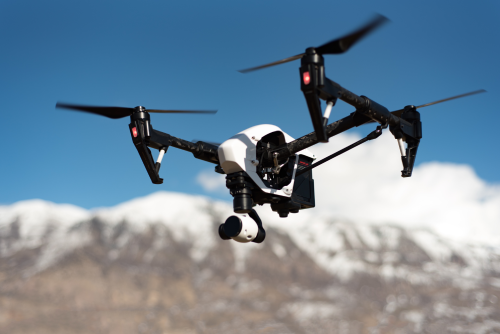
A drone flyover looks simple, but good ones are rarely accidental. If you want to learn how to shoot better drone flyovers, the real improvement comes from planning the route, controlling speed, and using the camera deliberately rather than just flying forward and hoping for a nice result.
For creators in India, flyovers can work beautifully over lakes, forts, resorts, farmland, coastlines, roads, and real estate sites, but they also demand extra care around people, traffic, wires, birds, and restricted areas. A clean, safe 8-second pass is more valuable than a flashy but messy one.
Quick Take
- A strong drone flyover needs one clear subject, one clear movement, and smooth speed.
- Fly slower than feels natural. Most beginners ruin flyovers by rushing.
- Early morning and late afternoon usually give better light and lower contrast than harsh midday sun.
- Lock white balance and keep ISO low so your footage looks consistent.
- Use an ND filter if you shoot in bright sunlight and want natural-looking motion blur.
- Avoid combining too many movements at once. Forward motion plus a gentle gimbal tilt is often enough.
- Do not fly over crowds, moving traffic, or sensitive areas. Always verify the latest Indian rules, airspace, and local permissions before flying.
- Shoot one safe “master” take first, then record small variations.
What a good drone flyover actually looks like
A flyover shot is an aerial pass where the drone moves over, past, or toward a subject in a smooth, intentional way. It could be a straight pass over a road, a low glide over a field, a rise above trees to reveal a fort, or a sideways move along a building.
The best flyovers usually have four qualities:
-
A clear subject
The viewer should instantly understand what the shot is about: a temple complex, a river bend, a hotel entrance, a cliff edge, or a farm pattern. -
A smooth path
The drone should feel like it is on rails. No wobble, no random corrections, no sudden jerks. -
A reason for the movement
The movement should reveal scale, shape, texture, or location. If the camera is moving but not showing anything new, the shot feels empty. -
A clean beginning and end
Good footage gives you editing room. Start recording before the move begins and keep recording after it finishes.
A useful mindset: a flyover is not about showing how high or fast your drone can go. It is about guiding the viewer’s eye.
Beginner-friendly flyover styles
Not every flyover needs to be a literal overhead pass. In fact, many better-looking shots are slightly off-axis because they create more depth.
| Flyover style | Best use | Why it works | Main risk |
|---|---|---|---|
| Straight forward pass | Roads, river edges, farm rows, driveways | Simple, clean, easy to edit | Can look flat if there is no foreground |
| Rise reveal | Hidden fort, resort, lake, hill view | Creates surprise and scale | Easy to overdo altitude change |
| Side pass | Buildings, ghats, coastline, tree lines | Shows shape and length | Subject can drift out of frame |
| Forward pass with gimbal tilt | Temple, monument, real estate, landscape | Adds depth without aggressive flight | Jerky tilt can spoil the shot |
| Backward pull-over | Beach, valley, event venue, open land | Reveals surroundings dramatically | Harder to judge obstacles behind |
If you are just starting, master the straight pass and rise reveal first.
Plan the shot before take-off
Good flyovers are mostly won before the drone leaves the ground.
Start with one subject and one idea
Ask yourself: what is the viewer supposed to notice?
Examples:
- A resort surrounded by greenery
- A fort emerging from morning mist
- Symmetrical crop lines in a farm
- A winding road through hills
- A lakeside property with clear approach roads
- A ghat or waterfront with strong geometry
If the scene has too many competing elements, the flyover will feel confused. Pick one visual anchor and let everything else support it.
Walk the route on foot first
Even if you know the location, a quick ground check helps.
Look for:
- Electric wires and utility poles
- Mobile towers
- Trees with uneven top height
- Cranes, flagpoles, and masts
- Bird activity
- Pedestrians, vehicles, and animals
- Dusty or unstable take-off spots
- Safe landing area if the battery drops faster than expected
This is especially important in Indian urban and semi-urban environments, where wires and rooftop structures are often harder to spot from the air than you expect.
Choose the best time of day
Light affects drone flyovers more than many beginners realise.
Early morning
Usually best for:
- Softer shadows
- Cleaner sky colour
- Lower traffic and fewer people
- Calmer wind in many areas
Watch for winter haze in North India and some city outskirts. A flyover through heavy haze can look washed out unless you are using it intentionally for mood.
Late afternoon
Great for:
- Warm tones
- Long shadows
- Strong texture in buildings, fields, and roads
Be careful not to fly directly into a low sun unless you want silhouette or flare.
Midday
Usually the hardest time for a flyover because:
- Light is harsh
- White buildings can overexpose
- Shadows become ugly and short
- Water and reflective roofs can blow out highlights
Midday can still work for top-down shots or highly graphic scenes, but it is not the easiest time to make a flyover look cinematic.
Monsoon and coastal conditions
Clouds can look dramatic, but wind and moisture are the bigger concerns. Do not push your drone in gusty conditions just because the sky looks nice.
Think about background, not just subject
A good flyover is often ruined by what is behind the subject.
For example:
- A beautiful farmhouse may have distracting tin roofs behind it
- A temple reveal may include ugly poles or construction frames
- A river scene may be cluttered with parked vehicles
- A beach pass may have crowds, tents, or garbage in the wrong part of the frame
Move your take-off point or change the flight line slightly to improve the background. Even a small shift can clean up the shot.
Safety and legal checks in India
A “better” flyover is never worth unsafe or non-compliant flying.
Before any flight in India:
- Verify the latest DGCA and Digital Sky requirements for your drone category, use case, and location.
- Confirm that the area is legal to fly in and not restricted or sensitive.
- Avoid airports, heli routes, defence and government-sensitive locations, border areas, and any place where drone operations are prohibited or tightly controlled.
- Do not fly over crowds, public gatherings, active traffic, or densely packed people.
- If you are filming private property, event venues, resorts, factories, or heritage locations, get the necessary permission from the owner or authority.
- Respect privacy. Do not film people in a way that is intrusive or identifiable without a valid reason and consent where appropriate.
- Maintain visual line of sight unless specifically permitted under applicable rules and operations.
- Set a safe return-to-home height after checking real obstacles in the area.
- Keep battery margin for a second approach or a safe return, not just the ideal shot.
- If possible, use a spotter when flying in complex locations.
Rules and operational requirements can change. Always verify the latest official guidance before you fly.
Camera settings that make flyovers look smoother
Good flight control matters, but camera setup is what turns a basic pass into usable footage.
Use a frame rate that suits the final video
If you want a natural cinematic feel:
- 24 fps or 25 fps works well for most travel, landscape, and property flyovers.
- 50 fps or 60 fps is useful if you plan to slow the shot down in editing.
For many creators in India, 25 fps is a practical choice if the rest of the project is also being edited at 25 fps. The key is consistency across the video.
Keep shutter speed under control
Shutter speed controls how sharp each frame looks during motion.
A very fast shutter makes movement look choppy and harsh. A more balanced shutter gives a bit of natural motion blur, which makes flyovers feel smoother.
As a basic rule, many videographers aim for a shutter speed roughly around double the frame rate. In bright Indian sunlight, that is often impossible without an ND filter, which is like sunglasses for the camera lens.
If you do not have an ND filter, you can still shoot, but expect the motion to look more crisp and less cinematic.
Keep ISO low
ISO is your camera’s light sensitivity. Lower ISO usually means cleaner footage with less noise.
For most daytime flyovers:
- Keep ISO as low as possible
- Avoid auto settings that suddenly raise ISO during the shot
Lock white balance
White balance controls colour temperature. If left on auto, your footage may shift from cool to warm mid-shot as the camera sees different parts of the scene.
That is one of the easiest ways to make a flyover look amateur.
Set white balance manually and keep it fixed for that scene.
Use standard colour if you do not grade footage
Many drones offer flat or log colour profiles meant for colour grading later. These can preserve more detail, but they also need editing skill.
If you are a beginner:
- Use a standard or normal colour profile if you want quick, reliable results
- Use log only if you know how to correct contrast, colour, and saturation in post
Check exposure before every take
Look closely at:
- White walls
- Clouds
- Reflective water
- Concrete roads
- Bright rooftops
If those highlights are blown out, you often cannot recover them later.
How to shoot better drone flyovers step by step
This is the simplest repeatable workflow for beginners and working creators.
1. Pick one shot type
Do not improvise five ideas at once. Decide in advance:
- Straight pass
- Rise reveal
- Side pass
- Forward pass with tilt
- Backward reveal
One clear plan will give you better footage than random movement.
2. Mark your start and end points
Choose:
- Where the shot begins
- Where the subject should appear
- Where the shot ends
You can use visual markers like a tree, gate, bend in the road, or edge of a building. This makes your movement more intentional.
3. Set a safe altitude and path
Think safety first, then aesthetics.
Avoid flying too low just to look dramatic if the area has:
- Hidden wires
- Tall grass hiding poles
- Birds
- Moving people
- Uneven terrain
- Wind gusts near structures or cliffs
Remember: a lower shot often looks better, but only if it is safe and controlled.
4. Start recording early
Hit record before you begin the move.
Give yourself:
- 2 to 3 seconds of stable footage before motion
- 2 to 3 seconds after the move ends
This extra padding is extremely useful in editing.
5. Ease into the movement
Do not slam the sticks forward.
Start gently, build speed gradually, then hold that speed. A smooth acceleration looks far more professional than an instant jump into motion.
6. Fly slower than feels comfortable
This is one of the biggest secrets behind better drone flyovers.
When you are piloting, a moderate speed often feels slow. But on screen, it usually looks right.
If your footage keeps feeling amateur, try this first: do the same shot at about 70 percent of your usual speed.
7. Keep the movement simple
Most bad flyovers combine too many inputs:
- Forward movement
- Yaw
- Altitude change
- Gimbal tilt
- Side drift
That is too much for a beginner to control smoothly.
A better formula is:
- Forward movement as the main action
- One secondary movement only, such as a gentle gimbal tilt
Yaw means rotating the drone left or right.
Gimbal tilt means angling the camera up or down using the motorised camera mount.
Use both carefully. Overuse makes the shot look busy.
8. Use the gimbal to create the reveal
A small downward or upward tilt adds polish.
For example:
- Start slightly down on a path or foreground texture
- Move forward
- Slowly tilt up to reveal the subject
This makes the flyover feel cinematic without aggressive drone movement.
The key is subtlety. If the gimbal tilt is obvious, it often looks mechanical.
9. Add depth with foreground
One reason some flyovers look flat is that everything is far away.
Depth improves when a nearby element passes through the frame, such as:
- Trees
- Fence lines
- Rocks
- Water edges
- Roof corners
- Field rows
This creates parallax, where near objects move faster across the frame than distant ones. That difference makes the image feel more three-dimensional.
Do this only with safe clearance and strong obstacle awareness.
10. Hold the horizon level
A tilted horizon instantly makes drone footage feel sloppy.
Check horizon level before flight and review the first clip on location. If your drone allows horizon correction or gimbal calibration, use it before important shoots.
11. Repeat the shot in small variations
After your safe master take, shoot two or three variations:
- Slightly lower
- Slightly slower
- Same path with more foreground
- Same move at a different gimbal angle
Do not leave with only one version.
Practical flyover setups that work well
For real estate and resorts
Best move: – Start outside the gate or driveway – Slow forward movement – Gentle rise to reveal the property and surroundings
Tips: – Shoot in soft light – Keep vehicles and people controlled if possible – Avoid flying over occupied areas unless fully safe and permitted
For forts, temples, and heritage-style locations
Best move: – Start with foreground trees, walls, or steps – Rise slowly to reveal the structure
Tips: – Verify local permissions and restrictions – Avoid intrusive flying around visitors – Watch for birds and flagpoles
For farms, orchards, and plantations
Best move: – Side pass or straight pass along rows
Tips: – Strong patterns look best – Golden hour light helps bring out texture – Watch for wires and agricultural equipment
For beaches, lakes, and coastlines
Best move: – Forward pass along the edge or backward reveal from waterline to wider coast
Tips: – Wind can shift quickly – Salt air and spray are risky for drones – Avoid crowds and nesting bird zones
For roads and approach shots
Best move: – Slightly offset forward pass instead of directly above the road
Tips: – Never prioritise the shot over safety near active traffic – A side-offset angle often looks better than a literal top pass – Avoid lingering over moving vehicles or public roads if unsafe or non-compliant
Editing tips that improve flyovers fast
Even a good drone flyover becomes stronger with clean editing.
Trim aggressively
Most flyovers are better at 5 to 10 seconds than 20 seconds.
Keep the best part: – Clean movement – Strong reveal – No corrections – No awkward stop
Fix the horizon and exposure first
Before adding fancy effects, correct:
- Horizon tilt
- Basic contrast
- Highlight control
- White balance consistency
Use stabilisation lightly
Some software stabilisation can help, but too much can warp the frame. If the shot is badly flown, heavy stabilisation usually does not save it.
Avoid overusing speed ramps
Speed ramping can be effective, but many beginners use it to hide weak flying. A naturally smooth flyover almost always looks better than an aggressively ramped one.
Match your project frame rate
Do not mix frame rates carelessly. Decide your timeline first, then conform slow-motion clips properly.
Think about delivery format
If your final video is for vertical social media:
- Compose a little wider if possible
- Keep the subject more centered than you would for a widescreen edit
- Avoid very wide side passes if you know you will crop heavily later
Common mistakes that ruin drone flyovers
Flying too fast
The most common issue. Fast footage feels nervous and gives the viewer no time to absorb the scene.
Using every control at once
Forward, yaw, climb, and tilt together usually create a messy result.
Shooting in harsh light
Even good flying can look poor at noon with hard shadows and blown highlights.
Leaving white balance on auto
Colour shifts mid-shot are distracting and difficult to fix cleanly.
Flying too high
Higher is not always better. Excess height often removes depth and emotional connection.
Forgetting foreground
A shot with no near object can feel flat and lifeless.
Starting and stopping abruptly
The move should ease in and ease out.
Not reviewing footage on location
Do not assume the shot worked. Check focus, horizon, exposure, and smoothness before leaving.
Chasing dramatic low passes without safety margin
This is where wires, branches, and poor judgment cause problems. A safer shot repeated well is always the better choice.
Ignoring the environment
Wind, birds, dust, and signal interference can all affect the move. The shot plan must adapt to conditions.
A simple practice routine for beginners
If you want to improve quickly, do this on your next three sessions:
- Pick one open, legal location.
- Shoot only one subject.
- Record the same flyover three ways: – Straight pass – Straight pass with gentle tilt – Rise reveal
- Keep each clip under 10 seconds.
- Review them on a larger screen later.
- Ask: – Was the horizon level? – Was the speed consistent? – Did the subject stay clear? – Was the lighting good? – Which version felt calm and deliberate?
This kind of repetition teaches more than trying ten random cinematic moves in one session.
FAQ
Is a flyover shot always supposed to go directly over the subject?
No. Some of the best flyovers go past or slightly beside the subject. A direct overhead pass can work, but it is not always the most cinematic or the safest option.
What is the ideal speed for a drone flyover?
There is no universal number because it depends on altitude, lens field of view, and subject size. As a rule, most beginners should slow down. If the shot feels slightly slow while flying, it often looks right in the final video.
Should I shoot at 24 fps, 25 fps, or 30 fps?
Use the frame rate that matches your overall project. For many creators, 24 or 25 fps gives a more cinematic feel. If you want slow motion, shoot at 50 or 60 fps and edit accordingly.
Do I really need ND filters for drone flyovers?
Not always, but they help a lot in bright daylight. They let you keep shutter speed in a more natural range so movement looks smoother and less harsh.
Can a beginner drone shoot good flyovers?
Yes. Good flyovers depend more on planning, light, smooth control, and clean framing than on owning the most expensive drone. A modest drone in skilled hands will often outperform a premium drone flown carelessly.
How low should I fly for a better-looking pass?
Low shots often look more dramatic because they create depth, but only if the route is clear and safe. Never choose a low altitude unless you have checked for wires, branches, poles, and people.
Are intelligent flight modes good for flyovers?
They can help, especially for repeatable movement, but do not trust them blindly. Test them in open areas first, understand how your drone behaves, and stay ready to take manual control.
My flyovers look jerky even when I fly carefully. Why?
Common reasons include fast shutter speed, sudden stick input, wind, poor gimbal settings, or small corrections during the shot. Often the fix is a combination of slower movement, better light control, and simpler shot design.
Can I use flyovers for weddings, events, or public gatherings?
Only with proper safety planning, permissions, and compliance checks. Extra caution is needed around people. Do not treat event flyovers casually, and never prioritise the shot over crowd safety or privacy.
What is the easiest flyover to master first?
A straight forward pass over or toward a clear subject, at steady altitude, with fixed white balance and slow speed. Once that looks clean, add a gentle gimbal tilt.
Final takeaway
To shoot better drone flyovers, do less but do it more deliberately: choose one subject, fly one clean path, slow down, lock your camera settings, and shoot in better light. On your next outing, aim for a single safe 8-second pass that feels calm and intentional; that one clip will teach you more than a whole battery of rushed footage.
