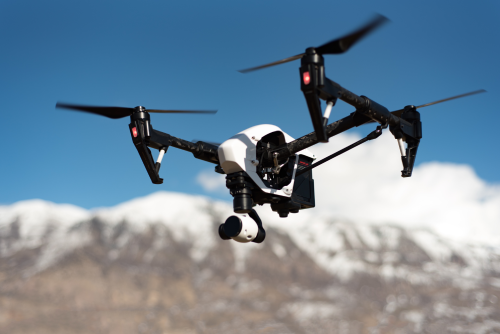
Flying near water is one of the best ways to get dramatic drone footage, but it is also one of the easiest ways to lose a drone. If you want to learn how to fly a drone near water safely, the key is to treat water as a risk multiplier: wind is less predictable, reflections can confuse sensors, and a small mistake leaves you with almost no recovery margin.
Quick Take
- Water looks calm from the shore, but drone conditions over water are often tougher than they appear.
- Launch and land from stable, dry ground whenever possible. For beginners, avoid taking off from boats, jetties, or wet sand.
- Check the latest Indian airspace and compliance requirements before every flight. Also verify local restrictions at beaches, dams, ports, wetlands, resorts, ghats, and protected areas.
- Do not rely on the water surface for low flying. Reflections, waves, and poor depth perception make low passes risky.
- Keep more battery reserve than you would on land. Wind over water can make the return leg slower and more power-hungry.
- Set your home point correctly and confirm your Return-to-Home height is high enough to clear nearby trees, poles, masts, bridges, or buildings.
- Saltwater is especially dangerous. Even sea spray can damage motors, bearings, and electronics over time.
- If the drone gets wet, do not power it on again to “test” it. Isolate the battery safely and get the drone checked before reuse.
Why flying near water is riskier than flying over land
A drone crash on a field may mean broken props. A drone crash in water often means total loss.
Water also changes how you judge distance and height. Over land, trees, roads, and shadows help your eyes estimate position. Over water, especially calm water, you get fewer visual references. That makes it easier to descend too low without realising it.
Some drones also behave less predictably close to water because downward vision sensors and optical positioning systems may struggle with:
- reflections
- clear or featureless water
- ripples and moving waves
- low light
- glare from the sun
Here is a practical way to think about the main risks:
| Risk | Why it happens near water | What to do |
|---|---|---|
| Wind drift | Open water has fewer wind breaks, and gusts can be stronger than they feel on shore | Check wind before take-off, fly conservatively, and return early |
| Poor depth judgement | Water gives fewer visual cues than land | Avoid low skimming passes until you are very experienced |
| Sensor confusion | Reflections, waves, and low texture can affect positioning | Do not rely on downward sensors close to the surface |
| No safe emergency landing | There may be nowhere dry to put the drone down | Plan a route that always gives you a landward recovery option |
| Corrosion | Salt spray and moisture can damage metal parts and electronics | Keep away from spray and inspect the drone after flight |
| Orientation loss | Sky and water can blend into one background | Keep the drone close enough to see clearly and use the map view if needed |
The most important mindset is simple: when flying near water, you are not just trying to get the shot. You are trying to keep your margin for error.
Before you fly: legal and location checks in India
Waterfront locations in India can be beautiful, but many are also sensitive, crowded, or locally controlled.
Before flying, verify the latest official guidance that applies to your drone, your use case, and your location. Rules and processes can change, so do not depend on old screenshots, social media tips, or a friend’s previous experience. Check the current DGCA and Digital Sky guidance, and make sure your drone and operation meet any applicable Indian requirements, including any category-specific or NPNT-related obligations where relevant.
Also check for local restrictions or permissions. This matters because many water-adjacent areas are not just “open spaces.” They may involve:
- beaches with local authority controls
- ports, harbours, and shipping zones
- coastal security or defence-sensitive areas
- dams and reservoirs
- wetlands and bird habitats
- riverfront promenades and tourist zones
- temple ghats and religious gatherings
- resort properties and private land
- national parks, sanctuaries, or eco-sensitive areas
If people are bathing, boating, fishing, or gathered for an event, think beyond legality and consider safety and privacy. Even if flying is technically possible, it may still be a bad idea.
As a rule, avoid flights:
- close to crowded beaches and ghats
- near rescue activity, disaster response, or flood operations
- over people on boats or in the water
- near nesting birds or large bird activity
- in spray, drizzle, or monsoon gusts
If you are unsure, do not guess. Verify first, or choose another location.
Pre-flight setup: what to check before take-off
A safe flight near water is mostly decided before the motors even start.
1. Check real conditions, not just the weather app icon
A sunny icon does not mean a safe flight.
Look at:
- wind speed and gusts
- visibility and haze
- chance of drizzle or sea spray
- tide or surf conditions if flying near the coast
- river current or mist near waterfalls
- how crowded the area will become in the next 15 to 30 minutes
At beaches and coastlines, wind often increases later in the day. Early mornings are often calmer, but do not assume. Check the actual conditions.
2. Pick a proper launch and landing spot
Your safest option is a dry, flat area on land with a clear climb-out path.
Good launch spots are:
- above the waterline
- clear of loose sand, dust, grass, or mud
- away from metal railings, parked vehicles, and benches
- away from crowds and curious children
- clear of wires, poles, flags, and trees
Use a landing pad if possible. This is especially useful on beaches, riverbanks, and dusty lake edges, where sand or grit can get into motors and the gimbal.
3. Inspect the drone carefully
Do not treat a water-side flight like a casual park flight.
Check:
- propellers for chips, bends, or hairline cracks
- motors for smooth movement
- arms and hinges for play or looseness
- battery seating and battery health
- camera and gimbal movement
- memory card space
- controller charge and phone/tablet battery
- lens cleanliness
If you flew near the sea on a previous day, pay extra attention to signs of salt residue or corrosion.
4. Wait for a strong positioning lock
Do not rush because the light looks good.
Before take-off, make sure:
- the drone has a good GPS lock
- the home point has updated correctly
- your map position makes sense
- any required system checks are complete
If your app asks for compass calibration, do it only in a suitable area away from metal structures, reinforced concrete, speakers, vehicles, and railings. Calibrating in the wrong place can create problems rather than solve them.
5. Set Return-to-Home properly
A poor Return-to-Home setup is a common reason for avoidable incidents.
Check:
- the home point is the place you actually want to return to
- the Return-to-Home height clears the tallest nearby obstacle with margin
- you understand what your drone will do if signal is lost
If you are near boats, masts, coconut trees, lamp posts, or bridges, this matters a lot.
For beginners, launching from a moving boat is not a good idea. Your home point may no longer match your actual position by the time you need it.
6. Plan a simple route
Do not improvise your first water flight.
A safer route is:
- Take off from land.
- Climb to a safe height.
- Fly parallel to the shoreline first.
- Test control response and wind.
- Only then consider a short move out over water.
- Keep a clear line back to shore.
This gives you more options if the wind changes or a warning appears.
7. Decide your return point before take-off
Do not wait for the low-battery warning to decide when to head back.
Over water, it is smarter to return earlier than usual. Many pilots use a larger battery reserve for water flights than for open-field flying, especially in coastal wind. The exact percentage depends on your drone, wind, and distance, so be conservative and build your own habit from flight logs.
The simple rule: be back over dry land with comfortable battery remaining, not just barely making it home.
8. Do a short test hover
After take-off, hold a steady hover nearby for a few seconds.
Use that moment to check:
- stability
- GPS health
- unusual drift
- control stick response
- gimbal behaviour
- any warning messages
If something feels off, land immediately and investigate.
How to fly a drone near water safely: step by step
1. Take off cleanly and climb with purpose
After lift-off, climb to a safe working height instead of hovering low near the surface.
Beginners often make the mistake of launching and immediately pushing toward the water at very low altitude because the reflection looks cinematic. That is exactly when sensor confusion, glare, or a sudden gust can catch you out.
A better habit is:
- lift off from land
- climb steadily
- pause
- confirm stable flight
- move out only after the aircraft feels normal
2. Fly the first leg into the wind if possible
If conditions allow, flying out into the wind and returning with the wind can make battery planning easier. The return should feel less stressful.
This is not a strict rule for every location, but it is a useful habit because it prevents the unpleasant surprise of turning back and discovering a strong headwind when your battery is already low.
3. Stay higher than you think you need to
Low flying over water looks exciting, but it removes your safety cushion.
For beginners, the safest water shot is usually not 1 metre above the surface. It is a higher, cleaner pass with enough room to recover from drift, braking changes, or momentary disorientation.
If you want a dramatic reveal, use the camera tilt and framing instead of dropping dangerously low.
4. Fly parallel to shore more often than straight out to sea
This is one of the best habits you can build.
Flying parallel to the shoreline gives you:
- a better visual reference
- more safe landing options
- easier orientation
- a quicker path back to land
If you are filming a beach, riverfront, or backwater resort, you can often get a stronger shot by tracking along the edge rather than pushing deep over open water.
5. Keep the drone close enough to read its attitude
Over water, small drones can become hard to read very quickly against a bright sky or reflective background.
If you cannot easily tell:
- which way the nose is pointing
- whether the drone is climbing or descending
- how it is reacting to wind
then it is too far away for the conditions.
Do not rely only on the screen. Maintain visual line of sight and use the app as support, not as a substitute for basic orientation.
6. Avoid sudden descents and aggressive braking near the surface
Fast descents, hard stops, and dramatic low pull-ins are riskier over water because your depth judgement is weaker and the aircraft has less room to recover.
Use slow, smooth inputs. That matters even more if you are filming in:
- strong glare
- choppy water
- sunset conditions
- haze
- mist near falls or surf
7. Watch for birds early
Water attracts birds, and birds do not always give you much warning.
If you notice kites, crows, gulls, or wetland birds becoming interested:
- gain separation calmly
- move away from their area
- return to land if needed
Do not chase birds for footage. And do not keep flying around nesting or feeding areas.
8. Land early, not heroically
A smooth, early landing is a sign of discipline, not wasted battery.
Come back while you still have time to:
- reassess wind
- make a second approach if people enter your landing zone
- avoid a rushed descent
- deal with a final warning calmly
The wrong time to discover your landing spot is now crowded or windy is when your battery is almost gone.
Best practices for common Indian water-side locations
Beaches and sea coasts
Sea flying looks great, but salt is your enemy.
Main risks include:
- strong and changing wind
- sea spray and humidity
- sand entering motors or gimbal parts
- crowds, lifeguard zones, and beach activity
- sensitive areas near ports or coastal security locations
Practical tips:
- stay well back from breaking waves and spray
- do not launch from soft or wet sand if you can avoid it
- use a landing pad
- wipe down the drone after the flight
- be more conservative with battery than you would at an inland park
Lakes, reservoirs, and backwaters
These often look calmer than beaches, but they can still be deceptive.
Common issues:
- mirror-like reflections that make height judgement difficult
- morning haze or light fog
- tourist boats
- limited landmarks over open sections
- birds near reeds and wetland edges
A good approach is to keep most of your route over or near the shoreline and use sideways movement and camera tilt for cinematic shots.
Rivers, ghats, and waterfalls
These are often the trickiest of all.
You may have to deal with:
- narrow flying corridors
- wires and poles
- bridges
- heavy public activity
- religious sensitivity and privacy concerns
- mist and turbulent air near waterfalls
Waterfalls deserve special caution. Spray can reach farther than it looks, and the air can be unstable. If you can feel fine mist where you are standing, the drone may be getting wet too.
Warning signs that mean you should land immediately
Do not push through these signals.
Land as soon as reasonably possible if you notice:
- stronger drift than expected
- repeated wind or compass warnings
- battery dropping much faster than normal
- the drone fighting to hold position
- unclear video because of mist or spray on the lens
- birds circling or approaching
- GPS inconsistency or odd map behaviour
- your landing area becoming crowded
- your own orientation becoming uncertain
One smart move can prevent a stupid loss. If the flight no longer feels easy, end it.
If something goes wrong over water
When a water flight starts going wrong, pilots often make it worse by panicking and descending.
Do this instead:
- Stop any fancy move or automatic shot mode.
- Climb to a safe height if you are too low and clear of obstacles.
- Re-orient yourself using the shoreline, map view, and home point.
- Bring the drone back toward land smoothly.
- Land at the nearest safe dry spot if your planned landing zone is no longer workable.
If the drone touches water or gets soaked:
- Do not power it on again to “see if it still works.”
- If the battery is removable and you can do it safely, remove it.
- Do not charge a battery that has been submerged or heavily exposed to saltwater.
- Dry and isolate the equipment safely.
- Get the drone and battery inspected before reuse.
Saltwater is especially serious because corrosion starts quickly. Even if the drone seems fine later, hidden damage can show up on a future flight.
After the flight: post-flight care matters
Water-side flying does not end when you land.
After every flight near the coast, lake, or riverbank:
- inspect props for small chips from grit
- check the motors for sand or roughness
- wipe the body and landing gear with a clean dry cloth
- look for moisture around vents, seams, and the battery area
- let the drone air out before packing it tightly
- inspect the gimbal for fine sand or sticky movement
If you flew near the sea, pay extra attention over the next few days. Salt damage is not always immediate.
Common mistakes beginners make near water
- Flying too low just for a reflection shot.
- Assuming calm water means calm wind.
- Launching from a small boat without understanding home point behaviour.
- Trusting “water-resistant” marketing and flying in spray or drizzle.
- Calibrating near metal railings, benches, cars, or reinforced concrete.
- Waiting for low-battery warnings before returning.
- Flying far out over open water when the same shot was possible from the shoreline.
- Ignoring birds, especially near wetlands and estuaries.
- Landing on wet sand or dusty ground without a pad.
- Packing the drone away immediately after a humid or salty flight without inspection.
FAQ
Can I fly a drone over the sea or a beach in India?
Possibly, but only after checking the latest official airspace and compliance requirements and any local restrictions. Beaches can also be crowded, privacy-sensitive, or close to security-controlled areas, so verify before you fly.
Is it safer to fly near a lake than near the sea?
Usually yes, because you avoid salt spray and often face milder wind. But lakes still create reflection, orientation, and emergency-landing problems, so they are not automatically “safe.”
Do drone sensors get confused over water?
They can. Downward vision and positioning systems may behave less reliably over reflective, clear, moving, or low-texture water. That is why very low flying over water is risky.
Should I use Return-to-Home when flying near water?
Yes, but only after setting it up properly. Confirm the home point and make sure the Return-to-Home height will clear nearby obstacles. Do not assume the default setting is suitable for your location.
Can I take off or land from a boat?
For beginners, it is better to avoid it. Boat launches are advanced because the take-off point can move, the landing platform may be unstable, and your home point may no longer make sense later in the flight.
How much battery reserve should I keep over water?
More than you would over land. There is no universal percentage that fits every drone and condition, but the safe habit is to be back over land with comfortable reserve, not squeezing every last minute out of the pack.
Is a waterproof or water-resistant drone safe in spray or light rain?
Do not assume so. Marketing terms are not a licence to fly casually in surf, spray, drizzle, or monsoon conditions. Moisture can still affect motors, sensors, ports, and long-term reliability.
What should I do if birds start approaching the drone?
Leave the area calmly. Gain separation, move away from the birds, and land if needed. Do not hover near nests or keep filming in the hope that they will lose interest.
What should I do if my drone falls into water?
Do not power it on again. Remove the battery if it is safe to do so, isolate the battery, do not charge it, and get the drone inspected before reuse. Saltwater exposure is especially serious.
Final takeaway
If you are new, the safest way to fly near water is not to fly far over it. Start from dry land, keep the drone close, fly parallel to the shoreline, use extra battery reserve, and treat wind, spray, and reflections as real hazards. If the location is crowded, legally unclear, gusty, or wet, postpone the flight and come back when the conditions give you margin.
