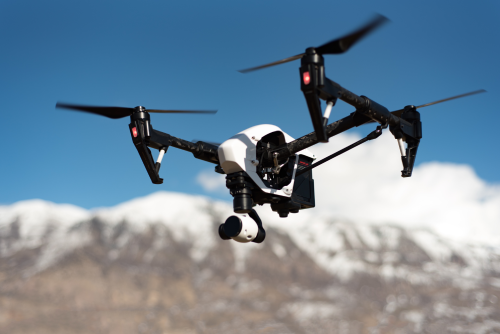
Flying a drone in windy conditions is one of the fastest ways for a beginner to get into trouble. But if you understand what wind is doing, know your drone’s limits, and fly with a plan, you can handle a mild breeze much more safely. In India, this matters even more around beaches, terraces, open farmland, hill stations, and during changing pre-monsoon or monsoon weather.
Quick Take
- Wind is usually stronger above your takeoff point than it feels on the ground.
- Check gusts, not just average wind speed. Gusts are sudden spikes that can upset even a stable drone.
- Stay well below your drone’s rated wind resistance. Beginners should keep a healthy safety margin.
- Fly the outbound leg into the wind if possible, so the return leg gets a tailwind.
- Keep the drone lower, closer, and in open space. Buildings, terraces, trees, and ridgelines create turbulence.
- Watch ground speed and battery drain closely. A drone can look fine in the air but still struggle to make progress.
- Do not trust automatic Return-to-Home blindly in strong wind. On many drones, RTH climbs first, which may put the drone into stronger wind.
- If conditions are doubtful, skip the flight. Waiting for calmer weather is often the smartest flying skill.
Why wind is harder for drones than it looks
A drone does not feel wind the way you do standing on the ground. At chest height, things may seem manageable. Twenty or thirty metres up, the air can be much faster and less predictable.
Three things make wind tricky:
Steady wind is one problem, gusts are another
A steady breeze is easier for a drone to fight. Gusts are more dangerous because they arrive suddenly and can push the drone off line, tilt it hard, or force it to use extra power just to hold position.
If your weather source shows “wind 18 km/h, gusts 32 km/h,” the gusts matter a lot.
Wind usually gets stronger with height
In open areas, air near the ground is slowed by trees, buildings, walls, and terrain. Higher up, there is less friction, so the wind often increases. That is why a drone may hover fine after takeoff, then struggle badly after climbing.
Headwind affects return time and battery
A drone flying into a headwind uses more power and covers less ground. Sometimes the drone is moving fast through the air but barely moving over the ground. That is dangerous because:
- battery drains faster
- return time becomes longer
- the drone may not make it back from the same distance that would be easy on a calm day
This is why windy flights are often lost on the way home, not on the way out.
Know your drone before you test it in wind
Before you try to fly a drone in windy conditions, know what your model can actually handle.
Find the official wind resistance or operating limit
Most consumer drones mention a maximum wind resistance or recommended operating wind limit in the manual, app, or product documentation. Some list it in metres per second, while weather apps may show kilometres per hour.
A simple conversion: – 1 m/s = 3.6 km/h
Do not fly right at the published limit. That number is not a comfort zone. It is closer to the edge of what the drone may tolerate in ideal circumstances.
For beginners, a good rule is simple: if the forecast or on-site signs suggest conditions are anywhere near the drone’s limit, do not take off.
If your drone’s wind rating is unclear, do not guess. Wait for calmer weather.
Small, light drones are affected more
In general: – lighter drones get pushed around more – larger propellers and heavier frames often hold position better – tiny selfie drones and toy drones are poor choices for windy outdoor flying
That does not mean bigger drones are “safe” in all wind. It just means they usually have more margin.
Battery health matters more in wind
Old, cold, damaged, or partially degraded batteries are a bad idea in windy weather. Wind already increases power demand. A weak battery removes the buffer you need.
Before flying: – use a healthy, fully charged battery – avoid swollen or questionable batteries – make sure battery contacts are clean and secure
Learn your flight modes
Different drones offer different modes such as Normal, Cine, or Sport.
In windy conditions: – slow cinematic modes may feel too soft and may not give enough control authority – normal mode is often the best balance – sport mode may help the drone fight wind better, but only if you are trained, the area is open, and you understand the trade-offs
On some drones, faster modes reduce or change obstacle sensing behaviour. Check your model before relying on them.
Understand how Return-to-Home behaves
On many drones, Return-to-Home climbs to a preset altitude before coming back. In wind, that can be a problem because higher air may be stronger than lower air.
Know: – your RTH altitude – whether your drone has dynamic home point updates – how to cancel RTH and take manual control if needed
How to judge wind before takeoff
The best windy-weather decision is often made before the motors start.
Check more than one weather source
Do not rely on a single app. Cross-check local weather and pay attention to: – average wind speed – gust speed – rain chance – approaching storm cells – time of day
In many inland parts of India, early mornings are often calmer than afternoons. In coastal areas, sea breeze can build later in the day. In hill areas, valleys and ridgelines can create strong local airflow even when the general forecast looks mild.
Read the site with your own eyes
Forecasts are only part of the story. Local conditions matter.
Use these clues:
| What you notice at the site | What it usually means | Best decision |
|---|---|---|
| Light leaf movement, grass bending slightly, drone hovers with little tilt | Light wind | Usually manageable for practice in a legal, open area |
| Flags extended, small branches moving, obvious drone lean while hovering | Moderate wind or gusts | Fly only if you know your drone well and still have margin |
| Trees swaying, dust blowing, loose debris moving, unstable hover near takeoff | Strong wind or turbulence | Do not take off |
| Wind feels calm at ground but treetops move quickly | Stronger wind aloft | Expect tougher conditions after climbing |
| Near terraces, buildings, cliffs, or ridges, the drone jitters or bobs | Turbulence | Move to a better site or cancel |
Be extra careful at these Indian locations
Some places create more turbulence than beginners expect:
- Apartment terraces: wind spills over parapet walls and corners unpredictably
- Beachfronts: sea breeze can increase quickly; wind over water also removes easy emergency landing options
- Open agricultural land: little shelter means gusts can build without warning
- Hill stations and ridges: air can curl, rise, and tumble over terrain
- Urban high-rise areas: wind tunnels form between buildings
If your first thought is “it should be okay,” that is not a strong enough reason to fly.
Step-by-step: how to fly a drone in windy conditions
If the weather is within your drone’s comfort zone and you still need to fly, use a more disciplined process than you would on a calm day.
1. Make a strict go or no-go decision
Ask yourself: – Is the flight necessary today? – Am I flying for practice, for a shot, or for paid work? – Do I have a large open landing zone? – Am I still well below the drone’s wind limit? – Are gusts manageable?
If you are a beginner and the wind makes you hesitate before takeoff, that is usually your answer.
2. Choose the right site and direction
Pick a location with: – open space – clear line of sight – room to land early – fewer buildings, walls, power lines, and trees
Then think about flight direction.
If possible, start by flying into the wind. That sounds harder, but it is safer because: – you discover early whether the drone can make headway – the return leg gets a tailwind – you are less likely to get stranded far away with a headwind on low battery
3. Prepare the drone for efficiency
Before takeoff: – remove unnecessary accessories – make sure props are undamaged and firmly attached – confirm battery is full – set a realistic RTH altitude, not an unnecessarily high one – check GPS lock and home point accuracy – verify memory card, controller charge, and app warnings
In wind, every bit of efficiency matters.
4. Take off and hover low first
Do not launch and immediately climb high.
Instead: 1. Take off smoothly. 2. Hold a low hover for 15 to 30 seconds. 3. Watch how hard the drone is leaning to stay in place. 4. Listen for motor strain and watch for warnings in the app. 5. Make a small box pattern nearby to see how it responds.
If the drone is already working hard at low level, the air above is unlikely to be better.
5. Climb only as much as you need
A common mistake is going high simply because the drone can. In wind, height is not free.
Use the lowest safe altitude that still avoids obstacles and captures the shot or inspection you need. Less height often means: – less wind – easier recovery – better signal and orientation – more options for a quick landing
6. Keep the drone close and your moves simple
Windy days are not for long-distance exploration or complex automated moves.
Better practice: – keep the drone closer than usual – avoid wide arcs unless you have plenty of room – make slower, cleaner inputs – pause and reassess often – maintain visual line of sight at all times
Fast yaw turns and aggressive stick corrections can make a windy drone feel even less stable.
7. Watch ground speed, not just the picture
The camera feed can be deceptive. The scene may look smooth while the drone is struggling badly.
Pay attention to: – ground speed – distance from home – battery percentage – wind or high-wind warnings – whether the drone can still stop, hold, and return confidently
If you push forward and the drone barely advances, you are meeting a headwind close to its limit.
8. Use the right mode, but do not experiment in the air
For many pilots, normal mode is safest.
If the drone is struggling to penetrate wind and you are trained on your model, switching to a higher-performance mode may help. But only do this if: – the area is wide open – you already know how that mode behaves – you are comfortable with faster response – you understand any sensor or braking limitations on your drone
A windy flight is not the time to try a new mode for the first time.
9. Return early, not on schedule
In wind, your normal battery habits are too optimistic.
Come back earlier than usual because: – the return may take longer – the wind may increase – the drone may need extra power for landing
If you typically start thinking about landing at a certain battery level on calm days, start earlier on windy days. The exact number depends on your drone, distance, and conditions, so use a bigger buffer than normal.
10. Land into the wind if possible
For a manual landing: 1. Bring the drone back while you still have strong battery reserve. 2. Position it into the wind if your site allows. 3. Descend steadily, not too slowly. 4. Expect some wobble near the ground due to disturbed airflow. 5. Be ready to abort and reposition if the landing zone becomes turbulent.
Avoid landing close to walls, terrace edges, parked vehicles, or people. Wind bounces and curls around objects.
What to do if the wind picks up suddenly
Even with planning, conditions can change. If the drone starts struggling, do this in order:
1. Stay calm and stop climbing
Do not panic and do not send the drone higher. Climbing often makes things worse.
2. Lower altitude if it is safe
If there are no obstacles below, descend to a lower, safer altitude where wind may be weaker.
3. Point the drone into the wind and test forward progress
Watch whether it is actually moving over the ground. If progress is poor, stop trying to continue the mission.
4. Shorten the route home
Take the most direct safe path back. Avoid wide detours, cinematic passes, or extra shots.
5. Consider manual return instead of automatic RTH
If you have visual line of sight and a safe route, manual return at a lower altitude may be better than an automatic climb into stronger wind. This depends on your skill level and your drone’s RTH behaviour, so know your system before you need this decision.
6. Land at the nearest safe spot if needed
Do not become fixated on returning to the exact launch point. If battery is dropping and wind is worsening, a controlled landing in a safe open area is better than a forced landing later.
7. End the flight and review what happened
After landing, check: – battery consumption – wind warnings – flight log if available – whether your takeoff site choice was poor – whether you climbed too high or flew too far downwind
That review will improve your judgment more than any feature list.
Safety, legal, and compliance points for India
Wind does not change the rules. It only increases the consequences of poor planning.
Keep these points in mind:
- Verify the latest official DGCA, Digital Sky, and local airspace requirements before flying. Rules, permissions, categories, and operational conditions can change.
- Maintain visual line of sight. Windy conditions are not the time to push distance.
- Leave extra buffer from restricted or sensitive areas. Wind drift can carry a drone farther than intended.
- Do not fly over crowds, roads with active traffic, events, or densely occupied areas just because you think the drone can “handle it.”
- Respect privacy and nearby property, especially when winds can push the drone toward neighbouring buildings or terraces.
- Avoid rain, lightning, and storm conditions entirely. Wind plus moisture is a bad combination for most consumer drones.
- If the flight is for business, inspection, or client work, plan even more conservatively. The safest professional decision is often to reschedule.
Common mistakes pilots make in wind
Looking only at average wind speed
Average wind might seem fine while gusts are the real problem.
Flying out downwind first
That makes the outbound leg easy and the return leg much harder. It is one of the most common causes of low-battery stress.
Climbing high too early
Higher altitude often means stronger wind. Stay lower unless you truly need height.
Trusting Return-to-Home without thinking
On many drones, RTH climbs first. In strong wind, that can turn a manageable situation into a worse one.
Waiting too long to come back
Windy flights consume battery faster. If you wait for the usual “last shot,” you may lose your buffer.
Flying beside buildings or from tight terraces
These areas produce turbulence and awkward landing conditions. Open ground is safer.
Overcorrecting on the sticks
Beginners often fight wobble with large inputs. That can create a cycle of overcontrol. Smooth, measured corrections work better.
FAQ
How much wind is too much for a beginner?
If conditions are anywhere near your drone’s published wind limit, it is too much for a beginner. Start in light breeze only. You want enough margin that the drone feels boring, not exciting.
Is early morning better for windy drone flying in India?
Often, yes. In many places, early mornings are calmer than late afternoons. But local terrain matters. Coastal winds, hill airflow, and seasonal weather can change that, so check the actual forecast and observe the site.
Should I use Sport mode in strong wind?
Only if you already know that mode well and the area is wide open. It may help the drone fight wind, but it also increases speed, battery use, and pilot workload. On some drones, sensor behaviour changes in faster modes.
Can obstacle avoidance save me in wind?
It may help in some situations, but it is not a cure for wind. A drone that is being pushed hard can still drift into danger, and sensors have their own limits in low light, bright glare, thin branches, or fast movement.
Why is my drone tilted so much while hovering?
That tilt is the drone using thrust to resist the wind. A little lean can be normal. A strong lean, especially combined with slow response or warnings, means the wind is becoming a problem.
Is it safe to fly over water when it is windy?
Usually not for beginners. Over water, you lose easy emergency landing options, glare can reduce orientation, and wind may be stronger than it feels on shore. Unless conditions are mild and you are experienced, skip it.
Can I rely on Return-to-Home if signal drops?
You should understand how your specific drone handles signal loss and RTH before every flight. In wind, automatic climb and return may not be ideal. Know the settings in advance and verify them during pre-flight.
Do heavier drones always handle wind better?
Not always, but they often have more stability and power than very small drones. The only number that really matters is your specific drone’s rated wind capability and how much margin you have below it.
What about flying during the monsoon?
Monsoon season brings shifting gusts, moisture, low cloud, and sudden rain. Even if a moment looks flyable, conditions can change quickly. Unless the weather is clearly stable and dry, it is better to wait.
Final takeaway
If you want to know how to fly a drone in windy conditions, the real answer is this: fly only in wind your drone and your skill level can comfortably handle, keep the aircraft low and close, go out into the wind, and come home early. If gusts are unpredictable, the site is turbulent, or the drone is working hard just to hover, do not try to “push through” it—pick a calmer time and protect your drone, your safety, and everyone around you.
