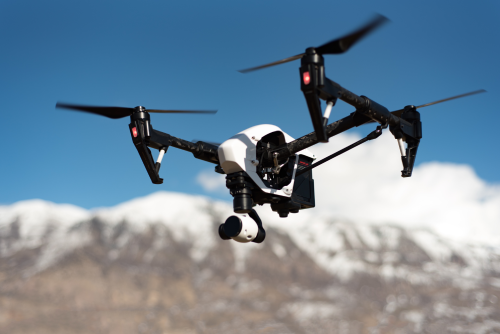
If you are trying to figure out how to choose the best drone for videography, do not start with brand names or marketing claims. Start with the kind of shots you want, the places you will fly in India, and how much editing, travel, and safety margin you actually need.
The best videography drone is not always the most expensive one. It is the one that gives you reliable footage, manageable workflow, and confidence in real-world conditions such as heat, wind, dust, crowded locations, and patchy signal environments.
Quick Take
- Choose a drone based on your video use case first: travel, real estate, weddings, solo content, commercial work, or cinematic storytelling.
- For video quality, sensor size, gimbal stability, dynamic range, and colour depth matter more than megapixel numbers.
- A good videography drone is not just about camera quality. Wind stability, battery life, tracking, obstacle sensing, and app reliability affect your footage every day.
- Budget for the full kit: extra batteries, memory cards, ND filters, spare propellers, charger, bag, and possibly insurance.
- In India, also check after-sales service, spare parts availability, and current compliance requirements before buying or flying.
- If you are a beginner, buy the easiest drone to fly well, not the most advanced drone on paper.
Start with your videography use case
The biggest buying mistake is choosing a drone by specs alone. Videography needs are different depending on what you shoot.
Ask yourself these questions:
- What do I mainly film?
- Do I need portability or better wind handling?
- Do I shoot in daylight only, or also at sunrise, sunset, or low light?
- Am I a solo creator who needs subject tracking?
- Do I need quick social media delivery or a more serious colour grading workflow?
- Will I travel often with the drone?
Here is a practical way to think about it:
| Use case | What matters most | What you can compromise on |
|---|---|---|
| Travel vlogs and scenic reels | Portability, quick setup, good stabilization, vertical-friendly workflow | Extreme low-light performance |
| Real estate and property videos | Stable hovering, wide clean footage, smooth slow movements, safe indoor-adjacent flying where allowed | High-speed sport modes |
| Wedding and event visuals | Reliable tracking, strong low-light ability, stable gimbal, predictable control response | Ultra-light portability |
| YouTube and solo creator work | Subject tracking, simple app workflow, dependable battery life, fast file transfer | Advanced manual colour workflow |
| Commercial filmmaking | Better sensor, 10-bit colour, log profile, stronger wind performance, consistent results | Lowest possible size and weight |
| Adventure and mountain trips | Wind resistance, battery performance, portability, fast deployment | Heavy cinema features |
If your work involves weddings, tourism, construction updates, resort marketing, or real estate, reliability is usually more valuable than chasing the highest resolution number.
Decide your real budget, not just the drone price
A drone that looks affordable at checkout often becomes much more expensive once you add the items needed for actual videography.
Budget for the full system:
- Drone and controller
- At least 2 to 3 batteries total
- Fast charger or charging hub
- High-quality memory cards
- ND filters for video
- Spare propellers
- Carry case or backpack
- Landing pad for dusty locations
- Extra cables and card reader
- Insurance, if suitable for your use
- Repair reserve for accidental damage
For Indian buyers, this matters even more because service and spare part availability can vary by brand, city, and seller. A slightly more expensive drone with easier support can be better value than a cheaper drone that is hard to repair.
A useful rule: if stretching your budget means you can only buy the drone body and one battery, it may not be the right videography purchase.
Camera features that actually matter for video
A long spec sheet can be misleading. These are the camera features that most affect footage quality.
Sensor size and low-light performance
A larger sensor generally captures more light and gives you:
- Better performance at sunrise, sunset, and cloudy conditions
- Cleaner shadows
- Better dynamic range, meaning more detail in bright and dark areas
- More flexibility in editing
If you mainly shoot in harsh daylight, a smaller sensor can still work well. But if your style includes evening city shots, moody resort videos, temple surroundings in soft light, or dramatic golden-hour scenes, sensor quality matters a lot.
Do not judge video quality by megapixels alone. For videography, the sensor and processing are usually more important.
Resolution and frame rates
For most creators today, 4K video is a sensible target because it gives:
- Sharper final footage
- Room to crop without losing too much quality
- Better flexibility for horizontal and vertical edits
Frame rate matters for motion:
- 24 fps or 25 fps gives a more cinematic look
- 30 fps is common for online content
- 50 fps or 60 fps is useful if you want smooth motion or slow motion in editing
If you love action shots, sports, bike follows, or fast reveal shots, higher frame rates are useful. If your work is mainly slow scenic storytelling, strong 4K at normal frame rates is enough.
Colour depth, bitrate, and log profiles
These terms sound technical, but they are important for serious video work.
- Bitrate is how much video data is recorded. Higher bitrate usually means cleaner footage with more detail.
- 10-bit colour records more colour information than standard 8-bit video. This helps if you colour grade.
- A log profile captures a flatter image that preserves more highlight and shadow detail for editing.
Who needs this?
- Beginners who want quick upload videos may be happy with standard colour profiles.
- Creators learning colour grading should look for good colour modes and stable editing support.
- Professionals and agencies should strongly consider 10-bit and log capture.
If you do not plan to edit much, do not overpay for advanced colour features you may never use.
Gimbal quality and horizon stability
The gimbal is the mechanical stabilizer that keeps your footage smooth. For videography, this is one of the most important parts of the drone.
A good drone gimbal should give you:
- Smooth tilt movements
- Stable horizon line
- Minimal micro-jitters
- Clean footage during slow pans and reveals
Many buyers obsess over camera specs and ignore gimbal performance. That is a mistake. A slightly less impressive camera with better stabilization often produces more usable video.
Lens field of view and look
Most consumer drones have fixed lenses. That means you should pay attention to the kind of look they produce.
A wider lens is good for:
- Landscapes
- Architecture
- Travel scenes
- Large group environments
But very wide lenses can make people and buildings look distorted if you get too close.
If your drone offers multiple focal lengths or flexible framing options, that can help for real estate, event coverage, and cinematic compression shots. But remember that more lens options usually increase cost and complexity.
Vertical video workflow
If you mainly create Instagram Reels, YouTube Shorts, or vertical ads for clients, ask this before buying:
- Does the drone support native vertical capture?
- Or will you crop from horizontal footage?
Native vertical support can save time and preserve quality for social media-focused creators.
Flight performance matters as much as camera quality
A great camera on an unstable drone will not give you great video.
Wind resistance and stability
Indian conditions can change quickly, especially near coastlines, open fields, hill stations, and rooftops. A drone that struggles in moderate wind will limit when and where you can shoot.
Better wind performance gives you:
- Smoother footage
- More confident hovering
- Safer operation
- Better battery efficiency in real conditions
Smaller drones are convenient, but they are usually more affected by wind. If you often shoot in breezy outdoor locations, do not underestimate this trade-off.
Obstacle sensing and subject tracking
Obstacle sensing uses sensors to detect objects around the drone. It is not a substitute for pilot skill, but it can help, especially for solo creators.
Useful if you often film:
- Yourself walking or cycling
- Cars on private property with safe planning
- Resort walkthroughs
- Moving subjects in open space
- Reveal shots through clear paths
Tracking quality matters more than whether tracking exists on paper. Some drones can technically track, but do it inconsistently. Good tracking should feel predictable, not risky.
Battery life in real shoots
Ignore ideal lab-style battery claims. Think about actual shooting time after:
- Takeoff
- Repositioning
- Retakes
- Wind correction
- Safe landing buffer
For videography, battery quality affects your creative freedom. One battery is rarely enough. Two is the minimum for casual use. Three or more is safer for client work or travel days.
Transmission and signal reliability
A drone may advertise long transmission capability, but what matters is signal stability in your actual environment.
For India, consider where you will fly:
- Urban rooftops with signal interference
- Semi-rural farm or construction sites
- Forest resorts
- Beach areas
- Hilly terrain
Reliable transmission matters for confidence, framing accuracy, and smooth control. For videography, you want a stable preview feed and low lag more than headline distance claims.
Portability vs stability: what type of drone should you buy?
There is no single ideal size. Each class has trade-offs.
| Drone type | Best for | Strengths | Limitations |
|---|---|---|---|
| Small portable drone | Travel creators, beginners, casual scenic footage | Easy to carry, fast to launch, less intimidating | More affected by wind, usually weaker low-light performance |
| Mid-size camera drone | Serious hobbyists, real estate, regular content work | Better stability, stronger camera, more reliable in mixed conditions | Heavier kit, higher cost |
| Advanced/pro-style drone | Commercial shoots, agencies, demanding creators | Better sensor, stronger colour workflow, more control, often better wind handling | Expensive, less travel-friendly, more complex workflow |
For many Indian buyers, the sweet spot is often a mid-tier camera drone that balances portability, image quality, and reliability.
Do not ignore the editing workflow
A drone can be excellent in the air and still become frustrating on your computer.
Before buying, think about:
- Are the files easy to transfer to phone or laptop?
- Does your editing app handle the codec smoothly?
- Will your current device struggle with high-bitrate 4K?
- Do you want ready-to-use colours or serious grading flexibility?
A student creator or beginner editor may prefer a drone with simple, attractive straight-out-of-camera footage.
A professional videographer may prefer flatter files that need editing but offer more control.
Also remember: drone audio is usually unusable because of propeller noise. If your videos need sound, plan a separate audio workflow.
India-specific buying checks
This is where many otherwise good buying guides stay too generic.
Check after-sales support in your city or region
Before buying, find out:
- Is there an authorized service option?
- Are batteries and props easy to source?
- How long does repair usually take?
- Is the warranty process straightforward?
- Are genuine accessories available?
A drone is a flying camera, not a shelf gadget. Support matters.
Think about local weather and terrain
Indian shooting conditions can be tough:
- Dusty grounds and construction sites
- High summer temperatures
- Humid coastal air
- Strong monsoon winds
- Mountain gusts
- Crowded urban areas
If you regularly shoot in demanding environments, choose reliability over flashy features.
Verify compliance before purchase and flight
Rules can change, and operational requirements depend on the drone category, use case, and current government guidance.
Before you buy or fly, verify the latest official information on:
- DGCA requirements
- Digital Sky processes
- Whether your model needs current registration or permissions
- Airspace restrictions for your location
- Any local police, property, or event restrictions
- Commercial-use obligations, if you are flying for business
Do not assume a drone is automatically legal to use everywhere just because it is sold online or in a store.
How to shortlist the best drone for videography
If you feel overwhelmed, use this process.
Step 1: Write down your main video job
Pick one primary use:
- Travel
- Real estate
- Solo creator
- Weddings
- YouTube
- Commercial promo videos
- Scenic cinematic work
If you choose five use cases equally, you will struggle to decide.
Step 2: Set an all-in budget
Include the drone plus at least:
- 2 to 3 batteries
- Memory cards
- ND filters
- Spare propellers
- Case
This gives you a realistic buying ceiling.
Step 3: Choose your minimum camera standard
For most buyers, this means deciding:
- Need 4K or not?
- Need better low-light or daylight only?
- Need 10-bit/log or simple ready-to-post colour?
Step 4: Decide how important portability is
Be honest.
If you are often on trains, flights, bike trips, or college commutes, a compact drone may get used far more often than a large one.
Step 5: Prioritize flight safety features
Especially for beginners, put strong weight on:
- Stable hovering
- Reliable return-to-home
- Obstacle sensing
- Good app warnings
- Predictable handling
Step 6: Check support and compliance
Do not skip this. Confirm current India-specific requirements and the practical support situation where you live.
Step 7: Make a final comparison of only three models
Compare them on:
- Video quality
- Stability
- Ease of use
- Battery ecosystem
- Repair and support
- Total cost
The best choice usually becomes clear at this point.
Features that are often overrated
Some specifications sound impressive but do not always improve your actual videos.
Be careful not to overvalue:
- Very high photo megapixel counts if your focus is video
- Extreme transmission distance claims
- Sport mode speed for cinematic work
- Too many auto modes you will never use
- Heavy editing features if you only post quick reels
- Tiny size if your locations are consistently windy
Buy for your footage, not for showroom comparison.
Common mistakes when choosing a videography drone
Buying too much drone too early
Many beginners buy a high-end model with advanced manual options but do not feel comfortable flying it. A simpler drone they use often would have been the better choice.
Ignoring ND filters
ND filters are like sunglasses for the camera. They help control shutter speed in bright conditions and can make motion look more natural in video.
If your drone has a fixed aperture, ND filters are especially useful.
Choosing based only on resolution
A stable 4K drone with better dynamic range and gimbal quality can easily beat a higher-resolution drone with weaker real-world performance.
Underestimating batteries
Videography involves waiting, repositioning, repeating, and shooting multiple takes. One battery disappears quickly.
Ignoring low-light limitations
If you dream of cinematic dawn, dusk, or city lights footage, choose accordingly. Many entry-level drones look good only in strong daylight.
Not checking repairability
Gimbals, motors, propellers, arms, and batteries are not lifetime components. Know what happens after a minor crash.
Forgetting editing device limitations
High-quality codecs can be heavy on older laptops and phones. Make sure your system can handle the files.
Safety, legal, and compliance checks in India
A good videography drone is one you can use responsibly and legally.
Keep these points in mind:
- Always verify the latest DGCA and Digital Sky guidance before flying.
- Check whether your flight location is allowed and whether any permissions are required.
- Be extra cautious near airports, helipads, military or strategic zones, government-sensitive sites, and crowded public spaces.
- Respect privacy. Do not film people in a way that is intrusive, unsafe, or unauthorized.
- Do not fly over crowds unless you are fully compliant, properly planned, and operating safely within current rules.
- Avoid risky flights near roads, traffic, power lines, animals, or emergency scenes.
- Watch weather closely. Sudden wind, rain, and heat can affect both safety and footage.
- If you fly for paid work, verify any current business, documentation, or insurance obligations before accepting the job.
Even the best drone cannot fix poor judgment.
FAQ
Is an entry-level drone good enough for videography?
Yes, if your work is mainly daylight travel videos, basic scenic shots, and social media content. No, if you need strong low-light performance, advanced grading flexibility, or highly reliable commercial output.
Do I really need 4K for drone videos?
For most buyers today, yes. It gives better detail and more room to crop for vertical or alternate framing. But 4K alone does not guarantee cinematic quality.
Is obstacle avoidance essential for beginners?
Not essential, but very useful. It adds confidence and can reduce risk, especially for tracking shots and solo content creation. It is still not a replacement for safe flying habits.
Are FPV drones better for videography?
They are better for fast, immersive, high-energy shots when flown by skilled pilots. For smooth cinematic aerial footage, a traditional camera drone is usually easier, safer, and more practical.
How many batteries should I buy?
At least two batteries total for casual use, and preferably three for proper videography sessions. For client work, many pilots carry more, depending on the schedule.
Do megapixels matter for drone video?
Not as much as many people think. For video, sensor quality, dynamic range, bitrate, colour depth, and stabilization matter more.
Should I buy a very small drone for travel?
Only if portability is your top priority and you mostly shoot in calmer conditions. If you often film in windy areas, a slightly larger and more stable drone may give better results.
Can one drone handle both travel content and paid client shoots?
Sometimes, yes. A well-chosen mid-tier camera drone can cover both. But if client work becomes serious, you may eventually want a more capable system with stronger camera and workflow features.
What should I check before buying a used drone?
Check flight logs if available, battery health, gimbal condition, motor sound, arm integrity, controller function, camera stability, accessory authenticity, and whether the drone can still be properly activated and supported.
Final takeaway
To choose the best drone for videography, match the drone to your shooting style, not to the loudest spec sheet. If you are a beginner, buy the most reliable drone you can comfortably fly and afford with extra batteries; if you are a serious creator, prioritize sensor quality, gimbal performance, and workflow over marketing numbers.
Make your shortlist based on three things: the footage you want, the conditions you actually shoot in, and the support you can realistically get in India. That is how you end up with a drone you will use often, trust on set, and grow with over time.
