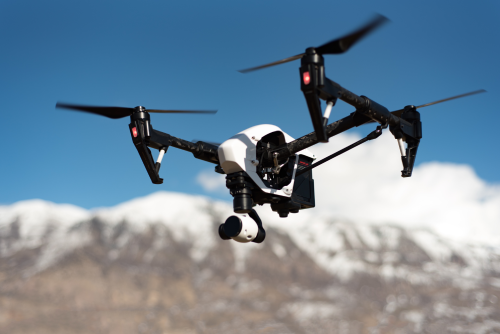
A good reveal shot hides the subject at first, then uncovers it in a smooth, satisfying way. If you want to learn how to capture reveal shots with a drone, the secret is not just flying well, but planning the movement, the foreground, and the final frame before take-off.
Quick Take
- A reveal shot works best when the viewer cannot fully see the subject in the opening seconds.
- The easiest drone reveals for beginners are a slow rise-up, a gentle side slide, and a simple pull-back.
- Smoothness matters more than speed. Use Cine mode or the slowest control mode your drone offers.
- Lock exposure and white balance before recording so the image does not shift mid-shot.
- Shoot in soft light when possible. Early morning and late afternoon usually look better than harsh midday sun.
- In India, always verify the latest DGCA and Digital Sky rules, local restrictions, and property permissions before flying.
- Do not attempt risky “thread the gap” shots near trees, wires, buildings, people, or traffic.
What makes a reveal shot work
A reveal shot is a camera move that starts with part of the scene hidden, then gradually exposes the real subject.
That hidden element could be:
- A tree line
- A wall or rooftop
- A hill edge
- A foreground pillar
- A rock, statue, or signboard
- Even a downward-looking camera angle that tilts up to reveal the scene
The reason reveal shots feel cinematic is simple: they create curiosity first, then payoff.
A basic reveal usually has three parts:
- Concealment: the subject is partially or fully hidden.
- Movement: the drone moves or the gimbal tilts.
- Payoff: the subject appears clearly, often with more scale than expected.
That payoff could be:
- A fort on a hill
- A beach hidden behind palm trees
- A resort or homestay emerging from greenery
- A wedding venue opening into a wide overhead view
- A road or river appearing after a rise over terrain
Choose the right kind of reveal
Not every reveal style suits every location. Start with the easiest one that matches the scene.
| Reveal type | Best for | Difficulty | Main movement | Main risk |
|---|---|---|---|---|
| Rise-up reveal | Landscapes, villas, lakes, hill views | Easy | Ascend slowly | Climbing into branches, wires, or wind |
| Side-slide reveal | Buildings, statues, roads, coastline | Easy | Strafe left or right | Uneven pace, drifting horizon |
| Pull-back reveal | Resorts, farms, open land, temples from a safe distance | Easy | Fly backward, sometimes with a slight climb | Losing awareness of what is behind the drone |
| Gimbal-tilt reveal | Safe open areas, rooftops, fields | Very easy | Tilt camera up while hovering or moving slowly | Flat-looking result if composition is weak |
| Orbit reveal | Monuments, towers, isolated structures | Medium | Circle the subject with steady framing | Jerky yaw and inconsistent radius |
If you are new to drone videography, start with a rise-up reveal or a side-slide reveal. They are easier to repeat and easier to correct in editing.
Plan the shot before take-off
The best reveal shots are usually designed on the ground, not invented in the air.
Build the shot backward
Before you launch, decide what the final frame should look like.
Ask yourself:
- What exactly am I revealing?
- Where should the shot end?
- How much of the subject should fill the frame?
- Is the background helping the subject or cluttering it?
- Will the viewer understand the reveal instantly?
A common beginner mistake is flying around until something “looks cinematic.” That wastes battery and often produces random footage instead of a usable shot.
Instead, stand at the location and imagine the ending first.
For example:
- Final frame: a homestay centered against a mountain backdrop
- Opening frame: the same homestay hidden behind a line of trees
- Movement: slow rise plus a tiny forward push
- Shot length: 8 to 12 seconds
That is already a workable plan.
Find a foreground “curtain”
A reveal needs something to hide the subject at the start. Think of that foreground element as a curtain.
Good foreground choices:
- Tree tops in open, obstacle-free areas
- A low ridge or rocky ledge
- A wall or parapet on private property with permission
- A rooftop edge if you are operating safely and legally
- A gate, arch, or pillar in a wide-open venue
Avoid foregrounds that create real collision risk:
- Wires or poles
- Dense branches
- Tight gaps between buildings
- Busy roads
- Crowds
- Water edges if you are inexperienced
For beginners, the safest reveal is often one where the drone starts in clear air but uses camera angle and layered composition to create the concealment. That way, you get the feel of a reveal without flying through danger.
Pick your light and weather
Reveal shots depend heavily on shape, depth, and mood. Lighting decides all three.
Best times:
- Early morning
- Late afternoon
- Just before sunset, if visibility is still good
These times usually give softer shadows, warmer colour, and better texture.
In Indian conditions, also watch for:
- Heat haze on hot afternoons, especially over roads, concrete, or dry land
- Monsoon wind and sudden weather changes
- Coastal gusts near beaches or cliffs
- Pollution or mist reducing long-distance clarity in cities
Harsh noon sunlight can still work for real estate or commercial jobs, but cinematic reveals usually look better in softer light.
Camera and drone settings for clean reveals
A reveal shot can fail even with good flying if the exposure, colour, or shutter looks messy.
Recommended starting settings
Use these as a practical baseline, then adjust for your drone and light.
- Resolution: 4K if your drone handles it well
- Frame rate: 25 fps or 30 fps for normal motion
- Shutter speed: roughly double the frame rate for natural motion blur
- ISO: keep as low as possible
- White balance: lock it manually
- Exposure: lock it once the scene looks right
- Colour profile: use Normal if you do not colour grade; use a flatter profile only if you know how to grade it later
Why 25 fps is often useful in India
If you are filming around artificial lights, event lighting, or mixed indoor-outdoor spaces, 25 fps can be helpful because it often matches 50 Hz power conditions better than 30 fps. That can reduce flicker.
For pure outdoor shoots, 25 fps or 30 fps can both work. The important part is consistency.
Use ND filters in bright daylight
An ND filter is like sunglasses for your drone camera. It helps you keep shutter speed under control in bright sun.
You may need one when:
- Shooting in strong daylight
- Trying to keep motion blur natural
- Recording at 25 or 30 fps without overexposing the scene
If you do not have ND filters, your drone may raise shutter speed too high, which can make motion look choppy or overly sharp during the reveal.
Smooth your controls
If your drone app allows it, reduce:
- Yaw sensitivity
- Gimbal pitch speed
- Braking aggressiveness
This makes movements look more cinematic and less robotic.
Also use:
- Cine mode
- Tripod mode
- Slow mode
The name varies by brand, but the idea is the same: softer stick response.
How to capture reveal shots with a drone: step by step
1. Decide the subject and the final frame
Do not start with the opening. Start with the payoff.
Hover at a safe height and frame the subject exactly how you want it to look at the end.
Take a photo or mental note of:
- Height
- Distance
- Camera angle
- Subject position in the frame
2. Reverse the move to find your starting point
Now fly backward or downward from that final frame until the subject becomes hidden or partially hidden.
This reverse planning helps you build a clean reveal path.
3. Check the full flight path
Before recording, check for:
- Branches
- Wires
- Poles
- Birds
- Unseen buildings behind you
- GPS or signal issues
- Wind direction
A reveal shot often looks simple, but it can involve moving upward, sideways, and forward at the same time. Make sure the route is truly safe.
4. Set exposure and white balance
Frame the mid-point or ending frame, then lock:
- Exposure
- White balance
- Focus if your drone allows it
This prevents ugly brightness jumps when the subject appears.
5. Start recording early
Press record before the move begins.
Give yourself:
- 2 to 3 seconds before movement
- 2 to 3 seconds after the reveal finishes
These extra seconds are called “handles.” They make editing much easier.
6. Fly one clean movement
For your first attempts, keep it simple.
Examples:
- Ascend only
- Slide left only
- Pull back only
- Gimbal tilt plus very slow forward motion
The more axes you combine, the harder the shot becomes.
7. Repeat with small variations
Do not settle for one take.
Try:
- Slower speed
- Slightly higher endpoint
- Wider framing
- More foreground in the opening
- A version with less movement
Often the best take is the third or fourth one, not the first.
8. Review footage on location
Zoom into the footage and check:
- Horizon level
- Focus
- Exposure consistency
- Jerks at the start or stop
- Prop shadows
- Wind wobble
If something is off, fix it immediately while the light is still the same.
Five beginner-friendly reveal moves
Rise-up reveal
This is the easiest classic drone reveal.
How to do it
- Start low enough that the subject is hidden by a foreground object or terrain edge.
- Ascend slowly.
- Keep the camera angle stable.
- Stop once the full subject and background are visible.
Best use cases
- Lake view behind trees
- Villa behind a compound wall on private property
- Valley opening up from behind a ridge
- Resort appearing above greenery
Tip
A tiny forward movement during the rise can add depth, but only if the path is clear.
Side-slide reveal
Instead of going up, move left or right so the subject appears from behind an object.
How to do it
- Place a tree, pillar, wall edge, or signboard on one side of the frame.
- Hide the subject behind it.
- Slide sideways at a constant speed.
- Let the subject gradually enter the frame.
Best use cases
- Building exteriors
- Monuments in open space
- Roadside viewpoints
- Resort entrances
Tip
The closer the foreground is to the lens, the stronger the parallax. Parallax means the foreground appears to move faster than the background, which adds cinematic depth.
Pull-back reveal
This starts close and then opens the scene wider.
How to do it
- Begin with a tighter shot of part of the subject or a detail.
- Fly backward slowly.
- Add a gentle climb if the background deserves to open up.
Best use cases
- Farmhouses
- Wedding venues
- Cafes or retreats
- Small temples or pavilions in open areas
Tip
Always know what is behind the drone. Pull-backs are easy to misjudge.
Gimbal-tilt reveal
This uses camera tilt more than drone movement.
How to do it
- Start with the camera tilted downward, showing texture, ground, roof, or water.
- Slowly tilt upward to reveal the wider scene.
- Add a tiny forward movement if needed.
Best use cases
- Roofline to full property reveal
- Field to horizon reveal
- Courtyard to building reveal
Tip
This is one of the safest reveals because the drone can stay nearly stationary.
Orbit reveal
A curved move around a subject can uncover the background gradually.
How to do it
- Keep the subject framed while circling slowly.
- Start from a side where the background is less impressive.
- End on the side where the background is strongest.
Best use cases
- Isolated structures
- Towers
- Statues
- Properties with an attractive backdrop
Tip
Beginners should orbit wide and slow. Tight orbits look dramatic but are harder to control.
Framing tricks that make reveals look cinematic
You do not need an expensive drone to make a reveal feel premium. You need better framing.
Use three layers
Try to include:
- Foreground
- Midground
- Background
Example:
- Foreground: palm leaves
- Midground: resort building
- Background: sea or hills
This layering gives the reveal depth.
Hide enough, but not too much
If the subject is fully visible from the start, there is no reveal.
If it is too hidden, the viewer may feel confused.
A good opening usually shows a hint of what is coming.
Keep the horizon level
A tilted horizon instantly makes a reveal look amateur. Fix it before take-off or correct it in post if the angle is minor.
Let the subject breathe
Do not end with the subject pressed awkwardly against the top or edges of the frame.
Leave some space around it, especially in the direction of the background you want to show.
Move for a reason
A reveal should feel motivated. Ask:
- Am I uncovering scale?
- Am I showing location?
- Am I adding drama?
- Am I connecting the subject to its surroundings?
If the move has no reason, it can feel like random drone motion.
Safety, legal, and compliance checks in India
Reveal shots often tempt people to fly close to objects, above venues, or in scenic public places. That is where good judgment matters most.
Before any flight in India:
- Verify the latest DGCA rules and official airspace guidance on Digital Sky.
- Confirm whether your specific drone, location, and purpose require any permissions or additional compliance.
- Avoid flying in restricted or sensitive areas, including places where drone operations may be prohibited.
- Get property owner permission when filming private land, resorts, homes, or event venues.
- Respect privacy in residential areas, religious spaces, and public gathering spots.
- Do not fly over crowds unless you are fully compliant, properly authorised where required, and operating with a clear safety plan.
- Be extra cautious near beaches, hills, forests, and tourist spots where local restrictions or enforcement may apply.
- Check weather carefully during monsoon, coastal wind, and summer heat.
A few practical safety rules matter for reveal shots in particular:
- Do not fly through tight gaps as a beginner.
- Do not rely blindly on obstacle avoidance sensors.
- Do not launch from a busy road or unstable surface.
- Do not shoot backward without first checking the full path.
- Do not keep repeating risky takes just because the composition looks good.
If you are shooting commercially for real estate, weddings, hospitality, or branded content, verify the latest legal and operational requirements before the job. Rules can change, and local enforcement can vary.
Editing reveal shots so the payoff lands
A reveal shot should feel clean, not over-produced.
Keep the cut simple
Trim the clip so that:
- The opening starts just before movement
- The reveal unfolds without dead time
- The shot ends shortly after the full subject is visible
Stabilise lightly if needed
If the clip has minor vibration, light stabilisation can help. Too much can warp the image.
Correct exposure and colour
Pay attention to:
- Brightness shifts
- White balance drift
- Haze
- Flat contrast
A small grade can make the reveal feel much richer.
Use speed ramps carefully
A speed ramp changes playback speed inside the shot. It can work well, but beginners often overuse it.
If you use one:
- Keep the opening slightly slower
- Let the reveal settle naturally
- Do not make the move look artificial
Match music to the payoff
If the reveal is part of a reel or promo video, sync the subject’s appearance to a beat change or music lift. That small edit choice can make a basic drone move feel far more polished.
Common mistakes
These are the errors that spoil most drone reveal shots:
- Starting the movement too fast
- Ending the shot too soon
- Using auto exposure and letting brightness jump
- Forgetting to lock white balance
- Combining too many controls at once
- Flying too close to the foreground object
- Not checking for wires or branches
- Shooting in harsh midday light when softer light is available
- Ignoring wind, especially during upward moves
- Pulling back without checking the rear path
- Ending with a crooked horizon
- Recording only one take
- Choosing a weak final frame with no real payoff
If your reveal feels disappointing, the problem is usually one of these three things:
- The subject was not worth revealing
- The foreground did not conceal it properly
- The movement was not smooth enough
FAQ
What is the easiest reveal shot for a beginner?
A slow rise-up reveal is usually the easiest. It needs fewer stick movements and gives a clear before-and-after effect.
How long should a reveal shot be?
A good reveal often lasts around 6 to 12 seconds. Record a bit longer than you need so you have room to trim in editing.
Should I use 25 fps or 30 fps?
Either can work. In India, 25 fps is often practical, especially around artificial lights, because it may reduce flicker under 50 Hz power conditions.
Do I need ND filters for reveal shots?
In bright daylight, yes, they are often very helpful. They let you keep shutter speed lower for smoother-looking motion.
Can I shoot reveal shots with an entry-level drone?
Yes. A stable gimbal, predictable controls, and good planning matter more than owning the most expensive drone.
Is it safe to do push-through shots between trees or buildings?
Not for beginners. Tight-gap shots carry real collision risk. It is better to create the reveal with framing and gimbal angle instead of flying through obstacles.
What weather is best for drone reveals?
Light wind, clear visibility, and soft sunlight are ideal. Avoid rain, strong gusts, and low-visibility conditions.
Can I use reveal shots at weddings or events?
You can, but only if the operation is safe, permitted, and compliant with current rules. Never compromise crowd safety for a cinematic shot.
Why does my reveal look jerky even when I fly slowly?
Your control sensitivity may be too high, or you may be stopping and starting unevenly. Use Cine mode, soften control settings if available, and practice maintaining one steady speed.
Final takeaway
If you want better drone reveal shots, stop chasing complicated moves and start planning cleaner ones. Pick a strong subject, hide it with a safe foreground, fly one smooth motion, and verify the legal and safety side before every shoot in India.
