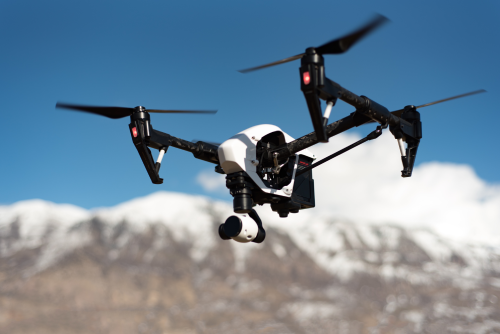
Learning how to capture epic travel drone videos is less about flying far or fast and more about planning, timing, smooth control, and smart editing. Whether you are filming beaches in Goa, forts in Rajasthan, tea estates in Kerala, lakes in Kashmir, or roads in Ladakh, the most memorable footage usually comes from simple shots done well.
This guide breaks down how to capture epic travel drone videos in a practical way for beginners and hobbyists in India, without risking unsafe or careless flying.
Quick Take
- The best travel drone videos are built on three things: good light, smooth movement, and a clear story.
- Plan your shots before the trip instead of hoping for magic once you take off.
- In India, always verify the latest DGCA and Digital Sky guidance, and also check local restrictions at tourist sites, monuments, parks, beaches, and private properties.
- Fly slowly. Fast drone movement often looks less cinematic than controlled, steady motion.
- Use short clips with a purpose: opening shot, reveal shot, tracking shot, detail shot, and exit shot.
- Keep camera settings simple: low ISO, fixed white balance, and a frame rate that suits your final edit.
- Shoot during sunrise or sunset whenever possible. Midday light is usually the hardest to make look cinematic.
- Do not fly over crowds, near sensitive zones, or in strong winds just to get a dramatic clip.
- In editing, use only your best shots. A short, strong video beats a long, repetitive one.
What makes a travel drone video feel epic
An “epic” travel drone video is not just a collection of aerial clips. It gives the viewer three things:
Scale
Drone footage works best when it shows how big, dramatic, or unusual a place feels. A mountain road, a sea cliff, a fort wall, or a winding river becomes powerful when the frame shows its full shape and context.
Motion
The drone should move with purpose. A slow rise over a ridge, a pull-back revealing a valley, or a side track along a coastline creates emotion. Random movement does not.
Story
Even a 30-second travel clip needs a mini storyline. Show where you are, what makes the place special, and how it feels. Think in sequences, not isolated shots.
A great travel drone video usually answers these three questions:
- Where is this place?
- Why does it look special?
- What does it feel like to be there?
Plan before you travel
Most weak travel drone videos are lost before the first battery is inserted. Good planning saves time, avoids legal trouble, and helps you come back with usable footage.
Research the location
Before the trip, check:
- Airspace restrictions and any current permissions you may need
- Local rules at the destination
- Whether the area is near an airport, heliport, defence site, border zone, wildlife area, port, power installation, or other sensitive location
- Weather and wind forecasts
- Sunrise and sunset timing
- Terrain challenges such as steep cliffs, magnetic interference, narrow valleys, water, or heavy tourist crowds
In India, this matters even more because many attractive travel locations have layered restrictions. A place may look flyable on a map but still have local prohibitions from forest departments, monument authorities, police, resort management, or event organisers.
Build a simple shot list
Do not overcomplicate it. For each destination, plan 5 to 7 shots.
Example shot list for a hill station:
- Wide establishing shot of the valley
- Slow push-in toward viewpoint
- Side tracking shot of winding road
- Top-down shot of forest path
- Orbit around a safe landmark
- Pull-back reveal of the hillside town
- Sunset exit shot
This gives you structure without making the shoot rigid.
Scout with your eyes first
When you arrive, do a ground check before flying:
- Where can you launch and land safely?
- Where are the people, wires, trees, poles, birds, and vehicles?
- Which direction gives the best light?
- Is the wind stronger than expected?
- Is there enough open space to maintain visual line of sight?
A five-minute walk often prevents a bad decision in the air.
Safety, legal, and compliance checks in India
Travel drone videos are exciting, but the legal and safety side cannot be treated as an afterthought.
What to verify before every flight
Always confirm the latest official guidance before you fly, especially if rules or platform requirements have changed since your last trip. Verify:
- Current DGCA requirements
- Digital Sky airspace status for the area
- Whether your drone and operation comply with current Indian norms
- Local restrictions from authorities managing the site
- Permission from property owners if you are launching from private land
Places where extra caution is essential
Travel creators often get into trouble because scenic places are also sensitive places. Be very careful around:
- Airports and heliports
- Military or defence areas
- Border regions
- Government complexes
- Ports and industrial zones
- National parks, wildlife sanctuaries, and eco-sensitive areas
- Historic monuments and protected sites
- Religious gatherings, festivals, and public events
- Crowded beaches, promenades, markets, and city centres
Even if a place looks empty from the sky, local restrictions may still apply.
Safety rules that matter in real life
For travel videos, follow these habits every time:
- Do not fly over crowds.
- Keep the drone within visual line of sight.
- Do not fly in rain, fog, or poor visibility.
- Avoid strong winds, especially in mountains and along coastlines.
- Keep a battery reserve for safe return.
- Watch for birds, especially near lakes, cliffs, forests, and beaches.
- Respect privacy. Do not film people closely without consent.
- Land immediately if conditions feel wrong.
In mountain destinations such as Himachal, Uttarakhand, Sikkim, or Ladakh, wind can change quickly and GPS behaviour can be less predictable near steep terrain. In coastal destinations like Goa, Gokarna, or Andaman, wind gusts and salt spray add risk. Epic footage is never worth a lost drone or a dangerous flight.
Gear that actually helps
You do not need the most expensive drone to make excellent travel videos. You do need a reliable setup.
Useful essentials
- A drone with a stable gimbal
- Extra batteries
- Spare propellers
- Fast memory cards
- A power bank or charging solution for travel
- ND filters for bright daylight
- A landing pad for dusty, sandy, or grassy locations
- A compact bag that makes access easy
Why ND filters matter
An ND filter, or neutral density filter, is like sunglasses for your camera. It reduces the light entering the lens so you can keep a more natural shutter speed in bright sunlight. This helps motion look smoother and more cinematic.
You can still shoot without ND filters, but in harsh daylight they make a real difference.
Best camera settings for travel drone videos
If you are new, the goal is not perfect cinema theory. The goal is consistent, easy-to-edit footage.
A simple starting setup
| Setting | Good starting point | Why it helps |
|---|---|---|
| Resolution | 4K if your drone handles it well | Gives cropping room and better detail |
| Frame rate | 25 fps or 30 fps for normal travel footage | Natural motion for most edits |
| Slow motion | 50 fps or 60 fps when you know you want slow motion | Useful for waterfalls, waves, roads, moving subjects |
| ISO | Keep as low as possible | Reduces noise and preserves detail |
| White balance | Set it manually instead of auto | Prevents colour shifts mid-shot |
| Colour profile | Normal if you want easy editing; flatter profiles only if you know grading | Keeps workflow simple |
| Sharpness | Avoid very aggressive in-camera sharpening if adjustable | Gives a more natural look |
Frame rate: 25 fps or 30 fps?
For most travel videos in India, 25 fps is a practical choice, especially when shooting around artificial lights, buildings, or city areas where power-frequency flicker can appear. India uses a 50 Hz power system, so 25 fps or 50 fps can be cleaner in some situations.
If your entire editing workflow is already built around 30 fps, that is fine too. The important thing is consistency.
Shutter speed, explained simply
Shutter speed controls how much motion blur appears in your video. Motion blur is the slight softness in moving objects that makes video feel natural.
A simple rule is to keep shutter speed roughly around double your frame rate:
- 25 fps: around 1/50
- 30 fps: around 1/60
- 50 fps: around 1/100
- 60 fps: around 1/120
In bright daylight, you may need ND filters to achieve this.
Use manual white balance
Auto white balance can shift colours while the drone turns or tilts. That can ruin a shot. Lock white balance manually so the sky, water, and landscape stay consistent across clips.
Expose carefully
If your drone offers exposure tools such as histogram or overexposure warning, use them. Slightly protecting highlights is often smarter than over-brightening the image and losing cloud detail.
The drone shots every travel video needs
You do not need 20 fancy moves. A few strong, repeatable shots are enough.
1. The straight-up reveal
Take off low behind a foreground object, then rise vertically to reveal the full scene.
Best for: – Beaches – Fort walls – Valley viewpoints – Temples or hilltop structures, where flying is permitted
Why it works: It creates surprise and scale.
2. The slow push-in
Fly gently forward toward your subject.
Best for: – Lakes – Palaces – Cliffs – Homestays or resorts, where allowed
Why it works: It draws the viewer into the location.
3. The pull-back reveal
Start closer to the subject and slowly fly backward, sometimes rising at the same time.
Best for: – Waterfalls – Isolated buildings – Viewpoints – Desert roads
Why it works: It expands the world around the subject.
4. The side track
Fly sideways while keeping the subject framed.
Best for: – Coastlines – Roads – Riverbanks – Tea estates – Mountain edges
Why it works: It adds parallax, which is the visual depth created when foreground and background move at different speeds.
5. The orbit
Circle around a subject while keeping it in frame.
Best for: – Lighthouses – Rock formations – Towers – Boats – Standalone structures
Why it works: It feels dynamic, but do it slowly. Fast orbits look amateur very quickly.
6. The top-down shot
Aim the camera straight downward for a graphic, patterned view.
Best for: – Boats on water – Roads with clean curves – Waves – Salt pans – Architecture – Fields
Why it works: It gives viewers a perspective they cannot get from the ground.
7. The rise-and-tilt shot
Rise while tilting the camera down or forward to reveal more of the scene.
Best for: – Valleys – Stairs – Terraces – Clifftop paths
Why it works: It creates a more layered, cinematic reveal.
Fly smoother than you think
The easiest way to improve travel drone footage is to slow down.
Use gentle stick inputs
Small movements look more professional than aggressive ones. Jerky footage usually comes from overcorrecting on the controls.
Keep each shot short and clean
Aim for 6 to 12 seconds of usable movement. You can always trim in editing. Long, wandering clips are harder to use.
Avoid doing too much at once
Beginners often try to:
- Fly forward
- Rise
- Rotate
- Tilt the camera
- Change speed
all in one shot.
That is difficult to do smoothly. Start with one main movement. When you gain confidence, combine two motions carefully.
Use cinematic speed, not sport speed
High speed is great for fun flying, but most travel footage looks better when the drone moves in a controlled, unhurried way.
Composition tips that make travel footage look premium
A drone gives you height, but good composition still matters.
Think in layers
Try to include:
- Foreground
- Midground
- Background
For example, on a Goa coastline shot, rocks in the foreground, beach in the middle, and sea horizon in the background will feel more immersive than a flat wide shot.
Use leading lines
Roads, rivers, walls, bridges, and shorelines naturally pull the viewer’s eye through the frame.
Keep the horizon level
A tilted horizon can instantly make footage feel sloppy unless it is a deliberate creative choice.
Do not centre everything
Centred framing can work, but use it selectively. Often the frame feels more cinematic when the subject sits slightly off-centre with negative space around it.
Include scale carefully
A person, vehicle, or boat can show how large the landscape is. Just make sure it is safe, legal, and respectful. Do not use uninformed bystanders as “tiny human scale” without considering privacy and safety.
Shoot a sequence, not random clips
The best travel videos feel connected. A simple structure helps.
A practical 5-shot sequence
- Establish the location with a wide shot
- Move closer with a push-in or side track
- Show a detail or pattern with a top-down shot
- Capture one hero shot, such as an orbit or reveal
- End with an exit shot, such as a pull-back or sunset rise
Example: filming a fort in Rajasthan
A beginner-friendly sequence could be:
- Wide sunrise shot showing the fort on the hill
- Slow push-in toward the main wall
- Top-down shot of courtyard geometry, if allowed and safe
- Side track along the fort edge
- Pull-back at golden hour revealing the town around it
That sequence tells a place-based story better than five unrelated aerial clips.
A simple workflow on location
When you reach the spot, follow this order.
1. Observe first
Stand still for a minute. Watch the wind, people, birds, and light direction.
2. Choose a safe launch area
Pick open ground away from dust, sand, traffic, and crowds.
3. Set your settings before takeoff
Do not sort out frame rate, white balance, or card space in the air if you can avoid it.
4. Take a high safety look
Your first flight can be a conservative check of the environment. Look for wires, masts, birds, and blind obstacles.
5. Capture wide shots first
These are easiest to get and give you a safety net.
6. Then move to medium and detail shots
Once you know the wind and the space, try more deliberate compositions.
7. Repeat the best shot once
If a shot matters, do it twice. Many creators regret not doing a clean second take.
8. Land with margin
Do not stretch battery life just because the light looks good. Travel locations often make retrieval harder if something goes wrong.
Edit for emotion, not just for length
Good editing turns decent clips into a memorable travel video.
Start with your strongest shot
Do not spend 10 seconds “warming up.” Hook the viewer early.
Cut before the shot gets boring
Many drone clips look great for the first few seconds and then lose impact. Be ruthless in trimming.
Match movement between shots
If one shot moves left to right, and the next shot also carries that motion naturally, the edit feels smoother.
Keep colours consistent
A blue-looking shot followed by a warm orange shot can feel messy unless it is intentional. Basic colour correction matters.
Use music carefully
Music can lift a travel video, but pacing matters. Let shot changes follow the energy of the soundtrack instead of changing clips randomly.
Add ambient sound if possible
Drone audio itself is rarely usable because of propeller noise. If you want atmosphere, record ambient sounds from the ground using your phone or camera and mix them under the music.
Do not overuse transitions
Hard cuts are often better than flashy transitions. Travel videos feel more premium when the footage does the work.
Common mistakes that ruin travel drone videos
Flying only at midday
Harsh overhead light makes landscapes look flat and colours less rich.
Shooting everything from too high
Altitude shows scale, but if every shot is very high, the video feels distant and repetitive.
Rotating too fast
Fast yaw, or rapid side-to-side rotation, is one of the biggest reasons footage looks amateur.
Using auto white balance
Colour shifts during a single shot are distracting and difficult to fix.
Ignoring wind
A place may feel calm on the ground but be turbulent above tree level or near cliffs.
Trying complicated shots too early
Master a slow push-in, reveal, and pull-back before chasing difficult combined movements.
Flying too close to obstacles
Trees, wires, poles, cliff edges, and water surfaces are far less forgiving than they appear on screen.
Collecting clips without a story
Pretty footage alone does not guarantee a memorable travel video.
Overediting
Too much speed ramping, over-saturated colours, and nonstop transitions can make good footage look cheap.
Ignoring local restrictions
One careless flight at a tourist site can end the shoot, attract complaints, or create problems for other responsible drone users.
FAQ
What is the best time of day to shoot travel drone videos?
Sunrise and sunset are usually best. The light is softer, shadows are longer, and landscapes look more textured and dramatic.
Should I shoot at 25 fps or 30 fps?
Either can work. In India, 25 fps is often a practical choice, especially around artificial lighting, because it can reduce flicker issues linked to the 50 Hz power system.
Do I really need ND filters?
They are not mandatory, but they help a lot in bright conditions by allowing more natural shutter speeds and smoother-looking motion.
How many batteries should I carry for a travel day?
Enough to avoid rushing. For a half-day outing, many creators feel more comfortable with at least two to three charged batteries, depending on the drone and the number of locations.
Can I fly at monuments, beaches, or hill stations in India?
Do not assume you can. You must verify current airspace status and also check local restrictions, site-specific bans, private property rules, and any permissions required by authorities managing the area.
Is automatic exposure okay for beginners?
It is okay to start with, but manual control usually gives more consistent results. A good middle path is to control the important parts: low ISO, fixed white balance, and exposure compensation if needed.
How do I get smoother footage if I am still learning?
Fly slower, use gentle stick movements, keep shots short, and avoid combining too many movements in one shot. Practice the same shot several times.
What resolution should I use?
If your drone and memory card can handle it reliably, 4K is a strong choice for travel videos because it gives more detail and more room for cropping in editing.
Is it safe to film myself while travelling alone?
Only if you can do it without losing awareness of your surroundings and without compromising control of the drone. Safety, local legality, and distance from people matter more than getting a self-shot.
Final takeaway
For your next trip, keep it simple: verify the rules, pick one location, fly at the best light, and capture a clean 5-shot sequence instead of random footage. If your shots are safe, smooth, and story-driven, your travel drone video will feel epic long before you upgrade your drone.
