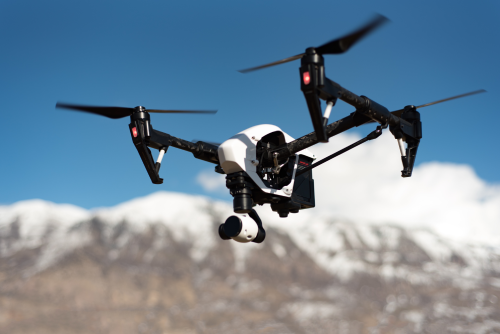
Open landscapes can look spectacular from the ground, yet surprisingly flat from the air if you simply climb and press record. To capture dramatic drone shots in open landscapes, you need four things working together: strong light, clear scale, controlled movement, and a shooting plan that suits real Indian conditions like haze, heat, wind, and access restrictions.
Quick Take
- The most dramatic open-landscape shots usually come from low to medium altitude, not maximum height.
- Shoot early morning or late afternoon for longer shadows, texture, and depth.
- Give the viewer a sense of scale with a road, tree, vehicle, hut, person, boat, or ridgeline.
- Fly slowly and keep your movements simple. One clean move is better than three messy ones.
- Lock exposure and white balance when possible so your footage does not visibly shift mid-shot.
- Use an ND filter for video in bright daylight. It acts like sunglasses for the lens.
- In India, always verify current airspace and local permissions before flying, especially near coasts, borders, wildlife areas, forts, tourist sites, helipads, airports, and defence-sensitive zones.
What makes an open landscape shot feel dramatic?
Open landscapes are beautiful, but they are harder to shoot than cities, mountains, or forests because they often lack obvious vertical subjects. If the land is flat, your drone footage can easily become “big but boring.”
A dramatic shot usually has these ingredients:
1. A clear subject
Even in a vast scene, the eye needs somewhere to land.
That subject could be:
- A lone tree
- A winding road
- A tractor in a field
- A jeep on a desert track
- A fisherman’s boat
- A salt pan pattern
- A ridge line or dune crest
- A small human figure, used safely and legally
Without a subject, an open landscape becomes just empty space.
2. Light that creates shape
Light is what turns flat ground into textured ground.
Side light, especially near sunrise or sunset, creates:
- Long shadows
- Visible ridges
- Texture in sand, grass, and ploughed fields
- Better separation between foreground and background
3. Layers and depth
Your shot feels bigger when it has:
- Foreground
- Midground
- Background
For example, a shot across a dry riverbed feels stronger if you include cracked earth in the foreground, a herd path in the middle, and distant hills in the background.
4. Motion with purpose
Drama does not come from random joystick movement. It comes from movement that reveals something:
- Rise to reveal a horizon
- Move forward to increase tension
- Pull back to show scale
- Track sideways to create parallax, which is the apparent movement between near and far objects
5. Contrast
Contrast can be:
- Light versus shadow
- Tiny subject versus huge landscape
- Straight road versus organic terrain
- Still land versus moving clouds or water
When you combine even three of these elements, the footage starts to feel intentional.
Plan before takeoff
The easiest way to improve your results is to do more work before the props start spinning.
A simple pre-flight planning process
-
Study the location – Check the map. – Look for access roads, obstacles, water, towers, and possible launch spots. – Identify the subject you want in frame.
-
Check light direction – Ask: where will the sun be when I fly? – A road or dune line may look ordinary from one angle and incredible from another.
-
Check wind and weather – Open terrain can be much windier than it feels at launch. – Coastal plains, deserts, plateaus, and hilltops can all produce sudden gusts.
-
Build a short shot list – One reveal shot – One push-in – One pullback – One top-down – One side-tracking shot – One still photo sequence
-
Set safety margins – Decide your return point. – Keep extra battery for flying back against wind. – Set a sensible return-to-home altitude after checking for trees, wires, masts, or structures.
If you show up without a shot list, you will usually waste battery finding ideas in the air.
Best light for open landscapes
If your goal is drama, light matters more than resolution.
The best times to shoot
Early morning
This is often the best time in India because:
- Air can be clearer than later in the day
- Winds are often calmer
- Warm light adds depth
- Dew, mist, or low fog can create atmosphere
It works especially well in:
- Farmland
- Grasslands
- Riverbeds
- Wetlands
- Tea estates
- Desert edges
Late afternoon and sunset
This is excellent for:
- Long shadows
- Warm tones
- Reflective surfaces
- Strong silhouettes
Dunes, dry fields, salt flats, and rocky plateaus often look more sculpted in evening light.
Cloudy or broken-cloud days
Not every dramatic shot needs golden light.
Clouds can add:
- Mood
- Texture in the sky
- Soft, even lighting
- Light patches moving across the ground
This can work beautifully over grasslands, coastlines, reservoirs, and hill plains.
When midday can still work
Midday light is usually harsh, but it can be useful for:
- Top-down shots
- Patterns in fields
- Salt pans
- Beach geometry
- Water edges
- Minimalist compositions
If you shoot at noon, avoid relying on depth. Focus on graphic shapes instead.
India-specific light challenges
Many Indian creators deal with conditions that affect drone image quality:
- Haze in cities, plains, and hot seasons
- Heat shimmer over roads, dry land, and rooftops
- Dust in farms, construction zones, and dry regions
- Strong reflections off water, sand, and salt flats
- Monsoon mood that looks great but changes fast
That means timing matters. A modest drone flown in clean morning light often produces a better result than an expensive drone flown at 1 pm in dusty haze.
Camera settings that actually help
You do not need cinema-grade gear to make landscapes look dramatic. You do need consistent settings.
For video
Frame rate
Use:
- 25 fps or 30 fps for a natural cinematic feel
- 50 fps or 60 fps only if you plan to slow footage down
If you are just starting out, 25 fps or 30 fps is the easiest choice.
Shutter speed
For natural-looking motion blur in video, a common rule is to keep shutter speed at roughly double your frame rate.
Examples:
- 25 fps: around 1/50
- 30 fps: around 1/60
- 50 fps: around 1/100
In bright daylight, that is hard without an ND filter.
ND filter
An ND, or neutral density, filter reduces the light entering the lens. Think of it as sunglasses for your camera.
It helps you keep:
- Lower shutter speeds
- More natural motion blur
- Better-looking video in bright sun
This is especially useful in Indian summers and open, reflective locations.
ISO
ISO controls how sensitive the camera is to light.
For the cleanest image:
- Keep ISO as low as possible
- Raise it only when needed in low light
White balance
If your drone allows it, set white balance manually rather than leaving it on auto.
Why?
Because auto white balance can shift colour during a shot, making the footage look amateur. A fixed setting gives you more consistency.
Colour profile
If your drone offers a flat or log-style colour profile, use it only if you are comfortable editing. If not, a normal or mild profile is perfectly fine.
Bad colour grading is worse than simple, clean footage.
For still photos
If your drone supports it:
- Shoot RAW for more editing flexibility
- Use exposure bracketing for high-contrast scenes
- Keep ISO low
- Watch the histogram if available so you do not blow out the sky
Top-down patterns, water edges, and golden-hour shadows can look excellent in stills even when the video seems ordinary.
A quick settings guide
| Goal | Best setting approach | Why it helps |
|---|---|---|
| Cinematic landscape video | 25 or 30 fps, shutter around double frame rate, low ISO, ND filter | Natural motion and cleaner footage |
| Slow-motion reveal | 50 or 60 fps, faster shutter if needed | Gives flexibility in editing |
| Sunrise or sunset stills | RAW, low ISO, exposure bracketing if available | Better dynamic range in bright skies |
| Midday top-down patterns | Low ISO, slightly faster shutter if needed | Keeps detail crisp in harsh light |
The best drone moves for open landscapes
A dramatic landscape shot usually becomes memorable because of how the camera moves through space.
1. The low push-in
Fly low and move forward toward the subject.
Best for:
- Roads
- Dunes
- Boats
- Tree lines
- Small huts
- Lone rocks
Why it works: The foreground moves faster than the background, which creates a strong sense of depth.
Tip: Do not start too high. Starting lower often feels more immersive.
2. The rise reveal
Start with the subject partly hidden, then gently climb.
Best for:
- Revealing a horizon
- Showing a valley beyond a ridge
- Revealing the scale of a salt flat, river bend, or field
Why it works: The viewer first sees mystery, then scale.
Tip: Keep the climb steady. Jerky vertical movement ruins the reveal.
3. The pullback and climb
Begin near the subject, then slowly move backward while gaining height.
Best for:
- Isolated structures
- A vehicle in the middle of nowhere
- A winding road
- A person standing safely in open land
Why it works: It starts intimate and ends grand.
4. The side track
Fly sideways across the scene while keeping your subject in frame.
Best for:
- Fences
- Riverbanks
- Dunes
- Field edges
- Coastlines
- Ridges
Why it works: It creates parallax, which makes the image feel three-dimensional.
5. The orbit
Fly around a subject while keeping it near the centre or on a third line.
Best for:
- Lone trees
- Towers where permitted
- Rocks
- Small buildings
- Hilltop shrines, if legal and respectful
Why it works: It gives shape and context to the subject.
Tip: Orbit only if the area is clear and you can maintain good separation from obstacles.
6. The top-down drift
Point the camera straight down and move slowly.
Best for:
- Farm patterns
- Salt pans
- Marshland textures
- Beach edges
- Dry river cracks
- Footprints and vehicle tracks
Why it works: It turns landscape into graphic design.
7. The diagonal climb
Move forward and upward at the same time, sometimes with a slight gimbal tilt.
Best for:
- Approaching cliffs or ridges from safe distance
- Following a track toward a horizon
- Building energy in a travel video
Why it works: It combines scale and momentum.
One rule that improves all drone moves
If you are a beginner, change only one or two things at once:
- Forward
- Backward
- Sideways
- Up
- Down
- Gimbal tilt
- Yaw, which is turning left or right
The more controls you combine, the easier it is to create wobble. Clean, simple moves look more professional than busy ones.
Composition tricks that make flat scenes look bigger
Open landscapes often need help from composition more than from gear.
Use a scale reference
A landscape looks dramatic when the viewer understands its size.
Good scale references include:
- A jeep on a road
- A single tree
- A line of camels
- A boat near shore
- A hut in a field
- A safely placed person in an open area away from the drone’s flight path
Do not fly over people just to create scale.
Put the horizon with intention
A centred horizon often feels static.
Try:
- Low horizon when the sky is dramatic
- High horizon when the ground texture is the main story
If both sky and land are mediocre, changing horizon position will not save the shot. Find a better angle.
Use leading lines
These guide the eye into the frame.
Look for:
- Roads
- Footpaths
- Canal edges
- Dry river channels
- Tractor marks
- Shorelines
- Fence lines
- Sand ripples
Even a flat field becomes interesting if a line takes the viewer somewhere.
Build depth with layers
Instead of shooting only the distant view, include:
- Near texture in the foreground
- Subject in the middle
- Horizon or sky in the distance
This works especially well at lower altitudes.
Leave negative space
Negative space is the empty area around the subject.
It works well when you want a cinematic, minimalist frame such as:
- A single bike on a long road
- A fishing boat in calm water
- A tree in dry land
- A hut surrounded by empty fields
Too much empty space without a subject feels blank. With a subject, it feels intentional.
A practical on-location workflow
Here is a simple sequence you can follow on almost any open-landscape shoot.
1. Arrive 20 to 30 minutes early
Use that time to:
- Walk the area
- Check wind
- Look for birds, wires, towers, and people
- Identify your best launch point
2. Pick one hero frame
Before flying, answer this question:
What is the one shot I really want from this location?
That could be: – A reveal of the river bend – A low push across the dunes – A top-down of the salt pan – A pullback from a lone tree
3. Shoot your safest, easiest shot first
Light changes. Batteries drain. Conditions worsen.
Get your best shot first, not last.
4. Capture a standard sequence
A reliable six-shot sequence is:
- High wide establishing shot
- Low push-in
- Rise reveal
- Side track
- Top-down texture shot
- Pullback hero shot
This gives you enough variety for short-form video, YouTube B-roll, real estate outskirts, tourism edits, or a personal travel film.
5. Take stills before landing
If the light is good, grab a few photos too:
- One wide
- One top-down
- One with strong shadow
- One with a clear subject for scale
You already did the hard part by getting the drone in the right place.
Edit for drama, not for overload
A dramatic shot should look polished, not exaggerated.
In video editing
Focus on:
- Trimming shaky starts and stops
- Keeping horizon level
- Slowing clips slightly if they feel rushed
- Adding moderate contrast
- Recovering highlights in bright skies
- Using dehaze carefully if needed
- Matching colour between clips
Avoid:
- Extreme saturation
- Over-sharpening
- Heavy fake HDR look
- Aggressive transitions on every shot
Open landscapes often look best with slower pacing. Let the frame breathe.
In photo editing
A good workflow is:
- Correct exposure
- Recover sky detail
- Add contrast carefully
- Increase texture slightly
- Fine-tune white balance
- Crop for stronger composition if needed
Be careful with greens, oranges, and blues. Many drone shots look unnatural because creators push colour too hard.
India-specific safety, legal, and compliance checks
Drone photography is not just a creative exercise. It is also an operational one.
Before flying in India, verify the latest official guidance that applies to your drone, use case, and location. Rules, airspace status, local permissions, and operational requirements can change.
What to check before every landscape shoot
- Confirm the current airspace status for the area.
- Check whether the location is near an airport, helipad, military area, port, border zone, or other sensitive site.
- Get permission from the landowner or site manager if you are launching from private property such as farms, estates, resorts, mines, or industrial land.
- Avoid flights over crowds, traffic, or people gathering to watch you.
- Maintain visual line of sight at all times.
- Keep extra battery margin for return flights in wind.
- Avoid disturbing wildlife, especially in wetlands, grasslands, coastlines, and nesting areas.
- Be extra cautious in places with tourist traffic, heritage structures, and local administration rules.
Extra caution for certain Indian landscapes
Some landscapes may look empty but are operationally sensitive:
- Coastal belts
- Border districts
- High-altitude plateaus
- Wildlife regions
- Areas near forts, ports, air bases, and strategic roads
- Remote desert stretches with poor recovery options
Do not assume “no one is around” means “it is okay to fly.”
Common mistakes that ruin open-landscape shots
1. Flying too high
Beginners often think higher equals more cinematic.
Usually, it does not.
Very high shots can flatten everything. Lower altitude often gives better depth, texture, and motion.
2. Shooting in bad light
A plain field at noon rarely becomes dramatic just because you used a drone.
Fix: Shoot earlier, later, or switch to top-down pattern shots.
3. No subject in frame
A big empty frame is not always artistic.
Fix: Include a clear anchor that shows scale.
4. Moving too fast
Fast drone movement makes landscapes feel smaller and less premium.
Fix: Slow down and let the scene reveal itself.
5. Auto exposure shifts mid-shot
The scene gets brighter or darker while you are flying.
Fix: Lock exposure if your drone allows it.
6. Crooked horizon
Nothing makes a landscape shot feel accidental faster than a tilted horizon.
Fix: Check gimbal alignment before takeoff and correct in editing if needed.
7. Too many control inputs
You are pushing forward, climbing, turning, and tilting all at once.
Fix: Simplify. One great move is enough.
8. Ignoring wind
Open landscapes can hide dangerous gusts.
Fix: Do a short hover test and watch the drone’s stability before committing to long shots.
9. Over-editing
The land turns neon green, the sky goes unreal, and detail falls apart.
Fix: Edit with restraint.
10. Chasing the shot without checking legality
A scenic location is not automatically a fly zone.
Fix: Verify airspace and permissions before you travel.
FAQ
What altitude is best for dramatic drone shots in open landscapes?
Usually low to medium altitude works best. It preserves texture, scale, and motion. Maximum height is useful for context, but not for every shot.
Is sunrise better than sunset for drone landscapes in India?
Often yes, especially if you want calmer winds and cleaner air. But sunset can produce richer colour and stronger silhouettes. Choose based on the direction of the light and the scene.
Do I need ND filters for drone landscape video?
If you shoot video in bright daylight, yes, they are very helpful. They let you keep slower shutter speeds for smoother, more natural-looking motion.
Should I shoot in 25 fps, 30 fps, or 60 fps?
Use 25 or 30 fps for normal cinematic footage. Use 50 or 60 fps if you know you want slow motion in editing.
Can I still get dramatic shots in flat farmland or plains?
Yes. Use side light, low altitude, a clear subject, leading lines, and slow movement. A tractor track or irrigation channel can become a strong visual element.
Is it okay to fly near beaches, hills, deserts, or tourist viewpoints?
Maybe, maybe not. Scenic areas can still have airspace restrictions, local rules, wildlife sensitivity, or security concerns. Always verify the latest permissions and operating conditions before flying.
Why do my open-landscape shots look boring even in 4K?
Because resolution is not the main problem. The usual issues are bad light, weak composition, flying too high, no subject, and uncontrolled movement.
Should I use auto mode or manual settings?
If you are new, start with the simplest settings you can control confidently. For best results, lock exposure and white balance when possible. Full manual control helps, but only if you understand it.
Is RAW important for drone landscape photos?
Yes, if your drone supports it. RAW files give you more flexibility to recover sky detail and fine-tune colour during editing.
What is the safest way to include a person for scale?
Keep the person stationary in a clear open area, well away from the drone’s path, and never fly directly overhead. Respect privacy and local permissions.
Final takeaway
The next time you shoot an open landscape, do not start by climbing straight up. Start by finding one strong subject, wait for better light, fly lower than you think, and capture four or five slow, deliberate moves. That single change in approach is usually what turns a wide empty scene into a dramatic drone shot worth keeping.
