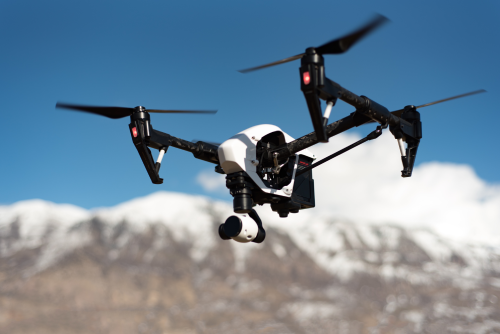
Aerial landscape photography with a drone is not just about flying high and pressing the shutter. The best photos come from planning, light, composition, and careful camera control. If you want to capture aerial landscape photos like a pro, you need to think like both a pilot and a photographer.
For creators in India, this matters even more because landscapes change dramatically by region, season, and weather. A sunrise over the Western Ghats, patchwork farms in Punjab, river bends in Assam, or desert textures in Rajasthan all need different shooting decisions.
Quick Take
- The biggest difference between average and professional-looking aerial landscape photos is not the drone. It is timing, framing, and light.
- Shoot during golden hour when possible: shortly after sunrise or before sunset.
- Use RAW files if your drone supports them. RAW keeps more detail for editing.
- Keep your ISO low for cleaner images. ISO is your camera’s sensitivity to light.
- Do not always fly higher. Many strong landscape photos are made at modest heights with clear foreground, middle ground, and background.
- Use the rule of thirds, leading lines, and layers to make wide scenes feel structured.
- Check weather, wind, visibility, and local restrictions before every flight.
- In India, always verify the latest DGCA, Digital Sky, and local flying requirements before flying.
- Shoot several versions of the same scene: high, medium, straight down, and slightly tilted.
- Edit with restraint. Good aerial landscapes look natural, not overcooked.
What makes an aerial landscape photo look professional
A professional-looking aerial landscape image usually has five things:
Strong light
Light shapes the land. Soft low-angle sunlight reveals texture in hills, fields, dunes, roads, and water. Midday light often flattens everything.
Clear subject
A landscape still needs a main point of interest. It could be:
- A winding river
- A lone road through farmland
- A temple on a hill
- Sand patterns in a desert
- A coastline with waves and rocks
- Terraced fields or tea gardens
Without a subject, the photo becomes a random wide view.
Depth
Good aerial images often show layers:
- Foreground
- Midground
- Background
Even from the air, depth matters. A low-altitude shot with trees in front, a lake in the middle, and hills in the background can feel much more dramatic than a very high shot of the same place.
Clean composition
The frame should feel intentional. Avoid visual clutter, awkward cut-offs, and empty space that does not add anything.
Controlled editing
Professional images are edited, but not destroyed by editing. Highlights, shadows, color, and contrast should support the scene, not distract from it.
Start before takeoff: plan the shot, not just the flight
Many beginners launch first and think later. Professionals do the opposite.
How to plan an aerial landscape photo shoot
1. Choose a location with shape and structure
Landscapes look better from above when they have patterns, contrast, or geometry.
Look for:
- Rivers and lakes
- Curving roads
- Ridge lines and valleys
- Coastlines
- Agricultural grids
- Forest clearings
- Rock formations
- Waterfalls and reservoirs
- Salt pans, marshes, and wetlands
Flat open ground without texture can look dull unless the light is excellent.
2. Use maps and satellite view
Before you leave home, study the area. Look for:
- Natural lines and patterns
- Access points
- Open takeoff spots
- Obstacles such as trees, power lines, towers, and buildings
- Water bodies and reflective surfaces
- Nearby restricted or sensitive areas
This simple step saves time and helps you decide which direction to fly.
3. Check the weather properly
For landscape photos, weather matters almost as much as location.
Pay attention to:
- Wind speed
- Cloud cover
- Haze
- Rain risk
- Visibility
In many Indian cities and plains, haze can ruin long-distance shots, especially after sunrise if pollution is heavy. In the monsoon, dramatic clouds can be beautiful, but rain, gusts, and low visibility can become unsafe quickly.
4. Decide your best time of day
The best light is usually:
- Early morning
- Late afternoon to sunset
Why? Low-angle light creates long shadows and reveals texture.
Good examples in India:
- Rice fields and village roads look richer in low morning light.
- Himalayan foothills often look clearer in the early hours before haze builds up.
- Desert scenes in Rajasthan gain shape and contrast near sunrise or sunset.
- Coastal scenes in Goa, Kerala, Tamil Nadu, or Gujarat often work best when the sun is low and the water picks up color.
Safety, legal, and compliance checks in India
This is a photography article, but safe and legal flying is part of professional work.
Before flying in India, always verify the latest official requirements from DGCA, Digital Sky, and any local authority rules. Regulations, permissions, airspace rules, and operational restrictions can change.
Keep these points in mind:
- Check whether the location is allowed for drone operations.
- Avoid airports, military areas, and other restricted zones.
- Be extra careful near cities, government buildings, and sensitive infrastructure.
- Do not fly over crowds or busy roads.
- Respect privacy. Do not photograph private property or people in a way that is intrusive.
- Protected wildlife areas, forest zones, monuments, and local tourist locations may have extra restrictions or separate permissions.
- Fly only in weather your drone and skill level can handle.
- Keep visual line of sight with the drone.
- Maintain enough battery reserve to return safely.
If you are shooting commercially for a client, double-check insurance, documentation, and local permissions where required. If anything is unclear, do not assume. Verify first.
Gear matters, but less than most people think
You do not need the most expensive drone to make strong landscape photos. What you do need is a drone with a stable camera, reliable GPS positioning, and a decent sensor.
Features that help most for aerial landscapes
- RAW photo capture
- Manual exposure control
- Exposure bracketing, if available
- A 3-axis gimbal for smooth camera stability
- Good dynamic range, meaning the camera can hold detail in both bright and dark areas
- Multiple focal lengths, if your drone offers them
Useful accessories
- Extra batteries
- High-speed memory cards
- Landing pad if the ground is dusty
- Microfiber cloth for the lens
- Sun hood for your phone or controller screen
- Neutral density filters only if you need them for specific creative effects or video
For still photography, ND filters are not always necessary. They are more important for video. For photos, sharpness, exposure, and timing matter more.
Camera settings for sharper, cleaner aerial landscape photos
If your drone supports manual controls, learn the basics. This alone can improve your images quickly.
Best starting settings
Shoot RAW
RAW files preserve more image information than JPEG. That gives you more flexibility when editing skies, shadows, and color.
If your drone allows RAW+JPEG, that can be a practical choice.
Keep ISO low
Use the lowest practical ISO, often ISO 100. Higher ISO adds noise, especially in shadows and low light.
Use a safe shutter speed
Because the drone is moving and the air is not perfectly stable, avoid very slow shutter speeds unless conditions are calm and you know what you are doing.
A faster shutter speed helps keep details sharp.
Watch exposure compensation
If the sky is bright, the camera may underexpose the land or overexpose the clouds. Use exposure compensation or manual exposure to balance the scene.
Use manual white balance when possible
White balance controls overall color temperature. Auto white balance can shift between shots and make a series look inconsistent. Locking it gives you more consistent results.
Turn on the histogram
A histogram is a graph showing how bright or dark your image is. It helps you see if highlights are blown out or shadows are crushed, even when your screen is hard to judge in sunlight.
Starting settings by shooting condition
| Situation | ISO | Shutter priority | Notes |
|---|---|---|---|
| Bright sunrise or sunset | Lowest possible | Fast enough for sharpness | Protect highlights in clouds |
| Soft cloudy light | Lowest possible | Moderate | Great for even tones and editing flexibility |
| Midday harsh sun | Lowest possible | Fast | Avoid if possible; shadows can look flat |
| Hazy conditions | Lowest possible | Fast | Keep compositions simpler and closer |
| Water reflections | Lowest possible | Fast | Watch overexposure and glare |
These are starting points, not fixed rules. Always adjust based on wind, light, and your drone’s camera.
Composition techniques that make aerial landscapes look polished
Composition is where most “pro” looking photos are made.
Use altitude as a creative tool
Beginners often think higher always means better. It does not.
Try three heights for the same scene:
- Low altitude for depth and intimacy
- Medium altitude for balanced context
- High altitude for abstract patterns and scale
A low flight over a river bend can show trees, banks, and distant hills in layers. A very high shot may flatten the entire scene.
Build the frame with layers
Layers make a landscape feel deep.
Look for combinations like:
- Foreground trees, midground water, distant mountains
- Foreground rocks, midground waves, background coastline
- Foreground farmland, midground village, background hills
If the frame feels flat, lower your altitude or change your camera tilt.
Use the rule of thirds
Imagine the frame divided into nine equal parts. Place key elements near the intersections or along the lines.
Examples:
- Horizon on the upper third when land is more interesting
- Horizon on the lower third when sky and clouds are dramatic
- River curve starting from a lower corner and leading inward
Look for leading lines
Leading lines guide the viewer’s eye through the image.
Great aerial leading lines include:
- Roads
- Rivers
- Coastlines
- Tree rows
- Railway lines
- Canal systems
- Terraced field edges
Try straight-down shots
A top-down shot can turn a normal place into a graphic composition. This works especially well with:
- Salt pans
- Farmland
- Boats near shore
- Forest clearings
- Sand patterns
- Rooftops and courtyards, where legally and ethically appropriate
Straight-down images work best when there is strong shape, color contrast, or repetition.
Keep the horizon level
A tilted horizon makes a landscape look careless unless the angle is intentional and obviously creative. Check the horizon before every shot, especially in coastal scenes.
Do not center everything
A centered subject can work, but many beginners center every frame. Shift the subject. Let negative space support the composition rather than dominate it.
Flight techniques for better still photos
You are not only operating a camera. You are positioning a camera in 3D space. That is the real power of drone photography.
A simple pro workflow in the air
1. Reach the scene slowly
Do not rush to your maximum height. As you climb, look at how the composition changes.
2. Stop and hover before shooting
Even with a stable gimbal, still photos are often sharper when the drone is settled.
3. Make small movements
Move a little higher, lower, left, right, forward, or backward. Tiny changes can clean up the frame dramatically.
4. Shoot in sets
For each composition, take:
- One wide shot
- One slightly tighter shot
- One top-down version if suitable
- One lower-angle version with more depth
5. Change camera tilt deliberately
A slight tilt downward often works better than extreme downward angles for landscapes because it preserves depth and distance.
A practical example
Suppose you are shooting terraced fields in Uttarakhand or tea gardens in Munnar.
Instead of flying straight up and taking one high photo, try this:
- Start low enough to include one strong foreground terrace.
- Tilt the camera slightly down so the pattern leads into the distance.
- Move sideways until the terraces create diagonal flow across the frame.
- Wait for soft light to define the edges.
- Capture a set at low, medium, and higher altitude.
The best image may not be the highest one. It may be the one where texture and depth are strongest.
How to work with light like a professional
Light is often the difference between a good photo and a memorable one.
Best light for aerial landscapes
Golden hour
This is the most reliable time for dramatic landscape images. The light is warmer, shadows are longer, and the land has more form.
Blue hour
The short period before sunrise or after sunset can work for calm, moody scenes, especially near water or city edges. But low light increases the risk of blur and noise.
Overcast days
Cloudy conditions can be excellent for waterfalls, forests, greenery, and even farmland because the light is even and soft. Colors often look richer without harsh shadows.
Harsh midday sun
Usually the hardest light for landscapes. It can still work for:
- Straight-down abstract compositions
- Coastal water with strong color
- Desert texture when the pattern itself is the subject
But in general, if you have a choice, shoot earlier or later.
Learn to expose for the sky and land
Landscape scenes often have bright skies and darker land. This is a dynamic range challenge.
To handle it:
- Check the histogram
- Slightly protect highlights instead of blowing out clouds
- Recover shadows later if shooting RAW
- Use exposure bracketing if your drone supports it and the scene is stable
Exposure bracketing means taking multiple photos at different exposures so you can choose the best one or blend them later.
What to shoot in different Indian landscapes
India gives you a huge range of aerial subjects. Your approach should change with the terrain.
Mountains and hills
Best for:
- Layered ridges
- Valleys
- Winding roads
- Early morning mist
Tips:
- Shoot early for clearer air
- Use side light to reveal texture
- Include scale, such as a road or river
- Be cautious with wind and terrain obstacles
Farmland and rural landscapes
Best for:
- Patchwork patterns
- Irrigation lines
- Dirt roads
- Seasonal color variation
Tips:
- Top-down shots work very well
- Use symmetry and repeating shapes
- Golden hour adds beautiful texture
- Be mindful of people working in the fields and respect privacy
Coastlines and beaches
Best for:
- Curves of land and water
- Waves and foam patterns
- Rocks, piers, or backwaters
Tips:
- Keep horizons level
- Watch for glare and overexposure
- Tide changes can transform the composition
- Wind near the coast can be stronger than expected
Deserts and dry landscapes
Best for:
- Dunes
- Tracks and shadows
- Minimal, graphic compositions
Tips:
- Low sun is essential for showing shape
- Look for clean lines and negative space
- Avoid clutter from random footprints or vehicles if possible
Waterfalls, rivers, and reservoirs
Best for:
- Leading lines
- Reflective surfaces
- Natural curves
Tips:
- Avoid flying too close to spray or mist
- Use a slightly lower angle to preserve depth
- Include surrounding terrain, not just the water itself
Editing aerial landscape photos without ruining them
Editing should make your image look finished, not fake.
A simple editing workflow
1. Correct exposure first
Adjust:
- Highlights
- Shadows
- Whites
- Blacks
Try to recover detail while keeping the image natural.
2. Fine-tune white balance
If the scene looks too blue, too yellow, or inconsistent, fix it here.
3. Add contrast carefully
Landscape images need separation, but too much contrast can make them look harsh.
4. Improve color with restraint
Boosting vibrance slightly can help. Heavy saturation often makes fields, water, and skies look unnatural.
5. Add clarity or texture lightly
These controls can reveal detail in terrain, but overdoing them creates crunchy, artificial images.
6. Sharpen last
Most drone photos need only moderate sharpening. Too much creates halos around edges.
7. Crop for structure
Do not hesitate to crop. A tighter crop can remove distractions and strengthen the subject.
A useful editing mindset
Ask yourself:
- What is the subject?
- What should the viewer notice first?
- Does the edit support the light and mood I actually saw?
If the answers are unclear, simplify the edit.
Common mistakes that make aerial landscape photos look amateur
Flying too high too quickly
Higher is not automatically better. You often lose depth, subject clarity, and emotional impact.
Shooting in bad light
A good location in poor light usually looks average. An ordinary location in great light can look excellent.
Ignoring the foreground
Even aerial photos need a visual entry point. A tree line, ridge, road, or shoreline can help pull the viewer in.
Relying only on auto mode
Auto can work, but it often struggles with bright skies and dark terrain. Learn basic exposure control.
Taking only one angle
Professionals capture options. One position rarely gives the best frame immediately.
Overediting
Over-saturated greens, neon blue water, crushed shadows, and extreme HDR effects are common mistakes.
Forgetting the story
A landscape photo should say something about the place. Scale, season, weather, and shape all help tell that story.
Not cleaning the lens
A small smudge can reduce contrast and create flare, especially around sunrise and sunset.
Ignoring wind
Even if the drone seems stable, gusty wind can reduce sharpness and make precise composition harder.
A repeatable step-by-step workflow you can use on your next shoot
Before the flight
- Check whether the location is legal and safe to fly.
- Review maps and identify likely compositions.
- Check wind, cloud cover, and visibility.
- Charge batteries and clean the lens.
- Plan to shoot during the best light.
On location
- Observe the light before launch.
- Choose a safe takeoff point.
- Start with low and medium heights before going high.
- Build frames with layers, lines, and a clear subject.
- Shoot RAW and monitor exposure with the histogram.
- Capture several variations of each scene.
After the flight
- Select the strongest image based on composition first, not just color.
- Edit exposure and color gently.
- Compare your final edit with the original to avoid overprocessing.
- Save both a high-resolution version and a web-ready version.
FAQ
Do I need an expensive drone to capture professional-looking aerial landscapes?
No. A better drone helps, especially with sensor quality and RAW support, but strong light, composition, and editing matter more than price.
What is the best time to shoot aerial landscape photos?
Usually early morning or late afternoon. Golden hour gives softer light, better texture, and more attractive color.
Should I shoot RAW or JPEG?
Shoot RAW if your drone supports it. RAW gives you more flexibility in editing, especially for skies, shadows, and color correction.
Is it better to fly high for landscape photos?
Not always. Medium or even low altitude often creates more depth and stronger compositions. High altitude is useful for scale and abstract patterns.
What camera angle works best for landscapes?
A slight downward angle is often ideal because it shows both shape and distance. Straight-down shots also work well when the scene has strong patterns.
How do I avoid blurry drone photos?
Use a low ISO, maintain a reasonably fast shutter speed, let the drone settle before shooting, and avoid flying in strong wind.
Can I shoot good aerial landscapes in cloudy weather?
Yes. Overcast light is excellent for greenery, forests, waterfalls, and even-toned scenes. It is less dramatic than golden hour but often easier to edit.
How important is editing?
Very important, but it should be subtle. Editing helps recover detail, improve color balance, and guide the viewer’s eye. Overediting quickly makes drone photos look unnatural.
Are there special rules for drone photography in India?
There can be, depending on the location, airspace, and purpose of the flight. Always verify the latest DGCA, Digital Sky, and local authority requirements before flying.
What should I practice first as a beginner?
Practice holding a steady hover, changing altitude slowly, tilting the camera deliberately, and composing one scene at three different heights.
Final takeaway
If you want to capture aerial landscape photos like a pro, stop thinking only about the drone and start thinking about light, shape, and timing. On your next flight, pick one location, go at sunrise or sunset, shoot it at three heights, keep your ISO low, and make five deliberate compositions instead of fifty random ones. That is the fastest path to better aerial photos.
