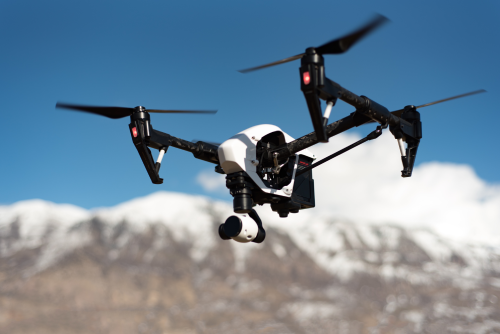
Most drone buying mistakes happen before checkout. Buyers compare camera resolution, top speed, and range, but ignore the bigger question: what job will this drone actually do in India, and can you legally and reliably use it? If you want to know how to avoid buying the wrong drone, start with use case, flying conditions, compliance, and after-sales support before you look at flashy specs.
Quick Take
- The wrong drone is usually not a bad drone. It is a bad match for your needs.
- Decide first whether you want a drone for travel, learning, content creation, business work, surveying, agriculture, or FPV action flying.
- In India, legal use matters as much as features. Always verify the latest DGCA and Digital Sky requirements before buying or flying.
- Good beginner drones are predictable, stable, easy to repair, and supported with spare batteries and props.
- Headline claims like “8K,” “45-minute flight time,” or “10 km range” are often less important than camera quality, app reliability, wind performance, and service support.
- The total cost includes batteries, memory cards, propellers, case, repairs, insurance if relevant, and training time.
- If you only need occasional aerial shots, hiring a trained operator may be smarter than buying.
Why buyers end up with the wrong drone
Most bad drone purchases follow the same pattern.
A buyer watches impressive videos, picks the model with the biggest spec list, and assumes it will fit every scenario. Then reality arrives:
- The drone is too large or noisy for the places they actually fly.
- The camera looks worse than expected despite a high megapixel number.
- Spare batteries are costly or hard to find.
- The app is unreliable on their phone.
- Repairs take too long.
- The model is not a good fit for lawful operation in their intended use case.
- The buyer wanted cinematic travel shots, but bought an FPV drone.
- The buyer wanted to learn safely, but bought something too expensive and stressful to practice with.
The easiest way to avoid buying the wrong drone is to stop asking, “Which drone is best?” and start asking, “Best for what, where, and how often?”
Buy for the job, not the brochure
Before you compare models, be honest about your main use case. Not your dream use case. Your actual one.
Which type of buyer are you?
| Buyer profile | Best fit | What to prioritise | Usually the wrong buy |
|---|---|---|---|
| Casual beginner or family user | Simple camera drone with GPS stability | Easy controls, return-to-home, good app, spare batteries, local support | Racing or FPV drone, or a very expensive pro model |
| Travel creator or vlogger | Compact foldable camera drone | Portability, quick setup, reliable video, wind handling, battery convenience | Bulky pro drone or a toy drone with poor stabilisation |
| Real estate, social media, wedding content team | Stable camera drone with good low-light performance and smooth video | Gimbal, colour consistency, file reliability, service turnaround | Ultra-cheap drone with shaky footage or weak app |
| Student or engineering learner | Durable beginner platform or simulator plus entry-level drone | Repairability, availability of parts, safe practice, predictable flight | Expensive creator drone bought only to “learn on” |
| Survey, inspection, mapping, industrial work | Purpose-built professional workflow drone | Data accuracy, mission planning, support, training, compliance, batteries | Consumer camera drone expected to handle professional deliverables |
| FPV enthusiast | FPV drone and simulator | Flight skills, spares, safety gear, repair knowledge | Standard camera drone bought for action flying |
The “one drone does everything” trap
This is where many buyers go wrong.
A standard camera drone is great for smooth aerial video and photos. It is not the best tool for aggressive FPV shots.
An FPV drone is exciting and immersive, but it is not the easiest platform for stable real estate footage or beginner flying.
A consumer camera drone may be good for basic site visuals, but that does not automatically make it suitable for precise mapping, inspection reporting, or agricultural operations.
If you need one drone for many roles, prioritise the job that matters most and accept the trade-offs. If the trade-offs are too big, you may need two separate tools over time, not one “do everything” purchase.
Match the drone to where you will actually fly
A drone that looks perfect on paper can feel wrong in the field.
Think about your real flying environment in India:
Crowded urban areas
Cities create problems fast:
- Limited open space
- Buildings that interfere with satellite lock and signal
- Heavy traffic, wires, towers, and people
- Greater privacy concerns
- Higher chance of local objections
If most of your flying will be in urban areas, prioritise a compact, predictable, quiet camera drone with strong stability and good safety features. But also remember that many city locations may not be suitable or permitted for flight. Verify the current airspace rules before every operation.
Farms, fields, and rural land
Open spaces sound easy, but they can still be tricky:
- Wind is often stronger than expected
- Heat reduces battery performance
- Dust affects motors and cameras
- Birds may attack the drone
- You may still be near restricted or sensitive areas without realizing it
If you fly in rural areas, wind resistance, visibility, battery management, and clear takeoff/landing habits matter more than flashy range claims.
Hills, coasts, and travel locations
Beautiful places are often the hardest to fly in.
Coastal winds, mountain gusts, sudden weather changes, and limited landing spots can make a lightweight drone frustrating. A travel-friendly model is useful, but only if it stays stable and gives you confidence in changing conditions.
Indoors and event venues
Many beginners think, “I’ll just use it indoors for weddings or events.”
That is often a wrong assumption. Indoor flight is a specialised skill. GPS may not help properly indoors, spaces are tight, and people, lights, décor, and ceilings add risk. If your real goal is indoor event coverage, do not casually buy a normal outdoor camera drone and expect easy results. This type of work should be planned carefully, with venue approval, crowd safety, and trained operation.
The features that matter more than marketing
Drone advertising is designed to pull your eyes toward the wrong numbers.
These are the claims buyers often overvalue, and what matters more in practice.
| Marketing claim | What to check instead | Why it matters more |
|---|---|---|
| “8K” or very high megapixels | Sensor quality, gimbal stability, bitrate, dynamic range, colour | A better camera system beats a bigger number on the box |
| Very long range | Link reliability, controller quality, local legal limits, line-of-sight flying | Most buyers never need extreme range, and safe lawful flying is usually much shorter |
| Maximum flight time | Real-world flight time in wind and heat | Indian weather can cut advertised numbers noticeably |
| High top speed | Stability, braking, control feel, safety | Speed is less useful than confidence and precision |
| Obstacle avoidance | How well it works in real conditions and from which directions | It helps, but it is not magic and cannot replace pilot judgment |
| Foldable design | Hinge quality, durability, cooling, ease of setup | Compact is good, but not if it compromises reliability |
What you should prioritise instead
1. Stable flight and GPS performance
For beginners, the most useful feature is not speed. It is stability.
A stable drone with good GPS positioning will hover more predictably, resist light wind better, and reduce panic. That makes learning easier and footage smoother.
2. Camera quality, not just resolution
If you care about video, look beyond resolution labels.
Ask:
- Is the footage actually smooth?
- Does it handle bright skies and shadows well?
- Is the low-light performance usable?
- Does the camera sit on a gimbal, meaning a motorised stabiliser that keeps footage level and smooth?
A properly stabilised 4K camera is often more valuable than a poorly processed “higher resolution” camera.
3. App and controller quality
A bad app ruins the ownership experience.
Check whether users report:
- Connection drops
- Laggy live view
- Phone overheating
- Poor map handling
- Complicated firmware updates
- Frequent app crashes
A drone can have excellent hardware and still be a bad buy if the software is unreliable.
4. Battery ecosystem
Never judge a drone only by what comes in the box.
Ask:
- How many batteries do you realistically need?
- Are extra batteries easy to buy in India?
- Are they widely available after a year?
- How long do they take to charge?
- Can you charge them efficiently while travelling?
A drone with poor battery availability becomes annoying very quickly.
5. Repairability and spare parts
This is where “cheap” drones become expensive.
Before buying, check whether props, landing parts, arms, chargers, and batteries are easy to source. If every minor issue means long downtime or overseas shipping, it is a poor value purchase.
6. Wind handling and confidence
A drone that flies beautifully in review videos may feel nervous in real outdoor use.
Look for owner feedback about:
- Stability in moderate wind
- Horizon level in video
- Return-to-home behavior
- Landing accuracy
- Overall confidence for new pilots
Real-world consistency matters more than a long spec sheet.
India-specific legal and compliance checks before you buy
This is one of the easiest places to make an expensive mistake.
Drone rules in India can change, and requirements may differ based on the drone’s class, its intended use, and where and how you fly. So be careful with old YouTube videos, outdated forum advice, or seller claims.
Before you buy, verify the latest official guidance on:
- DGCA rules
- Digital Sky procedures
- Airspace restrictions
- Registration or permission requirements, if applicable
- Whether your intended operations are allowed for that type of drone and use case
- Any current requirements related to NPNT, which means “No Permission, No Takeoff,” if applicable to your aircraft or workflow
- Business use, pilot training, documentation, or insurance needs where relevant
A few practical rules help:
Do not assume your location is okay
Your home terrace, college campus, farm, resort, or wedding venue is not automatically a legal flying location.
Always check the latest airspace status and local restrictions before flight.
Do not buy first and research later
Many buyers assume compliance can be “sorted out later.” That is backwards.
If you are buying for client work, inspections, mapping, agriculture, or recurring commercial jobs, legal suitability should be checked before purchase, not after.
Be careful with imported or unofficially sourced models
An attractive deal can become a headache if the drone’s software, documentation, warranty, or support path does not suit Indian use. Before buying a foreign-sourced or older model, confirm what you would need for lawful operation, servicing, and firmware support.
Privacy and public safety matter
Even where flight is technically possible, that does not make it appropriate.
Avoid buying with the expectation of flying over crowds, near airports or helipads, over sensitive areas, or in ways that invade people’s privacy. If your use case depends on risky or questionable flying, the drone is not the problem. The plan is.
Don’t ignore after-sales, repairability, and total cost
A smart drone purchase is really an ecosystem purchase.
Your real budget is not just the drone
Plan for:
- At least one or two extra batteries if you expect regular use
- Spare propellers
- Suitable memory card
- Carry case or bag
- Charging accessories
- Basic maintenance and cleaning
- Potential repairs
- Insurance, if relevant for your work
- Practice time, and maybe simulator time for FPV
A drone that seems affordable can become poor value if every add-on is expensive or unavailable.
After-sales support is a buying feature
Ask these questions before ordering:
- Is there reliable service support in India?
- How long do common repairs usually take?
- Are batteries and props easy to get?
- Is the model likely to receive software updates for a reasonable period?
- Is there a clear warranty process?
- Can local shops actually help, or do they only sell?
For buyers outside major metros, this matters even more.
Buying used? Check these first
A used drone can be a great deal, but only if you inspect it properly.
Check:
-
Crash history
Ask directly whether it has been crashed, repaired, or water exposed. -
Battery condition
Weak batteries can ruin a bargain. -
Gimbal health
The gimbal should initialise properly and hold level without shaking. -
Motors and arms
Listen for unusual sounds and check for cracks, looseness, or repairs. -
Controller and app connection
Confirm the full system pairs and works normally. -
Firmware status
Make sure the drone is not stuck in a software problem the seller wants to offload. -
Serial numbers, invoice, and accessories
Missing proof of purchase or mismatched parts are warning signs.
If anything feels unclear, walk away. There is always another drone for sale.
Common mistakes that lead to buyer’s regret
- Buying for specs, not use case
- Expecting one drone to cover travel, FPV, weddings, mapping, and inspections equally well
- Ignoring Indian compliance questions until after purchase
- Choosing the cheapest option without checking repair support
- Believing advertised flight time as real flight time
- Assuming obstacle avoidance will prevent all crashes
- Underbudgeting for batteries and accessories
- Buying a large, intimidating drone as a first practice platform
- Buying a fragile toy drone and expecting creator-level footage
- Trusting seller claims more than real owner feedback
A simple 7-step buying process
If you want to avoid buying the wrong drone, follow this sequence:
-
Write down your main use case in one sentence.
Example: “I want smooth travel video and occasional family photos.” -
List where you will realistically fly.
City rooftops, farms, highways, tourist spots, campuses, indoor venues, or client sites all change the right answer. -
Verify current legal suitability in India.
Check official rules before narrowing models. -
Set an all-in budget, not just drone budget.
Include batteries, props, storage, case, and potential repairs. -
Shortlist only models with reliable support.
Remove anything with weak service, hard-to-find batteries, or poor app feedback. -
Watch real-world reviews, not launch videos.
Focus on app reliability, wind handling, image quality, and ownership experience. -
If still unsure, choose simpler.
A predictable, well-supported drone is usually a better first purchase than a feature-heavy drone you are afraid to fly.
FAQ
Is a toy drone a good first drone?
Only if your goal is basic orientation and casual indoor practice. If your real goal is photography, travel content, or outdoor learning, a toy drone often teaches the wrong lessons and delivers disappointing footage.
Should a beginner buy an expensive professional drone?
Usually no. Beginners benefit more from a stable, forgiving, easy-to-repair drone than from a premium tool they are scared to fly.
Is 4K enough in 2026?
For most beginners and creators, yes. Good stabilisation, colour, and dynamic range usually matter more than chasing higher resolution numbers.
How many batteries should I plan for?
For regular outdoor use, one battery is rarely enough. The exact number depends on your work, travel style, and charging access, but buyers should budget for extra batteries from day one.
Can one drone handle photography, video, FPV, and surveying?
Not well. Some drones cover photo and video nicely, but FPV and professional surveying are usually specialised categories.
Is it safe to buy a drone from abroad or from an unofficial seller?
Sometimes the price looks attractive, but support, warranty, firmware, documentation, and India-specific compliance can become serious problems. Verify all of that before buying.
Do I need to check DGCA or Digital Sky even as a hobby user?
Yes. Even hobby users should verify the current official rules, airspace restrictions, and any applicable requirements before buying and flying.
Is obstacle avoidance necessary?
It is helpful, especially for beginners, but it should not be the reason you buy a drone. Good control habits, clear surroundings, and responsible flying matter more.
Should I buy a drone or hire a pilot?
If you only need occasional aerial shots, hiring a trained operator may save money, reduce legal confusion, and deliver better results. Buying makes more sense when you will fly regularly and can invest in learning properly.
Final takeaway
The best way to avoid buying the wrong drone is simple: buy for your most common job, your real flying environment, and your actual ownership budget, not for the most exciting spec sheet. If a model fits your use case, has dependable support in India, and passes your legal and practical checks, you are far more likely to end up with a drone you will actually use instead of one you regret.
