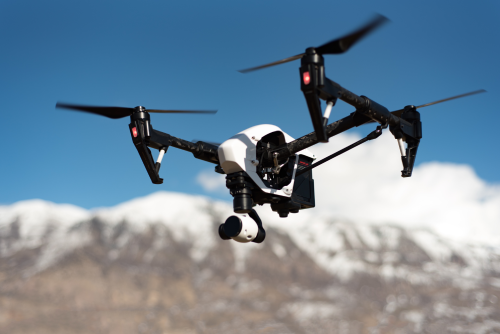
Wind turbine inspection is one of the clearest examples of where drones solve a real industrial problem. Instead of sending technicians up towers or hanging them on ropes for every visual check, operators can use drones to capture close-up images of blades, towers, hubs, and nacelles faster, more safely, and with less turbine downtime.
Quick Take
- Drones are used in wind turbine inspection to check blades, towers, nacelles, hubs, and surrounding infrastructure without relying only on manual climbing or rope access.
- The biggest value is speed, safety, repeatability, and better visual records.
- High-resolution RGB cameras handle most inspections. Zoom and thermal cameras add value for specific cases.
- Drones are especially useful for routine checks, post-storm surveys, lightning-strike assessment, and defect confirmation across large wind farms.
- They do not fully replace technicians. If a defect is found, hands-on inspection or repair may still be required.
- In India, operators must verify the latest DGCA and airspace rules, follow site safety procedures, and coordinate closely with the wind farm owner or O&M team before flying.
Why wind turbines need regular inspection
A wind turbine works in a harsh environment for years. Its blades face constant stress from wind, dust, rain, heat, moisture, and sometimes salt in coastal areas. Over time, small issues can become serious if they are not detected early.
Common problems include:
- leading edge erosion, which is wear on the front edge of the blade
- surface cracks
- coating or paint damage
- lightning strike marks
- trailing edge openings or splits
- corrosion on tower sections
- oil leaks or stains near the nacelle
- external damage after storms or transport
- foundation surface issues and drainage problems around the base
In India, these risks can vary by location:
- Coastal wind farms may see corrosion and salt exposure.
- Dry and dusty regions may face faster blade surface wear.
- Monsoon conditions can limit inspection windows.
- Remote sites spread over large areas make manual checks slower and more expensive.
That is why inspection is not just a maintenance task. It is a way to reduce unexpected failure, avoid larger repair bills, and keep turbines generating power.
What drones inspect on a wind turbine
Drones are mainly used for detailed external inspection. They are very good at getting close visual access to areas that are difficult or risky to inspect from the ground.
| Turbine area | What drones look for | Typical payload |
|---|---|---|
| Blades | Cracks, erosion, lightning marks, coating loss, trailing edge damage, tip damage | High-resolution RGB camera, zoom camera |
| Hub and spinner | Surface damage, loose or missing panels, staining, impact signs | RGB camera, zoom camera |
| Nacelle exterior | Oil staining, panel condition, cooling vents, visible external hot spots in some cases | RGB camera, thermal camera where relevant |
| Tower | Rust, paint failure, corrosion, weld area concerns, ladder or platform exterior condition | RGB camera, zoom camera |
| Foundation and base area | Surface cracks, drainage issues, oil spills, vegetation or debris buildup | RGB camera, oblique mapping photos |
| Nearby electrical assets within the wind site | Visible condition of external components, thermal anomalies on exposed equipment | RGB and thermal, depending on task |
A few important limits matter here:
- Drones are strongest at visual inspection.
- They cannot reliably confirm hidden internal damage inside a blade just by looking at the surface.
- Thermal imaging can help in some situations, but it is not a magic tool.
- For serious defects, operators may still need rope access, non-destructive testing, or component-level maintenance.
How a typical drone inspection works
A professional wind turbine drone inspection is more structured than many people assume. It is not just “fly around and take photos.”
1. Define the purpose of the inspection
The first step is deciding what the job is for:
- routine annual or periodic inspection
- post-monsoon or post-storm assessment
- suspected lightning damage
- warranty documentation
- pre-repair or post-repair verification
- defect follow-up after an earlier report
This matters because the flight plan, camera settings, reporting format, and time on site all depend on the purpose.
2. Secure site approval and confirm compliance
Before flying, the team should confirm:
- site owner permission
- wind farm safety induction or permit-to-work requirements
- turbine shutdown or parking procedure, if close inspection is planned
- latest DGCA and airspace compliance requirements
- whether any local restrictions or sensitive infrastructure rules apply
Large wind farms often sit in remote areas, but that does not mean a flight can be taken for granted. Operators should verify the current rules before every mission.
3. Park and secure the turbine through the authorized maintenance team
For close-up blade inspection, turbines are typically parked and secured by the site’s authorized maintenance personnel. This is a critical safety step.
A drone should not be flown close to moving blades for inspection work. Even highly experienced pilots avoid that kind of unnecessary risk.
4. Plan the flight path
The team decides:
- which sides of each blade to inspect
- required image resolution
- standoff distance from the structure
- orbit pattern or manual inspection route
- battery needs
- emergency landing points
- wind and weather limits
Some teams use automated flight paths for consistency. Others fly manually for better control around specific defects.
5. Capture visual and thermal data
Most wind turbine inspections rely heavily on high-resolution photos. The pilot or camera operator aims for:
- sharp close-ups
- consistent angles
- enough overlap between images
- full coverage of all blade zones
- clear labeling of each turbine and blade position
If thermal imaging is part of the job, the team also considers:
- sun angle
- ambient temperature
- reflective surfaces
- the best time of day for useful thermal contrast
6. Check image quality on site
This step is often overlooked.
Before leaving the turbine, the crew should confirm:
- images are in focus
- no section was missed
- the defect area is properly documented
- file names or folders match the correct turbine
- thermal images are usable and not distorted by poor conditions
Re-flying the same turbine later is costly and inefficient.
7. Process and review the data
After the flight, the images may be:
- sorted by turbine and component
- stitched into inspection sets
- reviewed by engineers
- annotated with defect tags
- compared with older inspections
- fed into analysis software for trend tracking
Some companies use software that can automatically flag cracks, erosion, or anomalies. That can speed up review, but human validation is still important.
8. Turn inspection findings into maintenance action
A good inspection ends with a decision, not just a folder full of photos.
Typical outputs include:
- defect severity list
- annotated images
- recommendations for follow-up inspection
- repair priority ranking
- comparison against previous damage
- proof that a repaired area looks satisfactory
This is where drone inspection becomes valuable for operations and maintenance teams, not just for the drone pilot.
Which drones and sensors are used
Not every drone is suitable for wind turbine inspection.
Multirotor drones are the main choice
For close inspection work, multirotor drones are the most common because they can:
- hover steadily
- move slowly around curved blade surfaces
- hold position for detail shots
- operate in tighter spaces than fixed-wing aircraft
Fixed-wing drones are useful for mapping large wind farm land areas, roads, or surrounding terrain, but they are generally not the right tool for close blade inspection.
The most useful camera types
RGB camera
This is the standard visible-light camera. It does most of the work in turbine inspection.
It is used for:
- cracks
- erosion
- paint loss
- impact damage
- corrosion
- lightning marks
- general documentation
A good RGB camera with enough resolution is often more important than extra features.
Zoom camera
A zoom camera lets the pilot capture detail without flying too close to the blade or tower.
This helps with:
- safer stand-off distance
- faster defect confirmation
- inspection in moderately challenging wind
Thermal camera
A thermal camera detects heat patterns. It can help in specific situations, especially for exposed electrical areas or unusual heating visible externally.
But thermal has limits:
- high ambient heat can reduce contrast
- direct sunlight can mislead interpretation
- many internal problems are not visible from outside
- it should be read by someone who understands the conditions
Other tools used with drone inspection
Some operations also use:
- photogrammetry, which creates a 3D model from overlapping images
- AI-assisted defect detection software
- RTK or high-accuracy positioning systems for better repeatability
- indoor collision-tolerant drones for confined spaces, in specialized cases
For most Indian wind turbine inspection work, a reliable enterprise multirotor with a strong camera system is more useful than a highly complex setup that the crew cannot operate consistently.
Why operators choose drones over traditional methods
Drones became popular in wind turbine inspection because they improve the inspection process in several practical ways.
| Method | Main advantage | Main drawback |
|---|---|---|
| Ground-based visual check | Low setup effort | Limited detail, many defects are missed |
| Rope access inspection | Very close, hands-on confirmation | Higher risk, slower, more manpower-intensive |
| Platform or crane access | Useful for certain maintenance tasks | Expensive and logistically heavy |
| Drone inspection | Fast, safe visual access, strong documentation | Not a full replacement for hands-on repair or deep internal testing |
Key benefits of drone inspection
Less human exposure to height risk
This is the biggest advantage. Instead of putting people on ropes for every routine visual check, the drone handles the first pass.
Faster coverage across multiple turbines
A wind farm may have many turbines spread across difficult terrain. Drones help teams inspect more units in less time and prioritize only the turbines that need closer physical attention.
Better record keeping
A drone inspection creates a repeatable visual archive. That matters when comparing damage over time, documenting warranty issues, or proving that a repair has been completed.
Lower unnecessary downtime
Because inspections can be done more efficiently, operators may reduce the time and effort needed just to identify which turbines actually need intervention.
Easier trend analysis
If the same blade zones are photographed repeatedly over months or years, engineers can track whether erosion or cracks are stable, worsening, or newly developed.
Practical use cases in Indian wind farms
Wind turbine inspection with drones is especially relevant in India because wind farms are often located in areas where access, weather, and maintenance logistics are real challenges.
Routine blade health checks
An operator managing many turbines across a large site can use drones to create a regular visual record of blade condition. Instead of sending technicians up every machine, they inspect from outside and flag only the worst cases for physical follow-up.
Post-monsoon damage assessment
After strong rain, gusts, or debris impact, a drone team can quickly check for:
- surface damage
- edge erosion
- water-related staining
- tower coating issues
- exposed damage that may have worsened during the season
Post-lightning or storm response
If a turbine is suspected to have been hit by lightning or affected by severe weather, drones help verify whether there are visible strike marks, tip damage, or panel issues before a larger maintenance response is planned.
Coastal corrosion monitoring
Wind farms near the sea can face corrosion stress over time. Drones help capture repeatable images of tower sections, nacelle exteriors, and blade surfaces so maintenance teams can track change before it becomes severe.
Baseline documentation after commissioning or repair
After installation or repair, drone inspection can create a “starting record” for future comparison. This is useful for asset owners, insurers, service teams, and quality control.
Triage across remote sites
When turbines are spread over long distances, travel time alone can slow manual inspection. Drone-based triage helps maintenance teams decide where to send specialists first.
What drones cannot do well
Drone inspection is useful, but it is easy to oversell it.
Drones do not replace all physical inspection
If an image shows a crack or suspicious separation, a technician may still need to inspect it directly. Drones are often the first step, not the last step.
Hidden internal defects may be missed
A blade can have internal structural issues that do not show clearly on the surface. That requires other inspection methods.
Bad weather can ruin both safety and data quality
Wind turbine sites are windy by nature. That sounds obvious, but it matters. Strong gusts, rain, poor visibility, or unstable airflow around the structure can reduce control and image quality.
Thermal imaging is easy to misuse
Thermal images look impressive, but false interpretation is common. Sun-heated surfaces, reflections, and hot ambient air can create patterns that are not actual faults.
Data overload is real
A single inspection campaign can generate thousands of images. Without proper naming, defect tagging, and review workflow, the data becomes hard to use.
Safety, legal, and compliance points in India
Wind farm drone work mixes aviation risk with industrial safety risk. Both matter.
Follow the latest DGCA and airspace rules
Before operating in India, verify the current official requirements for:
- drone registration or compliance status where applicable
- pilot qualifications or authorizations
- airspace permission status
- Digital Sky or the latest official approval process
- any restricted or sensitive area conditions
Do not assume that a remote wind farm automatically means unrestricted flying.
Do not treat wind farms like casual flying sites
Industrial sites have their own rules. The drone team should follow:
- site induction requirements
- permit-to-work procedures
- exclusion zones
- emergency response plans
- radio or communication protocols
- coordination with turbine maintenance staff
Turbine shutdown and lockout should be handled by the authorized site team
For close inspection, the turbine is generally parked and secured by the people responsible for the asset. The drone crew should not improvise around moving equipment.
Avoid beyond visual line of sight assumptions
Wind farms are spread out, so there can be a temptation to stretch operations across many turbines quickly. If an operation would go beyond normal visual line of sight or other standard limits, verify the latest legal and operational requirements first. Do not assume it is allowed.
Protect people on the ground
Set up a clear ground safety zone around the turbine and take care that:
- no unauthorized person enters the operating area
- vehicles are managed
- takeoff and landing spots are stable
- operations stop if site activity creates risk
Respect data sensitivity
Inspection imagery can include industrial equipment, layout details, and critical infrastructure. Capture only what is needed and store it responsibly according to the client’s policy and the law.
Common mistakes to avoid
Even capable drone pilots make avoidable mistakes when they move into wind turbine inspection.
Flying too close too early
New inspection pilots often rush toward the blade to get dramatic footage. Inspection flying is not cinematic flying. Start with a safe working distance and close in only as needed.
Trying to inspect moving blades
This is one of the biggest errors. Close inspection should not be done on rotating blades.
Ignoring wind direction and airflow around the structure
Airflow near a large turbine can be tricky. The drone may behave differently near the tower or blade surface, especially in gusts.
Using the wrong time of day for thermal work
Midday heat and strong sun can produce confusing thermal images. A thermal mission should be planned, not added casually.
Relying only on automation
Automated routes are useful, but pilots still need manual control skills and inspection judgment.
Missing file organization
If the images are not clearly labeled by turbine, blade, side, and date, the inspection report becomes messy very quickly.
Leaving the site without checking the data
An out-of-focus image or missed blade section is much cheaper to fix on the spot than after everyone has packed up.
Promising that software will detect everything
AI-assisted inspection tools can help, but they still need experienced review. False positives and false negatives both happen.
FAQ
Are drones replacing rope-access technicians in wind turbine inspection?
No. Drones reduce the need for routine visual access at height, but technicians are still required for confirmation, repair, and deeper inspection.
Can a normal consumer drone inspect a wind turbine?
It can do basic visual checks, but serious commercial inspection usually needs a more stable platform, better camera quality, stronger wind handling, and a proper reporting workflow.
Do turbines need to be stopped before drone inspection?
For close inspection, they are typically parked and secured by the authorized site team. Flying near moving blades is not standard practice for detailed inspection.
Is thermal imaging always necessary?
No. Most defect detection on blades starts with high-resolution visual imagery. Thermal is useful in selected cases, not every case.
Can drones detect internal blade damage?
Not reliably by visual inspection alone. Hidden structural problems may require other inspection methods.
How often should a wind turbine be inspected?
That depends on the turbine model, OEM guidance, site conditions, maintenance strategy, and whether unusual weather or lightning events occurred. Operators should follow the asset owner’s and manufacturer’s inspection plan.
What is the biggest advantage of drone-based wind turbine inspection?
Safer and faster access to high-quality visual data. It helps operators find the right turbines to repair first instead of sending crews everywhere.
What should a good inspection report include?
At minimum: clearly labeled images, defect locations, defect severity or priority, comparison notes if older data exists, and a practical recommendation for follow-up action.
Are special permissions required in India?
Possibly, depending on the airspace, operation type, drone class, and current rules. Always verify the latest official DGCA and related requirements before flying.
Final takeaway
Drones are used in wind turbine inspection because they make a difficult job safer, faster, and more measurable. If you operate turbines, the smart first step is not “buy the biggest drone,” but to define the inspection goal, verify compliance, run a controlled pilot project on a few parked turbines, and build a workflow that turns images into maintenance decisions.
