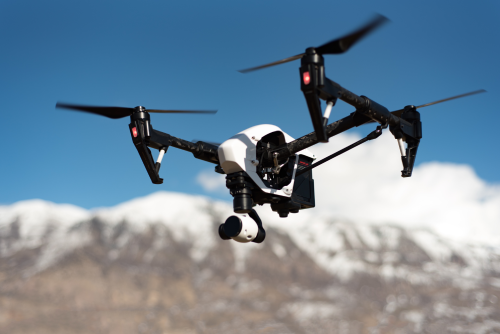
How drones are used in water resource management is no longer just a research topic. In India, drones are already helping teams map reservoirs, inspect canals, monitor floods, and plan watershed work faster than many ground-only methods. When used properly, they save time, improve visibility, and help decision-makers act on current data instead of old maps or scattered field notes.
Quick Take
- Drones help water managers see large areas quickly, especially canals, reservoirs, riverbanks, wetlands, flood zones, and watershed structures.
- The most common jobs use an RGB camera, which is a normal visual camera. More advanced work may use thermal, multispectral, or LiDAR sensors.
- Drones are strong for mapping surface conditions, change detection, inspection, and documentation.
- They are not a magic replacement for hydrology, ground survey, or water sampling. In many projects, drone data works best when combined with field measurements.
- In India, drones can be useful for irrigation departments, consultants, NGOs, panchayat-level planning, disaster response teams, infrastructure inspectors, and environmental monitoring groups.
- Before flying, verify the latest DGCA and local operational requirements, especially near critical infrastructure, populated areas, emergency scenes, protected zones, or sensitive locations.
Why drones matter in water resource management
Water resource management is about more than finding water. It includes storing it, distributing it, protecting it, tracking losses, planning recharge, reducing flood damage, and keeping ecosystems healthy.
Traditional field surveys are still important, but they can be slow, labour-intensive, and difficult in muddy, flooded, remote, or unsafe areas. Satellite imagery is useful for large-scale monitoring, but it may not always offer the timing, detail, or local flexibility a project needs.
Drones sit in the middle.
They can provide:
- Fast local coverage
- High-resolution images
- Repeat surveys of the same area
- Better visibility of hard-to-reach locations
- Measurable outputs like area, distance, slope, and change over time
For Indian conditions, this is especially valuable in:
- Canal networks spread across many villages
- Monsoon-affected districts
- Tank and pond restoration projects
- Riverbank erosion zones
- Semi-arid watershed programmes
- Urban flood-prone areas
- Wetlands under pressure from encroachment or pollution
Main ways drones are used in water resource management
Reservoir, lake, pond, and tank mapping
One of the most practical uses of drones is mapping water bodies and their surroundings.
Teams use drones to:
- Map the current water spread area
- Document shoreline changes
- Monitor encroachment around lakes and tanks
- Track silted or exposed areas during low water periods
- Create before-and-after records for restoration work
This is useful for village ponds, irrigation tanks, city lakes, and medium reservoirs.
In many Indian districts, tank rejuvenation and local water body restoration work suffers from poor baseline documentation. A drone survey can quickly create a current visual record and a map that planners, engineers, and local administrators can actually use.
A key limit: drones mainly observe the surface and the visible edges. Estimating total reservoir capacity or underwater sediment levels usually needs bathymetric survey data or other field methods in addition to drone imagery.
Canal and irrigation network inspection
Canal inspection is one of the strongest real-world applications for drones.
Instead of sending teams to walk long stretches of canal bank, a drone can inspect sections for:
- Cracks or erosion on embankments
- Seepage or wet patches near canal sides
- Vegetation growth and obstruction
- Illegal cuts or unauthorised outlets
- Sediment build-up
- Damage after heavy rain
- Blockage in distributaries and minors
For irrigation departments and contractors, this saves time and creates visual evidence. A drone survey also makes it easier to compare the same stretch across months or seasons.
Thermal cameras can sometimes help identify abnormal moisture patterns linked to seepage, but they are not a guaranteed shortcut. Ground confirmation is still needed before taking engineering decisions.
Mini scenario
A sub-division responsible for a canal network after monsoon damage may use a drone to inspect 10 to 20 km in segments, flag suspected breaches, and prioritise which locations need engineers on site first. That is far more efficient than treating every reported issue as equally urgent.
Watershed planning and drainage analysis
Drones are highly useful in watershed management because they can capture terrain detail.
When drone images are processed properly, teams can generate:
- Orthomosaics, which are stitched aerial maps
- Surface models, which show the shape and height of terrain and objects
- Contours and slope maps
- Drainage paths and micro-watershed patterns
This helps with planning:
- Check dams
- Farm ponds
- Contour trenches
- Bunds
- Recharge structures
- Gully plugs
- Stormwater channels
In semi-arid parts of India, where every rainfall event matters, better terrain understanding can improve placement of structures that slow runoff and increase infiltration.
Here, accuracy matters. If the project involves engineering design, the drone workflow should include proper control points, survey checks, and experienced processing. A rough map is not enough.
Flood monitoring and emergency assessment
During and after floods, drones become eyes in the sky.
They are used to:
- Map inundation extent
- Identify cut-off roads and villages
- Inspect embankment damage
- Check breaches in canals or bunds
- Document river overflow paths
- Support relief route planning
- Capture evidence for damage assessment
In flooded terrain, ground access is often dangerous or impossible. A drone can help authorities quickly understand where the water is, where it is moving, and what assets are affected.
This is especially relevant in flood-prone districts in Assam, Bihar, Uttar Pradesh, West Bengal, Kerala, and other monsoon-sensitive regions.
But emergency drone flights require discipline. Flood zones often involve crowds, low visibility, power lines, helicopters, and unstable weather. Such operations should be coordinated with the responsible local authorities, and teams must verify the latest rules before flying.
Riverbank erosion and sediment monitoring
Rivers are dynamic. Their edges shift, meanders migrate, and banks fail over time.
Drones help monitor:
- Riverbank retreat
- Erosion hotspots
- Sandbar formation
- Sediment deposition on exposed sections
- Changes in channel alignment
- Damage to embankments and river training works
A repeated drone survey every few months can show exactly where the bank line is moving. That matters for planning protective works, identifying at-risk land, and documenting where intervention is most urgent.
For example, on a river reach with recurring erosion near agricultural land, a drone survey can provide visual proof of progression rather than relying only on local memory or isolated GPS points.
Again, this is mainly about visible and measurable surface change. Full sediment transport analysis or underwater profile changes need additional methods.
Wetland monitoring and habitat protection
Wetlands are water resources too. They store water, reduce flood peaks, support biodiversity, and often recharge local systems.
Drones can help monitor:
- Wetland boundary changes
- Seasonal water spread
- Invasive plant growth
- Encroachment
- Waste dumping
- Surface vegetation patterns
- Disturbance to marshes and shallow zones
An RGB camera is useful for basic mapping. Multispectral cameras, which capture additional bands of light not seen by the human eye, can help detect vegetation health and stress patterns more clearly.
This is useful for urban wetlands, village marshes, bird habitats, and protected landscapes.
A caution: drone use near wildlife areas needs extra care. Disturbing birds or nesting zones is not acceptable, and local permissions may be necessary depending on the location and status of the area.
Dam, bund, and embankment inspection
Large water infrastructure needs frequent inspection, but not every inspection needs scaffolding, boats, or full manual access.
Drones can support visual checks of:
- Upstream and downstream faces
- Surface cracking
- Concrete spalling
- Vegetation on embankments
- Riprap displacement
- Drainage outlets
- Spillway surroundings
- Access roads and adjacent slope failures
They are especially useful after heavy rain, before maintenance, or after a reported issue.
For major structures, drone imagery should support engineering inspection, not replace it. A drone can show where to look, help document condition, and reduce inspection time, but structural decisions still need qualified professionals.
Water quality and pollution monitoring
Drones do not directly replace lab testing, but they can support water quality work in smart ways.
They help by:
- Mapping visible algal blooms
- Tracking colour changes in lakes or ponds
- Identifying foam, scum, or discharge plumes
- Monitoring sediment-laden inflows after rain
- Spotting illegal dumping near water bodies
- Checking surface temperature patterns with thermal sensors
Thermal sensors are useful because unusual warm or cool patches may indicate inflows, leak points, or mixing patterns. Multispectral sensors can sometimes help detect vegetation or surface conditions associated with eutrophication, which is nutrient-driven water degradation.
However, this is an indirect method. If the question is chemical contamination, bacteria, or potability, field sampling and laboratory analysis are still essential.
Urban stormwater and drainage management
Indian cities often struggle with blocked drains, poor stormwater planning, and local flooding.
Drones are now used to:
- Map drainage channels
- Identify choke points
- document encroachments over drains
- inspect desilting progress
- assess low-lying areas
- compare pre-monsoon and post-monsoon conditions
For municipal teams, drone data can support ward-level planning and improve communication between engineering, disaster management, and urban planning departments.
A drone map is often easier to act on than a stack of site photos and handwritten notes.
What type of drone data is used for which job?
| Use case | Typical sensor | What the team gets | Best for |
|---|---|---|---|
| Pond, tank, reservoir boundary mapping | RGB camera | High-resolution map, area measurement | Local planning, restoration records |
| Canal inspection | RGB, sometimes thermal | Visual defects, seepage clues, vegetation issues | Irrigation maintenance |
| Watershed planning | RGB with accurate positioning, sometimes LiDAR | Terrain model, contours, drainage pattern | Site design and planning |
| Flood assessment | RGB | Inundation maps, damage evidence | Emergency response and recovery |
| Wetland monitoring | RGB, multispectral | Seasonal extent, vegetation pattern, encroachment record | Ecology and land-use monitoring |
| Riverbank erosion tracking | RGB | Change detection along banks | Risk mapping and intervention planning |
| Infrastructure inspection | RGB, thermal in some cases | Visual condition data | Dams, embankments, bunds |
| Pollution pattern observation | RGB, thermal, multispectral | Surface anomaly mapping | Preliminary environmental assessment |
A practical drone workflow for water projects
A lot of value comes not from the drone alone, but from the workflow.
1. Define the actual question
Start with the management problem, not the drone.
Ask:
- Are we trying to locate leaks?
- Measure shoreline change?
- Prioritise flood damage?
- Plan a recharge structure?
- Document encroachment?
- Compare before and after desilting?
A vague objective creates a vague survey.
2. Choose the right platform and sensor
A small multirotor drone is often enough for:
- Canals
- Ponds
- Embankments
- Local flood spots
- Urban drains
A fixed-wing drone may suit larger corridor or area mapping, but it needs more space and operational experience.
If surface visuals are enough, an RGB camera is often the most cost-effective option. Advanced sensors should be chosen only when the project truly needs them.
3. Plan for accuracy
For engineering or repeated monitoring work, positional accuracy matters.
Useful terms to know:
- RTK: Real-Time Kinematic positioning, which improves location accuracy during flight
- Ground control points: clearly marked surveyed points used to improve map accuracy
- Orthomosaic: a corrected stitched map made from many overlapping images
- DEM or elevation model: a digital representation of terrain height
Without proper control and checking, a beautiful map can still be misleading.
4. Fly at the right time
Water and sun are tricky together.
Midday glare, strong winds, and monsoon clouds can reduce image quality. Low sun angles may also create shadows on embankments and channels.
Early planning matters, especially if the goal is repeat monitoring. Surveys should be done in a consistent way each time if you want reliable comparison.
5. Process and interpret the data properly
The output is not just “photos.”
A useful deliverable may include:
- Annotated defect map
- Encroachment layer
- Flood extent map
- Area and distance measurements
- Cross-sections
- Change analysis
- Priority inspection list
Decision-makers need findings, not just files.
6. Validate on the ground
This step is often skipped.
A drone may show a wet patch, but is it seepage, irrigation spill, recent rain, or vegetation shadow? A flood image may suggest a breach, but field confirmation tells you whether it is active, repaired, or misread.
The best teams combine aerial evidence with site verification.
Benefits of using drones in water management
The practical advantages are clear:
- Faster coverage than walking surveys
- Better access to risky or muddy sites
- Repeatable monitoring
- Strong visual documentation
- Useful maps for planning and reporting
- Better coordination between technical and administrative teams
For small businesses and consultants, drones can also turn a labour-heavy site visit into a more structured service offering.
For public agencies, they help create a record that is easier to defend, review, and revisit later.
Limits you should understand before relying on drones
Drones are useful, but they have real limits.
- They mostly see the surface, not underground conditions
- Reflections from water can reduce image quality
- Plain water surfaces are difficult for photogrammetry
- Strong wind near open water can affect stability
- Heavy vegetation can hide drainage issues
- Thermal interpretation is not always straightforward
- Accurate results need skilled processing
- Regulatory limits and local permissions still apply
Most importantly, drones support water resource management. They do not replace hydrologists, surveyors, environmental scientists, or engineers.
Safety, legal, and compliance points for India
If you plan to use drones in India for water projects, be careful and current.
Rules, airspace restrictions, and operating requirements can change. Before any professional or commercial operation, verify the latest official guidance from DGCA and any relevant platform or airspace process in force at that time.
Also check for local restrictions or permissions that may apply when working near:
- Dams and major infrastructure
- Urban settlements
- Disaster or rescue operations
- Rivers or reservoirs near sensitive areas
- Protected wetlands, forests, or wildlife habitats
- Government facilities or strategic zones
Operational safety matters just as much as legal compliance.
Good practice includes:
- Keep visual line of sight unless specifically permitted otherwise
- Do not fly in rain, lightning, or unsafe wind
- Maintain safe separation from people, vehicles, and power lines
- Use a spotter when inspecting long canals, flood zones, or complex terrain
- Launch and recover from a dry, stable area
- Set a safe return-to-home altitude
- Brief the local ground team before takeoff
- Avoid disturbing birds, especially near wetlands
If a mission involves emergency response, coordinate with the responsible district or state authority rather than acting independently.
Common mistakes people make
Treating drone images as final truth
A drone image is evidence, not automatic diagnosis. Leaks, erosion, contamination, and flood pathways still need interpretation and often ground confirmation.
Using the wrong sensor for the job
Not every canal survey needs thermal. Not every wetland project needs multispectral. Sensor choice should follow the question, not the trend.
Ignoring glare and reflections
Water surfaces can confuse both pilots and processing software. A flight planned at the wrong time of day may produce poor results.
Skipping repeatability
If you want change detection, keep the survey method consistent. Similar flight path, altitude, overlap, timing, and map reference make comparisons far more useful.
Focusing on flying, not outputs
Many teams collect images but fail to produce actionable outputs like defect layers, area calculations, or priority maps.
Overpromising accuracy
A high-resolution image does not automatically mean survey-grade accuracy. That depends on flight planning, positioning, control points, and processing quality.
Flying without checking permissions or local sensitivities
Water bodies often sit near villages, roads, public works, or ecologically sensitive areas. Community concerns and official restrictions should be respected.
FAQ
Can drones measure water depth directly?
Usually not with a standard camera. Drones are excellent for surface mapping, shoreline tracking, and visible condition assessment. Water depth generally needs bathymetric tools, sonar, field survey, or other specialised methods.
Are drones useful for small village water projects?
Yes. They can be very useful for mapping ponds, tanks, recharge structures, drains, and watershed works at village or block level. Small projects often benefit a lot because the drone quickly creates a clear baseline.
What is the best drone for canal inspection?
For most canal inspections, a reliable multirotor drone with a good RGB camera is enough. Thermal can help in some seepage cases, but only if the project really needs it and the data will be interpreted correctly.
Can drones help during floods?
Yes, especially for inundation mapping, route planning, embankment inspection, and rapid damage documentation. But flood operations must be coordinated carefully and flown only within the latest legal and safety requirements.
How accurate are drone maps?
It depends on the workflow. Basic visual maps can be very useful without being engineering-grade. For design, measurement, or legal boundary-related work, use proper survey control and accuracy checks.
Are drones allowed near dams or reservoirs in India?
You should not assume they are. Restrictions may apply depending on location, airspace, security, and local administration. Always verify the latest official rules and site-specific permissions before planning a flight.
Which is better for water management: multirotor or fixed-wing?
Multirotor drones are better for inspection, smaller sites, and tight spaces. Fixed-wing drones are better for covering larger areas efficiently, but they are more specialised and not ideal for every field team.
Can drones detect water pollution?
They can help spot visible signs such as algal blooms, discoloration, dumping, or unusual thermal patterns. But confirming pollution type and severity usually requires field sampling and lab analysis.
Do I need internet at the site to fly a water survey mission?
Not always. Mission planning and flight can often be done without strong mobile signal, depending on the system used. But pre-mission checks, airspace verification, syncing, and data transfer are easier if you plan connectivity in advance.
Is drone data enough for building a check dam or recharge structure?
Not by itself. Drone data is very helpful for terrain understanding and planning, but engineering design should also use ground survey, hydrological assessment, and site verification.
Final takeaway
Drones are most valuable in water resource management when they solve a specific field problem: inspecting canals faster, mapping floods safely, tracking erosion clearly, or planning watershed works with better terrain data. If you are considering using them, start with one repeatable use case, combine aerial data with ground checks, and verify the latest Indian compliance requirements before you fly.
