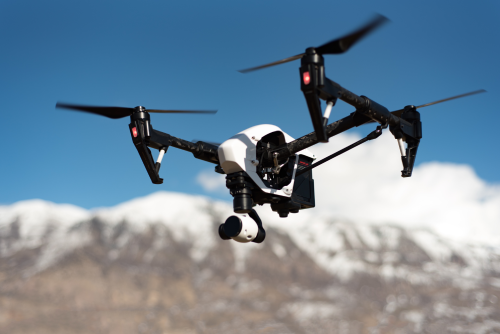
Traffic monitoring from the ground has obvious limits: blind corners, fixed camera angles, slow patrol response, and sudden bottlenecks that appear without warning. Drones help by giving traffic teams a live overhead view of roads, junctions, queues, crashes, and diversions. In India, where traffic patterns can change quickly during peak hours, festivals, roadworks, monsoon conditions, and public events, drones are becoming a practical support tool for both monitoring and decision-making.
Quick Take
- Drones are used in traffic monitoring to spot congestion, detect incidents, assess queue length, monitor diversions, and improve response time.
- They are especially useful where fixed CCTV coverage is weak or where traffic patterns change quickly.
- In India, drones can support city traffic police, highway operators, event managers, road contractors, and transport planners.
- The most useful drone features for traffic work are stable live video, zoom capability, good battery planning, and reliable communication links.
- Drones do not replace CCTV, patrol vehicles, or traffic staff. They work best as an extra eye in the sky.
- Any traffic monitoring operation must follow current DGCA and local authority requirements. Always verify the latest rules, permissions, and airspace restrictions before flying.
Why drones matter in traffic monitoring
A traffic control room can only act fast if it can see what is happening clearly. That sounds simple, but in real life many roads are hard to monitor continuously.
Common problems include:
- Junctions with limited or badly placed CCTV coverage
- Highways with long stretches between patrol units
- Temporary congestion caused by roadworks, rallies, markets, or festivals
- Crash scenes that block lanes and create long queues within minutes
- Illegal parking and roadside encroachment that reduce road width
- Large events where crowd movement and vehicle flow change rapidly
A drone helps because it can be launched quickly, moved to the exact trouble spot, and repositioned as conditions change. Instead of relying only on a fixed viewpoint, traffic staff get a flexible aerial view.
That flexibility is the real value. A drone is not useful just because it flies. It is useful because it shows what is happening across the whole road environment at once.
The main ways drones are used in traffic monitoring
Real-time congestion monitoring
This is the most direct use case. A drone can hover over a busy junction, fly along a corridor, or observe a roundabout and show where the queue is actually forming.
Traffic teams use this for:
- Peak-hour congestion analysis
- Signal timing review
- Detecting queue spillback from one junction to another
- Monitoring lane discipline and turning conflicts
- Watching how pedestrians, buses, autos, and private vehicles interact
For example, if a major city junction looks normal on CCTV but traffic is still slowing, a drone may reveal that the real problem is a blocked left turn, a bus stop conflict, or roadside parking 200 metres away.
Accident and incident assessment
When a crash happens, the first few minutes matter. A drone can be flown to the site to assess:
- Number of blocked lanes
- Approximate queue length on both approaches
- Safe access routes for ambulances or recovery vehicles
- Spillover impact on nearby junctions
- Whether a diversion is needed
This is especially useful on highways and expressways, where a small incident can build into a long traffic queue very quickly.
From an operations point of view, the drone helps the control room answer practical questions fast:
- Is this a two-lane blockage or a shoulder event?
- Are vehicles still moving slowly, or is traffic fully stopped?
- Should upstream traffic be diverted now?
That makes the response more informed than relying only on a phone call from the ground.
Monitoring roadworks and temporary diversions
In Indian cities, road conditions can change overnight because of utility work, metro construction, resurfacing, drainage repairs, or festival-related barricading. A diversion that looks good on paper may fail badly on the ground.
Drones help authorities and contractors check:
- Whether signs and barricades are placed correctly
- Whether the diversion is causing unsafe merging
- If pedestrian movement is being blocked
- Whether buses and large vehicles can negotiate the route
- If the temporary arrangement is creating long queues at nearby junctions
This is one of the most practical applications because the footage can be reviewed later and used to improve the traffic plan the next day.
Event, procession, and crowd-related traffic monitoring
Traffic becomes unpredictable during:
- Religious gatherings
- Political rallies
- Stadium events
- VIP movement
- College festivals
- Public celebrations and parades
In these cases, traffic is not the only concern. Crowd movement, parking overflow, pedestrian crossing points, and vehicle-pedestrian conflict all matter.
A drone helps monitor:
- Entry and exit routes
- Parking approach roads
- Pressure points near barricades
- Congestion building outside venues
- Whether emergency access routes remain clear
This kind of overhead view is useful because the problem may not be at the venue gate itself. It may be developing on feeder roads a few minutes away.
Highway patrol and long-corridor monitoring
Fixed cameras work well at toll plazas and key junctions, but long highway stretches are harder to monitor. Drones can support highway operations by checking:
- Sudden traffic build-up
- Broken-down vehicles
- Hazardous roadside activity
- Wrong-side driving
- Queue formation near toll plazas
- Diversion compliance after an incident
For highways, the biggest value is speed. Instead of sending a patrol vehicle first and waiting for a report, the operations team can get a visual assessment almost immediately.
Illegal parking and encroachment detection
Many traffic bottlenecks in India are not caused by volume alone. They are caused by reduced usable road space.
Drones can help identify:
- Double parking
- Vendors or temporary structures narrowing the road
- Unauthorised loading or unloading zones
- Autos and taxis occupying turning space
- Construction material stored on carriageways
This is useful for enforcement planning and for recurring problem analysis. A drone record over several days may show that a location fails at the same time each evening due to the same roadside behaviour.
Toll plaza and queue management
At toll plazas and check points, congestion often forms in patterns that are hard to understand from one fixed camera. A drone can show:
- Which lanes are backing up fastest
- Whether heavy vehicles are blocking approach lanes
- How far the queue extends
- Whether lane discipline is breaking down upstream
- If manual intervention is needed
This helps operators decide whether to open more lanes, guide vehicles differently, or deploy staff to specific points.
Traffic studies and planning
Not all drone traffic monitoring is about live enforcement. A lot of value comes from recorded video used for analysis.
Urban planners, consultants, and transport engineers can use drone footage for:
- Vehicle counts
- Turning movement counts
- Queue length analysis
- Junction performance review
- Conflict analysis between vehicles and pedestrians
- Studying bus stop interference
- Reviewing intersection geometry
This is where drones move beyond “live surveillance” and become a planning tool. A short aerial study during morning and evening peak hours can reveal design problems that are easy to miss at street level.
Emergency route management
In major incidents, ambulances and fire services need clear access. Drones can help identify:
- Which route is least obstructed
- Where traffic police should intervene first
- Whether parked vehicles are blocking emergency passage
- How congestion is spreading around the incident
This is one of the strongest arguments for drones in public safety operations. They support faster decisions, not just better visuals.
What a drone can actually tell traffic teams
A good traffic monitoring operation is not just about video. It is about extracting useful information from that video.
Here is what drones can realistically help measure or observe:
| Traffic task | What the drone helps reveal | Why it matters |
|---|---|---|
| Queue monitoring | How long the vehicle line extends | Helps decide where to intervene |
| Junction analysis | Lane usage, turn conflicts, spillback | Useful for signal and design changes |
| Incident response | Lane blockage and access conditions | Improves dispatch and diversion planning |
| Diversion review | Whether vehicles follow the temporary route | Shows if the traffic plan is working |
| Event traffic control | Crowd pressure and parking overflow | Helps prevent sudden choke points |
| Road safety review | Conflict areas and risky movement patterns | Useful for long-term improvement |
In more advanced setups, software may be used for automated counting. This is often called computer vision, meaning software that detects and tracks vehicles in video. It can save time, but it still needs validation because shadows, poor lighting, occlusion, and mixed traffic can reduce accuracy.
A practical traffic monitoring workflow using drones
If a police department, highway operator, consultant, or private service provider wants to use drones effectively, the workflow matters as much as the drone itself.
1. Define the exact purpose
Do not send a drone up with a vague goal like “check traffic.”
Be specific:
- Monitor queue growth at one junction
- Assess a crash scene on a highway
- Review diversion performance near roadworks
- Study peak-hour turning movements
- Watch parking overflow during an event
A clear purpose changes where you fly, what camera angle you use, and how you report findings.
2. Verify permissions and airspace
Before any operation, confirm the current legal and operational requirements. In India, that may involve checking the latest DGCA guidance, Digital Sky airspace status, and any local permissions required by police, district administration, event organisers, or site authorities.
Do not assume that because the mission is traffic-related, it automatically has permission.
3. Choose the right take-off point
The take-off location should be:
- Safe and controlled
- Away from moving traffic
- Clear of overhead wires and obstacles
- Easy for the pilot to maintain line of sight where required
- Close enough for an efficient response but not in the middle of the disruption
This sounds basic, but many poor traffic drone operations start with a bad launch point.
4. Plan the viewing angle
Traffic footage is useful only if the angle supports the objective.
Examples:
- For queue length, a higher wide shot works well.
- For lane conflict analysis, a steeper overhead angle is often better.
- For observing enforcement-sensitive details, optical zoom may be more useful than flying lower.
Flying lower is not always better. It can reduce area coverage, disturb people, and create unnecessary risk.
5. Stream and communicate clearly
The pilot should not be the only person interpreting the scene. Ideally, live footage should be viewed by the traffic control team, with clear radio or phone communication between:
- Pilot
- Visual observer if used
- Command centre
- Ground traffic staff
The fastest drone video is wasted if nobody can act on it.
6. Convert footage into action
After live monitoring, teams should create a simple output:
- What happened
- Where it happened
- When it happened
- How traffic was affected
- What response was taken
- What should change next time
This turns drone flying into operational value.
What kind of drones and sensors are useful for traffic monitoring
Different traffic jobs need different drone features. You do not always need a complex enterprise platform, but you do need reliability.
| Feature | Why it matters in traffic work | Best for |
|---|---|---|
| Stabilised RGB camera | Clear daytime video | General monitoring |
| Optical zoom camera | View details from a safer distance | Junctions, incidents, enforcement support |
| Good live transmission | Reliable real-time awareness | Control room operations |
| Thermal camera | Heat-based imaging in low visibility or at night | Search, night incidents, limited use in traffic scenes |
| Obstacle sensing | Helps in complex environments | Urban areas |
| Longer battery endurance | Reduces mission interruptions | Highways, extended observation |
| Loudspeaker or spotlight | Useful in some public safety cases | Special operations only |
A few practical points:
- For normal traffic observation, a strong daylight camera and stable live feed matter more than fancy extras.
- Optical zoom is often more useful than flying closer.
- Thermal cameras are helpful in some night or emergency situations, but they are not a magic solution for reading fine details.
- Very small consumer drones may be okay for training or basic visual review, but official or commercial monitoring usually needs stronger reliability, logging, and operational support.
Where drones work best, and where they do not
Drones are powerful, but they are not ideal in every traffic situation.
Best-fit situations
- Temporary congestion hot spots
- Crash scenes
- Long highway stretches
- Event traffic
- Roadworks and diversions
- Short-duration peak-hour studies
- Locations with poor fixed camera coverage
Weak-fit situations
- Continuous all-day monitoring of the same junction
- Heavy rain, strong wind, or very poor visibility
- Extremely dense urban airspace with many obstacles
- Areas near sensitive no-fly or restricted zones
- Missions where privacy risk is high and the purpose is unclear
If a fixed camera can already cover the exact location 24/7, a drone may not be the best first tool. But if the problem moves, changes shape, or happens only at certain times, drones become very useful.
Benefits of drone-based traffic monitoring
The strongest benefits are practical, not flashy.
Faster situational awareness
You can understand a scene in minutes instead of waiting for a ground report.
Wider field of view
One aerial shot can show a junction, the feeder roads, and the queue pattern together.
Better use of manpower
Ground officers can be sent exactly where they are needed instead of searching first.
Better post-event analysis
Recorded drone footage helps teams review what worked and what failed.
Useful during temporary changes
Drones are very effective where traffic patterns are not permanent, such as festivals, construction, and incidents.
Limits and challenges
Every drone traffic operation has trade-offs.
Battery limits
Drones cannot stay up forever. Long operations need rotation planning, spare batteries, and realistic mission timing.
Weather and visibility
Rain, gusty wind, haze, and harsh sun angles can reduce both safety and video quality.
Urban obstacles
Wires, poles, towers, trees, and buildings make city flying more complex than open-area highway work.
Signal and data issues
A live feed is only useful if the connection is stable and the control room can receive it clearly.
Privacy concerns
Traffic monitoring should focus on operational need, not unnecessary close-up recording of people.
Operator skill
A good traffic mission needs more than basic flying skill. The team must understand traffic behaviour, camera framing, communication, and emergency procedures.
Safety, legal, and compliance in India
Traffic monitoring with drones is not just a technical task. It is also a legal and public-safety task.
Keep these points in mind:
- Always verify the latest DGCA drone rules before any operation.
- Check the current airspace status on Digital Sky and confirm whether the area is permitted, restricted, or needs prior clearance.
- Use drones and procedures that meet current compliance requirements, including NPNT where applicable. NPNT means No Permission, No Takeoff.
- Do not assume that police, municipal, contractor, or event-related work is automatically exempt from normal requirements.
- If you are a private operator working for a public agency, verify in writing what permissions and responsibilities apply to your mission.
- Avoid reckless flying near crowds, busy roads, emergency scenes, or sensitive locations.
- Maintain strong on-ground safety control during take-off and landing.
- Handle recorded footage responsibly and limit access to authorised people.
- If your work involves public authorities or commercial service delivery, insurance and written standard operating procedures are strongly advisable.
- Because rules can change, verify the latest official requirements before acting on any checklist.
For readers in India, this is especially important in big cities, near airports, near government or defence-sensitive areas, and during high-security events.
Common mistakes in drone traffic monitoring
Even well-intentioned drone operations can fail if the basics are weak.
Flying without a precise objective
If the team does not know what it wants to observe, the footage often becomes useless.
Flying too low for no reason
This reduces area coverage, increases risk, and may distract the public without improving the result.
Ignoring sun angle and time of day
Glare, shadow, and backlighting can make vehicle movement harder to interpret.
Using wide shots when detail is needed
Sometimes operators capture a beautiful overhead scene but miss the exact conflict point because they never used zoom or changed angle.
No coordination with traffic staff
A drone feed is only valuable if ground teams can respond to what it shows.
Poor battery planning
Running low over a live incident creates avoidable pressure and can interrupt the most useful part of the mission.
Launching from unsafe places
Take-off points near moving traffic, crowds, or overhead wires add unnecessary risk.
Treating drone footage as proof without validation
Video can support decisions, but for enforcement or formal reporting, teams may need additional verification depending on the purpose and local process.
Over-collecting footage
If the purpose is traffic flow analysis, capture what is necessary. Do not collect more identifiable detail than needed.
FAQ
Can drones replace CCTV in traffic monitoring?
No. Drones are best used as a flexible supplement. CCTV is better for continuous fixed-point monitoring, while drones are better for temporary, moving, or hard-to-see situations.
Are drones legal for traffic monitoring in India?
They can be, but only if the operation follows current DGCA requirements, airspace restrictions, and any local permissions needed. Always verify the latest official rules before flying.
Can a drone read vehicle number plates?
Sometimes, depending on altitude, camera quality, zoom, light, and angle. But this should not be assumed in every mission, and privacy as well as legal process must be considered.
What type of drone is best for traffic monitoring?
A stable drone with a good daylight camera, reliable live feed, safe flight performance, and preferably optical zoom is often the most practical choice. The best model depends on whether the job is for highways, city junctions, events, or planning studies.
How long can a drone monitor one location?
That depends on the drone, weather, payload, and flight style. In practice, traffic teams usually plan shorter focused missions or rotate batteries and aircraft if longer observation is needed.
Are thermal cameras useful for traffic work?
They can help in low light, night incidents, and some emergency situations, but they are not a replacement for a normal visual camera. They are best seen as a specialised add-on.
Who uses drones for traffic monitoring?
Traffic police, highway operators, municipal bodies, road contractors, transport consultants, event managers, and some emergency response teams may all use drones in different ways.
Can small businesses offer traffic monitoring services?
Yes, but only with the right compliance, trained operators, proper documentation, and a clear service scope such as road safety audits, event traffic observation, diversion review, or traffic survey work. Public-safety-style operations need especially careful coordination.
What is the biggest limitation of using drones for traffic monitoring?
Battery life and operating constraints. A drone gives excellent short-term visibility, but it is not ideal for permanent all-day coverage.
Do drones work well in old city areas with narrow roads?
They can help, but operations become more complex because of dense buildings, wires, crowds, and limited safe launch points. In such places, safety planning matters even more.
The real takeaway
Drones are used in traffic monitoring because they solve a simple problem: traffic teams often need a fast, wide, flexible view that ground units and fixed cameras cannot provide on their own. If you are planning to use drones for this purpose in India, start with one clearly defined use case, build a safe and compliant workflow around it, and choose a drone for reliable observation rather than flashy features.
