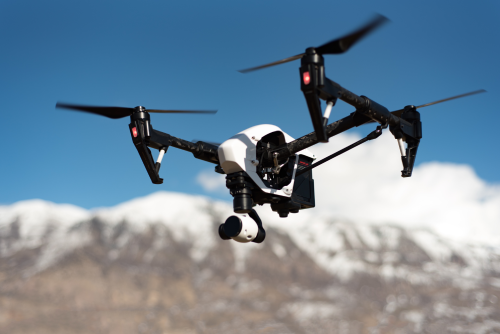
Telecom tower inspection is one of the clearest real-world examples of where drones save time, reduce risk, and improve documentation. Instead of sending a technician up the tower for every visual check, companies can now use drones to capture close-up images, zoom shots, and site-wide data much faster.
For Indian telecom operators, infrastructure vendors, and service providers, this matters even more because tower sites are often spread across difficult terrain, dense cities, rooftops, and remote villages. Drones do not replace every manual task, but they can make inspection work safer, quicker, and more consistent.
Quick Take
- Drones are used in telecom tower inspection mainly for visual checks, photo and video documentation, defect spotting, and faster site assessment.
- They help inspect antennas, mounts, bolts, corrosion, cable routing, aviation lights, rooftop access issues, and storm damage without sending a climber up for every check.
- A drone inspection usually includes site planning, airspace and safety checks, image capture from multiple angles, and a defect report.
- Drones are especially useful for repeat inspections, post-monsoon checks, pre-maintenance surveys, and towers in remote or risky locations.
- They do not fully replace manual climbing. If a component needs tightening, testing, alignment verification, or physical repair, a technician still has to go up.
- In India, operators must verify the latest DGCA and Digital Sky requirements, site permissions, local restrictions, and company safety procedures before flying.
What telecom tower inspection actually means
A telecom tower is not just a tall metal structure with antennas on top. A proper inspection can involve several layers of checking:
- Structural condition of the tower
- Antennas and radio equipment
- Mounting brackets and clamps
- Feeders, cables, and cable trays
- Microwave dishes and alignment hardware
- Aviation warning lights and markers
- Corrosion, rust, paint damage, and loose parts
- Guy wires on guyed towers
- Rooftop support structures on urban installations
- Ground compound condition, fencing, and access roads
Traditionally, much of this work has depended on tower climbers, binocular-based visual checks, or limited ground photography. That works, but it is time-consuming and often risky.
Drones change the process by bringing the camera close to the asset instead of bringing the person close to the asset first.
Why drones fit telecom tower inspection so well
Telecom towers are exactly the kind of asset where drone inspection makes practical sense.
1. Height creates risk
Climbing towers is hazardous. Even with trained personnel and proper fall protection, working at height always carries risk. A drone can perform the first visual inspection without exposing a person to that height immediately.
2. Towers need frequent checks
Telecom networks depend on uptime. Operators often need regular inspection after storms, before maintenance, during upgrades, or after complaints of reduced performance. Drones make frequent documentation more feasible.
3. Small defects matter
A slightly loose bracket, corroded mount, damaged cable sheath, or misaligned dish can lead to bigger problems later. High-resolution drone imaging helps spot issues before they become outages.
4. Access is often difficult
In India, many tower sites are in remote rural areas, on hilltops, on crowded rooftops, or inside compounds with limited access. Drones reduce the amount of climbing and setup needed once the crew reaches the site.
5. Better records help maintenance teams
Drone footage provides visual proof. A service provider can compare before-and-after images, mark defects, and share findings with engineers, clients, or contractors.
How drones are used in telecom tower inspection
This is where the real value lies. Drone use in telecom tower inspection is not one single task. It is a set of inspection jobs that fit different tower conditions and business needs.
Close visual inspection of the tower structure
The most common use is a close visual survey of the tower itself.
The pilot flies around the structure and captures:
- Full-height views of the tower
- Close-up images of joints and bracing
- Condition of bolts, welds, and plates
- Signs of bending, warping, or impact damage
- Rust, coating failure, and corrosion spots
For lattice towers, this is especially useful because there are many repeating members and joints that are hard to inspect properly from the ground.
For monopoles, the inspection focuses more on:
- Panel integrity
- Mounting frames
- Access ladders
- Surface corrosion
- Attachments and cable runs
Inspection of antennas and radio equipment
Telecom towers carry panel antennas, microwave dishes, remote radio units, and associated mounting hardware.
A drone can help inspect:
- Whether antennas appear physically damaged
- Missing covers or loose fasteners
- Misalignment visible from mounting angle
- Bent support arms
- Cracked radomes on antennas
- Damage to microwave dish mounts
- Bird nesting or obstruction around equipment
This is especially useful after high winds, heavy rain, or when a site reports degraded service and the team wants a quick visual check before a climbing crew is dispatched.
Important point: a drone can identify visual signs of antenna issues, but it cannot confirm RF performance by sight alone. If the problem is electrical, software-related, or inside the radio chain, engineers still need conventional testing.
Checking cables, feeders, and routing
Cable routing issues are common on telecom sites.
Drone imaging can help detect:
- Hanging cables
- Damaged cable jackets
- Improper fastening
- Loose feeder clamps
- Sharp bends in cable runs
- Cable tray problems
- Separation or wear caused by vibration
On rooftop towers, the cable route from the mast to indoor equipment is often messy or exposed. A drone can document the external route quickly and help maintenance teams plan the next visit.
Corrosion and paint damage detection
India’s climate is tough on exposed telecom infrastructure. Coastal air, monsoon moisture, heat, and pollution can all accelerate corrosion.
Drones are often used to spot:
- Early rust at joints and brackets
- Peeling paint or failed coating
- Galvanizing wear
- Water pooling or staining around mount points
- Metal fatigue indicators
This is one of the strongest business cases for drone inspection because early corrosion detection can prevent major structural repair later.
Aviation lights and tower-top accessories
Many towers use warning lights or markers, especially taller installations. These components are awkward to inspect from the ground.
A drone can help verify:
- Whether the beacon housing is intact
- Visible damage to lights or marker assemblies
- Loose mountings
- Dirt or obstruction affecting visibility
If the issue is clearly visible, the maintenance team can go up with the right replacement part instead of making an exploratory climb.
Guy wire inspection on guyed towers
Guyed towers add another inspection challenge because the structure depends heavily on tensioned support wires and anchor points.
A drone can inspect:
- Guy wire condition from multiple heights
- Visible fraying or corrosion
- Anchor point area
- Vegetation encroachment
- Sagging or abnormal geometry
That said, tension and integrity still need proper engineering checks. A drone is excellent for visual assessment, not a complete substitute for mechanical testing.
Rooftop telecom site inspection
A large number of urban telecom installations in India are on rooftops rather than free-standing towers.
Drones are useful here for:
- Checking mast condition
- Inspecting rooftop mount frames
- Looking for cracks or water entry around support points
- Reviewing cable routing across the roof
- Identifying access obstacles and safety hazards
- Documenting nearby obstructions that may affect maintenance work
Rooftop sites often have an extra complication: tight urban airspace, nearby buildings, wires, and privacy concerns. This means the operation must be more carefully planned than a rural tower survey.
Post-storm and emergency assessment
After strong winds, lightning, heavy rain, or local storm events, operators need quick answers.
A drone can be sent to check:
- Whether the tower is visibly damaged
- Antennas knocked out of position
- Broken mounts or loose fixtures
- Fallen debris on the compound
- Flooding around the site
- Access road condition
- Damage to fencing, shelters, or solar panels at off-grid sites
This lets the company prioritize urgent repairs and avoid sending the wrong team or equipment first.
Progress monitoring during installation or upgrades
Not all telecom tower drone work is fault inspection. Drones are also used during deployment and upgrades.
Examples include:
- Recording the site before equipment installation
- Checking mounting progress
- Verifying whether old equipment has been removed
- Documenting upgrade stages for project reports
- Creating proof-of-work records for clients or contractors
For tower companies and infrastructure providers, this documentation is valuable during audits and handovers.
Typical drone inspection workflow for a telecom tower
A good telecom tower inspection is not just “fly around and shoot video.” The best results come from a repeatable workflow.
1. Define the inspection goal
Start with a clear purpose:
- Routine preventive inspection
- Complaint-based fault check
- Post-storm assessment
- Pre-maintenance survey
- Structural documentation
- Installation progress update
This matters because it changes what images must be captured.
2. Check permissions, safety, and airspace
Before flying, the operator should verify:
- Whether the location is allowed for drone operations
- Current airspace status on official systems
- Site owner or tenant approval
- Local operating restrictions
- Company safety protocol
- Presence of nearby airports, helipads, power lines, or sensitive locations
In India, always verify the latest DGCA and Digital Sky requirements before any commercial or professional operation. Rules, categories, and permissions can change.
3. Conduct a ground risk assessment
The team should identify:
- Safe take-off and landing area
- Wind conditions around the tower
- Nearby cables and obstructions
- People movement in the area
- Roof edge hazards, if on a rooftop site
- Interference risk from metal structures and RF equipment
- Emergency landing options
4. Plan the flight path
A telecom inspection flight usually includes:
- Wide establishing shots
- Slow orbit around the tower
- Vertical passes along each face
- Close-up imaging of antennas and fixtures
- Top section review
- Ground compound overview
The goal is to avoid random flying and ensure nothing is missed.
5. Capture still photos, not just video
Video looks impressive, but still photos are often better for inspection records. A proper inspection usually combines:
- High-resolution stills
- Short inspection clips
- Zoomed defect images
- Annotated reference shots
6. Review data on site if possible
Before leaving, the team should confirm:
- Images are sharp enough
- No critical angle was missed
- Defect areas are clearly visible
- The inspection set is complete
This prevents the need for a repeat visit.
7. Prepare the inspection report
The final output is usually a structured report that includes:
- Site details
- Date and inspection purpose
- Observed defects
- Marked images
- Severity or priority notes
- Recommendation for monitoring, repair, or climbing intervention
What kind of drones and cameras are used
Telecom tower inspection usually benefits more from camera quality and flight stability than from raw speed.
Features that matter most
- Good obstacle sensing, where available
- Stable hover performance
- Strong GPS lock
- High-resolution camera
- Optical zoom for safe stand-off distance
- Reliable low-speed control
- Good performance in moderate wind
- Clear image transmission to the pilot and observer
- Repeatable flight planning, where allowed and practical
Camera and payload options
| Payload type | Best use in telecom inspection | Notes |
|---|---|---|
| Standard RGB camera | General visual inspection | Most common option |
| Optical zoom camera | Bolts, clamps, mounts, tower-top details | Reduces need to fly too close |
| Thermal camera | Hotspots in electrical equipment, shelters, some asset checks | Useful, but results depend on conditions and operator skill |
| RTK-enabled positioning | Repeatable mapping and precise documentation | More useful for structured asset records than basic visual checks |
Thermal imaging can be valuable, but it is often misunderstood. It can help identify abnormal heat in some equipment or site assets, but sunlight, reflective surfaces, weather, and equipment shielding can affect interpretation. It should be used by someone who understands its limits.
Manual inspection vs drone inspection
Drones are powerful, but they are not magic. The best telecom maintenance programs combine drone inspection with human technical work.
| Task | Drone is strong at | Manual team is still needed for |
|---|---|---|
| Initial visual survey | Yes | No |
| Defect documentation | Yes | Sometimes |
| Close-up imaging of antennas and mounts | Yes | No |
| Tightening bolts or replacing hardware | No | Yes |
| Electrical testing | No | Yes |
| Precise alignment and physical adjustment | Limited | Yes |
| Climbing rescue readiness and safety response | No | Yes |
| Repeat progress records | Yes | No |
A useful way to think about it is this: drones are excellent for seeing, documenting, and prioritizing. Human teams are still essential for touching, testing, and fixing.
Benefits for telecom companies and service providers
Faster inspections
A drone can capture the required visuals much faster than a full climb-based inspection, especially for preliminary assessment.
Reduced exposure to working-at-height risk
Fewer unnecessary climbs mean less risk for staff.
Better maintenance planning
If the issue is already documented, the repair crew can arrive with the right tools and spare parts.
Better audit trail
Images and videos create a record for internal teams, contractors, insurers, or clients.
Useful for distributed tower networks
Companies managing many sites can standardize inspection reporting across regions.
Where drones are especially useful in India
The Indian telecom environment creates several strong use cases.
Rural and remote sites
Travel time is often high. If the team is already on location, a drone can speed up the visual survey and reduce repeat visits.
Monsoon-prone regions
After rain and storms, operators can quickly check visible damage before sending climbers.
Dense urban rooftops
Drones help document the rooftop setup, but only if flown with extra care for privacy, clearances, and local restrictions.
Coastal regions
Corrosion monitoring becomes more important near salt-laden air.
Large infrastructure portfolios
Tower companies and maintenance vendors with many sites benefit from standardized image-based inspections.
Safety and compliance in India
Telecom tower inspection with drones is a professional operation. It is not something to do casually.
Key practical points
- Verify the latest DGCA rules before operation.
- Check Digital Sky or the relevant official airspace process for the location.
- Confirm whether the drone, pilot, and operation type meet current legal requirements.
- Get permission from the tower owner, infrastructure company, rooftop owner, or site operator as needed.
- Follow company SOPs, especially for take-off area control and emergency procedures.
- Be cautious around urban sites, critical infrastructure, and sensitive locations.
- Avoid flying close to people who are not part of the operation.
- Be mindful of privacy when filming rooftop or residential areas.
Site-specific risks
Telecom sites can present unusual flight challenges:
- Metal structures can affect compass behavior
- Wind can be turbulent around the tower
- RF-rich environments may affect planning and caution levels
- Guy wires can be hard to see
- Nearby power lines may be dangerously close
- Rooftop edges and narrow take-off areas create extra risk
If the site is too tight, too windy, or too restricted, the right decision may be not to fly.
Common mistakes in telecom tower drone inspection
Treating video as enough
A cinematic orbit is not a real inspection. You need structured stills, close-ups, and an inspection checklist.
Flying too close to the tower
Beginners often assume closer is always better. It is not. A safer stand-off distance with zoom often gives better results and lower collision risk.
Ignoring wind around the structure
Wind near a tower can be very different from wind at ground level. Gusts and rotor wash interactions can become unpredictable.
Missing the backside of fixtures
Some defects are hidden behind antennas, brackets, or cable loops. Good inspection planning includes multiple angles.
Relying only on drone visuals for technical diagnosis
A drone can show a loose mount or cracked panel, but it cannot confirm every network performance problem.
No on-site image review
If the team discovers later that the critical image is blurry, the site visit may be wasted.
Poor reporting
Raw footage without annotations or defect notes is much less useful to maintenance teams.
Practical tips for getting better inspection results
- Use a standard shot list for every tower type.
- Capture wide, medium, and close-up views.
- Take reference photos that show where the defect sits on the structure.
- Fly slowly near detail areas.
- Prefer optical zoom over aggressive close-in flying.
- Inspect early in the day when visibility is good and winds are calmer, if site conditions allow.
- For repeat inspections, use similar camera angles each time for easy comparison.
- Have both a pilot and a visual observer on professional jobs where possible.
- Mark urgent findings separately from routine observations.
What drones still cannot do well
It is easy to overstate the role of drones. Here are the practical limits.
They cannot physically verify everything
Some structural issues require touch, torque checks, or engineering measurement.
They may miss internal or hidden faults
If the issue is inside a sealed radio unit or cable run, visuals alone are not enough.
Tight urban sites can limit usefulness
Some rooftop locations simply do not offer a safe flight path.
Weather can delay operations
Wind, rain, glare, and poor light all affect inspection quality.
Data is only useful if someone can interpret it
A good camera does not automatically produce a good inspection. The operator or reviewer must know what to look for.
FAQ
Can drones completely replace tower climbers?
No. Drones reduce unnecessary climbs and improve visual inspection, but manual teams are still needed for repairs, testing, adjustments, and some detailed checks.
What defects can a drone usually spot on a telecom tower?
Common visible issues include corrosion, loose or damaged mounts, misaligned-looking equipment, cable problems, cracked housings, missing hardware, bird nests, and post-storm damage.
Are zoom cameras important for telecom tower inspection?
Yes, very often. Optical zoom helps capture detail from a safer distance, especially near antennas, tower-top accessories, and hard-to-reach fixtures.
Is thermal imaging necessary for tower inspection?
Not always. A normal high-resolution camera handles many inspection jobs well. Thermal can be useful for some equipment and site diagnostics, but only when used in the right conditions and interpreted properly.
Can a hobby drone be used for telecom tower inspection?
For serious commercial work, the drone must be suitable for stable, safe, repeatable inspection and compliant with current Indian rules. In practice, professional operations usually need better imaging, control, documentation, and operating discipline than casual hobby flying.
Are telecom towers difficult to inspect with drones?
Yes, they can be. Wind, metal structures, guy wires, rooftop obstacles, and limited airspace can make tower flights more demanding than open-field flying.
Do drones affect telecom signals?
A properly conducted inspection flight is mainly a visual operation and should be planned to avoid unsafe interference concerns. However, operators should still be cautious around active infrastructure and follow site protocols.
What is the best time to inspect a telecom tower with a drone?
Usually when visibility is clear, wind is manageable, and lighting is good enough for detail capture. The exact time depends on weather, tower orientation, and site conditions.
Do telecom companies in India need special permission for every drone inspection?
Requirements depend on location, airspace, operation type, and the current rule set. Operators should verify the latest DGCA and Digital Sky guidance, plus site owner permission and any local restrictions, before each operation.
What should be in a telecom tower drone inspection report?
At minimum: site identity, inspection date, purpose, images of key assets, marked defect photos, notes on severity, and recommended next action such as monitor, repair, or manual climb.
Final takeaway
Drones are used in telecom tower inspection because they solve a very practical problem: how to inspect high, complex, distributed infrastructure faster and with less risk. They are best at visual assessment, documentation, and helping maintenance teams decide what needs attention first.
If you are planning to use drones for telecom work in India, think beyond the aircraft itself. The real value comes from a safe workflow, clear reporting, and proper compliance. Done well, drone inspection does not just create good footage. It helps telecom teams make better maintenance decisions, sooner.
