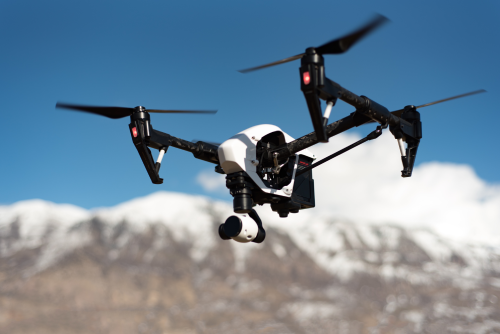
Tea estate managers have always relied on field walks, paper maps, and supervisor notes. But understanding how drones are used in tea estate mapping shows why more estates are adding aerial surveys to that routine: drones can turn large, uneven, or hard-to-reach plantations into clear, measurable maps within hours instead of days.
For tea-growing regions in India, from Assam and Dooars to Darjeeling, the Nilgiris, and Kerala, drone mapping is especially useful for block planning, drainage checks, plant health monitoring, and replanting decisions. The value is not just pretty aerial images; it is better estate decisions backed by visible data.
Quick Take
- Drones help tea estates create accurate maps of field boundaries, tea blocks, roads, drains, slopes, shade trees, and problem areas.
- A basic RGB camera drone is enough for many mapping jobs like area measurement, gap detection, and drainage planning.
- Multispectral and thermal payloads can add plant-stress insights, but they are not always necessary for every estate.
- In hilly tea regions, drone-generated terrain maps can help identify erosion, steep slopes, blocked drains, and landslide-prone sections.
- The best results come when drone maps are matched with field checks by estate staff, not treated as a replacement for agronomy or supervision.
- In India, always verify the latest DGCA and Digital Sky requirements before flying. Rules can vary by drone type, location, and purpose.
- Tea estate mapping is most useful when flights are repeated on a schedule, so managers can compare change over time.
Why tea estate mapping matters
Tea estates are not simple open fields. They often include:
- irregular block boundaries
- steep terrain or rolling slopes
- shade trees
- internal roads and worker paths
- drainage channels and culverts
- nursery zones
- replanting sections
- mixed-age tea bushes
Traditional mapping methods can be slow and inconsistent. A field team may know the estate well, but measuring exact area, slope, canopy gaps, or waterlogging patterns by walking is difficult. Satellite imagery can help at a broad level, but cloud cover, lower resolution, and less flexible timing can reduce usefulness, especially during monsoon periods or in small fragmented sections.
Drones fill that gap. They can fly low enough to capture high-detail images, and software can stitch those images into a corrected top-down map called an orthomosaic. That map is not just for viewing. It can be measured, compared over time, and used for planning.
For tea estates, that means better answers to practical questions such as:
- Which blocks have poor canopy coverage?
- Where are drains failing after heavy rain?
- How much area is ready for replanting?
- Which road segments need repair?
- Are all planted sections actually planted at full density?
- Where should field teams be sent first?
What exactly gets mapped in a tea estate
Boundaries, blocks, and area measurement
One of the simplest and most valuable uses of drones is estate boundary and block mapping.
A drone survey can help create:
- updated estate maps
- clear block or section boundaries
- measured planting area
- buffer zones near roads, settlements, or water bodies
- GIS-ready layers for planning software
This matters because many estate decisions depend on correct area numbers. Fertiliser planning, labour allocation, pruning schedules, and replanting budgets all become more reliable when block size is measured properly.
For estates that have changed over time, with merged sections, new roads, or altered drainage lines, drone maps can also replace outdated paper plans.
Tea bush canopy health and gap detection
Tea is harvested from a managed canopy surface, so uniformity matters. Drone images can help detect:
- weak canopy zones
- missing or dead plants
- irregular row patterns
- patchy growth
- sections recovering poorly after pruning
- areas affected by water stress or disease pressure
With a standard camera, managers can already spot visible variation in colour and canopy density. With a multispectral camera, they may also generate vegetation maps that highlight relative plant stress. These maps do not diagnose every issue on their own, but they help teams identify where to inspect on the ground.
This is useful when an estate wants to separate:
- healthy blocks
- medium-performing blocks
- poor-performing blocks
- priority replanting zones
Terrain, slope, drainage, and erosion
This is one of the biggest advantages of drone mapping in tea.
A drone survey can produce a terrain model, often called a digital elevation model or DEM. In simple terms, it is a 3D representation of surface height. From that, software can generate:
- contour lines
- slope maps
- drainage flow patterns
- water accumulation zones
- erosion-prone areas
- embankment or cut-slope issues
For hill tea estates in places like Darjeeling, the Nilgiris, and parts of Kerala, this can be extremely valuable. For flatter estates in Assam or Dooars, it helps identify waterlogging risk and poor runoff routes after heavy rain.
Instead of reacting only after damage appears, managers can use maps to strengthen drainage, protect vulnerable paths, and plan new field access more sensibly.
Roads, paths, culverts, and estate infrastructure
Tea estate mapping is not only about the crop itself. Drones are also used to map:
- internal roads
- worker movement paths
- bridges and culverts
- collection points
- weigh stations
- storage areas
- factory approach roads
- water tanks or pumps
A current aerial map gives estate managers a better overview of movement across the property. This helps with logistics planning, especially during peak plucking periods or after monsoon damage.
Shade trees, nurseries, and replanting zones
In many tea landscapes, shade trees play a role in microclimate and field condition. Drones can help count or map visible shade tree patterns and identify areas where shade distribution looks uneven.
Nursery areas and replanting sections can also be mapped more precisely. This helps track:
- where old bushes have been removed
- how much area has been replanted
- whether replacement planting is uniform
- which sections need follow-up inspection
A practical drone mapping workflow for tea estates
Drone mapping works best when it follows a clear workflow. The flight itself is only one part.
1. Define the estate question first
Before sending up a drone, decide what you need to learn.
Examples:
- update the master estate map
- measure block area
- identify drainage issues after rain
- detect canopy gaps in a specific division
- plan replanting for next season
If the goal is vague, the output is usually vague too.
2. Choose the right type of drone and sensor
For most tea estate mapping jobs, a camera drone with a good RGB sensor is enough. RGB means a normal visible-light camera.
You may need more advanced payloads if the job specifically involves:
- crop stress analysis across large areas
- thermal variation
- more advanced terrain work in complex conditions
- repeated precision surveys requiring very high positional accuracy
For large contiguous estates, fixed-wing drones may cover more area in one flight, but they require more operating skill and more suitable takeoff and landing space. For many Indian tea estates, quadcopters are more practical because they can launch and land in tighter spaces.
3. Plan the flight properly
Good mapping depends on consistent image capture. The flight plan usually includes:
- altitude
- image overlap
- speed
- route
- takeoff and landing points
- weather timing
In hilly tea estates, image overlap should usually be planned more carefully than in flat land because slopes and elevation change can make reconstruction harder.
Midday harsh shadows may reduce image clarity in some blocks, while fog, mist, or strong wind can make flights unusable.
4. Use ground control or high-accuracy positioning if needed
If the map will be used for simple visual inspection, standard GPS may be acceptable. But if the estate needs accurate measurements for engineering, detailed planning, or repeated comparison, better positioning matters.
Two common approaches are:
- ground control points, which are visible markers placed on the ground and measured accurately
- RTK or PPK-enabled workflows, which improve positioning accuracy using advanced GPS correction methods
For steep terrain, drainage design, or precise block measurement, this step can make a big difference.
5. Capture the images safely and consistently
During the survey:
- avoid flying over working labour lines unnecessarily
- keep takeoff and landing areas clear
- monitor battery margins carefully
- watch wind changes, especially in hill sections
- pause if rain or mist appears
Tea estates often have uneven terrain and changing weather, so field discipline matters as much as technology.
6. Process the survey into usable maps
Special software turns overlapping drone photos into outputs such as:
- orthomosaic map
- area measurement map
- elevation model
- slope map
- contour map
- canopy density or stress layers
- geo-tagged issue points
A good drone job ends with these outputs, not just a folder of images.
7. Ground-check the findings
This is the step many first-time users underestimate.
A map may show a weak patch, but the reason could be:
- missing plants
- pest attack
- shade effect
- waterlogging
- nutrient issue
- pruning recovery
- path disturbance
Drone data tells you where to look. The field team confirms why it looks that way.
8. Turn the map into an action list
The best tea estate mapping projects end with decisions like:
- clean drains in blocks 3, 5, and 7
- inspect suspected gap areas in upper division
- prioritise replanting in two weak sections
- repair culvert near access road
- redesign supervisor route after monsoon damage
- compare next month’s canopy map with current baseline
Without this last step, drone mapping stays interesting but not operational.
Choosing the right drone data for tea estate mapping
| Estate need | Most useful data | What it helps with | Best fit |
|---|---|---|---|
| Boundary and block mapping | RGB imagery | Area calculation, section outlines, estate basemap | Most estates |
| Canopy gaps and visible crop variation | High-resolution RGB | Missing plants, patchy growth, weak blocks | Routine monitoring |
| Relative plant stress mapping | Multispectral plus RGB | Early stress screening, block comparison | Estates needing deeper agronomy insight |
| Drainage, slope, contour planning | RGB photogrammetry with good overlap and accurate positioning | Water flow, erosion risk, road and drain design | Hilly or rain-sensitive estates |
| Heat or moisture pattern checks | Thermal, usually with RGB support | Stress hotspots, irrigation or water issues where relevant | Advanced or targeted surveys |
| Dense terrain and complex surface modelling | LiDAR or advanced survey workflows | Better terrain understanding in difficult conditions | Specialized projects |
For many estates, starting with high-quality RGB mapping is the smartest first step. It is simpler, more affordable, and often enough to solve real management problems.
India-specific tea estate use cases
Large estates in Assam and Dooars
These regions often have extensive planted areas, internal roads, drainage networks, and monsoon-related water issues.
Drone mapping is commonly useful for:
- block area verification
- drainage and waterlogging identification
- road and culvert inspection
- canopy uniformity checks across large sections
- planning field movement efficiently
In such landscapes, the speed of a drone survey matters. A manager can get a broad current view without waiting for multiple teams to walk every block.
Hill estates in Darjeeling, the Nilgiris, and Kerala
Steep terrain changes the mapping priority. Here, drones are especially valuable for:
- contour generation
- erosion spotting
- slope stability monitoring
- access route planning
- locating runoff damage after heavy rain
- mapping scattered sections separated by terrain
A hill estate may not need the largest survey area in one day. It often needs the most accurate understanding of elevation and access.
Small and medium tea growers
Not every tea operation is a classic large estate. Smaller growers or grouped holdings can use drones for:
- plot boundary confirmation
- replanting progress checks
- visual crop monitoring
- shared service surveys through local providers
- basic mapping before land development work
For these users, hiring a service provider for a few focused surveys can make more sense than buying a drone.
Where drone mapping clearly helps
Compared with purely manual field inspection, drone mapping gives three strong advantages.
Faster coverage
A drone can cover many hectares quickly, especially when blocks are spread out or hard to access on foot.
Consistent visual record
A repeat survey creates a time-based record. This helps managers compare before and after:
- monsoon damage
- pruning cycles
- replanting
- drain repair
- road repair
- disease-control interventions
Better communication
Maps are easier to discuss than verbal observations. Estate managers, field officers, consultants, and owners can all look at the same visual evidence.
Limits of drone mapping
Drones are useful, but they are not magic.
- They cannot diagnose every crop problem from the air.
- They do not replace field scouting, agronomy expertise, or local knowledge.
- Heavy cloud, fog, rain, and wind can delay flights.
- Dense shade can reduce visibility of underlying tea bushes.
- If data is captured badly, the map may be misleading.
- Terrain models from normal camera surveys can be less reliable in very complex conditions than advanced survey methods.
- A map is only as good as the workflow behind it.
A practical estate should treat drone mapping as a decision support tool, not a standalone answer.
Safety, legal, and compliance points in India
Tea estates may feel private, but drone operations still need legal and safety discipline.
Before any survey flight in India:
- check the latest DGCA requirements
- verify current airspace status through official channels such as Digital Sky
- confirm whether your drone and operation meet the latest compliance rules, including NPNT where applicable
- ensure the pilot or service provider is operating legally for the intended use
- obtain clear permission from estate management and relevant local stakeholders where needed
Also remember these ground realities:
- Tea estates may be near settlements, roads, forest edges, or sensitive zones.
- Some tea-growing regions, especially in parts of the Northeast or border-facing areas, may require extra caution.
- Avoid flying low over workers unless absolutely necessary for the task.
- Inform supervisors and field teams before flights so people are not startled.
- Respect privacy around labour housing, offices, and residential areas.
- Do not fly in unsafe weather just to complete a schedule.
- Commercial operators should also consider insurance and documented operating procedures.
If the mission involves engineering design, land records, or decisions with financial impact, ask the service provider how accuracy will be established and documented.
Common mistakes in tea estate mapping
Starting without a clear objective
“Map the estate” is too broad. Decide whether the real goal is area measurement, drainage, canopy monitoring, or replanting planning.
Flying too high
A very high flight may cover more ground, but it can reduce the detail needed to spot canopy gaps or small drainage issues.
Using too little image overlap
This is a common problem in sloped tea fields. Poor overlap can lead to distorted maps or broken 3D models.
Ignoring ground truth
A drone can show stressed patches, but someone still needs to inspect the field to identify the cause.
Mapping only once
The real strength of drones is repeatability. A one-time map is useful, but repeated surveys create management value.
Expecting advanced insights from basic data
A standard camera drone is powerful, but it will not provide every agronomic answer. Match expectations to sensor type.
Not planning for monsoon and hill weather
Mist, wind, rain, and low visibility are major operational factors in tea regions.
Accepting poor deliverables
A service provider should not hand over only pretty photos. Ask for useful outputs such as:
- orthomosaic map
- measured block boundaries
- issue-marked maps
- slope or contour maps where needed
- files that can be reused later
How often should an estate map?
There is no single perfect schedule, but a practical approach looks like this:
- Basemap update: once a year or after major estate changes
- Canopy condition monitoring: every few weeks during active management periods
- Drainage and erosion checks: after heavy rain or monsoon events
- Replanting progress: at key milestones
- Road and infrastructure survey: before and after monsoon, or before repair planning
The right frequency depends on estate size, terrain, budget, and the decisions being made from the data.
If you are hiring a drone survey provider, ask these questions:
- Have you mapped plantations or agricultural estates before?
- What outputs will you deliver, beyond photos?
- How will you ensure map accuracy?
- Can you show sample orthomosaics, contours, or vegetation reports?
- What field checks do you recommend after the survey?
- How quickly can repeat surveys be done in the same format?
FAQ
Can a normal camera drone map a tea estate properly?
Yes, for many tasks. A good RGB camera drone is enough for estate basemaps, block boundaries, canopy gaps, drainage visibility, road inspection, and many routine monitoring jobs.
Do tea estates always need multispectral drones?
No. Multispectral cameras are useful when the estate wants relative crop-stress mapping or more advanced vegetation analysis. But many real-world tea mapping needs can be handled well with RGB imagery first.
Are drones better than satellite images for tea plantations?
For high-detail local work, usually yes. Drones give sharper, estate-controlled imagery and can be flown when needed, subject to weather and legal clearance. Satellites are still useful for broad regional observation.
Can drones estimate tea yield?
Only indirectly, and with caution. Drones can help measure canopy condition, block uniformity, and stress patterns, which may support yield forecasting. But they do not replace harvest records, field sampling, or estate-level production data.
How accurate are drone-based area measurements?
That depends on the drone, flight method, terrain, and whether ground control points or RTK/PPK workflows are used. For decisions that need high accuracy, ask the survey provider to explain the accuracy method clearly.
Can drones detect pest and disease problems in tea?
They can help identify suspicious zones, especially where canopy colour, density, or temperature differs from surrounding plants. But they usually cannot confirm the exact pest or disease without ground inspection.
What is the most useful output for a tea estate manager?
Usually an orthomosaic map plus practical overlays such as block boundaries, issue markers, drainage lines, or slope zones. A good output should support action, not just viewing.
Are fixed-wing drones better than quadcopters for tea estates?
Not always. Fixed-wing drones can cover larger areas efficiently, but quadcopters are often more practical in tea landscapes because they need less space to launch and land and are easier to use in fragmented or hilly sections.
Can drone mapping be useful for small tea growers too?
Yes, especially through shared survey services. Small growers may not need to buy a drone, but they can benefit from occasional mapping for boundaries, replanting checks, and visible crop-condition assessment.
What should an estate do first if it wants to try drone mapping?
Start with one clearly defined pilot project, such as mapping a few blocks for canopy gaps or drainage problems. Compare the output with field observations, and only then decide whether to scale up.
Final takeaway
The smartest way to use drones in tea estate mapping is not to begin with fancy sensors or huge ambitions. Start with one real management problem, map it well, verify it on the ground, and build a repeatable workflow from there. That is when drone mapping stops being a demo and starts becoming a useful estate tool.
