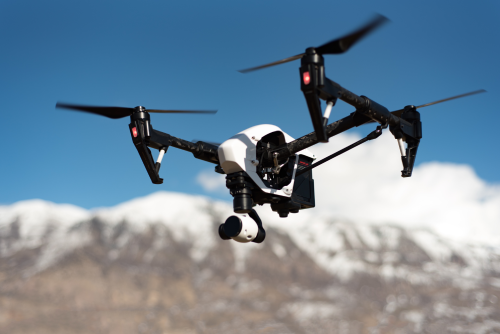
Stadium coverage is no longer limited to ground cameras, long lenses, and expensive crane rigs. Today, drones are used to capture dramatic aerial views, support event operations, inspect infrastructure, and create fast social media content around sports and live events. In India, though, stadium drone work is as much about planning, permissions, and safety as it is about camera movement.
Quick Take
- Drones are used in stadium coverage for more than just cinematic shots.
- Common uses include venue establishing visuals, fan-entry coverage, practice-session filming, security observation, parking and crowd-flow monitoring, and stadium inspection.
- For live events, especially with large crowds, drone flying is highly sensitive and may be restricted or unsuitable.
- In India, always verify the latest DGCA rules, airspace status, Digital Sky requirements, and local security permissions before operating.
- Many of the best stadium drone shots are captured before gates open, after the event, during rehearsals, or in controlled empty sections.
- A drone does not replace every camera. It works best as one part of a larger production workflow.
Why drones matter in stadium coverage
A stadium is a huge visual space. Ground cameras show players, performers, and close action well, but they cannot always reveal the scale of the venue, the crowd buildup outside, or the overall layout of the event.
That is where drones help.
A drone can show:
- the full size of the stadium and surrounding area
- fan movement at entry gates and parking zones
- the atmosphere before kickoff or before a concert starts
- the relationship between the field, stands, lights, screens, and city skyline
- operational areas that are hard to inspect from the ground
For viewers, that means more context and more excitement.
For organizers, it means better situational awareness.
For venue managers, it means faster visual checks and documentation.
Where drones are used in stadium coverage
Not every stadium use is the same. Some are purely for media production, while others support operations and maintenance.
1. Establishing shots for broadcast and digital media
This is the most obvious use.
An establishing shot is the wide opening visual that shows the venue before the main action starts. In a stadium setting, that might be:
- a slow rise showing the full ground at sunrise
- a side reveal of the floodlit arena in the evening
- a top-down view of the pitch, boundary rope, track, or seating bowl
- an orbit around the exterior façade of the stadium
These shots are often used in:
- pre-match intros
- promo videos
- highlight packages
- documentary-style sports films
- YouTube and Instagram event content
In India, this can be especially useful for cricket stadiums, football grounds, athletics venues, and large college sports complexes where scale adds a lot to the story.
2. Pre-event and fan-arrival coverage
A drone can show the energy around a venue before the event begins.
Typical examples include:
- fans entering the gates
- team buses arriving
- parking lots filling up
- security lanes and crowd barriers
- sponsor zones and event branding setups
This type of coverage helps broadcasters and organizers communicate atmosphere without needing dozens of fixed cameras outside the venue.
But this is also where caution matters. Flying near entry crowds, roads, and security checkpoints is not casual work. Timing, altitude, safe stand-off distance, and coordination with event control are essential.
3. Practice session and rehearsal filming
Stadium drones are often more useful during non-live hours than during the main event.
During:
- training sessions
- pitch inspections
- empty-stadium rehearsals
- lighting checks
- opening ceremony practice
a drone can move more freely in a controlled environment.
For sports teams, this can help with:
- formation analysis
- spacing review
- warm-up documentation
- strategy visuals for coaching staff
For event organizers, it helps review:
- stage placement
- camera positions
- crowd-flow design
- performer movement routes
A football or athletics coach may use top-down or angled aerial clips to understand spacing better than with sideline footage alone.
4. Social media content for clubs, leagues, and venues
Stadium content is no longer made only for television.
Today, drone footage is heavily used for:
- match-day teasers
- “gates opening” reels
- behind-the-scenes clips
- sponsor-backed promo edits
- stadium tours
- anniversary films
- “coming soon” construction updates
A short 10- to 20-second drone clip can be more effective for social media than a long conventional shot because it instantly shows scale.
For smaller Indian sports clubs, schools, colleges, and academies, drones can be a cost-effective way to make their venue look more professional online, if the operation is legal and safely managed.
5. Security and situational awareness
This is one of the most practical but least glamorous uses.
Aerial visuals can help organizers and security teams monitor:
- crowd buildup outside the venue
- parking congestion
- perimeter fencing
- access roads
- emergency route blockages
- movement near restricted areas
In some scenarios, a drone can give a faster overview than a patrol vehicle or a static CCTV angle.
That said, security use inside or around a live stadium event comes with serious sensitivity. There may be special restrictions, police involvement, or instructions that override normal production plans. A drone used for security observation is not the same as a drone used for cinematic content.
6. Stadium inspection and maintenance
Many stadiums are difficult and expensive to inspect manually.
Drones are useful for checking:
- roof sections
- façade panels
- light towers
- upper seating rows
- drainage zones
- signage mounts
- solar panels, where installed
- external cracks or water damage
After heavy rain, wind, or a large event, a drone can help create quick visual records without immediately sending people to high or hard-to-reach areas.
For Indian stadiums exposed to monsoon weather, dust, heat, and heavy seasonal use, this can save time and reduce inspection risk.
7. Event documentation for management and sponsors
Organizers often need proof of event scale and execution.
Drone footage can document:
- full audience turnout
- sponsor branding visibility
- stage setup and lighting design
- hospitality zone layout
- crowd distribution by section
- vehicle holding areas
This material is useful after the event for:
- sponsor reports
- internal review
- future planning
- venue marketing
- bidding for new events
A stadium operator pitching the venue for tournaments, concerts, or corporate events may rely heavily on aerial footage to show access, size, and overall presentation.
8. Post-event review and operations planning
After a match, concert, or ceremony, drone footage can help teams review what worked and what did not.
Examples:
- Were entry routes too narrow?
- Did parking spill beyond planned zones?
- Were temporary barricades effective?
- Did any area become a crowd bottleneck?
- Was signage placement visible from approach roads?
This kind of review matters for recurring events. A stadium that hosts multiple sports, university programs, or commercial shows can use aerial records to improve the next setup.
How drones fit into a real stadium production workflow
The best stadium drone work usually looks effortless on screen. In reality, it is planned in detail.
Step 1: Define the purpose clearly
Before anyone powers on a drone, the team should know exactly why it is being used.
Possible goals:
- one hero establishing shot
- fan-arrival coverage
- sponsor promo footage
- practice-session analysis
- roof inspection
- parking and perimeter observation
If the purpose is unclear, the drone often becomes a distraction rather than a useful tool.
Step 2: Check permissions and airspace
This is non-negotiable.
For stadium operations in India, verify:
- current DGCA rules
- applicable Digital Sky process
- whether the area falls in permitted or restricted airspace
- whether the drone platform and operation need additional compliance checks
- permissions from venue management
- event organizer approval
- local police or security coordination, where required
Do not assume that a drone is allowed simply because it is small, common, or used by creators elsewhere. Stadiums are sensitive venues, and many are in dense urban areas where airspace and security restrictions can be tighter.
Step 3: Survey the site
A proper site survey should identify:
- safe take-off and landing zones
- crowd-free buffers
- tall obstacles like floodlight towers and cables
- scoreboard locations
- RF interference sources such as broadcast systems
- emergency landing options
- wind patterns around open roof edges or grandstands
Stadium airflow can be tricky. Wind may feel mild at ground level but become turbulent above stands or near structural edges.
Step 4: Match the drone type to the job
Not every drone is suitable for every stadium task.
| Use case | Best-fit platform | Why it works | Main limitation |
|---|---|---|---|
| Wide exterior stadium shots | Standard camera drone | Stable, easy to frame, good image quality | Needs careful airspace and crowd planning |
| Fast cinematic interior passes in empty areas | Small FPV or cinewhoop-style drone | Dynamic movement, immersive feel | Higher pilot skill needed |
| Inspection of roof/façade/light structures | Inspection-focused camera drone | Precise hovering, detailed visual checks | Less cinematic, more technical |
| Repeated route documentation | GPS-stable professional drone | Repeatable paths and steady footage | May still be unsuitable near active crowds |
FPV means first-person view, where the pilot flies using a live immersive feed. It can create dramatic “through the venue” motion, but it is usually a specialist tool and should not be treated as a beginner option.
Step 5: Fly at the right time
Timing is everything in stadium drone coverage.
The safest and most practical windows are often:
- early morning before staff and spectators arrive
- rehearsal periods
- controlled training sessions
- maintenance windows
- after the event, once crowd density drops
- empty-stadium days for promotional filming
Trying to capture everything during peak crowd density is often the wrong plan.
Step 6: Coordinate with the full crew
A stadium drone operator should not work in isolation.
The drone team usually needs to stay in sync with:
- broadcast director
- camera control
- event manager
- security chief
- ground production crew
- venue operations staff
Even a great shot is not useful if it conflicts with live operations, emergency access, or main camera lines.
What drones do better than traditional stadium cameras
Drones are powerful, but only when used for the right job.
Best strengths
- Show overall scale quickly
- Capture approach roads and venue surroundings
- Create smooth rising or revealing shots
- Reach inspection points without scaffolding
- Produce high-impact social clips with small crews
- Add movement where static cameras feel flat
Where they are weaker
- Close-up live sports action
- Long-duration continuous coverage
- High crowd-density environments
- Strong-wind conditions
- Heavy rain or poor weather
- Tight spaces with many obstacles
- Audio capture, which is usually poor from drones
For core live action, fixed broadcast cameras, long lenses, cable systems, and ground gimbals are often better choices.
The smart approach is to use drones for what only drones do well.
India-specific realities stadium teams should not ignore
In India, stadium drone operations can be complicated by location and event profile.
Some common realities include:
- stadiums near busy city zones
- security-heavy events
- police-controlled traffic perimeters
- VIP movement
- nearby heli routes or airport-influenced airspace in some cities
- dense mobile network and broadcast signal environments
- large last-minute crowd buildup outside gates
A college sports day in a smaller city and a major league event in a metro are not the same kind of drone job.
The same aircraft may be technically capable of both, but the permissions, risk profile, crew size, and operational limits can be completely different.
Safety, legal, and compliance basics for stadium drone work
This is the section many people rush through. It should be the first one they read.
The big reality: flying near crowds is high risk
A stadium is one of the most sensitive places to fly.
If spectators are present, you must think about:
- injury risk from failure or pilot error
- panic caused by low or unexpected drone movement
- distraction to players, performers, or officials
- privacy concerns
- interference with security operations
- limited emergency landing options
Because of that, many professional stadium shoots avoid active crowd-overflight entirely and instead capture:
- empty venue shots
- exterior reveals
- controlled perimeter footage
- rehearsals
- pre-event and post-event visuals
What to verify in India before operating
Always verify the latest official requirements before any stadium flight. At a minimum, check:
- DGCA operating rules currently in force
- applicable Digital Sky workflow
- drone registration and remote pilot requirements, where relevant
- whether the aircraft and operation need NPNT compliance under the current framework
- local airspace status
- venue permission in writing
- event organizer approval
- police or local administration coordination, if required
- insurance terms, if your client or venue asks for it
Rules and practical enforcement can differ depending on the event, city, and security sensitivity. If anything is unclear, do not guess.
Minimum operational discipline
Even with approvals, good teams still use strict discipline:
- locked-down take-off and landing area
- visual observer support
- pre-briefed emergency actions
- no improvising over people
- battery health checks
- return-to-home settings reviewed carefully
- clear abort criteria for wind, interference, or crowd movement
Permission is not the same as safe execution.
Common mistakes in stadium drone coverage
Treating the drone as the main camera for everything
A drone is a specialist tool, not a replacement for all production cameras. If you try to force it into every role, the coverage suffers.
Planning the shot but not the operation
Many newcomers think only about the final video.
Professionals think about:
- where to launch
- who controls the area
- what happens if the link drops
- where spectators will be in 10 minutes
- what the wind is doing above the stands
Flying too low for drama
Low passes may look exciting, but they increase risk and often reduce the usable view. Higher, cleaner, wider shots usually work better in stadium environments.
Ignoring signal conditions
Stadiums are full of electronic systems. Broadcast gear, metal structures, large screens, and dense phone use can create a difficult operating environment.
Choosing the wrong time of day
A visually perfect sunset may also be the busiest crowd period. The best operational window is not always the most glamorous one.
Using FPV without enough skill
FPV stadium videos look amazing online, but they require planning, practice, and a controlled environment. They are not a shortcut for beginners.
Skipping rehearsal
Even simple shots improve dramatically after one dry run. Without rehearsal, teams waste batteries, miss cues, and create avoidable risk.
Practical examples of stadium drone use
Example 1: Cricket venue promo shoot
A stadium operator wants a 45-second promo film for sponsors.
Best drone use:
- dawn exterior reveal
- slow orbit around the seating bowl
- top-down shot of the pitch area
- evening floodlight glow shot after the venue is cleared
Not ideal:
- low flying above spectators during a packed live match
Example 2: College sports day in India
A school or university wants event coverage for admissions and social media.
Best drone use:
- empty-ground opening shots
- parade setup before crowd arrival
- aerial look at track layout and field events
- post-event recap visuals
Important caution:
- student-filled grounds are still crowd environments, so safety and permissions matter just as much
Example 3: Stadium maintenance after monsoon
Venue management needs to inspect roof edges and upper external cladding.
Best drone use:
- visual roof survey
- drainage blockage spotting
- water-stain documentation
- façade imagery for contractor review
This is often one of the most practical returns on investment for a stadium drone program.
FAQ
Can drones be used during a live match inside a packed stadium?
Sometimes they may be proposed, but this is highly sensitive and often unsuitable without strict approvals, risk controls, and event-level coordination. In many cases, the safer and more realistic option is to shoot before gates open, during rehearsal, or after the crowd clears.
Are drones legal for stadium shoots in India?
They can be, but legality depends on the current DGCA framework, airspace status, the type of drone, the nature of the event, and local permissions. Always verify the latest official rules and venue-specific approvals before operating.
Do small creators need the same planning as broadcasters?
Yes. The scale of the production may differ, but the need for legal compliance, safe take-off areas, and crowd-risk management does not disappear just because the shoot is small.
Are drones better than cable cams for stadium coverage?
Not always. Cable cams are often better for predictable movement over the field in controlled broadcast setups. Drones are better for flexible aerial perspectives, exterior reveals, and quick deployment in appropriate conditions.
Can drones be used indoors in stadiums or arenas?
They can be used in some indoor venues, especially for controlled promotional shoots, but GPS may be weak or unavailable indoors, and obstacle risk is higher. Indoor flying needs extra planning and a very controlled set.
What is the biggest technical challenge in a stadium?
Usually a mix of wind, obstacles, and signal conditions. Large metal structures, electronic systems, and changing crowd patterns make stadiums more complex than open fields.
Which type of drone is best for stadium coverage?
It depends on the job. Standard camera drones work well for stable wide shots. Small FPV platforms are useful for dynamic movement in controlled, empty spaces. Inspection work may call for a more precise, utility-focused drone.
Is drone footage useful for stadium security?
Yes, for situational awareness, perimeter review, parking observation, and post-event assessment. But security-related flying may involve stricter coordination and should never interfere with public safety operations.
Final takeaway
Drones are used in stadium coverage not just to make videos look cinematic, but to solve real problems: showing scale, documenting events, reviewing operations, inspecting structures, and supporting better planning. If you want to use a drone in or around a stadium in India, think like an operator first and a videographer second: define the purpose, choose the right timing, verify every permission, and only fly where the shot is worth the risk.
