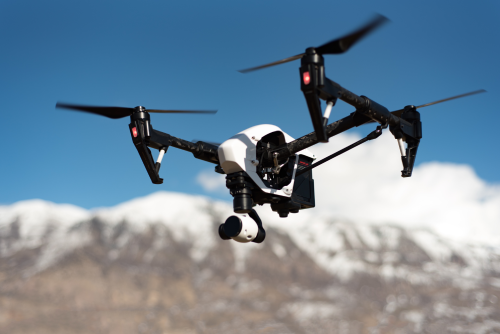
Solar farms look simple from a distance: long rows of panels under open sky. In practice, they are large, data-heavy assets where a small fault in one area can quietly reduce output across an entire block. How drones are used in solar farm monitoring is all about finding those issues faster, safer, and with much better visibility than a manual walk-through alone.
Quick Take
- Drones help solar farm operators inspect large sites quickly using visual and thermal data.
- The most common jobs are spotting hotspots, broken panels, shading, vegetation growth, drainage issues, tracker problems, and post-storm damage.
- A thermal drone can show where panels or strings are behaving abnormally, but it does not always reveal the exact root cause on its own.
- In India, drones are especially useful because many solar plants are large, dusty, hot, remote, and affected by seasonal weather.
- For any commercial operation, verify the latest DGCA, Digital Sky, site-permission, and airspace requirements before flying.
Why solar farm monitoring is a strong use case for drones
A solar farm may have thousands, sometimes hundreds of thousands, of modules spread across a very large area. Inspecting every row on foot takes time, manpower, and consistent attention to detail. It is easy to miss a small cracked panel, a hotspot, or a section affected by vegetation and dust.
That is where drones become useful.
A drone can cover a large site much faster than a manual inspection team and collect repeatable image data from the same height, angle, and route. That matters because solar performance problems are often not dramatic. They show up as patterns:
- one module running hotter than surrounding modules
- one row showing different thermal behaviour
- repeated soiling in a specific block
- shadows from new vegetation or structural misalignment
- waterlogging or erosion near certain arrays
In India, this matters even more because operating conditions are tough. Utility-scale plants in dry regions may face heavy dust and soiling. Sites in monsoon-prone areas may need quick post-rain or post-wind checks. Heat, long walking distances, and tight maintenance windows all make drone-based monitoring attractive.
What drones actually monitor on a solar farm
Solar farm monitoring is not just about “looking at panels from the air.” Different sensors and flight plans are used for different problems.
| Monitoring task | Typical sensor | What the drone can reveal | Why it matters |
|---|---|---|---|
| Module performance inspection | Thermal + RGB camera | Hotspots, abnormal temperature patterns, underperforming sections, possible string-level anomalies | Helps maintenance teams find likely fault zones faster |
| Visual panel inspection | High-resolution RGB camera | Broken glass, discoloration, frame damage, visible dirt, physical impact marks | Useful for repair planning, evidence, and QA |
| Tracker and mounting checks | RGB camera, sometimes zoom | Misaligned rows, mechanical damage, shading caused by angle mismatch | Protects energy yield and mechanical reliability |
| Vegetation monitoring | RGB camera, sometimes multispectral | Weed growth, shading risk, access blockage, fence-line encroachment | Reduces shade, fire risk, and access issues |
| Site condition mapping | RGB photogrammetry | Drainage problems, erosion, waterlogging, road damage, boundary issues | Supports civil maintenance and safer site access |
| Construction and expansion tracking | RGB mapping, RTK/PPK workflows | Layout progress, as-built comparison, trench progress, stockpile records | Helps EPC and asset teams monitor work quality |
RGB means standard visual imagery. Thermal means infrared imagery that shows surface temperature differences. RTK/PPK are positioning methods that improve mapping accuracy when precise location data is important.
Real-world monitoring examples
1. Dust-heavy blocks in western India
At a large ground-mount site in a dry, dusty region, operators may notice that one section consistently underperforms. A drone flight with RGB and thermal imaging can quickly compare block-to-block conditions. The result may show heavier soiling in a few rows, along with heat patterns that suggest reduced performance.
That does not automatically prove exact energy loss from dirt alone, but it helps the operations team target cleaning and inspect those rows first.
2. Post-monsoon damage check
After strong wind or heavy rain, walking the entire site can take too long. A drone can first map the plant and flag:
- pooled water near foundations
- damaged access tracks
- displaced fencing
- tracker misalignment
- visible panel breakage
Maintenance crews then go only to the affected areas instead of searching blindly.
3. Construction-stage verification
During a new solar farm build, drones are often used before full commissioning. They help compare the planned layout with the actual installation, record progress, and spot visible issues such as uneven row alignment, incomplete work zones, or poor drainage around newly developed sections.
How thermal drones help find solar panel issues
Thermal imaging is one of the biggest reasons drones are used in solar farm monitoring.
A thermal camera detects infrared radiation and converts it into an image showing temperature differences across the site. On a solar farm, those differences can reveal modules or cells that are behaving differently from nearby panels under similar conditions.
What a thermal anomaly can suggest
A drone-based thermal scan may highlight:
- a hotspot on a cell or module
- unusual heating near a junction box area
- a row or string that appears cooler or hotter than nearby rows
- temperature patterns linked to shading
- temperature effects linked to dirt, bird droppings, or partial blockage
- abnormal behaviour around connectors or electrical sections visible at module level
This is extremely useful because the drone does not just say “something is wrong somewhere.” It gives the maintenance team a map and a location.
Why thermal does not replace electrical diagnosis
Thermal imagery shows symptoms, not always the full diagnosis.
For example, a hot module could be linked to:
- cell damage
- a bypass diode problem
- partial shading
- dirt accumulation
- a connection issue
- a mismatch with surrounding modules
From the air, these can look similar at first. That is why good solar drone workflows include ground verification. A technician may still need to inspect the module physically, check connectors, measure electrical values, or perform more detailed testing.
Timing matters in thermal inspections
Thermal surveys work best when the plant is operating under stable generation conditions. If sunlight is inconsistent, wind is high, or environmental conditions are changing rapidly, the thermal pattern may be harder to interpret correctly.
The exact inspection window depends on:
- sunlight conditions
- module temperature
- wind
- site layout
- camera quality
- the operator’s inspection method
For this reason, serious solar inspections usually follow a defined protocol rather than casual flying.
A typical drone workflow for solar farm monitoring
Good results come from a system, not just a flight.
1. Define the inspection goal
Start by deciding what the mission is for:
- routine performance inspection
- post-storm damage survey
- vegetation and shading check
- construction progress mapping
- warranty or insurance documentation
- pre-maintenance or post-maintenance verification
This decides the sensor, altitude, speed, overlap, and reporting style.
2. Review permissions, airspace, and site access
Before flying in India, check the latest applicable DGCA and Digital Sky requirements, along with local site permissions and internal safety rules. A private solar farm still requires site owner approval, and some projects may be near sensitive infrastructure or controlled airspace.
Also check whether your mission requires specific compliant equipment or operational approvals under current rules. Do not rely on old screenshots, social media posts, or outdated checklists.
3. Plan the flight for repeatability
A professional solar inspection usually uses automated flight paths instead of manual wandering. The operator plans:
- flight altitude
- image overlap
- route direction
- speed
- sensor settings
- take-off and landing zones
- battery swaps and mission segmentation
Repeatability matters because operators often want to compare the same block across months or seasons.
4. Capture RGB and thermal data
Many solar teams prefer to collect both data types.
- RGB imagery gives visible evidence of damage and site condition.
- Thermal imagery highlights abnormal temperature behaviour.
Using both together reduces false assumptions. For instance, a hotspot seen in thermal may make more sense when the RGB image shows bird droppings, shading, broken glass, or a visible physical defect.
5. Process the data into usable maps
After the flight, software is used to stitch overlapping images into an orthomosaic, which is a map-like image made from many photographs. Thermal datasets may be processed into panel-level or row-level anomaly maps.
Some platforms also use automated detection to flag suspicious modules. That can save time, but it should not replace technician review entirely.
6. Tag anomalies and rank them
The most useful reports do more than show pretty images. They identify:
- location of the issue
- type of anomaly
- severity or inspection priority
- supporting RGB and thermal snapshots
- recommended ground check
This turns the drone survey into a maintenance task list.
7. Verify on the ground
This is one of the most important steps.
After the drone identifies likely problem areas, technicians inspect those exact modules, strings, or structures on the ground. They confirm whether the issue is truly a defect, a temporary condition, a cleaning problem, or an electrical fault elsewhere.
8. Repair, document, and re-inspect
After maintenance, a follow-up drone survey can confirm whether the hotspot is gone, the tracker alignment is corrected, or the affected block is back to normal. This creates a useful before-and-after record.
What a good drone inspection report should include
If you are hiring a service provider, ask for outputs that maintenance teams can actually use:
- site map or orthomosaic
- geo-tagged anomaly list
- RGB and thermal images for each finding
- block, row, or module reference where possible
- severity or action priority
- notes on what needs ground confirmation
- summary of areas covered and any gaps
A drone report is valuable only if it helps a site team act faster.
Benefits for solar operators in India
Drone monitoring is attractive everywhere, but the Indian context makes the value easier to see.
Faster coverage of large sites
A large utility-scale plant can be too slow to inspect manually at useful frequency. Drones make periodic reviews more realistic.
Better response after weather events
Monsoon rain, wind, dust storms, and local damage can affect only parts of a site. Drones quickly narrow down where crews should go first.
Less physical strain on inspection teams
Walking rows in heat for long hours is tiring and time-consuming. Drones reduce unnecessary field movement, though they do not remove the need for technicians.
Better maintenance prioritisation
Instead of sending crews everywhere, operators can dispatch them to specific rows, strings, or structures.
Stronger documentation
Repeat flights create a visual record of performance trends, vegetation growth, civil wear, and repair history. That is useful for asset owners, EPCs, O&M contractors, and insurers.
Drones help beyond the panels too
A good solar farm inspection does not stop at module surfaces.
Drones can also help monitor:
- access roads and internal tracks
- erosion near foundations
- fence damage and perimeter intrusion
- vegetation near cable routes and array edges
- standing water after rain
- tracker movement consistency across rows
- general site housekeeping during O&M
On some sites, even a simple overhead map can reveal patterns that are hard to notice from ground level.
Limits you should know before relying on drone data
Drones are powerful, but they are not magic.
- They do not always reveal the exact electrical root cause.
- Thermal results can be affected by weather, sunlight, angle, and operator method.
- Very small defects may be missed if flight altitude is too high or image quality is poor.
- Some issues under modules, inside equipment, or within cabling need closer inspection tools.
- Data processing and analysis quality matter as much as the flight itself.
- Enterprise-scale inspections create a lot of data, so storage and reporting need planning.
If you treat a drone as a complete replacement for maintenance engineering, you will be disappointed. If you treat it as a fast and precise first layer of inspection, it becomes extremely valuable.
Safety, legal, and compliance in India
Solar farms may look open and easy to fly over, but commercial drone work still needs careful planning.
Verify current DGCA and Digital Sky requirements
Drone rules, airspace procedures, and equipment requirements can change. Before any operation, verify the latest official guidance on:
- whether the flight location is permitted
- what approvals or permissions are needed
- what type of drone and operator credentials are applicable
- whether your aircraft falls under current NPNT or other compliance conditions
Do not assume that a remote solar location automatically means unrestricted flying.
Get site owner and project-level permission
The plant owner, EPC, or O&M operator should approve the mission in writing. Many sites also require:
- gate entry records
- safety induction
- PPE rules
- escort procedures
- no-fly zones within the site
- emergency contact details
Plan for electrical and physical hazards
Solar farms contain live equipment, high-voltage areas, tracker mechanisms, and sometimes nearby transmission assets. Drone crews should maintain safe stand-off distances and avoid improvised flying near electrical infrastructure without a proper risk plan.
Manage heat and batteries carefully
Indian summer conditions can be harsh on both people and batteries. Plan:
- shaded prep area
- battery rotation and cooling discipline
- clear landing zones
- hydration and heat-stress precautions for the crew
Protect privacy and data handling
Even industrial inspections should respect adjacent land, workers, and any non-essential image capture outside the site boundary. Data should be stored and shared responsibly.
Common mistakes in solar farm drone monitoring
Flying too high to see useful detail
A fast, high-altitude survey may look efficient but can miss module-level problems. Flight height should match the inspection goal.
Using thermal data without RGB context
Thermal-only reporting can create confusion. Pairing thermal and visual images usually leads to better interpretation.
Treating every hotspot as a failed panel
Not every hot area means a panel must be replaced. Some anomalies are caused by temporary shading, dirt, or environmental conditions.
Skipping ground confirmation
This is one of the biggest errors. Drone findings should guide technicians, not replace them.
Poor timing
Flying in unstable weather or under unsuitable generation conditions can reduce inspection quality.
Ignoring non-panel issues
Operators sometimes focus only on modules and miss bigger site risks like drainage, vegetation, row misalignment, or fence damage.
Buying hardware before defining the workflow
A thermal drone alone is not a monitoring system. You also need mission planning, data processing, reporting, and follow-up maintenance logic.
Choosing the right drone setup
The “best” setup depends on the job.
RGB-only setup
Useful for:
- construction progress
- visible damage checks
- vegetation and drainage mapping
- basic site documentation
This is a reasonable starting point for visual monitoring, but it will not replace thermal performance inspection.
Thermal + RGB setup
Best for:
- operational PV inspection
- hotspot detection
- anomaly mapping
- targeted maintenance planning
For serious solar work, a radiometric thermal camera is usually more useful than simple thermal video because it preserves measurement data per pixel.
RTK/PPK-enabled mapping setup
Useful when precise geolocation is important across large repeat inspections. RTK and PPK are accuracy-enhancement methods that help place findings more reliably on the site map.
For utility-scale farms, the hardware matters less than the full workflow: planning, flying, processing, analysis, reporting, and maintenance follow-up.
FAQ
Can drones replace manual solar farm inspection completely?
No. Drones are excellent for finding where to look, but technicians still need to confirm faults, inspect hardware closely, and perform electrical testing where required.
Do you always need a thermal camera for solar farm monitoring?
Not always. If the goal is construction progress, drainage mapping, or visible damage checks, RGB may be enough. If the goal is performance-related inspection, thermal is usually the key sensor.
How often should a solar farm be inspected by drone?
There is no single correct schedule. Frequency depends on site size, dust levels, weather exposure, maintenance contracts, and how critical fast fault detection is. Many operators combine periodic scheduled inspections with event-based flights after storms or major performance drops.
Can drones detect dirty panels and soiling?
They can help identify visibly dirty sections and thermal patterns linked to uneven conditions, but exact soiling loss still needs careful interpretation and, in many cases, ground-based confirmation or performance data comparison.
Are drones useful only for utility-scale solar parks?
No. The same methods can help with smaller ground-mount plants and some large rooftop installations too. The main difference is scale, access complexity, and the level of reporting needed.
Can a basic consumer drone do solar inspection work?
For simple visual site overviews, sometimes yes. For repeatable enterprise monitoring, especially thermal inspection, larger sites usually need more capable equipment, better mapping tools, and stronger reporting workflow.
What is the biggest advantage of drone monitoring for solar farms?
Speed with location accuracy. Instead of knowing that “output seems low somewhere,” operators can know which block, row, or module group should be checked first.
What is the biggest limitation?
A drone often shows that something is abnormal, but not always why. The final diagnosis may still need a trained technician on site.
Is AI enough to analyse all thermal solar data automatically?
AI tools can save time by flagging suspicious areas, but they are not infallible. Human review remains important, especially when maintenance decisions or warranty claims depend on the findings.
What should I ask a drone service provider before hiring them?
Ask what sensor they use, what deliverables you will receive, how anomalies are geo-tagged, whether they include RGB plus thermal evidence, how they handle ground-truth recommendations, and whether their operation follows current Indian compliance requirements.
Final takeaway
If you want to use drones for solar farm monitoring, start with one clear objective: thermal fault detection, post-monsoon damage review, construction QA, or vegetation mapping. Then insist on a workflow that includes proper permissions, repeatable flights, actionable reports, and ground verification. That is the difference between collecting drone footage and actually recovering performance from a solar asset.
