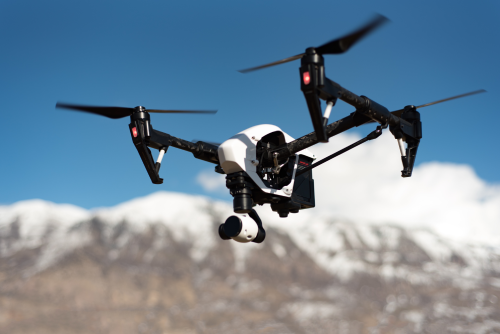
Sand mining is hard to monitor from the ground alone. Sites change quickly, access can be difficult, and illegal extraction often happens in short windows or in remote river stretches. That is exactly why drones are increasingly used in sand mining monitoring: they help authorities, lease holders, consultants, and survey teams capture fast, repeatable, and visual evidence from the air.
In India, this use case is especially important because sand mining affects rivers, roads, village communities, construction supply chains, and local ecosystems. When used properly, drones can improve transparency, reduce field risk, and make inspections far more efficient than relying only on manual checks.
Quick Take
- Drones help monitor sand mining by capturing aerial photos, videos, maps, and 3D terrain data.
- They are useful for checking lease boundaries, measuring stockpiles, spotting fresh excavation, tracking riverbed changes, and documenting suspected illegal mining.
- Compared with only ground inspections, drones cover more area faster and create clearer visual records.
- For serious measurement work, planning matters more than the drone brand: flight height, overlap, GPS quality, ground control, and repeatability affect accuracy.
- In India, operators must verify current DGCA requirements, airspace permissions, and any local administrative restrictions before flying.
- Drone data is powerful, but it works best when combined with field verification, timestamps, survey procedure, and proper record-keeping.
Why sand mining monitoring needs drones
Sand mining is not like inspecting a single building or a fixed factory plot. The landscape can shift week by week, especially near riverbeds, floodplains, access tracks, loading points, and stock yards.
Traditional monitoring has some common problems:
- Inspectors cannot see the full site from the ground
- Manual measurements take time
- Remote areas are hard to reach safely
- Evidence is often fragmented
- Repeated surveys are inconsistent
- Changes between visits are easy to miss
Drones solve part of this problem by giving a bird’s-eye view and a repeatable survey method.
For example, if a district team needs to compare a riverbank stretch over multiple dates, drone imagery can show whether excavation expanded, whether access ramps changed, and whether stockpiles increased. If a legal lease operator needs to prove compliance, drone maps can help show activity stayed within an approved area, subject to ground validation and official review.
What drones actually capture at a sand mining site
A drone is not just a flying camera. In sand mining monitoring, the value comes from the kind of outputs it can produce.
1. High-resolution photos
These are useful for:
- Visual inspection of excavation zones
- Evidence of machinery presence
- Road and access path checking
- Riverbank condition review
- Site documentation for reports
2. Videos
Videos help when the goal is quick inspection or field documentation.
They are useful for:
- Showing active movement on site
- Recording truck loading areas
- Capturing a general site overview
- Communicating findings to officials or stakeholders
Video is easy to understand, but it is not enough for precise measurements on its own.
3. Orthomosaic maps
An orthomosaic is a stitched aerial map made from many overlapping images. Unlike a casual photo, it is geometrically corrected so distances and positions can be analyzed more reliably.
This is one of the most useful drone outputs for sand mining monitoring because it allows teams to:
- Mark excavation zones
- Compare date-wise site changes
- Check boundaries against a lease map
- Measure affected area
- Create inspection records
4. Digital surface models and 3D terrain data
These outputs show elevation and surface shape.
They are used to:
- Estimate cut-and-fill changes
- Measure stockpile volumes
- Study excavation depth patterns
- Track terrain changes over time
5. Geotagged inspection evidence
Geotagging means the images are linked to location data. This becomes helpful when data must be reviewed later in an official or contractual context.
Main ways drones are used in sand mining monitoring
Lease boundary verification
One of the most practical uses is checking whether mining activity stays inside the approved lease area.
A drone survey can help overlay actual excavation with boundary references. This is useful when:
- Ground markers are missing or disturbed
- The site is large or irregular
- Boundaries follow river stretches or shifting land features
- There is a dispute about the active area
Important note: drone maps should not replace the official legal survey record by themselves. They should support verification, not become a shortcut for formal land determination unless the client and authority accept that workflow.
Detecting suspected illegal sand mining
Illegal extraction often happens in:
- Remote river stretches
- Early morning or late-night windows
- Seasonal dry riverbeds
- Areas with multiple access points
- Locations where field patrols are infrequent
Drones can help spot:
- Fresh pits or cut marks
- New approach roads
- Vehicle tracks
- Excavators or loaders
- Temporary stockpiles
- Unusual disturbance along the riverbank
A single flight may not prove the full case. But repeated drone monitoring can build a strong visual timeline of site activity. That is often far more useful than scattered ground photos taken from a few fixed points.
Measuring stockpiles and extracted material
This is a major commercial and compliance use case.
At legal sand yards, depots, or crusher-linked storage areas, drones can estimate stockpile volumes. Instead of using manual tape methods or rough assumptions, a drone can generate a 3D model and calculate the volume more consistently.
This helps with:
- Inventory checks
- Contractor billing support
- Reconciliation between extraction and dispatch
- Internal audit work
- Progress tracking
Accuracy depends on the survey method. For high-confidence volume estimation, teams often use better GPS positioning, correct overlap, proper ground references, and a consistent base surface.
River morphology and riverbank change monitoring
Sand mining affects how a river behaves. Monitoring is not only about catching extraction; it is also about observing changes to the river environment.
Drone surveys can reveal:
- Bank erosion
- Channel widening or narrowing
- Fresh cut faces
- Sediment movement patterns
- Changes near bridges, embankments, or flood-prone stretches
- Water flow path shifts in dry or low-flow conditions
For environmental consultants and authorities, this can support periodic review of impact in and around mining zones.
Access route and transport monitoring
Mining impact is not limited to the extraction pit. Roads, village tracks, and temporary haul routes also matter.
Drone imagery can help monitor:
- Truck movement corridors
- Road widening due to heavy traffic
- Encroachment onto farmland or public paths
- Loading and unloading points
- Dust-prone segments near settlements
This is especially useful when complaints come from nearby communities and teams need objective aerial records.
Safety inspection of unstable areas
Sand pits, river edges, and steep faces can be dangerous to inspect on foot.
Drones reduce the need for surveyors or officials to walk into risky zones such as:
- Freshly excavated slopes
- Waterlogged depressions
- Loose stockpile edges
- Unstable riverbanks
- Areas with heavy machine movement
They do not remove all risk, but they reduce direct exposure.
Evidence documentation for enforcement or reporting
Good monitoring is not only about seeing a problem. It is about documenting it in a repeatable, defensible way.
A drone survey can support reports by providing:
- Date-wise site imagery
- Map-based annotations
- Before-and-after comparisons
- Measured area affected
- Visible machine and road patterns
- Consistent visual records from the same flight path
That said, evidence handling matters. Teams should maintain file integrity, timestamps, location references, and written field notes.
How a typical drone monitoring workflow works
Below is a practical workflow used by survey teams, consultants, and inspection units.
1. Define the monitoring objective
Start with one clear question:
- Are you checking boundary compliance?
- Estimating stockpile volume?
- Comparing excavation over time?
- Looking for suspected illegal activity?
- Assessing environmental impact?
Without a defined objective, teams often collect lots of footage but little usable data.
2. Gather reference data
Before flying, collect:
- Lease boundary or survey map
- Previous site imagery if available
- Ground control plan if needed
- Site access details
- Safety risks
- Airspace and permission status
3. Plan the mission
Mission planning includes:
- Flight altitude
- Image overlap
- Ground sampling detail needed
- Takeoff and landing zone
- Battery planning
- Weather window
- Observer placement
- Emergency procedure
If the goal is measurement, automated grid flights are usually better than casual manual flying.
4. Fly and capture data
At the site, the team should check:
- Wind conditions
- People and vehicle movement
- Signal quality
- Camera settings
- Battery health
- Return-to-home settings
- Ground obstacles such as wires, trees, cranes, or elevated machinery
5. Process the images
Specialized software is used to create:
- Orthomosaics
- 3D models
- Elevation outputs
- Volume calculations
- Change detection layers
6. Verify with ground observations
This step is often skipped, but it matters.
Ground verification helps confirm:
- Whether a shadow is actually a cut
- Whether a mound is stockpiled sand or unrelated material
- Whether a road is active or abandoned
- Whether a boundary marker is visible and correctly interpreted
7. Generate the report
A useful report should include:
- Date and time of survey
- Area covered
- Flight parameters
- Weather notes
- Key observations
- Annotated maps
- Volume or area calculations if relevant
- Limits of interpretation
- Comparison with earlier surveys where available
Which types of drones are used for sand mining monitoring
Not every drone is suitable for every mining task.
| Drone type | Best for | Strengths | Limits |
|---|---|---|---|
| Small multirotor with RGB camera | Quick inspections, photos, short-area mapping | Easy to deploy, good for visual checks | Shorter flight time, slower over large areas |
| Mapping-focused multirotor with better positioning | Stockpiles, lease verification, repeated surveys | Better consistency and measurement workflow | More setup and skilled processing needed |
| Fixed-wing mapping drone | Large river stretches and wide-area surveys | Covers more ground in one flight | Needs more open launch/recovery space, not ideal in tight areas |
| RTK-enabled drone | Higher-accuracy mapping and volume work | Better positional quality when used correctly | Higher cost and still may need proper survey workflow |
| LiDAR-capable system | Complex terrain or vegetation-heavy areas | Better terrain capture in specific conditions | Expensive and usually unnecessary for many routine sand sites |
For many Indian users, a camera-based multirotor is the practical starting point. It handles most inspection and basic mapping jobs well. Higher-end survey needs may justify RTK or specialized systems.
What data products are most useful to different users
| User | Most useful drone output |
|---|---|
| District administration | Date-wise orthomosaic maps, annotated evidence images, area change comparison |
| Mining lease holder | Boundary overlays, stockpile volume reports, progress mapping |
| Environmental consultant | Terrain change maps, riverbank imagery, repeat survey comparisons |
| Survey contractor | Orthomosaic, DSM, contour outputs, volume calculations |
| Enforcement team | Geotagged visuals, timeline documentation, marked locations of machinery or excavation |
Benefits of using drones in sand mining monitoring
Faster coverage
A drone can inspect in minutes what may take much longer on foot or by vehicle.
Better visual clarity
An overhead view reveals patterns that are hard to notice from ground level.
Repeatability
When flights are conducted with similar settings and paths, comparisons over time become much more meaningful.
Safer inspection
Teams spend less time entering unstable or active mining zones.
Improved reporting
Maps and annotated imagery are easier to share with officials, managers, and legal teams than scattered phone photos.
Better measurement potential
For stockpiles and terrain changes, drone-derived models can be far more informative than rough visual estimates.
Limits and challenges you should know
Drones are useful, but they are not magic.
Water surfaces can be tricky
Photogrammetry, which is the method of creating maps and 3D models from overlapping photos, does not work well over reflective or moving water. If the survey area includes river channels, measurements near water need extra care.
Sand texture can look similar everywhere
Uniform surfaces can make feature matching harder in some conditions, especially with poor lighting or low overlap.
Wind affects image quality and safety
Open river corridors can be windy, especially at certain times of day.
Dense vegetation reduces visibility
If vegetation covers part of the site, standard RGB mapping may not reveal the true ground below.
Accuracy depends on workflow
A poor survey with a good drone can still produce weak results.
Drone evidence may still need ground corroboration
For disputes or enforcement, aerial evidence is stronger when supported by field notes, official records, and repeat observations.
Safety, legal, and compliance considerations in India
This topic needs careful handling.
If you plan to use drones for sand mining monitoring in India, verify the latest position on the following before any operation:
- DGCA drone requirements applicable to your aircraft category and use case
- Airspace permissions and restricted zones
- Digital Sky processes where relevant
- Local district administration instructions
- State-specific mining department conditions
- Permissions from landowners, lease holders, or project authorities
- Environmental sensitivity of the area
- Operational restrictions near people, roads, bridges, power lines, or sensitive infrastructure
A few practical points:
Do not assume a mining site is automatically okay to fly over
Mining activity on the ground does not override airspace or local administrative restrictions.
Avoid crowding or aggressive enforcement-style flying
If a drone is used during inspection or suspected violation checks, maintain distance and safety. Do not fly low over workers, machinery, or vehicles unless the operation is planned and authorized.
Privacy and data handling matter
A drone mission may capture nearby villages, roads, farmland, or private property. Teams should minimize unnecessary collection and store data responsibly.
Keep records
For professional monitoring work, maintain:
- Flight logs
- Mission purpose
- Pilot details
- Date and time
- Data storage procedure
- Processing steps
- Versioned reports
Use trained operators
A casual hobby-style flight is not enough for compliance monitoring or measurable survey work.
Best practices for reliable sand mining monitoring
Use the same survey method every time
If you want change detection, keep the flight height, overlap, camera angle, and site coverage consistent across dates.
Fly when lighting is stable
Harsh shadows can hide cuts and distort interpretation. Midday or evenly lit conditions often work better than very early or late light for mapping.
Combine overview and detail flights
One wide-area grid map plus a few close inspection passes gives better results than only cinematic video.
Add ground control when accuracy matters
For higher-accuracy mapping, use proper survey control or equivalent workflow under a trained professional.
Mark features clearly in the report
Do not send raw imagery alone. Annotate the suspected excavation, road, stockpile, or boundary issue.
Compare with previous data
Single-date images are useful. Multi-date comparison is far more powerful.
Common mistakes in drone-based sand mining monitoring
Treating video as a survey product
Good-looking video is useful for communication, but it does not replace a proper mapping mission.
Flying too low for large areas
Low-altitude flying gives detail but can make coverage inefficient and inconsistent.
Skipping overlap in image capture
Without enough overlap between photos, the map or 3D model may fail or become unreliable.
Ignoring ground truth
A dark patch in an image may not mean excavation. Always verify critical observations.
Not defining the base surface for stockpile volumes
Volume calculation depends on what “ground” you are measuring from. Poor base definition leads to bad numbers.
Inconsistent repeat surveys
If one survey is flown differently from the next, comparisons become weak.
Using consumer output for legal certainty without validation
Drone data can support a case, but important decisions should use proper survey and documentation standards.
A practical example
Imagine a district team receives repeated complaints about unauthorized sand extraction near a river stretch.
A sensible drone-based monitoring plan could look like this:
- Obtain the official lease boundary map and identify the complaint zone.
- Verify whether the drone operation is permitted in that area and coordinate with the relevant authority.
- Conduct a planned mapping mission over the target stretch.
- Generate an orthomosaic and mark visible excavation points, approach roads, and machinery positions.
- Compare the new imagery with older drone data or satellite references if available.
- Send a field team to verify key points identified from the map.
- Prepare a report with visuals, mapped locations, date-wise comparison, and observed changes.
This approach is stronger than just sending officers with phones to take a few ground photos.
Who should consider using drones for this work
Drones are especially useful for:
- District and local enforcement teams
- Legal mining lease operators
- Environmental consultants
- Survey contractors
- Infrastructure companies sourcing aggregate through regulated channels
- Researchers studying river and extraction impacts
- Mining compliance teams at larger operations
If the need is occasional and visual, a basic inspection workflow may be enough. If the need is measurement-heavy or dispute-sensitive, bring in a trained survey team.
FAQ
Are drones legal for sand mining monitoring in India?
They can be, but legality depends on the drone type, pilot compliance, airspace status, and local permissions. Always verify the latest DGCA and administrative requirements before flying.
Can a normal camera drone measure sand stockpile volume?
Yes, in many cases, but only if the survey is planned properly and processed with suitable mapping software. For better confidence, consistent flight settings and proper reference data are important.
Do I need an RTK drone for sand mining surveys?
Not always. For general inspection and basic mapping, many teams start with a standard camera drone. RTK can help in higher-accuracy workflows, especially for repeated measurement and volume work.
Is drone footage alone enough to prove illegal mining?
Usually, it is best treated as strong supporting evidence rather than the only proof. Ground verification, official records, timestamps, and proper documentation improve reliability.
How often should a sand mining site be surveyed?
That depends on the risk and purpose. High-risk or complaint-prone areas may need frequent checks, while legal stockyard or lease monitoring might follow a weekly, monthly, or milestone-based plan.
What is the best drone type for riverbed sand mining monitoring?
For most users, a multirotor mapping drone is the practical choice because it is easy to deploy and works well over moderate areas. Very large stretches may justify fixed-wing systems.
Can drones map areas with water accurately?
They can capture visuals over water, but precise terrain reconstruction over reflective or moving water is more difficult. Measurements near active water surfaces should be interpreted carefully.
What deliverables should I ask from a drone survey vendor?
Ask for more than photos. Useful deliverables may include an orthomosaic map, annotated findings, stockpile or terrain measurements, date-wise comparison, flight metadata, and a clear statement of accuracy limits.
Do small businesses in mining or aggregates benefit from drones?
Yes. Even small operators can use drones for stockyard checks, progress tracking, and internal compliance documentation, provided they use trained pilots and follow the law.
What is the biggest reason drone mining reports go wrong?
Usually poor planning. If the mission is flown casually, without enough overlap, reference data, or repeatability, the output may look impressive but be weak for measurement or decision-making.
Final takeaway
If you want to understand how drones are used in sand mining monitoring, think beyond aerial video. The real value is in repeatable mapping, stockpile measurement, boundary checks, riverbank observation, and date-wise evidence that supports better decisions. If you are evaluating this for your department, business, or consultancy in India, start with one clearly defined use case, verify the legal flight conditions, and insist on a proper survey workflow rather than just “drone footage.”
